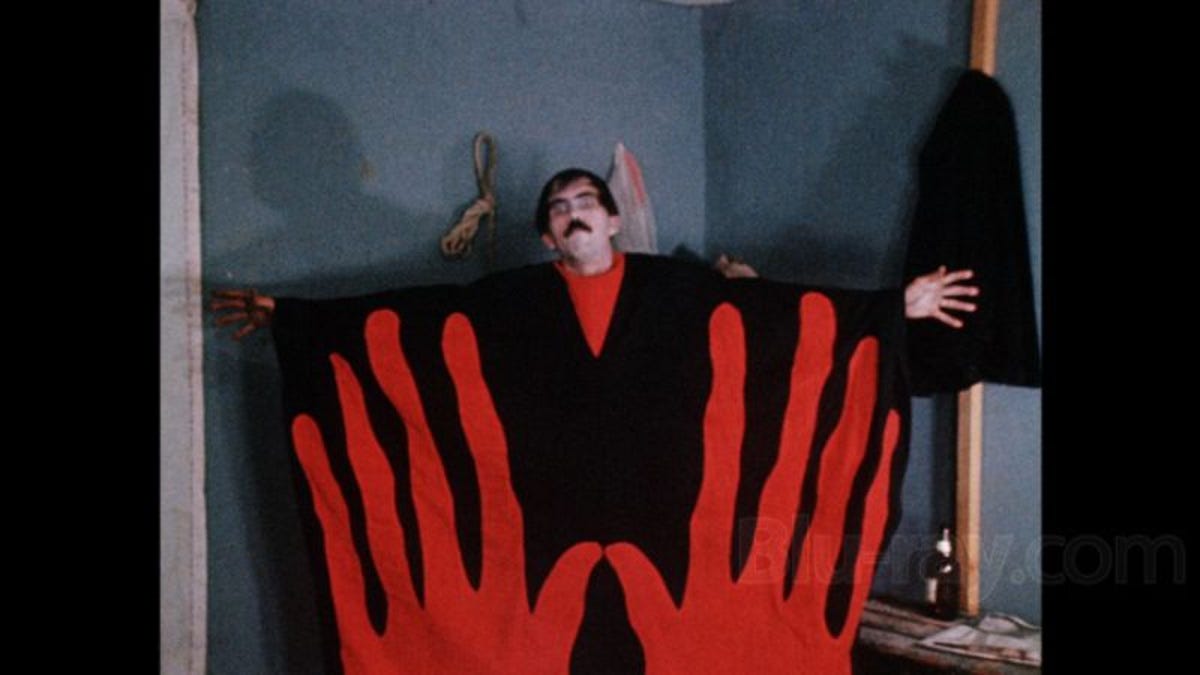
BingoFlix at the CALS Ron Robinson Theater tonight with MANOS: THE HANDS OF FATE

Image result for manos the hands of fate"

BingoFlix returns to the Ron Robinson Theater!

Play bingo to some of the most hilarious movie cliches during a screening of the so-bad-it’s-good film, Manos: The Hands of Fate! Win prizes including free movie and event tickets to upcoming shows at the CALS Ron Robinson Theater!

Doors open at 6:00 p.m. Film starts at 7:00 p.m. Beer, wine, and concessions will be available!

This 1966 American independent horror film revolves around a vacationing family who lose their way on a road trip. After a long drive in the Texas desert, the family finds themselves trapped at a lodge maintained by a polygynous pagan cult, and they attempt to escape as the cult’s members decide what to do with them.

One of the actors, John Reynolds, was on LSD throughout the filming. His incessant twitching may not be the weirdest thing about this movie.

The entire film was shot with a hand-held camera that could only record 32 seconds of film at a time. It was also shot without sound; all the lines were dubbed later by two men and one woman.

The only cast members who were paid for their performances were Jackey Neyman Jones and a Doberman, which got a bag of dog food. The rest of the cast was supposed to receive a cut of the movie’s profits, which never materialized. Director Harold P. Warren also gave the crew shares, instead of a salary.
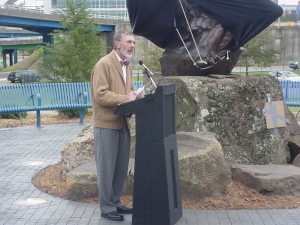
Six sculptures dedicated to kick off week of Clinton Center opening activities in 2004

On Sunday, November 14, 2004, six sculptures were dedicated along President Clinton Avenue and in Riverfront Park. This event was the first in the series of programs leading up to the dedication of the Clinton Presidential Center on Thursday, November 18, 2004.
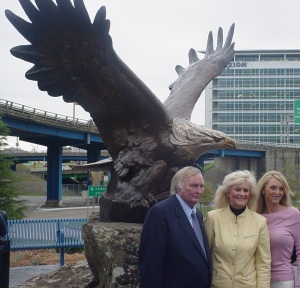
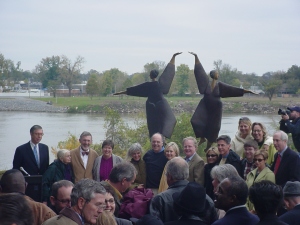
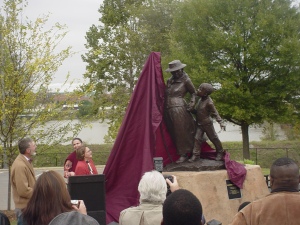
The six sculptures were:

  • Eagle of the Rock by Sandy Scott
  • Fiesta by Carol Gold
  • Anglers by Jane DeDecker
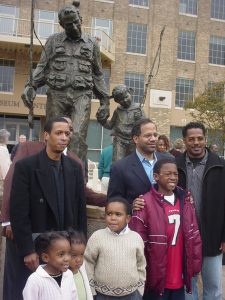
  • Harriet Tubman by Jane DeDecker
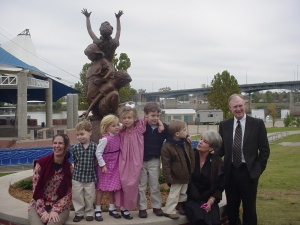
  • Touch the Sky by Jane DeDecker
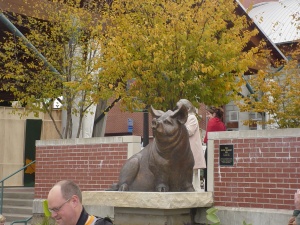
  • River Market Pig by Sandy Scott

The Jennings Osborne family in front of EAGLE OF THE ROCK

The Tucker, Kumpuris, and Moses families in front of FIESTA.

Carrie Remmel Dickinson unveiling Harriet Tubman

Darren Peters, Bruce Moore, and Rickey Mays (with Darrin Williams hidden by Darren Peters) along with the next generation.

Sculptor Jane DeDecker, the Clark grandchildren, with Margaret and Bill Clark in front of TOUCH THE SKY.

Sandy Scott’s RIVER MARKET PIG

Skip Rutherford took a break from looking over the Clinton Center preparations to come down to the sculpture dedication.

Dozens of people gathered for the dedication.

Isaac Hayes is topic of Old State House Museum Brown Bag lecture today

Some people would remember Isaac Hayes Jr. as a songwriter. He won an Academy Award for the musical score for “Shaft, and “Soul Man” (written with partner David Porter) was one of the most influential songs of the 20th century.
Some people would remember Hayes as a soul singer. His solo albums “Hot Buttered Soul” and “Black Moses” topped the R&B Charts.

Some would remember Hayes as an actor from his roles in “Truck Turner,” “Escape from New York,” “It Could Happen to You,” “Rockford Files” and others. He also voiced the part of Chef in “South Park.”

Arkansan Chris Cockrell, who worked as Hayes’ producer and road manager in the 1990s and early 2000s, remembers Hayes as a grandfatherly figure. “I really admired the man. [Hayes had] integrity and honesty in a business where that isn’t the norm.”

Cockrell is going to share some of his favorite stories about the versatile entertainer during a special Brown Bag Lunch Lecture at 12 p.m. Thursday, Nov. 14.

Admission is free. Guests are welcome to bring their lunch, and the Old State House Museum provides drinks.

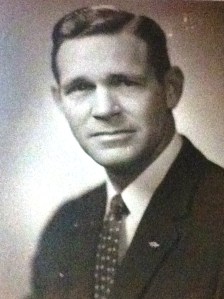
Woodrow Mann, Little Rock’s 53rd Mayor, born on Nov. 13, 1916

Future Little Rock Mayor Woodrow Wilson Mann was born on November 13, 1916, in Little Rock.  His tenure at Little Rock mayor was tumultuous from both things of his doing as well as events that catapulted him onto the international scene.

In 1955, he ran as the Democratic nominee for Mayor of Little Rock and defeated two term incumbent Pratt C. Remmel, a Republican.  He took office in January 1956 and immediately set about to make a lot of changes.  In addition to revitalizing the City’s bus system, and removing some color barriers at City Hall, he oversaw the dismantling of the copper dome on top of Little Rock City Hall (as opposed to the repair of the dome championed by Mayor Remmel).

Mayor Mann was caught up in a grand jury investigation into purchasing practices at City Hall as well as within the City government in North Little Rock.  Partially in response to this, Little Rock voters approved a new form of government in late 1956.  Mayor Mann opposed the switch to the City Manager form and refused to set the election for the new officials but was ultimately compelled to do so.

He was also Mayor during the 1957 integration of Little Rock Central High School.  He sought to keep the peace and to broker a deal between President Dwight Eisenhower and Governor Orval Faubus.  His powers within the city were, no doubt, hampered because of his lame duck status as Mayor.  In November 1957 following the election of the new City Board of Directors, he chaired his last City Council meeting and left office.

In January of 1958, a series of articles written by Mayor Mann detailed his perspective on the events at Central High. These were carried by newspapers throughout the US.

Because of ill will toward him due to the Central High crisis (he was criticized by both sides) and grand jury investigation, Mayor Mann felt it would be difficult to maintain his insurance business in Little Rock. He moved to Texas in 1959 and remained there the rest of his life.  He died in Houston on August 6, 2002.

An entry about Mayor Mann in the Encyclopedia of Arkansas History and Culture can be found here.

Ravel and Villa-Lobos are on the program for tonight’s Arkansas Symphony River Rhapsodies

Ravel & Villa-LobosThe Arkansas Symphony Orchestra continues the 2019-2020 River Rhapsodies Chamber Music season with Ravel and Villa-Lobos, Tuesday, November 12th at 7:00 p.m. at the Clinton Presidential Center.
ASO’s Rockefeller String Quartet, along with other musicians are performing Ravel’s Sonata for Violin and Cello, Ives’ Trio for Violin, Cello, and Piano, Missy Mazzoli’s Death Valley Junction, and Villa-Lobos’ Bachianas Brasileiras No. 5.

River Rhapsodies Chamber Music Concerts are held in the intimate setting of the Clinton Presidential Center’s Great Hall. A cash bar is open before the concert and at intermission, and patrons are invited to carry drinks into the concert. The Media Sponsor for the River Rhapsodies Chamber Music Series is UA Little Rock Public Radio.

General Admission tickets are $26; active duty military and student tickets are $10 and can be purchased online at www.ArkansasSympohny.org; at the Clinton Center beginning 60 minutes prior to a concert; or by phone at 501-666-1761, ext. 1.

Artists
Rockefeller String Quartet
-Trisha McGovern Freeney, violin
-Linnaea Brophy, violin
-Katherine Reynolds, viola
-Jacob Wunsch, cello

David Gerstein, cello
Katherine Williamson, violin
Geoffrey Robson, violin
John Krebs, piano
Casey Buck, cello
Rafael Leon, cello
Daniel Cline, cello
Stephen Feldman, cello
Kristin Smith, cello
Hannah Yeo, cello
Maria Fasciano, soprano

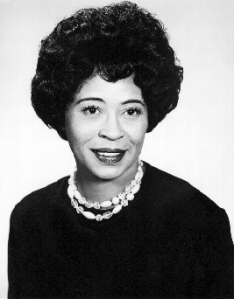
Daisy Bates, born 105 years ago on Nov. 11, 1914

Daisy Lee Gatson Bates and her husband were important figures in the African American community in the capital city of Little Rock.  Realizing her intense involvement and dedication to education and school integration, Daisy was the chosen agent after nine black students were selected to attend and integrate a Little Rock High School.

Bates guided and advised the nine students, known as the Little Rock Nine, when they enrolled in 1957 at Little Rock Central High School. President Clinton presented the Little Rock Nine with the Congressional Gold Medal and spoke at the 40th anniversary of the desegregation while he was in office.

Daisy Bates was involved in more than the Little Rock Nine.  In January 1956, she led 27 African American students in their attempt to integrate four Little Rock schools.  While the efforts were not successful, they did serve to put the Little Rock School District on notice that the African American community was expecting action on school integration.

In 1959, she was arrested for refusing to provide City leaders with the membership of the local NAACP chapter. The case ended up going to the US Supreme Court as Daisy BATES et al., Petitioners, v. CITY OF LITTLE ROCK et al.  The decision had far-reaching impact in stopping government entities from requiring membership rolls as a means of intimidation or curbing the right of public assembly.

When Mrs. Bates died, a memorial service was held at Robinson Center on April 27, 2000.  Among the speakers were President Bill Clinton, Secretary of Transportation Rodney Slater, and Rev. Rufus K. Young, pastor of the Bethel AME Church.  Others in attendance included Lt. Gov. Winthrop Paul Rockefeller, Mayor Jim Dailey, Presidential diarist Janis Kearney, former senator and governor David Pryor, and five members of the Little Rock Nine:  Carlotta Walls Lanier, Ernest Green, Minnijean Brown Trickey, Jefferson Thomas, and Elizabeth Eckford.

It was during his remarks at the service that President Clinton announced he had asked that Bates’ south-central Little Rock home be designated as a national historic landmark.