Unknown's avatar

About Scott

A cultural thinker with a life long interest in the arts and humanities: theatre, music, architecture, photography, history, urban planning, etc.

Charles S. Dutton “Bless the Mic” tonight at Philander Smith

Charles S. Dutton kicks off the 2013-14 Bless The Mic Lecture Series at Philander Smith College tonight.

This award winning actor, director and inspirational speaker will appear at 7pm.  
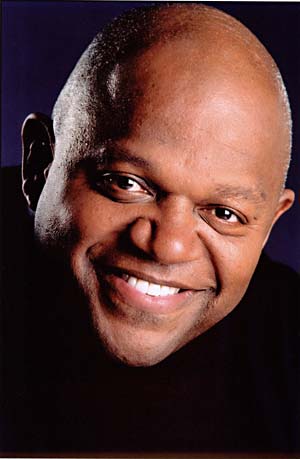
pscduttonA graduate of the Yale School of Drama, Tony nominee Charles S. Dutton’s career spans theater, television and film. From 1991 to 1994 he starred in the title role and executive produced the critically-acclaimed Fox comedy/drama Roc, for which he received several NAACP Image Award nominations. Dutton has numerous other television credits, having won Emmy Awards for his guest starring roles in Without a Trace and The Practice.  He also won an Emmy for directing the movie The Corner for HBO.  Most recently he can be seen in guest star roles on top shows Criminal Minds and American Horror Story as well as Longmire and Zero Hour.

The Baltimore native is also a veteran of numerous feature films, including Aliens 3; Cry, The Beloved Country; A Time to Kill; Get on the Bus; and Cookie’s Fortune. On Broadway he has starred in Ma Rainey’s Black Bottom and The Piano Lesson.  He received Tony nominations for the original productions of those titles. He also won both a Theatre World Award and a Drama Desk Award for his performance in Ma Rainey’s Black Bottom.  In 2003, he starred in a revival of Ma Rainey’s Black Bottom on Broadway.

Bless The Mic is a contemporary spin on the traditional President’s Lecture Series. These events, held on hundreds of campuses across the country, have been a way to stimulate the intellectual discourse on the campus. Even today, these series seek to bring in noted scholars, authors, politicians and public intellectuals to expose not only the campus community to their ideas and concepts, but the broader community in which the institution resides.

Mac Park Music Tonight – Kirk Anderton and Quentin May

macparkmusicFrom the late 1920s through the mid 1950s, Little Rock’s MacArthur Park was a centerpiece of live music.  The Foster Bandshell, named in memory of Mrs. H. H. Foster, stood in the park near 10th and Commerce.  The structure was torn down in the early 1960s.  A portion of the Arkansas Arts Center sits on the site of the old Foster Bandshell.

In 2002, the lakeside pavilion in MacArthur Park was renamed the Foster Pavilion to pay tribute to the memory of Mrs. Foster and the bandshell.

The Foster Pavilion will be the site of a new music series taking place on Wednesday nights in September.  MAC PARK MUSIC! will take place from 5:30pm to 7:30pm on September 11, 18 and 25.

Tonight’s lineup features Kirk Anderton and Quentin May will be playing good ole Southern Rock and all of your sing-a-long favorites.  Clyde & Kiddo’s BBQ will be serving salads, burgers, BBQ, fries and more.  Beer and wine will be available for donations.


Tales from the South – Just Between You and Me

talesfromsouthTonight’s edition of  ”Tales from the South” is Just Between You and Me. It will feature stories by Tyler Thompson and Sandra Hamilton. Music is by The Brad Williams and blues guitarist Mark Simpson

“Tales From the South” is a radio show created and produced by Paula Martin Morell, who is also the show’s host. The show is taped live on Tuesday. The night is a cross between a house concert and a reading/show, with incredible food and great company. Tickets must be purchased before the show, as shows are usually standing-room only.

“Tales from the South” is a showcase of writers reading their own true stories. While the show itself is unrehearsed, the literary memoirs have been worked on for weeks leading up to the readings. Stories range from funny to touching, from everyday occurrences to life-altering tragedies.

The program takes place at Starving Artist Café.  Dinner is served from 5pm to 6:30pm, the show starts at 7pm.  Admission is $7.50, not including dinner.

You MUST purchase your ticket before the show

Previous episodes of “Tales from the South” air on KUAR Public Radio on Thursdays at 7pm.  Tonight’s episode will air on October 3.

Exhibit at Clinton Library pays tribute to March on Washington

(Copyright Estate of Stanley Tretick LLC)

(Copyright Estate of Stanley Tretick LLC)

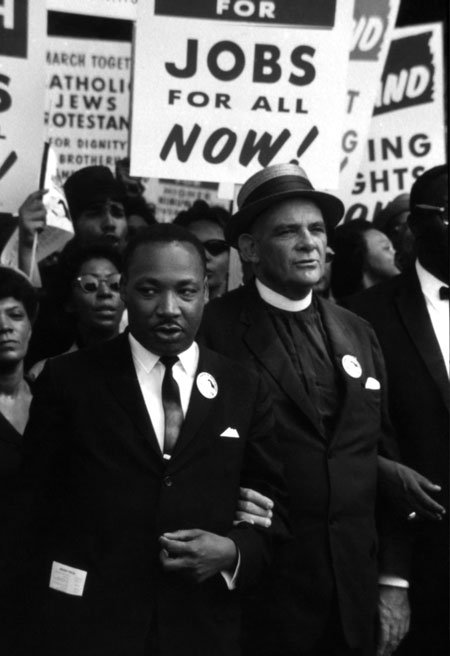
The William J. Clinton Presidential Library opened a new exhibit last month in conjunction with the 50th anniversary of the March on Washington.

Entitled, “And Freedom for All: The March on Washington for Jobs and Freedom,” this exhibit pays tribute to the 50th anniversary of The March on Washington. The March took place in Washington, D.C., on August 28, 1963.  It was attended by approximately 250,000 people, it was the largest demonstration ever seen in the nation’s capital.

Stanley Tretick was assigned by LOOK magazine to cover the march behind-the-scenes with organizers and program speakers.  The exhibit features his pictures and videos of speeches by Daisy Bates, John Lewis and a performance by Mahaila Jackson.

Dr. Martin Luther King Jr’s “I Have a Dream” speech is also featured in the exhibit.  President Clinton declared it to be “the clearest clarion call to the more perfect union of America in the 21 century.”

Stanley Tretick was an American photojournalist who worked for United Press International, Look and People (where he was a founding photo editor). He covered every president from Harry S. Truman through George H. W. Bush. For UPI, he followed the Kennedy presidential candidacy.  He resigned when UPI would not assign him to the White House once JFK took office.  The President promised his broad access which prompted Look to hire him.  His photos of the Kennedys helped form the collective iconic images for which the family is now remembered.

The exhibit runs through November 17.

Little Rock Look Back: Mayor Henry Lewis Fletcher

Mayor H L FletcherOn September 15, 1833, future Little Rock Mayor Henry Lewis Fletcher was born in Saline County.  His parents were Henry Lewis and Mary Lindsey Fletcher.  One of his siblings was future Little Rock Mayor John Gould Fletcher.  The Fletcher brothers are the only set of siblings to serve as Mayors of Little Rock.

Though the life of John Gould Fletcher is fairly well documented, not much information is out there on his brother Henry Lewis (and some of what is out there is incorrect).  He married Susan Bricelin August 30, 1855, in Pulaski County.  During the Civil War, he served as a sergeant in the cavalry for the Confederate Army in Captain Ed Nowland’s Company.

As a civic leader, Fletcher oversaw Arkansas’ contribution to the Philadelphia Centennial Exposition in 1876. The building received as a prize a cast-iron fountain still standing in front of the Old State House Museum.

Fletcher served as Mayor of Little Rock from 1891 to 1893.  When Fletcher became Mayor he appointed a new Police Chief (as most Mayors did) and the entire police force was dismissed.  A new police force was hired by E. H. Sanders, who served as chief for 18 months.  Upon his resignation, Frank MacMahon (who had been dismissed from the force when Fletcher came to office), was appointed Chief by Mayor Fletcher.  He would serve from 1892 until 1905.

Mayor Fletcher died on June 30, 1896 and is buried at Oakland Cemetery next to his wife (who died in 1911).

Little Rock Look Back: Mayor Charles E. Taylor

Mayor TaylorOn September 15, 1868, future Little Rock Mayor Charles E. Taylor was born in Austin, Mississippi.  After locating to eastern Arkansas, his family moved to Little Rock around 1880.

Taylor graduated from Scott Street High School in Little Rock and proceeded to work for various hardware stores and other businesses.  In 1895 he married Belle Blackwood, with whom he would have four children.

In 1910, Taylor announced his intention to run for Mayor of Little Rock.  Though he had never held elective office, he had been involved in several civic organizations.  Taylor was the main challenger to Alderman John Tuohey.  Seen as a reformer, Taylor initially lost to Tuohey but after an investigation of voter fraud and a subsequent runoff, Taylor was elected Mayor.

Upon taking office in August 1911, Mayor Taylor focused on improving health conditions in the city, upgrading the fire department and enhancing the overall moral tone of the city.

As a progressive of the era, he fought against gambling, drinking and prostitution.  He created a Health Department and enhanced the City Hospital.  His efforts led to a decrease in the death rate in Little Rock.  As Mayor, Taylor introduced motorized vehicles to the Fire Department.  He also led the City Council to establish building and electrical codes.  Mayor Taylor also oversaw the construction of the 1913 Beaux Arts Central Fire Stations (which today serves as the City Hall West Wing).

Under his leadership, the City of Little Rock annexed Pulaski Heights. One of the selling points to Pulaski Heights residents was Mayor Taylor’s ability to provide modern services such as paved streets, water mains, fire hydrants and street lights.

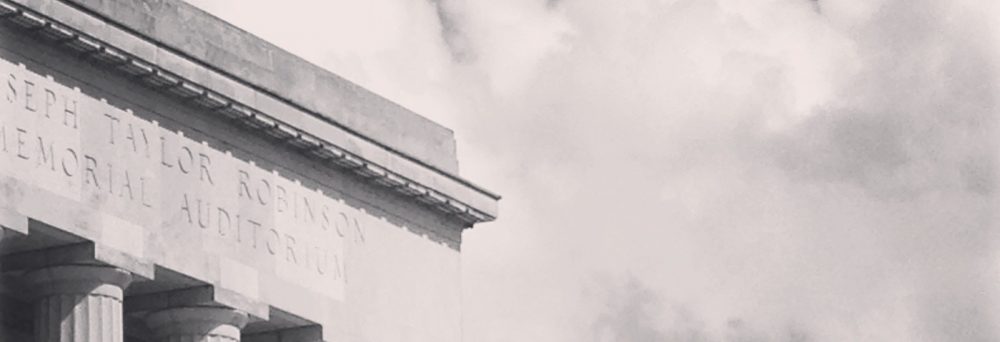
Though neither his 1911 Parks Master Plan nor his dreams for a civic auditorium came to fruition, they paved the way for future successes in both of those areas.

Funding for projects continued to be a problem throughout Mayor Taylor’s four terms in office.  He believed that one obstacle to city funding was the prohibition by the state constitution against cities issuing bonds.  Though that ban has since been lifted, Taylor tried three times unsuccessfully to get it changed while he was Mayor.

In April 1919, Taylor left office after having served eight years.  He was the longest serving Mayor of Little Rock until Jim Dailey served in the 1990s and 2000s.  Following several business ventures, Taylor moved to Pine Bluff and led their chamber of commerce from 1923 through 1930.

Mayor Charles E. Taylor died in Pine Bluff in 1932. He was buried at Oakland Cemetery in Little Rock.

During his time in office, Mayor Taylor was presented with an unofficial flag of Little Rock by a group of citizens.  During Mayor Dailey’s tenure, that flag was restored by some private citizens and presented to the City.  It is framed on the 2nd Floor of Little Rock City Hall.

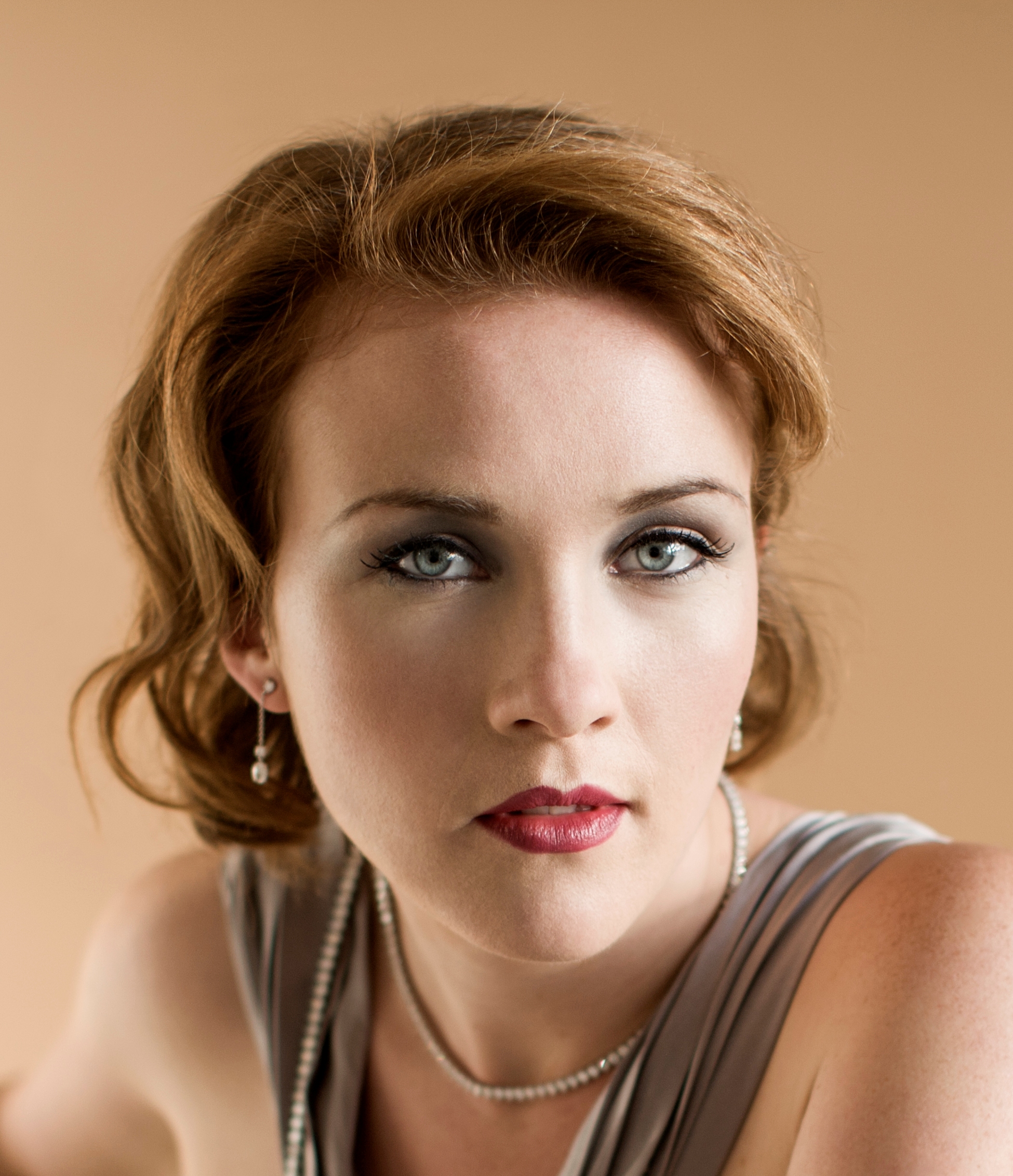
Artspree 2013 kicks off with Sasha Cooke, mezzo-soprano

(Photo by Dario Acosta, courtesy of UALR Artspree)

(Photo by Dario Acosta, courtesy of UALR Artspree)

Radiant American mezzo-soprano Sasha Cooke caused a sensation as Kitty Oppenheimer in the Metropolitan Opera premiere of John Adams’ Doctor Atomic, the DVD release of which won the 2012 Grammy Award® for Best Opera Recording. She was praised in The New Yorker for her “fresh, vital portrayal, bringing a luminous tone, a generously supported musical line, a keen sense of verbal nuance, and a flair for seduction.”

Cooke will be in recital today at 3pm at UALR’s Stella Boyle Smith Concert Hall to kick off the 2013-2014 Artspree season.  Tickets are $15 for the general public, free to UALR faculty staff and students, and $10 for other students.

During the summer of 2012, Sasha Cooke opened the Hollywood Bowl’s summer season in Beethoven’s Ninth Symphony with Leonard Slatkin and the Los Angeles Philharmonic, and also appeared at Music@Menlo and the RoundTop Festival. She appeared in the closing concerts of the Aspen Music Festival and the Mostly Mozart Festival, with Robert Spano in Mahler’s Eighth Symphony and with Louis Langrée in Beethoven’s Mass in C, respectively. Returning to the Deutsches Symphonie-Orchester Berlin, Sasha performed songs by Bernstein, Copland, Bolcom, Barber and Gershwin in the inaugural concerts of new music director Tugan Sokiev in Berlin and at the Beethovenfest in Bonn. The new season marks her San Francisco Opera debut as the title role in the world premiere of Mark Adamo’s The Gospel of Mary Magdalene, as well as her role debuts as Magnolia in Francesca Zambello’s production of Show Boat at Houston Grand Opera and as Sonja in Dominick Argento’s The Aspern Papers at Dallas Opera.

She returns to the San Francisco Symphony in Beethoven’s Missa Solemnis under the baton of Michael Tilson Thomas, gives the world premiere of Augusta Read Thomas’s Earth Echoes with the Orpheus Chamber Orchestra at Carnegie Hall, appears with the Chamber Music Society of Lincoln Center both in New York and in Mecklenberg, Germany, and sings Mahler’s Third Symphony with the Orchestre de Lyon. She also sings Bernstein’s “Jeremiah” Symphony with Leonard Slatkin and the Detroit Symphony, and Alexander Nevsky with Pinchas Steinberg and the Cleveland Orchestra. She returns to the New York Festival of Song for a program exploring the lives of women, joins the Mirò Quartet for music of Respighi and Schubert with Friends of Chamber Music Denver, and sings Das Lied von der Erde with the Columbus Symphony.