LR Cultural Touchstone: Louise Loughborough

louise_loughborough_fLouise Loughborough could be called the mother of historic preservation and history museums in Arkansas.

Born Louisa Watkins Wright in Little Rock 1881, her ancestors included many early Arkansas leaders. At age 21 she married attorney J. Fairfax Loughborough.  She became active in several organizations including the Little Rock Garden Club, Colonial Dames and Mount Vernon Ladies Association.

Her involvement in historic structures in Little Rock began when the Little Rock Garden Club sought to improve the appearance of the War Memorial Building (now known as the Old State House Museum) in 1928. The grounds were littered with signs and monuments, and the roof of the Greek Revival building sported figurative statues of Law, Justice, and Mercy, which had been installed above the pediment after being salvaged from the Arkansas exhibit at the Philadelphia Centennial of 1876. To take the façade of the edifice back to its original 1830s appearance, Loughborough had the statues removed—without the permission of the War Memorial Commission, which had legal authority over the building.

In 1935, Loughborough was appointed to the Little Rock Planning Commission, and it was in this role that she first heard about the plan to condemn the half-block of houses that she had grown up admiring on Cumberland and East Third streets. Although the neighborhood had fallen on hard times, becoming a red-light district and slum, Loughborough feared the loss of several historic structures, including the Hinderliter House, the oldest building in Little Rock and thought to be Arkansas’s last territorial capitol. She mobilized a group of civic leaders to save these buildings. She enlisted the aid of prominent architect Max Mayer and coined the term “town of three capitols” to try to capture the imagination of potential supporters, grouping the “Territorial Capitol” with the Old State House and the State Capitol.

In 1938, Loughborough secured a commitment from Floyd Sharp of the federal WPA to help with the project, on the condition that the houses be owned by a governmental entity. She persuaded the Arkansas General Assembly to create and support, with general revenues, the Arkansas Territorial Capitol Restoration Commission (Act 388 of 1939). This satisfied Sharp’s condition, and the WPA provided labor and material for the new historic house museum. A private fundraising campaign brought in the remaining monetary support necessary for the completion of the project.

The Arkansas Territorial Restoration opened on July 19, 1941. The project was the first Arkansas agency committed to both the restoration of structures and the interpretation of their history, and it served as a model and inspiration for historic preservation in the state. Around the same time, she was a moving force behind the creation of a museum at the Old State House as well.  Today both Historic Arkansas Museum (as the Territorial Restoration is now known) and the Old State House Museum are agencies of the Department of Arkansas Heritage.

As founding Chairman of the Arkansas Territorial Restoration Commission, Louise Loughborough provided daily direction for the museum house complex through the first twenty years of its existence, yielding her authority to architect Edwin B. Cromwell only as her health began to fail. She died in Little Rock on December 10, 1962 and was buried at Mount Holly Cemetery.

Little Rock Look Back: Donald Mehlburger, LR’s 62nd Mayor

Mayor D L MehlburgerOn October 19, 1937, future Little Rock Mayor Donald Lee Mehlburger was born in Little Rock.  His parents were Max A. Mehlburger and Mary Lou Covey Mehlburger who also had another son Max C. Mehlburger.

Mehlburger’s first run for the City Board of Directors was in November 1968 when there was an open seat.  At the time he was 30, the youngest one could be and be elected to the City Board.  He lost that race, but eight years later ran again.  This time Mehlburger won the race.  At his first meeting on the City Board, Mehlburger was selected as Mayor of Little Rock by his colleagues.

Prior to running for the City Board the second time, Mehlburger had been appointed to the Planning Commission.  Planning and growth were two important emphases for Mayor Mehlburger, in addition to public safety.  He stressed the importance of quality growth in the edges of the city and a push for a revitalized downtown.  Mayor Mehlburger was also an advocate for public mass transit.

Due to business interests taking up too much of his time, he resigned from the City Board a few months before his term was up.  But he remained engaged in civic affairs.  Historic preservation was important to Mehlburger.  In addition to owning historic properties, he was a founding board member of the Historic Preservation Alliance of Arkansas.  He had graduated from the University of Arkansas and was a member of Trinity Episcopal Cathedral.  He had also been active with the Junior Chamber of Commerce (Jaycees) and Rotary Club 99.

Mehlburger died on May 25, 1992 and was buried at Mount Holly Cemetery.  His grave marker features an engraved sextant which pays tribute to his career as an engineer.  It also notes that he was Mayor of Little Rock.  Mayor Mehlburger was survived by his wife Susan and his three children – Donald Lee Jr., Harry and Katherine.

LR Cultural Touchstone: Jeane M. Hamilton

Photo taken for SOIREE

Photo taken for SOIREE

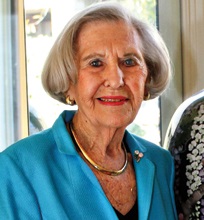
Jeane M. Hamilton is not a native Arkansan. But it was Little Rock and Arkansas’ good fortune that she married a Little Rock native and came here.

Arriving in Little Rock a young wife in 1952, she immediately set about to become involved in her new community as she and her husband James set up a household.  In the mid-1950s, the Junior League of Little Rock tapped her to chair the initiative to create a new art museum for Little Rock.  The two decades old Museum of Fine Arts was threadbare through years of neglect and unfocused programming and collecting.

Hamilton, along with Junior League President Carrie Remmel Dickinson and Vice President Martha McHaney, approached Winthrop Rockefeller (then a relatively new resident) to lead the fundraising effort for the new museum.  He agreed on a few conditions: one was that a base amount had to be raised in Little Rock first, and second that the museum would be for the entire State of Arkansas and not just Little Rock.

Hamilton and her colleagues set about to raise the funds. They raised $645,000 at the same time Little Rock’s business climate was stymied by the aftereffects of the Central High crisis.

Now a lifetime honorary member of the Arkansas Arts Center Board, Hamilton has spent much of her life working on Arkansas Arts Center projects since that visit in 1959.  She has served on the Board, chaired committees, chaired special events, served hot dogs, helped kids paint and danced the night away at countless fundraisers.  She was on the committee which hired Townsend Wolfe as executive director and chief curator.  Jeane has led art tours for the Arts Center to a number of countries over the years.

When she is not at the Arts Center, she is often seen at the Rep, the Symphony or any number of other cultural institutions.  While she enjoys seeing old friends at these events, she also loves to see a room full of strangers – because that means that new people have become engaged in the cultural life of Little Rock.

Mid-Century Modern architecture in Little Rock is on tour today

qqa mcmOn Sunday, October 12, the QQA will host the first-ever tour of mid-century modern architecture in Little Rock. The tour will begin at 1:00 p.m. at the Tower Building, 323 Center Street. Tickets are $15 for QQAmembers, $20 for nonmembers.

Guests will be viewing 10 prime examples of this often overlooked architectural style in the downtown area by trolley, with interior tours of 3 locations. .

Tickets may be purchased by calling (501)375-0076 or clicking here. Space is limited, reserve seats now.

The tour is sponsored by Delta Capital Partnership.

The Quapaw Quarter Association’s mission is to promote the preservation of Little Rock’s architectural heritage through advocacy, marketing and education.

Incorporated in 1968, the QQA grew out of an effort to identify and protect significant historic structures in Little Rock during the urban renewal projects of the early 1960s. Throughout its existence, the QQA has been a driving force behind historic preservation in Greater Little Rock.

Greater Little Rock Preservation Awards presented tonight at Quapaw Quarter annual meeting

QQAThe Quapaw Quarter Association will present the Greater Little Rock Preservation Awards at its 2014 Annual Membership Meeting on Tuesday, October 7 at the Ron Robinson Theater.  This year’s award recipients include the Argenta Branch of the William F. Laman Public Library System, Stone’s Throw Brewing Company, the Clinton Foundation, Donna Thomas and Wright Avenue Neighborhood Association, and J. Chandler and Co.  Rachelle Walsh will receive the Peg Smith Award to recognize her exemplary volunteer work. Carolyn Newbern will be presented with the Jimmy Strawn Award, the QQA’s most prestigious award, presented to someone whose efforts on behalf of the preservation of Greater Little Rock’s architectural heritage are an inspiration to the entire community.  Matt DeCample will serve as emcee of the awards ceremony.

The QQA is also kicking off efforts to raise awareness about mid-century modern architecture in Little Rock, beginning with a special lecture from Dr. Ethel Goodstein-Murphree of the Fay Jones School of Architecture.  Goodstein-Murphree’s lecture, “Rock ‘n’ Roll, Poodle Skirts, and a White I-Beam: The Preservationist’s Guide to Loving the 1950s and its Architecture” will be presented at the meeting.

The meeting will begin at 6:00 p.m. following a 5:30 reception at the Ron Robinson Theater at 100 River Market Avenue in Little Rock.  The QQA’s annual membership meeting is free and open to the public.  Nonmembers may join at the door.

LR Cultural Touchstone: Phyllis D. Brandon

phyllisbrandon_t180Phyllis D. Brandon has played a unique role in shaping and supporting Little Rock’s cultural life.  As the first and longtime editor of the Arkansas Democrat-Gazette‘s High Profile section, she promoted cultural institutions, supporters and practitioners.

Since it started in 1986, being featured in High Profile has been akin to the Good Housekeeping Seal of Approval.  It exposes cultural institutions and events to new and wider audiences.  There is no way to put a monetary measure on the support Brandon gave to Little Rock’s cultural life during her time leading High Profile from 1986 to 2009.  From 2009 to 2011, she served as editor of Arkansas Life magazine, again supporting and promoting cultural life.

With her unassuming manner, she coaxed stories out of interview subjects and captured photos which highlighted events.  A journalist since her junior high school days in Little Rock, Brandon has also been a witness to history.  As a recent graduate of the University of Arkansas, Brandon returned to her alma mater, Little Rock Central High, to cover the events in early September 1957 for the Arkansas Democrat.  Eleven years later, she was in Chicago for the contentious and violent 1968 Democratic National Convention as a delegate.

From 1957 until 1986, she alternated between careers in journalism and the business world, as well as being a stay-at-home mother.  Upon becoming founding editor of High Profile, she came into her own combining her nose for news and her life-long connections within the Little Rock community.  As a writer and photographer, she created art in her own right. A look through High Profile provides a rich historical snapshot of the changes in Little Rock and Arkansas in the latter part of the 20th Century and start of the 21st Century.

Since retiring in 2011, Brandon has kept a relatively low profile. She can be seen from time to time spending time with friends and family and enjoying attending events. Only this time she generally does not have her trusty camera or notepad.

Chairman of the National Endowment for the Arts to visit Little Rock

NEA LRDr. Jane Chu, a former resident of Arkadelphia, is the new chairman of the National Endowment for the Arts.  On Tuesday, October 7, she will be in Little Rock.

At 1:30, she will be part of a presentation at the Arkansas Repertory Theatre.  Steve Luoni of the University of Arkansas Community Design Center, will lead a discussion of the Creative Corridor.  Dr. Chu will also make remarks.  Mayor Mark Stodola will be the host of the event.  The public is invited to attend.

During her visit in Little Rock, Dr. Chu will also take part in a variety of meetings and tours.