Final weeks of “Piranesi and the Perspectives of Rome” at UALR Galleries

Piranesi_First-Edit_AO1The prints of Giovanni Battista Piranesi (1720-1778) have contributed much to defining what Europeans and Americans think of the as “ancient Roman glory.” An exhibit of several of his prints is currently on display at the UALR Art Galleries through October 5.

In approximately, architect Edwin Cromwell (1909-2001) was going through the papers of  his late father-in-law, architect Charles Thompson (1868-1959). Included in this was a loosely bound volume of 30 prints by Piranesi. In 1999, Cromwell approached the UALR Department of Art to suggest that research might be done on this set of prints. In fact, it provided the basis for the MA thesis project of Olga Elwood. In 2010, the three daughters of Edwin Cromwell donated the prints to the Department of Art.

Thompson and Cromwell were both leading architects of Little Rock in each of their eras.  Among Thompson’s many designs are both the 1908 Little Rock City Hall and the 1913 Central Fire Station which is now the City Hall West Wing.

The exhibit, was designed to accompany a special topics art history course taught at UALR this semester by Dr. Jane Brown and Dr. Floyd Martin.

There are two upcoming lectures this week in conjunction with the exhibit:
September 25, 10:50 a.m., room 161 in the Fine Arts Building
Dr. Carol C. Mattusch, Professor Emerita, George Mason University – Pompeiian Dreams: Myths and Realities about the Ancient Romans, a lecture to the students enrolled in the course “Piranesi and Perspectives of Rome.

September 25, 6:00 p.m., the Stella Boyle Smith Concert Hall in the Fine Arts Building

Dr. Richard S. Mason, Lecturer, University of Maryland, Baltimore County – Reliving the Ancient World: Rediscovering Herculanium and Pompey
Little Rock Look Back: City Councilman Angelo Marre

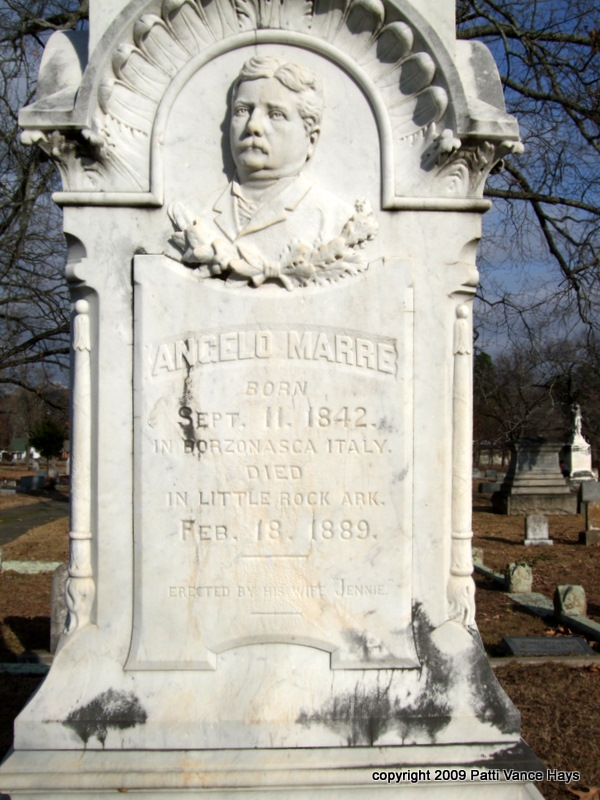
angelomarreOn September 11, 1842, future Little Rock Alderman Angelo Marre was born in Borzonaca, Italy.  He immigrated to Tennessee with his parents in 1854.

During the Civil War, he served in the Confederate Army. From 1865 to 1868, Angelo Marre worked for the Memphis Police Department but was forced to resign after he was accused of killing a man during an argument.  After his acquittal, he returned to the saloon business.  In 1872 Marre was convicted of stealing money and sentenced to three years in prison.

Tennessee Governor John Brown granted Marre a full pardon two years into his sentence, and he regained his citizenship in 1879.

After getting out of prison, he claimed an inheritance and joined his brothers in Little Rock.  He worked as a bartender at the Metropolitan Hotel.  He later opened a saloon and billiard parlor.

By the mid-1880s, Marre owned two saloons, a liquor import business, an office building in downtown LR, 3,000 sharesof stock in mining companies operating in Garland and Montgomery counties, and he was the first president of Edison Electric Company of LR.

In 1883, he was elected as an alderman on the Little Rock City Council.  He lost is bid for reelection in 1885. In 1888, he was an unsuccessful candidate for Pulaski County Sheriff.

villamarreAngelo Marre died February 18, 1889, as a result of his infection.  He is buried at Calvary Cemetery in LR. His custom designed, marble monument was ordered from Florence, Italy, and cost $5,000.

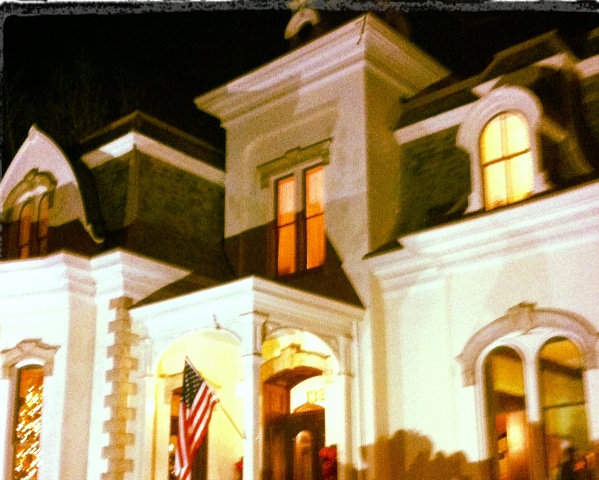
Marre is probably best known today as the builder of the structure now known as the Villa Marre.  Built in 1881, it is designed in the Italianate and Second Empire styles.  It was built in 1881 and 1882 on Block 21, Lots 5 & 6 of the Original City of Little Rock.  The cost was $5,000.

It was originally a red brick structure and has been modified and expanded several times as well as painted white.  It did not bear the name Villa Marre until the 1960s when historic preservation advocate Jimmy Strawn gave it that name.

After serving as the headquarters for the Quapaw Quarter Association for several years, it was returned to a private residence.  It is now available for special events and rentals.

The Villa Marre is probably best known locally and nationally for serving as the facade for the Sugarbaker design firm on the CBS sitcom “Designing Women.”  Though the interior of the house does not match the interior on TV, the building was featured in the opening credits as well as in exterior shots each week.

Little Rock Look Back: Plans for new City Hall finally proceed

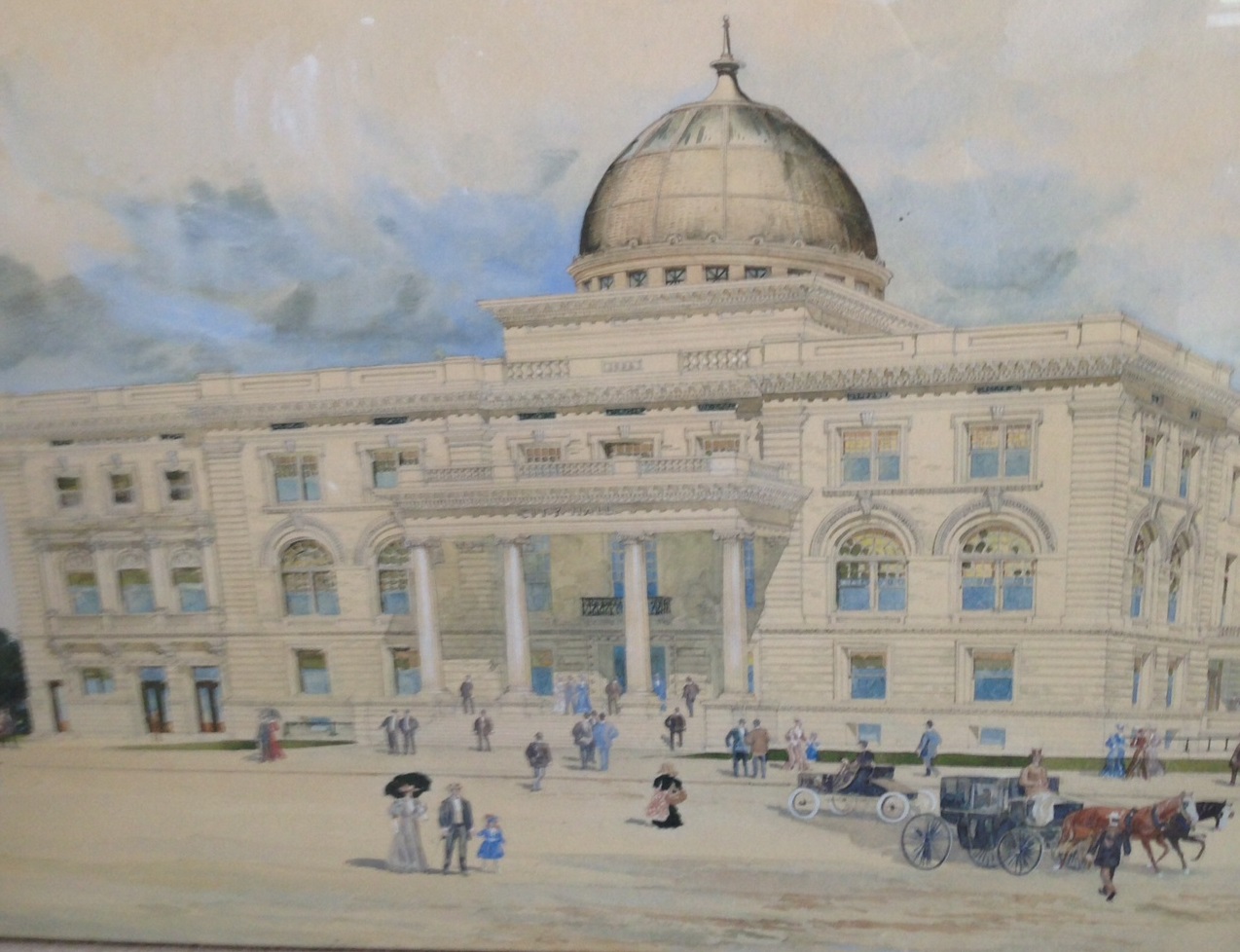
City Hall circa 1908

City Hall circa 1908

After a judge ruled in August 1906 that the City of Little Rock could not build a new City Hall and Auditorium complex, it looked like Little Rock would be stuck with its existing inadequate building.

However on September 10 it became obvious that much work had been taking place behind the scenes after that ruling.  On that day, the Board of Public Affairs (a City body charged with overseeing municipal government construction projects and comprised of the mayor and two citizens approved by the City Council) voted to ask the aldermen to cancel plans and rescind legislation for the city hall, jail and auditorium complex.  The Board of Public Affairs then offered up a new plan for a city hall and jail building.  Because no auditorium was involved, these plans would not be in violation of the Chancery Court.

That same evening the City Council followed suit and revoked the plans for the original project.  The aldermen then voted to proceed with building a new city hall and jail without the auditorium.  There was only one dissenting vote; Alderman Jonathan Tuohey voted no.  He explained his negative vote was not a lack of support for the project, but he was not comfortable with the way it was rushed through.

Mayor Warren E. Lenon told the Gazette, “The Chancery Court has enjoined us from erecting an auditorium and the Board of Public Affairs has consequently rescinded all resolutions and orders pertaining to that structure.” He noted that there would “be no appeal from the injunction granted by Chancellor Hart, because there is nothing to appeal.”

The coverage of the actions of the City Council that night was in keeping with the manner in which the two daily newspapers had covered the lawsuit and the trial.  The Gazette headline cried “City Hall Ordinance Railroaded Through” while the staid Democrat merely stated “New $175,000 City Hall Provided by City Council.”  The tone of the Gazette’s article matched the headline while the Democrat’s story was more straightforward.

Architect Charles Thompson adjusted his plan for the new City Hall by removing the auditorium wing.  With the revised Th0mpson plan and the approval of the City Council, Little Rock was at last on its way to a new City Hall.  This was over two years after Mayor Lenon had first broached the subject.

Originally slated to open in 1907, the building officially opened in April 1908.

QQA’S Rhea Roberts receives Historic Real Estate Development Professional certification

Orhearn August 11, 2014, Executive Director of the Quapaw Quarter Association Rhea Roberts received certification as a Historic Real Estate Development Finance Professional (HHDFP) from the National Development Council (NDC).  HHDFP Certification is a professional credential given to individuals who successfully complete NDC’s intensive historic real estate development finance training series.  The training provides individuals working in the field of housing development with instruction in housing development finance, rental housing development finance including problem solving and deal structuring, and the creation and implementation of development programs.

The two HHDFP Certification Program courses were five days in length and concluded with an exam.  Upon successful completion of the courses, the candidate is awarded HHDFP Certification.

The National Development council was established in 1969 and is a non-profit organization specializing in economic and housing development training and technical assistance for community development.  NDC has provided training to over 60,000 professionals working in the fields of economic and housing development.  Participants come from diverse backgrounds including city and state governments, public agencies, community-based organizations, professional organizations and banks.

Rhea Roberts has served as Executive Director of the Quapaw Quarter Association since August 2010.  The QQA’s mission is to promote the preservation of Little Rock’s architectural heritage through advocacy, marketing and education.  Incorporated in 1968, the QQA grew out of an effort to identify and protect significant historic structures in Little Rock during the urban renewal projects of the early 1960s.  Throughout its existence, the QQA has been a driving force behind preservation in Greater Little Rock.


Butler Center Legacies & Lunch today at noon: Frank Sata

legaciesEach month (usually the first Wednesday), the Butler Center for Arkansas Studies hosts “Legacies & Lunch”.  This month the program features Frank Sata discussing Unlikely Foundation: How WWII Internment in Arkansas Shaped a Family’s Life in Art and Architecture.  

Mr. Sata’s appearance is also presented in partnership with the Clinton School of Public Service’s speaker series.

sataAs a young boy, Frank Sata was one of thousands of Japanese Americans who spent time in Arkansas during World War II, imprisoned by their own country merely because of their ancestry. He was eight years old when his family was shipped from their home in California to Jerome, where one of two Arkansas internment camps for Japanese Americans was built by the War Relocation Authority. Mr. Sata’s father, J.T. Sata, was an accomplished artist who documented his family’s time in camps in Arkansas and Arizona in a series of remarkable oil paintings and charcoal drawings. Much of that art is currently on display in Concordia Hall of Butler Center Galleries, as part of Drawn In: New Art from WWII Camps at Rohwer and Jerome, and will remain in the Butler Center’s collection following the closing of the exhibition on August 23, 2014.

Mr. Sata, who lives in Pasadena, California, went on to become an architect. His own work was influenced by his experience of the World War II camps, his father’s art and photography, and famed American architect Frank Lloyd Wright’s fascination with Asian architecture. He will discuss the internment experience, his father’s art, and the ways his work as an architect reflects his memories of his years in Arkansas.

Despite the sadness embedded in the injustice of the World War II camps, Mr. Sata says, “I have since developed a sense of comfort and place for Arkansas.” He says, “Sometimes words do not come easily for me to describe that special meaning, but he is an eloquent interpreter of the power of a harsh experience visited upon a country’s citizens by wartime frenzy and the healing power of creativity to overcome anger and bitterness.

Legacies & Lunch is sponsored in part by the Arkansas Humanities Council. Bring a sack lunch; drinks and dessert are provided. For more information, visit www.butlercenter.org.

Paul Laurence Dunbar School Neighborhood Historic District listed in the National Register of Historic Places.

dunbarimage2

Built as Paul Laurence Dunbar High School, this building is now known as Dunbar Middle School. It is the centerpiece of the Dunbar Neighborhood.

Earlier today, Little Rock Mayor Mark Stodola and Director of the Arkansas Historic Preservation Program Missy McSwain announced the listing of the Paul Laurence Dunbar School Neighborhood Historic District in the National Register of Historic Places and discuss what that means for the City of Little Rock.

This designation is the result of several years of hard work by members of the community.  This National Register listing formally documents the neighborhood’s history, development and contributions to the City of Little Rock.  It also provides an incentive in the form of rehabilitation tax credits for many of the properties within its boundaries.

Paul Laurence Dunbar School Neighborhood Historic District in Little Rock contains buildings dating to 1890. According to the National Register nomination, the district is representative of the evolution of a neighborhood from an integrated working and middle-class neighborhood in the late-nineteenth and early-twentieth century to a predominantly African-American working and middle-class neighborhood in Little Rock by the 1960s. Resources within the District reflect the varied architectural styles prevalent during the late nineteenth and early-to-mid-twentieth centuries. Properties in the district exhibit a broad mix of influences and architectural variants popular during the period, influenced by regional and ethnic traditions.

The National Register of Historic Places is the official list of the Nation’s historic places worthy of preservation. Authorized by the National Historic Preservation Act of 1966, the National Park Service’s National Register of Historic Places is part of a national program to coordinate and support public and private efforts to identify, evaluate, and protect America’s historic and archaeological resources.

Also at the press announcement, Hearne Fine Art unveiled a new sculpture, “Three Rings: Tribute to Isamu Noguchi.”


Little Rock Look Back: Would Little Rock get a new City Hall and Auditorium in 1906?

The 1906 plans for City Hall with the Municipal Auditorium on the left portion.

The 1906 plans for City Hall with the Municipal Auditorium on the left portion.

Last week: Little Rock Mayor Warren E. Lenon had been advocating for a new City Hall a municipal auditorium since shortly after taking office in April 1903. After plans were approved in July 1906, a group of citizens, led by Arkansas Gazette publisher J. N. Heiskell, filed suit to stop the City.

The closing arguments in the trial against plans for a new City Hall and auditorium complex had been heard on Monday, July 30.  The case was heard by Chancery Judge J. C. Hart.  Serving as an advisor to Chancellor Hart throughout the trial (though with no official legal standing) was Pulaski County Circuit Court Judge Robert J. Lea.  To accommodate the expected large attendance, the trial had been moved into his courtroom which was larger than Chancellor Hart’s.

On Friday, August 3, Pulaski County Chancery Judge J. C. Hart issued an injunction to keep the City from signing a contract for the construction of a city hall, jail and auditorium.  Chancellor Hart concurred with the plaintiffs that Arkansas’ constitution and laws dictated all taxation must be for public purposes.  He found there was nothing in Arkansas case law which defined an auditorium to be used for conventions as a public purpose.

As had been the case throughout the trial, the tone of the coverage of the decision differed greatly in the city’s two daily papers.  The subheading in the Democrat noted that the plaintiffs would be liable for any losses to the municipal government’s coffers due to a delay in commencing the construction if Little Rock eventually prevailed.  That fact is not mentioned by the Gazette.  Both papers did make note that Judge Lea agreed with the Chancellor’s decision.

For now, it looked as if the City of Little Rock would be stuck in the 1867 City Hall on Markham between Main and Louisiana.  Mr. Heiskell and his compatriots waited to see if the City would appeal the decision.

While August would be a quiet month publicly, work would go on behind the scenes.  More on that, in the future.