Little Rock Look Back: J. J. McAlmont (Little Rock Mayor and UAMS founder)

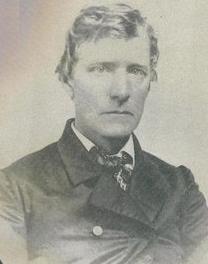
McAlmontJohnJ_fFuture Little Rock Mayor John Josephus McAlmont was born on this date in 1821 in New York state. (Various reports give his birth date as December 22 — but the family reports December 19 as the date.)

After studying medicine in Pennsylvania and Ohio, he arrived in Little Rock in March 1850 with his family.  After practicing medicine in nearby Benton, he returned to Little Rock in 1852.  In addition to being a physician, he was a pharmacist.

During the Civil War, he relocated his family out of Little Rock (to a spot where the present day community of McAlmont bears his name).  Following the war, he moved them back to the City.  In 1866 he was elected Mayor of Little Rock, the first elected Mayor since local government resumed following the Civil War.

In October 1879, he and seven other physicians founded the Arkansas Industrial University Medical Department in Little Rock. This institution has grown into the University of Arkansas for Medical Sciences.  He served on the faculty of the medical school for several years.

Dr. McAlmont died in September 1896.  He is buried at Mount Holly Cemetery.  In addition to the McAlmont community bearing his name, there is a McAlmont street in downtown Little Rock which was named in his memory.

Little Rock Look Back: Christmas songs on Robinson Center front steps

Today, the Arkansas Symphony wraps up its holiday music concert at Robinson Center.

Similarly, 77 years ago,on December 18, 1939, the sounds of Christmas carols filled the air at Robinson. Only that time it was outside the building, not inside.

That afternoon, 500 school children from elementary schools were joined by the A Capella Choir of Little Rock High School as they sang Christmas carols on the front steps of the auditorium on a weekday afternoon. The singers were accompanied by the Little Rock High School Brass Sextet. The invocation for the event, which was sponsored by the Little Rock Council of Parents and Teachers, was delivered by the Right Reverend Richard Bland Mitchell, the Episcopal Bishop of Arkansas.

A Christmas tree in front of City Hall was lit up as part of the ceremony as well. Media coverage noted that the audience witnessing the program stood on the front steps of the Pulaski County Courthouse, the side lawn of City Hall and in front of the steps of Robinson Auditorium. It was also noted that most windows in the nearby government buildings were filled with people watching the ceremony.

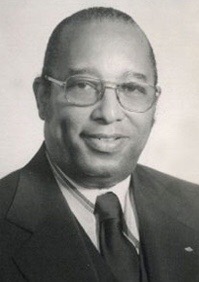
Little Rock Look Back: Charles Bussey

Future Little Rock Mayor Charles Bussey was born on December 18 in 1918. 

Throughout his life he was a trailblazer. He was the first African American Sheriff’s Deputy in Pulaski County and expanded the Junior Deputy program into the African American community.

In 1968 he became the first African American elected to the Little Rock City Board of Directors. He was not the first African American to run for the City Board, but he was the first to win a race. Mr. Bussey sought support not just from the African American community, but from all sectors of Little Rock.

Apparently, while campaigning in 1968, he deliberately went into the Arkansas headquarters of segregationist presidential candidate George Wallace to see about leaving campaign literature. A hulking man with a broad smile, he shocked the young receptionist. He was undoubtedly the first (and probably last) African American to enter that campaign headquarters.

He served from 1969-1977 and again from 1979 through 1991. In 1981 he was selected by his fellow City Directors to serve as Little Rock’s Mayor, which made him the first African American Mayor of Little Rock. He served as Vice Mayor of Little Rock for a total of 8.5 years which is the longest of anyone in the City’s history.

Throughout his lifetime Mayor Bussey championed youth outreach efforts. He also was active in the Arkansas Municipal League, National League of Cities, West Little Rock Rotary Club, Elks, Shriners and many other organizations.

In 2006 he was posthumously inducted into the Arkansas Black Hall of Fame. The previous year, 20th Street in Little Rock was renamed in his honor. In 2015 he was included in the Arkansas Civil Rights Heritage Trail.

The OXFORD AMERICAN received $25,000 Art Works grant from the National Endowment for the Arts

2e6b4_1320267846-oxa_logoLittle Rock-based Oxford American magazine was announced as a recipients of funding by the National Endowment for the Arts.

National Endowment for the Arts Chairman Jane Chu has approved more than $30 million in grants as part of the NEA’s first major funding announcement for fiscal year 2017. Included in
this announcement is an Art Works grant of $25,000 to the Oxford American to support the publication and promotion of the magazine in 2017.

“We are honored to receive National Endowment for the Arts funding through their Art Works program,” said Oxford American executive director Ryan Harris. “Art Works excels at providing democratized support opportunities for organizations like the Oxford American to continue their work. We are humbled to be amongst a select group of grant recipients.”

The Art Works category focuses on the creation of art that meets the highest standards of excellence, public engagement with diverse and excellent art, lifelong learning in the arts, and the strengthening of communities through the arts. “The arts are for all of us, and by supporting organizations such as the Oxford American, the National Endowment for the Arts is providing more opportunities for the public to engage with the arts,” said NEA Chairman Jane Chu. “Whether in a theater, a town square, a museum, or a hospital, the arts are everywhere and make our lives richer.”

The award granted to the Oxford American—a national magazine dedicated to featuring the best in Southern writing—will fund the publication of fiction, nonfiction, and poetry by both emerging and established authors.

“An investment in nonprofit publications like the Oxford American is an investment in the future of American letters,” said editor Eliza Borné. “We are grateful to receive funding from the National Endowment for the Arts for the second year in a row.”

Oxford American is a 501(c)(3) nonprofit arts organization and national magazine dedicated to featuring the very best in Southern writing, while documenting the complexity and vitality of the American South. The Oxford American is committed to the development of young individuals aspiring to work in the publishing industry and to the production and presentation of multidisciplinary arts events in and around Little Rock.

Billed as “A Magazine of the South,” it has won four National Magazine Awards—including the 2016 Award for General Excellence in the category of Literature, Science and Politics—and other high honors since it began publication in 1992. The magazine has featured the original work of such literary powerhouses as Charles Portis, Roy Blount, Jr., ZZ Packer, Donald Harington, Donna Tartt, Ernest J. Gaines, and many other distinguished authors, while also discovering and launching the most promising writers in the region. The magazine has also published previously unseen work by such Southern masters as William Faulkner, Eudora Welty, Walker Percy, James Agee, Zora Neale Hurston, James Dickey, and Carson McCullers. In 2007, the New York Times stated that the Oxford American “may be the liveliest literary magazine in America.” The Oxford American is published from the University of Central Arkansas.

1st ever winners of 12th Ever Nog-Off

thnogoff_tstHistoric Arkansas Museum’s 12th Ever Nog Off was Friday, December 9.
The winners have been announced.
The Judges were: Alexia Elichiryof Vive la Vieradio and De Nux Distributors, LLC, Becky Falkowski of Downtown Little Rock Partnership and Amy Kelley Bell of South on Main. Their favorite nog was the Capital Hotel Eggnog by Matthew Dunn and Ben Edwards, The Capital Hotel
The nog that got the most votes from the public was also Capital Hotel Eggnog by Matthew Dunn and Ben Edwards, The Capital Hotel.

The Not Your Great, Great, Great Grandfather’s Eggnog Award (a nod to Nicholas Peay’s place in the family of longtime museum director Bill Worthen, who makes Peay’s recipe each year) is given to the best unconventional nog.  The public voted for St. Elizabeth’s Spiked Nog by Elizabeth Strandberg of Loblolly Creamery and Seth Barlow of O’Looney’s Wine & Liquor

Little Rock Look Back: Gordon N. Peay, Little Rock’s 23rd Mayor

Mayor PeayOn December 12, 1819, future Little Rock Mayor Gordon Neill Peay was born.  The Peay family arrived in Arkansas from Kentucky in 1825.  They quickly became one of Little Rock’s leading families.  Mayor Peay’s father, Nicholas Peay served on the Little Rock Board of Trustees (which existed before the town was incorporated) and later served on the City Council and was acting mayor.

Godon N. Peay served as mayor of Little Rock from 1859 to 1861.  During the Civil War, Peay served as Captain and later Colonel of the Capital Guard.  He later received a pardon from the federal government.  In the days leading up to the Civil War and during it, Mayor Peay was one of a select group of civic leaders who corresponded with President Lincoln and other Union leaders. It has been said that this conciliatory tone is a reason that Little Rock fared better during Federal occupation and Reconstruction than did many other Confederate cities.

The Peay family owned the Peay Hotel, Little Rock’s first hotel, and were also co-founders of what became Worthen Bank.  They were also a founding family of Christ Episcopal Church. Mayor Peay later served as Pulaski County Chancery Clerk.

He died on December 14, 1876, and is buried at Mount Holly Cemetery along with many members of his family.  A nephew of his, Ashley Peay, served on the City Council in the 1920s.  Mayor Peay’s great-grandson Joseph Barber Hurst, Sr. served on the Little Rock City Board of Directors from 1967-1971. One of Mr. Hurst’s sons, Howard, was born on Mayor Peay’s birthday.

Science with Santa today at the Museum of Discovery!

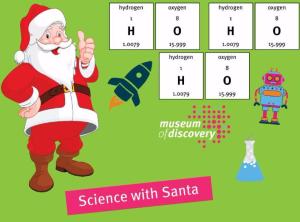
arkmod-science-santa“Hydrogen Oxygen, Hydrogen Oxygen, Hydrogen Oxygen”
That is how scientist Santa says “Ho Ho Ho.”
The Museum of Discovery today offers its popular annual Science with Santa!
  • Make shrinky dink ornaments, custom cookie cutters and gingerbread play dough!
  • Enjoy candy cane “experiments,” holiday science shows, hot chocolate and face-painting.
  • Meet museum animals, birds from Raptor Rehab of Central Arkansas and, of course, Santa Claus (and have your photo made with him!)
Science with Santa is included in regular museum admission ($10 for adults, $8 for children 12 and under and free for members and children under one.)
Purchase tickets online or at the door.