Brown Bag at Old State House today at noon – COURAGE, PROMINENCE, THEN OBSCURITY: THE LIFE OF EDWARD ALLEN FULTON

OSH Brown BagToday (March 10) at noon, Blake Wintory presents the Old State House’s March Brown Bag program on the life of Edward Allen Fulton.
Fulton was an African American leader, politician and newspaper editor in Arkansas during Reconstruction and subsequent years. Born a slave in Kentucky in 1833, Fulton spent his youth as a slave in Missouri before escaping and joining the abolitionist movement in Chicago. During the Civil War he worked as a recruiter for U.S. Colored Troops and arrived in post-war Arkansas in 1866.

In 1870 Drew County elected him to the Arkansas General Assembly as a Republican. Fulton sided with Joseph Brooks’ “Brindletail” or Reform Republicans and often clashed with the Regular Republicans, including Governor Powell Clayton. Throughout his career he championed the rights of African Americans and even led several Drew County families to western Iowa at the height of the Exoduster migration. Despite a colorful life that included an assassination attempt, Fulton died in relative obscurity in St. Louis in 1906.

Blake Wintory received his Ph.D. from the University of Arkansas in 2005. He is the on-site director at the 1859 Lakeport Plantation, an Arkansas State University Heritage Site in Chicot County. He serves on the board of Preserve Arkansas and the Friends of the Arkansas History Commission. In 2015 he published his first book, Images of Chicot County, and has published articles on Arkansas history in the Arkansas Historical Quarterly, the Arkansas Review, and the Encyclopedia of Arkansas History & Culture.

LR Women’s History Month – Ruth May Wassell Gibb

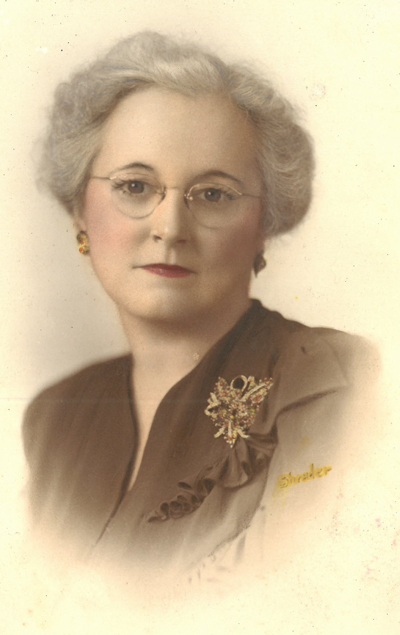
Ruth-May-Wassell-GibbOn August 27, 1944, Ruth May Wassell shattered a bottle on the hull of a new ship and christened it the U.S.S. Little Rock.  Mrs. Wassell, whose husband was Little Rock alderman Sam Wassell, had been designated as the official sponsor for the City of Little Rock by Mayor Charles Moyer.

Ruth May Wassell was more than the wife of a local political leader.  The daughter of Dr. and Mrs. Wiley Singleton May, she moved from Gurdon to Little Rock with her family and graduated from Little Rock High School. She later graduated from Henderson-Brown College and received a law degree from the University of Arkansas.  In 1932, she was admitted to the Arkansas Bar and later was admitted to practice before the Arkansas Supreme Court, one of the first women to receive this designation.

Mrs. Wassell was active in business, serving as president of the Arkansas Lumber Company  and owner of a citrus farm in Texas.  She was also active in civic affairs through involvement with the Arkansas Democratic Women, Boys Club and Second Presbyterian Church.  From 1947 until 1951 she was First Lady of Little Rock when Sam Wassell was elected as Mayor.

Following the December 1954 death of Mayor Wassell, she subsequently married E. W. “Bud” Gibb.  She died in 1964.

On International Women’s Day, see the Dorthea Lange’s America at the Arkansas Arts Center

Today is International Women’s Day. The Arkansas Arts Center currently features several exhibitions celebrating women artists.  One of them is Dorthea Lange’s America.  It is on display through May 8.

Dorothea Lange, American (Hoboken, NJ, 1895 – 1965, San Francisco, CA), Migrant Mother, Nipomo, California, 1936, gelatin silver print, Private Collection, © Dorothea Lange/Oakland Museum of California

Migrant Mother strikes the heart. Dorothea Lange’s iconic image of the Great Depression forces us to confront the humanity and strength of one woman struggling to get her family through the privations they face when there is no money. Dorothea Lange’s America brings together many of the photographer’s images made as she traveled across America during the 1930s documenting the suffering of unemployed or terribly underpaid agricultural workers and their families. Lange took these photographs as part of the photography program connected to the Farm Security Administration, a federal agency formed under the New Deal to assist poor farmers with loans and other programs.

Lange and her fellow FSA photographers recorded the lives of people coping with the dust bowl, bank and business failures, and the loss of their jobs and homes. We see the hopelessness of hungry men in breadlines and the shattered, abandoned cabin of a tenant farmer in the Mississippi Delta. But Americans did not give up. We also see the determination of men doing the grueling work of cutting lettuce for a pittance a day. And there is the radiant smile of an Arkansas mother who went to California to make a new start with her husband and eleven children. Such powerful images helped government agencies and representatives to understand the urgency of helping suffering Americans who had no other place to turn. 80 years later, these black and white documents of American endurance have not lost their impact.

Dorothea Lange’s America includes photographs made by Lange and her FSA colleagues, including Walker Evans, Ben Shahn, and Marion Post Wolcott. Depression-era photographs from photographers outside the FSA give a wider understand of the time. Here are striking visions by Mike Disfarmer, who worked as a portrait photographer in Heber Springs, Arkansas; and documentary images made from Oklahoma to Alabama by photographic artists including Lewis Hine, Doris Ulmann, and Willard Van Dyke. The exhibition continues with photographs Dorothea Lange made in the same spirit after the FSA was disbanded in 1943.

Little Rock Look Back: Count Casimir Pulaski

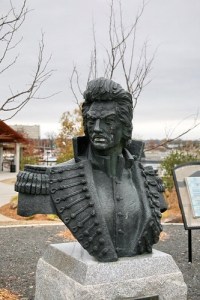
On March 6, 1745, Casimir Pulaski was born in Poland. A Polish nobleman and military commander he has been called a “father of the American cavalry.”

Born in Warsaw, he followed in his father’s footsteps he became involved in the military and the revolutionary affairs in Poland. Pulaski was one of the leading military commanders for the Bar Confederation and fought against Russian domination of Poland. When this uprising failed, he was driven into exile.

Following a recommendation by Benjamin Franklin, Pulaski emigrated to North America to help in the cause of the American Revolutionary War. He distinguished himself throughout the revolution, most notably when he saved the life of George Washington.

Pulaski became a general in the Continental Army, created the Pulaski Cavalry Legion and reformed the American cavalry as a whole. At the Battle of Savannah, while leading a daring charge against British forces, he was gravely wounded, and died shortly thereafter.

Pulaski is one of only eight people to be awarded honorary United States citizenship. He never married and had no descendants.

Arkansas is one of several states to have a county named in honor of Count Pulaski.  Pulaski County was Arkansas’s fifth county, formed on December 15, 1818.

William-Adolphe Bouguereau’s ADMIRATION at the Arkansas Arts Center through May 15

Now through May 15, the Arkansas Arts Center has a special piece of artwork on display!

William-Adolphe Bouguereau’s Admiration is in the Ted and Virginia Bailey Gallery.

Adoring young women gather around the youthful, winged figure of Cupid, the Roman god of love. The immortal boy playfully points his amorous arrow at a lovely maid who clasps her bosom as if the dart of love has, indeed, struck home. The beautifully crafted painting, its figures rendered with ideal proportions in flawless perspective, was clearly produced by a master. This painting by William-Adolphe Bouguereau displays the results as his training in the highest academic manner of the mid-19th century at the École des Beaux-Arts in Paris and other academies.

William-Adolphe Bouguereau, French (La Rochelle, France 1825 – 1905, La Rochelle, France), Admiration, 1897, oil on canvas, 58 x 78 in., Bequest of Mort D. Goldberg to the San Antonio Museum of Art, 59.46.

In 1850, the young artist won the Premier Grand Prix de Rome, the top academic art prize of the day, which enabled him to study classical art in Rome for four years. This began his career as the leading French academic artist of his day; he triumphantly exhibited year after year in the massive annual exhibition known as the Salon. While classical subject matter was supposedly the most proper and edifying material an academic artist of the 19th century could portray, Bouguereau’s success arose at least partially from his ability to infuse a sense of naughty fun into his classical nude figures. That is certainly on display in this delightfully sensual image, which was a success both at the Paris Salon of 1899 and the Paris Exposition Universelle of 1900.

This great neoclassical painting comes as a special loan from the San Antonio Museum of Art in exchange for an earlier loan from the Arkansas Arts Center of its 1914 Cubist masterpiece, Dos Mujers, painted by Diego Rivera when the Mexican artist was working in Paris early in his career. Admiration will be accompanied by a related drawing by Bouguereau. The painting and drawing will be complemented by a selection of academic figure drawings from the Arkansas Arts Center’s acclaimed collection of original works on paper. These will allow viewers to see how academic artists drew to study the figure so they could achieve the mastery we see in Bouguereau’s painting.

Have Fun and Learn as SCHOOLHOUSE ROCK LIVE! takes stage at Arkansas Arts Center Children’s Theatre

AAC CT SchoolhouseThe Schoolhouse Rock cartoon may be decades old now, but this fresh, live-theatre adaptation will spark the wide-eyed wonder of new discovery in our youngest generation while inviting smiles of toe-tapping, lip-synching nostalgia from the rest of us. Get ready to relive those fun-filled afternoons in front of the TV; Schoolhouse Rock Live! is coming to the Arkansas Arts Center Children’s Theatre March 4-25.

From “Just a Bill,” “Conjunction Junction,”  “Interplanet Janet” and more, every song in this live musical performance of the classic, Emmy Award-winning cartoon series “Schoolhouse Rock” is sure to please.  With performances Fridays at 7 p.m., Saturdays and Sundays at 2 p.m., March 4-25, and 2 p.m. matinee performances March 22-25, there are plenty of opportunities to see this show which makes learning grammar, science, math and history a delight!

The Arkansas Arts Center Children’s Theatre performance of Schoolhouse Rock Live! is directed by Katie Campbell. Costumes are designed by Erin Larkin, lighting design by Mike Stacks, scenic design by Miranda Young, choreography by Erin Fowler and Rivka Kupperman is the stage manager. Nicole Jovanovic and Cathleen Gleason are part of the run crew.

The cast includes:

  • Nick Spencer of Nashville TN. as Tom;
  • Jeremy Matthey of North Little Rock as George;
  • Samantha Harrington of Little Rock as Shulie;
  • Aleigha Morton of Beebe as Dori;
  • Geoffrey Eggleston of Sioux Falls, SD as Joe and
  • Paige Carpenter of Little Rock as Dina.

Schoolhouse Rock Live! was originally adapted and produced for the stage by Theatre BAM, from the series created by George Newall and Tom Yohe, based on an idea by David McCall; book by Scott Ferguson, George Keating and Kyle Hall. Music and lyrics by Lynn Ahrens, Bob Dorough, Dave Frishberg, Kathy Mandry, George Newall and Tom Yohe.

Schoolhouse Rock and the accompany play have strong ties to Arkansas. Robert Dorough, born in Cherry Hill, Ark., wrote and performed many of the original songs for the cartoon and the play. Scott Ferguson is the original director and author of Schoolhouse Rock Live! Not only is he a native of Sherwood,, but he is also an alumnus of the Arkansas Arts Center Children’s Theatre.

Get ready for the ultimate Throwback Thursday event with Schoolhouse on the Rocks—an adults-only singalong performance of Schoolhouse Rock Live! on Thursday, March 10. Before the play, enjoy a reception at 6 p.m. featuring themed cocktails, a cereal and Hiland Dairy milk bar with some of your favorite breakfast treats and a grownup spin on other classic childhood snacks. Tickets are $10 for members, $20 for non-members and include the reception and ticket to the show.

The Arkansas Arts Center Children’s Theatre will once again offer “Pay What You Can” preview performances. “Pay What You Can” tickets are available for the 7 p.m. Thursday preview performance of each Main Stage production. Tickets for the Schoolhouse Rock Live! preview on Thursday, March 3 must be purchased in person at the Arkansas Arts Center (501 East 9th Street) from 10 a.m. – 5 p.m. at the Stephens Inc. Visitors Center, or from 6-6:45 p.m. at the Children’s Theatre Box Office, Lower Lobby Level. The maximum ticket purchase of six tickets per person. Additional tickets can always be purchased in person, online or by phone at regular ticket pricing.

Schoolhouse Rock Live!

March 4-25, 2016

Show times: Fridays at 7 p.m., Saturdays and Sundays at 2 p.m.

Spring Break Matinee Performances:  March 22-25, 2016 at 2 p.m.

Ticket prices: $12.50 General admission, $10 for Arkansas Arts Center members, $10 per person for groups of 10 or more

Best enjoyed by all ages.

For more information and to purchase tickets, visit ArkansasArtsCenter.org/theatre.

Sandwich in History at Waldo E. Tiller House today at noon

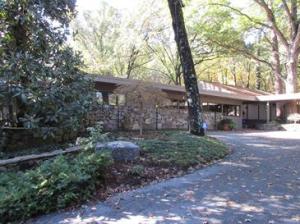
ahpp WaldoTillerHouseThe Arkansas Historic Preservation Program’s next “Sandwiching in History” tour will visit the Waldo E. Tiller House at 35 Sherrill Road in Little Rock beginning at noon today, (March 4).

Completed in 1954, the Tiller House was designed by Little Rock architect Dietrich Neyland, who worked for the firm of Ginocchio, Cromwell & Associates. The home’s modern design was inspired by the work of Neyland’s mentor, internationally-known architect Richard Neutra. Waldo Tiller was president of the Tiller Tie & Lumber Company. He also served as president and later, executive secretary, of the Arkansas Forestry Association. The Tiller House was remodeled in 2007 to provide necessary updates while preserving the home’s unique, Mid-Century Modern character.

The “Sandwiching in History” tour series targets Pulaski County structures and sites. The noontime series includes a brief lecture and tour of the subject property. Participants are encouraged to bring their lunches with them. The American Institute of Architects offers one HSW continuing education learning unit credit for members who attend a “Sandwiching in History” tour.

The tour is free and open to the public. For information, call the AHPP at (501) 324-9880, write the agency at 323 Center St., Suite 1500, Little Rock, AR 72201, send an e-mail message to info@arkansaspreservation.org, or visitwww.arkansaspreservation.org.

The AHPP is the Department of Arkansas Heritage agency responsible for identifying, evaluating, registering and preserving the state’s cultural resources. Other agencies are the Arkansas Arts Council, the Delta Cultural Center in Helena, the Old State House Museum, the Mosaic Templars Cultural Center, the Arkansas Natural Heritage Commission and the Historic Arkansas Museum.