Little Rock Look Back: Mayor Webb Hubbell

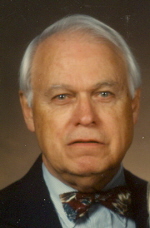
Mayor HubbellOn January 18, 1948, future Little Rock Mayor Webster “Webb” Hubbell was born. After playing football in high school, he played for the University of Arkansas Razorbacks.  He also received his law degree from the U of A.

At the age of 30, already a successful attorney, Hubbell was appointed to the Little Rock City Board of Directors to fill a vacancy in September 1978.  In 1980, he was elected to a four year term on the City Board.

In June 1979, there was a vacancy in the office of Mayor of Little Rock.  Hubbell was selected by his fellow City Directors to serve as Mayor until December 1980.  In January 1981, he was selected to serve another term as Mayor.  In June 1981, he stepped down as Mayor but continued to serve on the City Board of Directors.

In 1984, Hubbell was appointed to serve as Chief Justice of the Arkansas Supreme Court to finish out the term of Richard B. Adkisson.  Following his service on the court, he returned to the practice of law at the Rose Law Firm.  He later served as the Associate Attorney General in the Justice Department during the Clinton administration.

Hubbell resigned from the Justice Department due to an investigation related to Whitewater.  He has been an author and management consultant.  His novel, When Men Betray, was published by Beaufort Books in May 2014.  His next novel Ginger Snaps was released in May 2015.  A Game of Inches, another mystery novel, will be released in 2016.

Final day to see OUR AMERICA exhibit at the Arkansas Arts Center

Today is the final day to enjoy the Arkansas Arts Center exhibition Our America: The Latino Presence in American Art.  This major collection of modern and contemporary Latino art from the Smithsonian American Art Museum has been here since October.

The exhibition Our America includes 93 works in all media by 72 artists who participated in various artistic styles and movements, including abstract expressionism; activist, conceptual and performance art and classic American genres such as landscape, portraiture and scenes of everyday life.

Our America presents the rich and varied contributions of Latino artists in the United States since the mid-20th century, when the concept of a collective Latino identity began to emerge. The exhibition is drawn entirely from the Smithsonian American Art Museum’s pioneering collection of Latino art.


Our America features bilingual labels for each work and a Spanish-language website created by the Smithsonian American Art Museum. Select works also feature podcasts with the artist’s commentary. Museum goers can simply call a number, scan a QR code or visit a website for more background on the artist and background on each piece—in English and Spanish.

Artists featured in the exhibition reflect the rich diversity of Latino communities in the United States. Our Americashowcases artists of Mexican, Puerto Rican, Cuban and Dominican descent, as well as other Latin American groups with deep roots in the United States. By presenting works by artists of different generations and regions, the exhibition reveals recurring themes among artists working across the country.

The 72 artists featured in the exhibition are ADÁL, Manuel Acevedo, Elia Alba, Olga Albizu, Carlos Almaraz, Jesse Amado, Asco (Harry Gamboa Jr., Gronk, Willie Herrón and Patssi Valdez), Luis Cruz Azaceta, Myrna Báez, Guillermo Bejarano, Charles “Chaz” Bojórquez, María Brito, Margarita Cabrera, María Magdalena Campos-Pons, Melesio “Mel” Casas, Leonard Castellanos, Oscar R. Castillo, José Cervantes, Enrique Chagoya, Roberto Chavez, Carlos A. Cortéz, Marcos Dimas, Ricardo Favela, Christina Fernandez, Teresita Fernández, iliana emilia garcía, Rupert García, Scherezade García, Carmen Lomas Garza, Ignacio Gomez, Ken Gonzales-Day, Hector González, Luis C. “Louie the Foot” González, Muriel Hasbun, Ester Hernandez, Judithe Hernández, Carmen Herrera, Carlos Irizarry, Luis Jiménez, Miguel Luciano, Emanuel Martinez, María Martínez-Cañas, Antonio Martorell, Ana Mendieta, Amalia Mesa-Bains, Franco Mondini-Ruiz, Delilah Montoya, Malaquias Montoya, Abelardo Morell, Jesús Moroles, Raphael Montañez Ortiz, Pepón Osorio, Amado M. Peña Jr., Chuck Ramirez, Paul Henry Ramirez, Sophie Rivera, Arturo Rodríguez, Freddy Rodríguez, Joseph Rodríguez, Frank Romero, Emilio Sánchez, Juan Sánchez, Jorge Soto Sánchez, Rafael Soriano, Ruben Trejo, Jesse Treviño, John M. Valadez, Alberto Valdés and Xavier Viramontes.

The exhibition is organized by E. Carmen Ramos, curator of Latino art at the Smithsonian American Art Museum.

Our America: The Latino Presence in American Art is organized by the Smithsonian American Art Museum. Generous support for the exhibition has been provided by Altria Group, the Honorable Aida M. Alvarez, Judah Best, The James F. Dicke Family Endowment, Sheila Duignan and Mike Wilkins, Tania and Tom Evans, Friends of the National Museum of the American Latino, The Michael A. and the Honorable Marilyn Logsdon Mennello Endowment, Henry R. Muñoz III, Wells Fargo and Zions Bank. Additional significant support was provided by The Latino Initiatives Pool, administered by the Smithsonian Latino Center. Support for “Treasures to Go,” the museum’s traveling exhibition program, comes from The C.F. Foundation, Atlanta.

Our America is sponsored in Arkansas by Donna and Mack McLarty, The Brown Foundation, Inc., of Houston, Consulate of Mexico in Little Rock and Alan DuBois Contemporary Craft Fund. Media sponsors include ¡Hola! Arkansas and Telemundo Arkansas.

Little Rock Look Back: First Little Rock Council Meeting in 1832

TowncouncilplaqueOn January 16, 1832, Mayor Matthew Cunningham MD presided over Little Rock’s first council meeting. Since Little Rock did not yet have a government hall, the Mayor and his wife hosted the meeting at their house. The Cunninghams owned the entire block which was bordered by what is now Main Street, 3rd Street, Louisiana Street and 4th Street.

A plaque at 3rd and Main Street commemorates this meeting and was placed at the northeast corner of the block in the 1930s. The Cunningham’s house was likely closer to the southwest corner of the block.

The plaque is on the Fulk building which now houses CJRW. The block also includes the Mann on Main project, which is comprised of the buildings originally constructed for the Gus Blass Department store.  Bruno’s and Samantha’s are also on the block.

Little Rock was chartered as a town in November 1831 and elections were subsequently held. Dr. Cunningham outpolled Rev. W. W. Stevenson to become the first Mayor.

Joining Mayor Cunningham at the first meeting were the original four Town Council members – Charles Caldwell, Benjamin Clemens, David Holt and John McLain.

In 1931 a plaque, as part of Little Rock’s Centennial, a plaque was erected to note the first meeting. The plaque erroneously implies that the first meeting was in 1831. This mistake is understandable since the legislation incorporating Little Rock was approved in November 1831. The plaque also refers to the body as the City Council. It was, in fact, the Town Council. There would not be a City Council until 1835 when Little Rock was elevated to City status.

Little Rock Look Back: LR Mayor Martin Borchert

Mayor BorchertOn January 16, 1916, future Little Rock Mayor Martin Borchert was born in Stuttgart.  After graduating high school he moved to Little Rock.  During World War II, he served as a bomber.  He started work at ACME Brick and spent 21 years there before engaging in other business interests.  Among these businesses were Martin Borchert Co., ASCO Hardware, Dtection Systems Inc. and Component Systems Inc.  In 2005 he was inducted into the Arkansas Construction Hall of Fame.

Mayor Borchert was elected to the Little Rock City Board of Directors in 1964 and served from January 1965 through December 1968. He chose not to seek a second term.  In 1967 and 1968 he served as Mayor of Little Rock. During this time, he laid out the vision for what has become Riverfront Park along the Arkansas River.

Other civic achievements included being a member of the Board of the Little Rock Chamber of Commerce, being on the Governor’s Citizens Advisory Committee, a member of the Pulaski County Quorum Court, vice chairman of the Arkansas Planning Commission, and being on the Little Rock Air Force Base Community Council. In 1967 he served on the President’s National Advisory Council to the Small Business Administration. Mayor Borchert served on the Little Rock Water Commission, including a tenure as chairman. In 1985, he was chairman of the Metropolitan Transit Policy Board and as chairman oversaw the transfer of the Central Arkansas Transit system to the Central Arkansas Transit Authority. One of the achievements of which he was very proud of was that he was one of the very first in Arkansas to receive an Adopt the Highway road.

Mayor Borchert was married for 57 years to Rosemary “Biddy” Branch Borchert.  They had two children, a son, John “Topper” Borchert and a daughter, Leslie Borchert Wilson.  He died on May 11, 2007.

Evolution of Jazz and its place on 9th Street focus of forum by Clinton School, Oxford American and Mosaic Templars

jazz forumTonight (January 14) at 6pm at the Mosaic Templars Cultural Center, the Clinton School Speaker Series is presenting a forum on Jazz.  “Jazz: Evolution of an American Art Form and Its Place on 9th Street,” Jazz Symposium will be presented in partnership with the Oxford American and Mosaic Templars Cultural Center.

This panel discussion will be moderated by musician and lifelong jazz enthusiast, Chris Parker, and feature panelists Amina Claudine Myers (born in Blackwell, Ark.), a New York-based jazz singer and pianist; John Cain, a Little Rock-based activist and 9th Street historian; and Nathan Hood, a Hot Springs-based baritone saxophone player. The panel will share personal experiences as jazz musicians and lovers of the genre, as well as the art form’s historical context within the African American microeconomics that existed in U.S. cities prior to the Civil Rights movement.

At 7:30 p.m. — following the 60-minute symposium — a jazz ensemble led by Chris Parker will play a 60-minute set of music. Featured members of the ensemble will include bassist Bill Huntington, drummer Yvette ‘Babygirl’ Preyer, and saxophonist Nathan Hood. Parker, Huntington, Preyer, and Hood have worked with an impressive and wide range of musicians, including Ellis Marsalis, Dr. John, Benny Powell, Art Pepper, Isaac Hayes, and Harold Ousley, among others. Admission for the performance is $10 regular or $5 for students/artists.

Art+History Throwback Thursday: Museum of Fine Arts

MFA postcardOn February 9, Little Rock voters will have the chance to say Yes to improving the Arkansas Arts Center, MacArthur Museum of Arkansas Military History and MacArthur Park.

Leading up to that election is a good time to look back at the development of these two MacArthur Park sited museums.

The Museum of Fine Arts opened in October 1937.  The groundbreaking was held on January 3, 1936, with the cornerstone laid on October 6 of that year.  Nearly one year later, the Fine Arts Club held its first meeting in the building and hosted a grand open house on October 5, 1937.

The front doorway to the museum is visible today inside a gallery of the Arkansas Arts Center.

Today’s Old State House Museum Brown Bag Lecture – AIRDOME: A HISTORY OF THE AIRDOME THEATER IN ARKANSAS

OSH Brown BagToday (January 14)  at noon at the Old State House Museum, the first Brown Bag Lecture of 2016 takes place.

In the early 20th century, several of Arkansas’s small towns and smaller cities were host to Airdome theaters, an open-air movie theater. Ralph S. Wilcox of the Arkansas Historic Preservation Program presents a talk about these early theaters for a Brown Bag Lunch Lecture at the Old State House Museum on Thursday, January 14, at noon. Once the Airdome appeared on the scene in Arkansas, it grew in popularity relatively quickly. By the mid-1910s at least sixteen communities in Arkansas had Airdomes. However, they closed just as quickly as they opened, and had virtually all disappeared by the mid-1920s. Learn more

Wilcox is a native of Meadville, Pennsylvania, and obtained his B.A. in History from Westminster College in New Wilmington, PA, and his M.S. in Historic Preservation from Ball State University in Muncie, IN.

The Old State House Museum is an agency of the Department of Arkansas Heritage.