Today at noon, Mosaic Templar’s Cultural Center celebrates Kwanzaa

mtcc

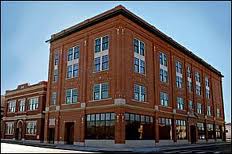
The Mosaic Templar’s Cultural Center, in partnership with the Sue Cowan Williams library, Pyramid Art Books and Custom Framing, and other community partners, will celebrate Kwanzaa from noon to 1 p.m. on Thursday, December 31.

MTCC’s Kwanzaa celebration is a citywide event that will celebrate the principle of Kuumba or creativity. This year’s event will feature saxophonist Ricky Howard and poet and educator Marquese McFerguson.

Kwanzaa is an African American holiday celebration that focuses on family, community, and culture.

The Mosaic Templar’s Cultural Center is an agency of the Department of Arkansas Heritage.

2015 In Memoriam – Jim Porter

1515 Porter

In these final days of 2015, we pause to look back at 15 who influenced Little Rock’s cultural scene who left us in 2015.

Jim Porter, Jr., spent a lifetime promoting music in Little Rock.  Along the way, he created social change as well.

A native of Little Rock, he graduated from Little Rock High School and the University of Arkansas.  After college, Jim started out in the family businesses and tried to follow a “traditional” path that his father had paved for him. Working in sales and public relations, he became active doing volunteer work.  Jim realized that the “traditional” path was not for him, and while working in the family businesses, he started bringing in top name entertainers, many of them black, to perform in Little Rock. He was not a singer, nor did he play any instrument, but his love for music and all things connected to music led him towards his calling as an agent/manager and promoter of musicians.

As a promoter of national artists and bands, Jim ran into southern racism and segregation. The Central High crisis in 1957 caused many black artists to refuse to come to Little Rock, fearful for their safety. Jim was forced to concentrate more on booking and managing local musicians through what was at the time Arkansas’ only full time booking and talent agency, Consolidated Talent Corporation (later to become Porter Entertainment). During his booking career from the late 50’s until his retirement in 2001, Jim placed talent across Arkansas (and even in Las Vegas) at clubs, hotels, restaurants, and private functions- anywhere that people needed entertainment.

Jim saw first hand the inequities of black musicians in Arkansas, the separate and very unequal accommodations, and the segregated venues. Never giving up promoting national artists, the 60’s led him and his co-investors to bring in such national names (mostly jazz artists) such as Louis Armstrong, Count Basie, Dizzy Gillespie, Al Hirt, Pete Fountain, Woody Herman, the Four Freshman, Dave Brubeck, George Shearing, Harry James and others.

In 1961, he was arrested for integrating a concert at Robinson Auditorium. A white man, he had entered the segregated balcony.  Knowing the challenges of booking acts in a segregated house (indeed Duke Ellington would cancel his booking at Robinson), Porter had tried to get the facility to change its rules.  It was 1966, when Louis Armstrong returned to Little Rock and played before an integrated house that the new rules were here to stay.  In the early 1970s, he helped bring the musical Hair to Little Rock, with the specter of full nudity causing consternation to Robinson Auditorium and some of the citizenry.

Jim was inducted into the Arkansas Entertainers Hall of Fame in 2005, and the Arkansas Jazz Heritage Foundation Hall of Fame in 2006. He was appointed to the Martin Luther King Commission in 2005 and entered politics to serve as a member of the Pulaski County Quorum Court from 1998 until 2006.

Always an entrepreneur, Jim also started MusAd Recording Studio, where commercial jingles were produced and bands could record demo tapes. The Hot Air Balloon Theatre (in the old Center Theatre on Main Street) was the site for G-movies and live entertainment for kids. The Yellow Rocket, an arcade in the “Heights” is still remembered by now middle-aged adults who spent afternoons and weekends feeding money into the game machines and eating snacks. Jim wrote several books, hosted TV shows (“After Five” and “Scene Around”) featuring restaurants, bars, clubs and their patrons and employees. He was featured on a weekly radio show about dining and entertainment, and wrote “Scene Around” columns and a dining and entertainment guide for the Arkansas Democrat.

Little Rock Look Back: Mayor J.G. Botsford

Botsford GraveOn December 30, 1838, future Little Rock Mayor Jefferson George Botsford was born in Port Huron, Michigan.  He married Charlotte Adelia Henry on June 13, 1867.  She had been born in Massachusetts, but moved to Little Rock with her parents and grandparents.

The couple had seven children: Nellie, Charlotte, Harriett, James, Edward, George and Charles. Nellie, James and Charles died in childhood.

Botsford had served in the Union Army and fought in frontier battles against Indians.  Among his commercial involvements in Little Rock were serving as mail contractor between Little Rock and Baton Rouge, proprietor of Anthony House, organizer of Merchants National Bank and president of the White River Valley & Texas Railroad.

In 1868, Botsford was elected to the Little Rock City Council.  The City Council suspended Mayor A. K. Hartman in February 1870.  Elected in 1869, he was disliked by the aldermen, the press and a portion of the public.  A court order overturned the suspension in June 1870.  In January 1871, Mayor Hartman was again suspended by the Council.  This time, Botsford was declared Mayor.  However Hartman also still claimed the title of Mayor through the remainder of his term in November 1871.

After stepping down as Mayor with the election of Robert Catterson in November 1871, Botsford returned to private life.  He died on October 29, 1915 and is buried at Mount Holly Cemetery.

2015 In Memoriam – Ozell Sutton

1515 Sutton

In these final days of 2015, we pause to look back at 15 who influenced Little Rock’s cultural scene who left us in 2015.

Ozell Sutton was a writer and eyewitness to history, while making some of his own too.

Born in Gould, he moved with his family to Little Rock and graduate from Dunbar High School and Philander Smith College. In 1950, he became the Arkansas Democrat‘s first African American reporter.

He was at Central High when the Little a Rock Nine integrated, marched with Dr Martin Luther King Jr. in Washington in 1963 and was with Dr King when he was assassinated in 1968.

He served as an aide to Gov. Winthrop Rockefeller from 1968 to 1970. From 1972 to 2003 he work for the U.S. Department of Justice Community Relations Service in Atlanta. In that capacity he was often on the forefront in efforts to diffuse racially tense situations.

In 1962, he received an honorary doctorate from Philander Smith in recognition of his political activism in the civil rights movement. He was awarded the Distinguished Service Award by the Department of Justice in 1994.  He also was awarded the Medallion of Freedom by the National Association for the Advancement of Colored People (NAACP).

In 2012, he was presented with the Congressional Gold Medal in recognition for his being one of the first African Americans to serve in the Marine Corps. His book “From Yonder to Here:” A Memoir of Dr. Ozell Sutton was published in 2009.  In 2013, he was honored by inclusion on the Arkansas Civil Rights Heritage This designation came for his work in 1963 to desegregate downtown Little Rock’s businesses.

Ozell Sutton was inducted into the Arkansas Black Hall of Fame in 2001.

Little Rock Look Back: Mayor Frederick Kramer

Mayor KramerOn December 29, 1829, future Little Rock Mayor Frederick G. Kramer was born in Halle, Prussia.  In 1848, he immigrated to the United States.  Kramer enlisted in the United States Army and served in the Seventh Infantry until his discharge at Fort Gibson, Indian Territory, in July 1857. After his discharge, Kramer settled in Little Rock, and became a citizen in 1859. He married Adaline Margaret Reichardt, an emigrant from Germany, in 1857. They had six children Louisa, Mattie, Emma, Charles, Fred, and Henry.

From 1869 to 1894, Kramer served on the Little Rock School Board.  He was the first School Board president.  Among his other civic activities were serving as president of the Masonic Mutual Relief Association, a founder of the Mount Holly Cemetery Commission, and a founder of Temple B’nai Israel.  In 1875 he and F. A. Sarasin opened a mercantile business. Kramer later became the president of the Bank of Commerce.

Frederick Kramer was elected Mayor of Little Rock in November 1873.  He served until April 1875, when a new Arkansas Constitution took effect.

From November 1869 through March 1875, the City Council President presided over City Council meetings and signed ordinances, performing many of the duties formerly ascribed to the Mayor.  As such, during his Mayoral tenure from 1873 to 1875, Kramer was the Chief Executive of the City but did not preside over Council Meeting.  When he had served on the City Council, however, Kramer had been elected President of the Council and had presided over Council meetings from October 1871 to May 1872

Kramer was returned to the Mayoralty in April 1881 and served three more terms leaving office in April 1887.  His tenure as an Alderman and as Mayor overlapped with his service on the school board.

A new Little Rock elementary school which opened in 1895 on Sherman Street was named the Fred Kramer Elementary School in his honor.  Though the building’s bell tower was removed in the 1950s, the structure still stands today.  It now houses loft apartments.

Frederick G. Kramer died on September 8, 1896, in Colorado Springs, Colorado.  A few months earlier, he had traveled there with his wife and daughter Emma to recuperate from an illness. He is buried in Oakland Cemetery.

15 Highlights of 2015 – Arkansas Arts Center exhibits “Our America” and “30 Americans”

Since the 1960s, the Arkansas Arts Center has worked to showcase artists from a variety of backgrounds.  This year, Dr. Todd Herman and his staff brought two outstanding exhibits to Little Rock.

From April to June, the Arkansas Arts Center was home to 30 Americans.

30americans30 Americans showcased works by many of the most important African American artists of the last three decades. This provocative exhibition focused on issues of racial, sexual, and historical identity in contemporary culture while exploring the powerful influence of artistic legacy and community across generations.

“This exhibition presents a sweeping survey of artwork by many of the most influential African-American artists of the last four decades,” said Arkansas Arts Center executive director Todd Herman. “For years, I’ve searched for an exhibition of this kind but couldn’t quite find what I was looking for – an exhibition with powerful interpretations of cultural identity and artistic legacy. When I came across 30 Americans, I knew this was exactly what I wanted patrons and visitors of the Arts Center to experience. These themes are universal in nature and speak to the larger human experience.”

30 Americans features work by such early and influential artists as Barkley L. Hendricks, Robert Colescott and Jean-Michel Basquiat, and those of younger and emerging artists, such as Kehinde Wiley, Wangechi Mutu and Shinique Smith. Often provocative and challenging, 30 Americans explores what it means to be a contemporary artist through an African-American point of view – whether addressing issues of race, gender, sexuality, politics or history.

Drawn from the collection of Mera and Don Rubell, 30 Americans contains 41 works in a variety of media – paintings, drawings, sculptures, installations, digital videos and photographs – by 30 of the leading contemporary African American artists. The Rubells began acquiring contemporary art in the late 1960s, often forging close friendships with living artists, particularly young artists.

On display since October and there until January 17, 2016 is Our America: The Latino Presence in American Art.

A major collection of modern and contemporary Latino art from the Smithsonian American Art Museum, the exhibition Our America includes 93 works in all media by 72 artists who participated in various artistic styles and movements, including abstract expressionism; activist, conceptual and performance art and classic American genres such as landscape, portraiture and scenes of everyday life.

Our America presents the rich and varied contributions of Latino artists in the United States since the mid-20th century, when the concept of a collective Latino identity began to emerge. The exhibition is drawn entirely from the Smithsonian American Art Museum’s pioneering collection of Latino art.

Artists featured in the exhibition reflect the rich diversity of Latino communities in the United States. Our Americashowcases artists of Mexican, Puerto Rican, Cuban and Dominican descent, as well as other Latin American groups with deep roots in the United States. By presenting works by artists of different generations and regions, the exhibition reveals recurring themes among artists working across the country.

The 72 artists featured in the exhibition are ADÁL, Manuel Acevedo, Elia Alba, Olga Albizu, Carlos Almaraz, Jesse Amado, Asco (Harry Gamboa Jr., Gronk, Willie Herrón and Patssi Valdez), Luis Cruz Azaceta, Myrna Báez, Guillermo Bejarano, Charles “Chaz” Bojórquez, María Brito, Margarita Cabrera, María Magdalena Campos-Pons, Melesio “Mel” Casas, Leonard Castellanos, Oscar R. Castillo, José Cervantes, Enrique Chagoya, Roberto Chavez, Carlos A. Cortéz, Marcos Dimas, Ricardo Favela, Christina Fernandez, Teresita Fernández, iliana emilia garcía, Rupert García, Scherezade García, Carmen Lomas Garza, Ignacio Gomez, Ken Gonzales-Day, Hector González, Luis C. “Louie the Foot” González, Muriel Hasbun, Ester Hernandez, Judithe Hernández, Carmen Herrera, Carlos Irizarry, Luis Jiménez, Miguel Luciano, Emanuel Martinez, María Martínez-Cañas, Antonio Martorell, Ana Mendieta, Amalia Mesa-Bains, Franco Mondini-Ruiz, Delilah Montoya, Malaquias Montoya, Abelardo Morell, Jesús Moroles, Raphael Montañez Ortiz, Pepón Osorio, Amado M. Peña Jr., Chuck Ramirez, Paul Henry Ramirez, Sophie Rivera, Arturo Rodríguez, Freddy Rodríguez, Joseph Rodríguez, Frank Romero, Emilio Sánchez, Juan Sánchez, Jorge Soto Sánchez, Rafael Soriano, Ruben Trejo, Jesse Treviño, John M. Valadez, Alberto Valdés and Xavier Viramontes.

The exhibition is organized by E. Carmen Ramos, curator of Latino art at the Smithsonian American Art Museum.

Our America: The Latino Presence in American Art is organized by the Smithsonian American Art Museum. Generous support for the exhibition has been provided by Altria Group, the Honorable Aida M. Alvarez, Judah Best, The James F. Dicke Family Endowment, Sheila Duignan and Mike Wilkins, Tania and Tom Evans, Friends of the National Museum of the American Latino, The Michael A. and the Honorable Marilyn Logsdon Mennello Endowment, Henry R. Muñoz III, Wells Fargo and Zions Bank. Additional significant support was provided by The Latino Initiatives Pool, administered by the Smithsonian Latino Center. Support for “Treasures to Go,” the museum’s traveling exhibition program, comes from The C.F. Foundation, Atlanta.

15 Highlights of 2015 – Kennedy Center President Deborah Rutter led panel at Clinton Presidential Center

Kennedy Center President Deborah Rutter addressing the audience. Photo by James Doyle

On October 21, 2015, Kennedy Center president Deborah Rutter and a distinguished panel of Arkansas educators and artistic directors discussed national trends in teaching the arts and humanities, while exploring new ways to give Arkansas schools access to combined national and local resources.

While no single cultural institution in Arkansas can match the reach & multi-disciplinary offerings of The Kennedy Center, Little Rock and Arkansas have many of the same resources distributed across multiple institutions. Educators and arts advocates from across the state participated in this very important conversation about the transformation of arts and humanities education in Arkansas through deeper collaboration between these institutions.
The program included two engaging panels.
Educator Discussion Panelists
  • Joy Pennington ( Moderator ), Executive Director, Arkansas Arts Council
  • Zinse Aggine, Teaching Artist and Musician
  • Jama Best, Senior Program Officer, Arkansas Humanities Council
  • Dr. Jeff Grubbs, Associate Professor, University of Arkansas at Little Rock
  • Lana Hallmark, Fine Arts Coordinator, Arkansas Department of Education
  • Melanie Landum, Executive Director, Arkansas A+ Schools
  • Dr. Lenore Shoults, Executive Director, The Arts & Science Center for Southeast Arkansas
Institution Discussion Panelists
  • Dr. Todd Herman  ( Moderator ), Executive Director, Arkansas Arts Center
  • Sericia Cole, Director, Mosaic Templars Cultural Center
  • Robert Hupp, Producing Artistic Director, Arkansas Repertory Theatre
  • Philip Mann, Music Director, Arkansas Symphony
  • Deborah Rutter, President, The Kennedy Center
  • Stephanie S. Streett, Executive Director, Clinton Foundation
This event was hosted by the Clinton Foundation; President’s Advisory Committee on the Arts member, Kaki Hockersmith; Mid-America Arts Alliance; Donna and Mack McLarty; and the Stella Boyle Smith Trust.