Little Rock Look Back: Elvis plays final Robinson Auditorium Show

Photo by Wayne Cranford

Photo by Wayne Cranford

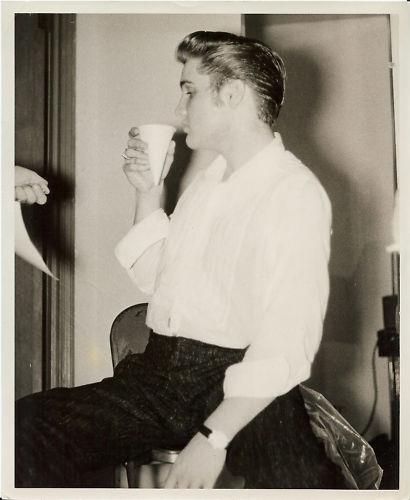
After two visits in 1955 where he was down on the bill, Elvis Presley made his third and final appearance at Robinson Auditorium on May 16, 1956.  This time he was the star and Robinson was packed. The tickets were $1.50 in advance at Walgreens and $2.00 at the box office.  The ads featured 8 great acts in “his” variety show which consisted of the Jordonaires; Rick and Emil Flaim and their orchestra; vocalists Frankie Conners and Jackie Little and comedian-magician Phil Maraquin. A second show was added at 9:30 p.m. to accommodate the ticket demand.

About 30 minutes late, due to a missed flight, Elvis appeared on stage in a purple blazer and started singing “Heartbreak Hotel.”  The crowd rushed the stage. Little Rock police officers were able to control them eventually and get the teenagers back to their seats.  While the crowd was impressed, the police officers were less so.  One of the patrolmen told the Arkansas Gazette reporter: “I wouldn’t know him if I saw him. And I wouldn’t be here unless I was being paid.”

Disc jockey Ray Green recorded the concert that night.  Copies of the concert on CD (which also includes an interview with Presley) are prized possessions of Presley collectors.

The Arkansas Democrat-Gazette has a special section on its website containing quotes from some of the concert attendees.


Heritage Month – U.S. Arsenal Tower Building

MacPark ArsenalToday is Armed Forces Day.  It is an appropriate day to look at the U. S. Arsenal Tower Building.  Construction on the Little Rock Arsenal began in 1838 and was completed in 1840.  The complex grew to include more than thirty buildings. The arsenal building itself was a two story brick building with an unusual central octagonal tower between two wings. The tower was actually used to move munitions between floors of the building. Other buildings included office buildings, a storehouse, a magazine, a guardhouse, a hospital and other service structures. The hospital and service structures were built of wood.

On 25 Jul 1873 the Little Rock Arsenal became the Little Rock Barracks and remained that until the facility was abandoned 25 Sep 1890. The tower building was converted into married officer quarters. Douglas MacArthur was born 26 Jan 1880, in the tower building at the Little Rock Barracks to then Captain Arthur MacArthur, Jr. and his wife.

The site was turned over to the city 23 Apr 1892, stipulated for use as a city park. In return, the City of Little Rock gave the U.S. Government 1,000 acres  on which Fort Logan H. Roots was established by the U.S. Congress on the same date, 23 Apr 1892. All of the remaining buildings on the original site were sold or destroyed except the Arsenal Tower building.

The land became known as City Park and later MacArthur Park.  The Tower Building remained empty and in deteriorating condition until the late 1930s, when the City of Little Rock renovated the building.  For many years, the Aesthetic Club met in the building as the only tenant.  When others refused to pay the utilities, the Aesthetic Club members did.  The organization continues to meet in the building.

In 1942, the Museum of Natural History and Antiquities opened in the building; it had previously been located in Little Rock’s City Hall. The name of the museum changed in 1964 to the Museum of Science and Natural History, and again in 1983 to the Arkansas Museum of Science and History. In 1997, the museum moved to a new location in the River Market, where it now is known as the Museum of Discovery.

In May 2001, the MacArthur Museum of Arkansas Military History opened in the building.

The structure was listed in National Register of Historic Places on July 28, 1970.  It was designated a National Historic Landmark on April 19, 1994.

On Armed Forces Day – Visit the MacArthur Museum of Arkansas Military History

Today is Armed Forces Day.  It is a good day to visit Little Rock’s museum devoted to Arkansas’ military heritage.  Located in the historic Arsenal Tower in MacArthur Park, the MacArthur Museum of Arkansas Military History honors the Arkansans who have served in the armed forces.  Exhibits feature artifacts, photographs, weapons, documents, uniforms and other military items that vividly portray Arkansas’s military history at home and abroad.

The exhibits include:

  • From Turbulence to Tranquility: The Little Rock Arsenal
  • Capital In Crisis and Celebration: Little Rock and the Civil War
  • Alger Cadet Gun
  • Camden Expedition
  • David Owen Dodd
  • Through the Camera’s Eye: The Allison Collection of World War II Photographs
  • By the President in the Name of Congress: Arkansas’ Medal of Honor Recipients
  • Conflict and Crisis: The MacArthur- Truman Controversy
  • Duty, Honor and Country: General Douglas MacArthur
  • The Sun Never Sets on the Mighty Jeep: The Jeep During World War II
  • War and Remembrance: The 1911 United Confederate Veterans Reunion
  • First Call – American Posters of World War I
  • Undaunted Courage, Proven Loyalty: Japanese American Soldiers in World War II
  • Vietnam, America’s Conflict

The MacArthur Museum of Arkansas Military History is a museum of the City of Little Rock.  It is led by executive director Stephan McAteer who works with the MacArthur Military History Museum Commission.  The museum is open Tuesday through Friday from 9am to 4pm, Saturday from 10am to 4pm and Sunday from 1pm to 4pm.

Little Rock Look Back: Mayor J. V. Satterfield

SatterfieldOn May 14, 1902, future Little Rock Mayor John Vines Satterfield, Jr. was born in Marion.   He grew up in Little Rock and Earle. J.V. was a star quarterback for the Earle football team and is featured in a painting of that team by respected painter Carroll Cloar.

Following high school, J.V. taught (including, much to his family’s amusement, a course in penmanship) and coached and sold Fords.  He then moved to Little Rock and sold insurance and later securities.  In 1931 he opened his own business; that same year he built a house at 40 Beverly Place in Little Rock, which would serve as his home until his death.

J. V. Satterfield was elected to serve as Mayor of Little Rock in 1939 and served one term, until 1941.  He was credited with saving the City from bankruptcy because of his fiscal policies. Among his efficiencies were the creation of a central purchasing office and using grass moved from the airport to feed the Zoo animals.  Though as a private citizen he had voted against the creation of a municipal auditorium in 1937, Mayor Satterfield fought valiantly to ensure that Robinson Auditorium opened to the public once he took office.  Shortly after he became Mayor, it was discovered that there were not sufficient funds to finish the construction. After the federal government refused to put in more money, he was able to negotiate with some of the contractors to arrange for the building to be completed. He also oversaw a successful special election to raise the money to finish the project.

Satterfield was a staunch supporter of the airport and worked to expand it.  He would serve as the chair of the first Municipal Airport Commission.  He also established the Little Rock Housing Authority (on which he would later serve on the board).  Mayor Satterfield also served as President of the Arkansas Municipal League in 1941.

Following the outbreak of World War II, Satterfield enlisted in the Army and was given the rank of a Major. He later was promoted to a Colonel and worked in the Pentagon during its early days.

In the late 1940s Satterfield became president of a small Little Rock bank called People’s Bank.  The bank changed its named to First National Bank when it moved into new offices at 3rd and Louisiana in 1953.  By focusing on smaller customers and courting corporate customers, Satterfield grew the bank into one of the state’s largest banks.  He maintained his desk in the lobby of the bank so he could interact with the customers and ensure they were having a positive experience.

Due to chronic health issues, Satterfield retired from the bank in 1964. He died in March 1966.

Heritage Month – Curran Hall

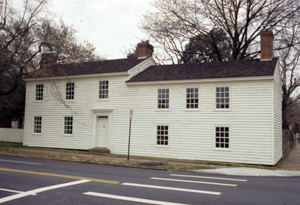
Curran HallCurran Hall, sometimes known as the Walters-Curran-Bell House, stands at 615 East Capitol Avenue and is one of the few remaining antebellum properties in Little Rock.  It was built in 1842 and was listed on the National Register of Historic Places on January 1, 1976.

Curran Hall was constructed in the Greek Revival style. The original one-story structure of the house was made with walls three bricks thick, cypress interior and exterior, and solid wood trimming and was settled on a raised foundation. The original interior floor plan was a four-room, central-hall type, although it was later added to by various owners. Each of the four rooms contains its original fireplace and classically designed mantel. The original interior of the house remains relatively undisturbed; however, the two rear additions have been fully transformed. In 1848, a children’s playhouse was constructed at the back of the house. The existing playhouse was reconstructed in the 1960s with materials from various historic houses in Little Rock.

Over the years, Curran Hall has been owned by several important Arkansas families. It changed hands fairly frequently from 1842 until the 1881.  At that point in time, Mary Eliza Bell, the daughter of Gazette founder William E. Woodruff moved in.  Her descendants stayed in the house until 1993.  In 1996, the structure was sold to the City of Little Rock.  The City’s Advertising & Promotion Commission and a private foundation raised money to restore the building.  After six years and $1.4 million, the house was formally opened to the public as the Little Rock Visitor Information Center on May 18, 2002.

In March 2007, the Quapaw Quarter Association took over the management of Curran Hall as the City’s official visitor information center.  The building is open daily for visitors to tour as well as learn about activities throughout the City.

Today, (Sunday, May 10), Curran Hall is one of the featured properties on the 51st Annual Quapaw Quarter Association Spring Tour of Homes.

Mother’s Day Little Rock Look Back: Eliza Bertrand Cunningham, Founding Mother of Little Rock

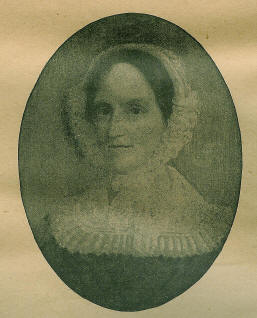
Eliza CunninghamEliza Wilson Bertrand Cunningham was the First Lady of Little Rock.  She literally was the first lady and the founding mother.

She became the first permanent female resident when she joined her husband Matthew Cunningham in Little Rock.  She gave birth to Chester Ashley Cunningham, the first baby born in Little Rock, as well as several other children with Cunningham.  When he became the first Mayor of Little Rock, she was the first First Lady of Little Rock. They hosted the first Little Rock Council meeting at their house on what is now the block downtown bounded by Third, Main, Fourth and Louisiana Streets.  Her son Charles P. Bertrand, from her first husband, later served as Mayor of Little Rock, making her the only woman to be married to a Mayor and be mother of a Mayor.

Born in Scotland in December 1788, she emigrated with her parents to the United States as a young girl.  In 1804 or 1805, she married a French businessman, Pierre Bertrand in New York City.  She lived in New York City, while he traveled to his various business ventures.  He never returned from a trip to his coffee plantation in Santo Domingo and was presumed to have died in 1808 or 1809.  She and Bertrand had three children, Charles Pierre, Arabella and Jane. (Jane may have died in childhood, because records and lore only indicated Charles and Arabella coming to Little Rock with their mother.)

Eliza married Dr. Matthew Cunningham in New York City.  He later moved to Saint Louis and settled in Little Rock in early 1820.  Eliza and her two children came to Little Rock in September 1820.  In 1822, she gave birth to Chester Ashley Cunningham, the first documented baby born in Little Rock.  (There are unsubstantiated reports that at least one slave child may have been born prior to Chester.)  She and Matthew also had Robert, Henrietta, Sarah and Matilda.  The latter married Peter Hanger, after whom the Hanger Hill neighborhood is named.

Dr. Cunningham died in June 1851.  Eliza died in September 1856. They and Chester (who died in December 1856) are buried in the Hanger family plot at Mount Holly Cemetery.

Heritage Month – Hinderliter House

HinderliterThe Hinderliter House is the oldest building still in existence in Little Rock.  It is now part of the Historic Arkansas Museum.

The Hinderliter Grog Shop began as a log structure in 1826-27 by Jesse Hinderliter, a man of German descent. It was his home and business, where he lived with his wife and two slaves until his death in 1834. Popular folklore associates the building with the last meeting of the territorial legislature of 1835. Red oak logs and cypress flooring were used in the grog shop’s construction. The clapboard siding and porch were later additions. Inside, the hand-carved federal mantel in the formal dining room shows that style was important, even in a log house on the frontier.

Many modifications were made to the building over the years.  Work to restore it in the late 1930s and again in the late 1960s removed many of these alterations.

The Hinterliter House and other structures on the Historic Arkansas Museum can be toured daily. They are being showcased today (May 9) as part of HAM’s 42nd Annual Territorial Fair.

The Hinderliter House was added to the National Register of Historic Places on March 5, 1970.