Today at noon, Mosaic Templar’s Cultural Center celebrates Kwanzaa

mtccThe Mosaic Templar’s Cultural Center, in partnership with the Sue Cowan Williams library, Pyramid Art Books and Custom Framing, and other community partners, will celebrate Kwanzaa from noon to 1 p.m. on Tuesday, December 30.

MTCC’s Kwanzaa celebration is a citywide event that will celebrate the principle of Nia (nee-AH), which means “to make our collective vocation the building and developing of our community in order to restore our people to their traditional greatness.”

Kwanzaa is an African American holiday celebration that focuses on family, community, and culture.

The Mosaic Templar’s Cultural Center is an agency of the Department of Arkansas Heritage.


Little Rock Look Back: Frederick Kramer, LR’s 31st and 33rd Mayor, first LR School Board President

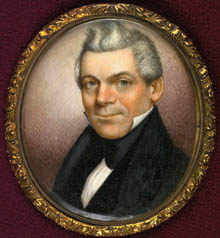
Mayor KramerOn December 29, 1829, future Little Rock Mayor Frederick G. Kramer was born in Halle, Prussia.  In 1848, he immigrated to the United States.  Kramer enlisted in the United States Army and served in the Seventh Infantry until his discharge at Fort Gibson, Indian Territory, in July 1857. After his discharge, Kramer settled in Little Rock, and became a citizen in 1859. He married Adaline Margaret Reichardt, an emigrant from Germany, in 1857. They had six children Louisa, Mattie, Emma, Charles, Fred, and Henry.

From 1869 to 1894, Kramer served on the Little Rock School Board.  He was the first School Board president.  Among his other civic activities were serving as president of the Masonic Mutual Relief Association, a founder of the Mount Holly Cemetery Commission, and a founder of Temple B’nai Israel.  In 1875 he and F. A. Sarasin opened a mercantile business. Kramer later became the president of the Bank of Commerce.

Frederick Kramer was elected Mayor of Little Rock in November 1873.  He served until April 1875, when a new Arkansas Constitution took effect.

From November 1869 through March 1875, the City Council President presided over City Council meetings and signed ordinances, performing many of the duties formerly ascribed to the Mayor.  As such, during his Mayoral tenure from 1873 to 1875, Kramer was the Chief Executive of the City but did not preside over Council Meeting.  When he had served on the City Council, however, Kramer had been elected President of the Council and had presided over Council meetings from October 1871 to May 1872

Kramer was returned to the Mayoralty in April 1881 and served three more terms leaving office in April 1887.  His tenure as an Alderman and as Mayor overlapped with his service on the school board.

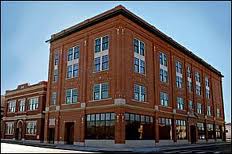
A new Little Rock elementary school which opened in 1895 on Sherman Street was named the Fred Kramer Elementary School in his honor.  Though the building’s bell tower was removed in the 1950s, the structure still stands today.  It now houses loft apartments.

Frederick G. Kramer died on September 8, 1896, in Colorado Springs, Colorado.  A few months earlier, he had traveled there with his wife and daughter Emma to recuperate from an illness. He is buried in Oakland Cemetery.

Hurst to lead Department of Arkansas Heritage

stacy-hurstYesterday Governor-Elect Asa Hutchinson announced that Stacy J. Hurst of Little Rock will be the next director of the Department of Arkansas Heritage.

“Stacy is extremely bright and hardworking, and she understands the importance of protecting and preserving our state’s incredibly rich history and culture. I have no doubt she will do a remarkable job in her new position as the director of the Department of Arkansas Heritage,” Hutchinson said.

As director of the agency, she will serve as the state’s chief preservation officer. She will oversee the Arkansas Arts Council, Arkansas Historic Preservation Program, Arkansas Natural Heritage Commission, Delta Cultural Center, Historic Arkansas Museum, Mosaic Templar’s Cultural Center, and Old State House Museum.

From January 2003 until December 2014, Hurst represented Ward 3 on the Little Rock City Board.  A native of Pine Bluff, she moved to Little Rock in 1985 after graduating from the University of Arkansas in Fayetteville with a degree in Communications.  Since 1996, she has worked at Tipton & Hurst, Inc.  Prior to that, she worked for Arkansas Children’s Hospital Foundation for twelve years, retiring from the organization as Vice President.

From January 2007 to December 2008, she served as Vice Mayor of the City of Little Rock.  Prior to her election to the City Board, she served as co-chair of the Vision Little Rock, Recreation and Tourism workgroup.  She also served as a member of the Little Rock Zoo Board of Governors from 2000 to 2002.

Hurst chaired the three (3)-year community-wide planning process that led to a vision and Master Plan for the renovation of War Memorial Park.  Since the plan was adopted by the Board, over $2 million has been devoted to improvements within this signature park.  She was instrumental in the revitalization of the Midtown Redevelopment Corridor.  These efforts started with the Statement of Expectations planning document and a Design Overlay District adopted by the Planning Commission and board of Directors.  As a result of this work, tens of millions of dollars of private investment in the Midtown Corridor that continues today.

She was founding chair and board member of the City Parks Conservancy, which raises money for the City’s parks.  She has served as chair of the Nature Conservancy Board of Trustees in Arkansas.  She is currently a sustaining member of the Junior League of Little Rock, after having led the League’s efforts to purchase and restore the historic Women’s City Club in downtown.  Her numerous other community memberships include the Nature Conservancy,Arkansas Arts Center, Youth Home Board of Trustees, Arkansas Women’s Forum, CARTI Foundation Board of Trustees, Little Rock Garden Club, First Tee of Arkansas Board of Trustees, Arkansas Children’s Hospital Auxiliary, Alzheimer’s Arkansas Advisory Board.

Little Rock Look Back: Ground Broken for Robinson Auditorium

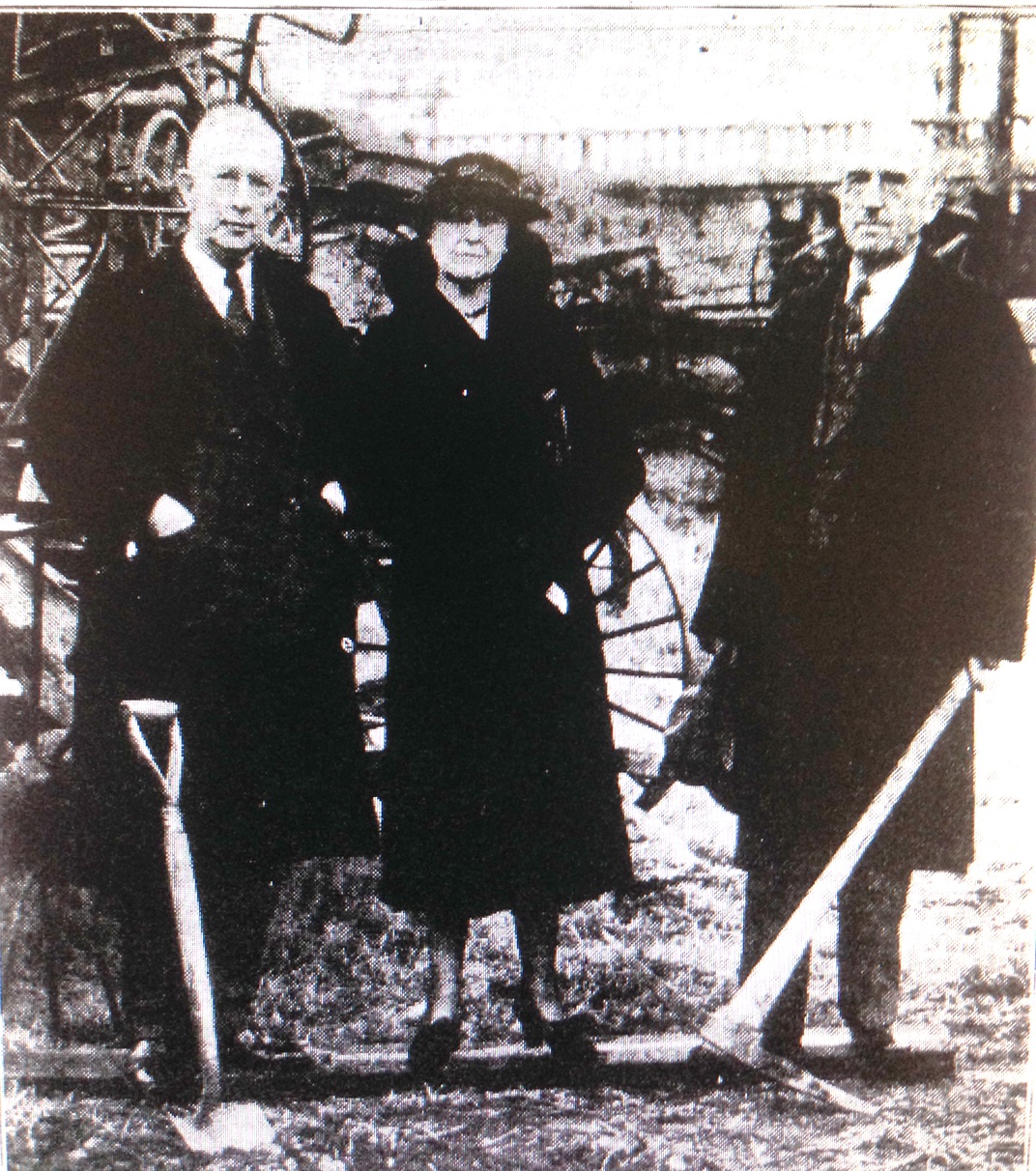
    ARKANSAS DEMOCRAT photo of Mayor Overman, Mrs. Robinson and Mr. Allaire at the groundbreaking. The Broadway Bridge balustrades are visible in the background.

ARKANSAS DEMOCRAT photo of Mayor Overman, Mrs. Robinson and Mr. Allaire at the groundbreaking. The Broadway Bridge balustrades are visible in the background.

On December 24, 1937, at 11:30 a.m., Little Rock Mayor R. E. Overman, Ewilda Gertrude Miller Robinson (the widow of Senator Joseph Taylor Robinson) and  Alexander Allaire of the PWA turned dirt to participate in the brief groundbreaking ceremony for Little Rock’s municipal auditorium.  That morning, the Arkansas Gazette ran a brief story on the upcoming groundbreaking.  The story mentioned that the building would be named in memory of the late beloved Arkansas politician.  This appears to be the first public pronouncement of the Robinson name for this civic structure.

Among others in attendance at the groundbreaking were Mrs. Charles Miller (sister-in-law of Mrs. Robinson), Mr. and Mrs. Grady Miller (brother and sister-in-law of Mrs. Robinson), the mayor’s wife, the three architects (George Wittenberg, Lawson Delony and Eugene John Stern), and D. H. Daugherty and Will Terry of the City’s Board of Public Affairs.

Construction had to start by January 1, 1938, in order to receive PWA funds.  By breaking ground on December 24, there was over a week to spare.  The site had been selected in late October 1937, and the purchase had not been finalized.  But the PWA did give permission for the City to let a contract for excavation, demolition and filling on the site.

The groundbreaking took place at the corner of Garland and Spring Streets which was on the northeast corner of the block set aside for the auditorium.  Today, Spring Street does not extend north of Markham; the street was closed to make way for the parking structure and what is now the Doubletree Hotel.  Garland Street is basically an alley that runs parallel to Markham north of City Hall, Robinson Auditorium and the Doubletree Hotel.

Approximate site of the 1937 groundbreaking. Once again it is a construction site as the Robinson renovation is underway.

Approximate site of the 1937 groundbreaking. Once again it is a construction site as the Robinson renovation is underway.

Little Rock Look Back: Roswell Beebe, LR’s 16th Mayor

Mayor BeebeOn December 22, 1795, future Little Rock Mayor Roswell Beebe was born in Hinsdale, New York.  His family were wealthy English immigrants.  At seventeen, Beebe went to New Orleans and fought with Andrew Jackson in the 1815 Battle of New Orleans.  He stayed in the Crescent City for the next two decades building successful lumber and brick businesses.

Due to health concerns, he moved north to a drier climate in 1834.  After first stopping in Fulton, Arkansas, he settled in Little Rock in 1835 at the age of forty.  He stayed at the home of Chester Ashley and married Ashley’s sister-in-law, Clarissa Elliott.  He and Clarissa had two children, Roswell and Cora.

For nearly 30 years, Little Rock had a complicated history of deeds, titles and land ownership.  In 1839, Beebe went to Washington DC and received the original patent from President Martin Van Buren.  He then set about clearing up the land and title issues, as well as drawing up a plan for the city and laying off blocks and streets.  Beebe deeded the streets and alleys to the City for a dollar.  He also donated the land on Markham Street for a new State Capitol building (now home of the Old State House Museum).  Along with his brother-in-law Chester Ashley, he donated the land for the establishment of Mount Holly Cemetery.

In 1848, Beebe was elected to the Little Rock City Council.  The following year, he was elected Mayor.  He served as Mayor of Little Rock from April 1849 to February 1850.

While his primary business focus in the 1840s had been real estate, in the 1850s he focused on railroads.  Beebe was named president of the Cairo and Fulton Railroad Company in 1853.

While on a visit to New York, Beebe died on September 27, 1856.  His body was returned to Little Rock, and Roswell Beebe was buried at Mount Holly Cemetery.  The town of Beebe, Arkansas, is named in his honor.

Little Rock Look Back: Dr. John J. McAlmont, LR’s 25th Mayor and a founder of UAMS

McAlmontJohnJ_fFuture Little Rock Mayor John Josephus McAlmont was born on this date in 1821 in New York state. (Various reports give his birth date as December 22 — but the family reports December 19 as the date.)

After studying medicine in Pennsylvania and Ohio, he arrived in Little Rock in March 1850 with his family.  After practicing medicine in nearby Benton, he returned to Little Rock in 1852.  In addition to being a physician, he was a pharmacist.

During the Civil War, he relocated his family out of Little Rock (to a spot where the present day community of McAlmont bears his name).  Following the war, he moved them back to the City.  In 1866 he was elected Mayor of Little Rock, the first elected Mayor since local government resumed following the Civil War.

In October 1879, he and seven other physicians founded the Arkansas Industrial University Medical Department in Little Rock. This institution has grown into the University of Arkansas for Medical Sciences.  He served on the faculty of the medical school for several years.

Dr. McAlmont died in September 1896.  He is buried at Mount Holly Cemetery.  In addition to the McAlmont community bearing his name, there is a McAlmont street in downtown Little Rock which was named in his memory.

Little Rock Look Back: School Children Sing Christmas Carols at Robinson Auditorium

Christmas Carols

Photo from Arkansas Gazette

Right now, music is silenced at Robinson Center.  During the renovation, violins and tubas have been replaced by saws and heavy equipment.

Similarly, 75 years ago, the halls of that building were alive with only the sounds of construction.  But out front, on December 18, 1939, the sounds of Christmas carols filled the air.

That afternoon, 500 school children from elementary schools were joined by the A Capella Choir of Little Rock High School as they sang Christmas carols on the front steps of the auditorium on a weekday afternoon.  The singers were accompanied by the Little Rock High School Brass Sextet.  The invocation for the event, which was sponsored by the Little Rock Council of Parents and Teachers, was delivered by the Right Reverend Richard Bland Mitchell, the Episcopal Bishop of Arkansas.

A Christmas tree in front of City Hall was lit up as part of the ceremony as well.  Media coverage noted that the audience witnessing the program stood on the front steps of the Pulaski County Courthouse, the side lawn of City Hall and in front of the steps of Robinson Auditorium.  It was also noted that most windows in the nearby government buildings were filled with people watching the ceremony.