Elvis Has Left the Building (Robinson Center, that is) – May 16, 1956

Photo by Wayne Cranford

After two visits in 1955 where he was down on the bill, Elvis Presley made his third and final appearance at Robinson Auditorium on May 16, 1956.  This time he was the star and Robinson was packed. The tickets were $1.50 in advance at Walgreens and $2.00 at the box office.

The ads featured 8 great acts in “his” variety show which consisted of the Jordonaires; Rick and Emil Flaim and their orchestra; vocalists Frankie Conners and Jackie Little and comedian-magician Phil Maraquin. A second show was added at 9:30 p.m. to accommodate the ticket demand.

About 30 minutes late, due to a missed flight, Elvis appeared on stage in a purple blazer and started singing “Heartbreak Hotel.”  The crowd rushed the stage. Little Rock police officers were able to control them eventually and get the teenagers back to their seats.  While the crowd was impressed, the police officers were less so.  One of the patrolmen told the Arkansas Gazettereporter: “I wouldn’t know him if I saw him. And I wouldn’t be here unless I was being paid.”

Disc jockey Ray Green recorded the concert that night.  Copies of the concert on CD (which also includes an interview with Presley) are prized possessions of Presley collectors.

The Arkansas Democrat-Gazette has a special section on its website containing quotes from some of the concert attendees.

Little Rock Look Back: Date set for 1959 Recall Election

On May 15, 1959, the Pulaski County Election Commission met to discuss the competing efforts to recall members of the Little Rock School Board.

The day prior, the Pulaski County Clerk had certified that petitions had enough valid signatures to have an election about recalling School Board members Ed McKinley, Robert Laster and Ben Rowland. There were also enough valid signatures to put before voters the recall of Ted Lamb, Everett Tucker and Russell Matson.

Because all of the school board members were to be on the ballot, the Election body decided to list them each alphabetically.  For each person there would be the question as to whether he should be recalled and voters would indicate “yes” or “no.”

The date of May 25, 1959, was set for the election.

It would be open to anyone with a valid 1958 poll tax receipt.  Voters must also live within the Little Rock School District boundaries (which were not coterminous with the city limits). They must have been residents of Arkansas for a year by election day, residents of Pulaski County for six months, and resided within their precinct for 30 days.

Meanwhile supporters of both trios were hard at work.  STOP had been in existence for a week to promote the efforts to recall the segregationist faction of the school board.  While the Central High Mothers League and Capitol Citizens Council had been working to recall the other three members of the school board, rumors were swirling about the emergence of a new organization which sought to fight for segregation.

Remembering the 23 LRPD Officers killed in the line of duty

May 15 each year is set aside as Peace Officers Memorial Day during Police Week.  Last Friday, the City of Little Rock paid tribute to the 23 men who were Little Rock Police Officers killed in the line of duty since the department was founded in 1866.

These were veterans and newcomers. They were white and African American.  They held the rank of Patrolman, Detective, Sergeant and Lieutenant.  Some had been on the force just a few years while one had over thirty years service in the LRPD uniform.

The details of each incident are tragic in their own way. But regardless of the circumstances which led to their death, it is important to remember that each of them gave their life in service to the citizens of Little Rock.

Patrolman William L. Copeland
December 30, 1885
Killed after being assaulted

Patrolman W. T. Phillips
August 1, 1908
Shot and killed while attempting an arrest

Patrolman John O. Miller
April 23, 1911
Shot and killed while attempting an arrest

Sergeant William I. Campbell
April 18, 1912
Shot and killed while investigating a disturbance

Detective Sam Morgan
October 30, 1915
Killed in a shootout while attempting an arrest

Patrolman Joe Erber
June 30, 1920
Shot and killed while responding to a disturbance

Patrolman Thomas D. Hudson
August 19, 1920
Shot and killed while attempting an arrest

Detective Sergeant John W. Cabiness
August 12, 1922
Accidentally shot and killed by a law enforcement official from another agency

Detective Sergeant George W. Moore
July 24, 1923
Shot and killed instantly while on an investigation with Detective Sergeant Luther Hay

Detective Sergeant Luther C. Hay
July 26, 1923
Died from injuries after being shot while on an investigation with Detective Sergeant George Moore

Patrolman Charles B. Faulkner
July 13, 1924
Died from injuries in a motorcycle accident while responding to a call

Patrolman Harvey L. Biggs
July 27, 1924
Shot and killed while investigating a burglary

Patrolman Frank E. Swilling Sr.
December 11, 1926
Died due to injuries received after being struck by a car while serving a summons

Patrolman Robert A. Johnson
March 23, 1930
Killed when his police motorcycle was struck by a car

Detective Samuel Neal McDermott
September 3, 1930
Died from injuries after being shot while attempting an arrest

Detective Oscar F. Deubler
January 1, 1947
Killed by an officer under investigation who mistakenly thought Lt. Deubler had testified against him. After killing Lt. Deubler, the officer killed himself.

Patrolman Lloyd W. Worthy
September 2, 1967
Shot and killed while investigating suspicious activity

Patrolman Alvin Joseph Free
September 27, 1970
Killed in an automobile accident while responding to backup an officer

Detective Noel Don McGuire
May 14, 1980
Shot in the back and killed while working a vice detail

Patrolman David Barnett
February 13, 1991
Shot and killed while trying to stop an armed robbery

Patrolman Henry L. Callanen
May 15, 1993
Shot and killed while making a bank deposit in an off-duty job

Detective Joseph Tucker Fisher
February 7, 1995
Shot and killed while serving a narcotics search warrant

Patrolman Jack David Cooper
February 2, 2002
Died from a gunshot wound received the previous day when respondeding to a disturbance



Little Rock Look Back: Mayor J. V. Satterfield

On May 14, 1902, future Little Rock Mayor John Vines Satterfield, Jr. was born in Marion.   He grew up in Little Rock and Earle. J.V. was a star quarterback for the Earle football team and is featured in a painting of that team by respected painter Carroll Cloar.
Following high school, J.V. taught (including, much to his family’s amusement, a course in penmanship) and coached and sold Fords.  He then moved to Little Rock and sold insurance and later securities.  In 1931 he opened his own business; that same year he built a house at 40 Beverly Place in Little Rock, which would serve as his home until his death.

J. V. Satterfield was elected to serve as Mayor of Little Rock in 1939 and served one term, until 1941.  He was credited with saving the City from bankruptcy because of his fiscal policies. Among his efficiencies were the creation of a central purchasing office and using grass moved from the airport to feed the Zoo animals.

Though as a private citizen he had voted against the creation of a municipal auditorium in 1937, Mayor Satterfield fought valiantly to ensure that Robinson Auditorium opened to the public once he took office.  Shortly after he became Mayor, it was discovered that there were not sufficient funds to finish the construction. After the federal government refused to put in more money, he was able to negotiate with some of the contractors to arrange for the building to be completed. He also oversaw a successful special election to raise the money to finish the project.

Satterfield was a staunch supporter of the airport and worked to expand it.  He would serve as the chair of the first Municipal Airport Commission.  He also established the Little Rock Housing Authority (on which he would later serve on the board).  Mayor Satterfield also served as President of the Arkansas Municipal League in 1941.

Following the outbreak of World War II, Satterfield enlisted in the Army and was given the rank of a Major. He later was promoted to a Colonel and worked in the Pentagon during its early days.

In the late 1940s Satterfield became president of a small Little Rock bank called People’s Bank.  The bank changed its named to First National Bank when it moved into new offices at 3rd and Louisiana in 1953.  By focusing on smaller customers and courting corporate customers, Satterfield grew the bank into one of the state’s largest banks.  He maintained his desk in the lobby of the bank so he could interact with the customers and ensure they were having a positive experience.

Due to chronic health issues, Satterfield retired from the bank in 1964. He died in March 1966.

Mother’s Day in Little Rock: Founding Mother Eliza Cunningham

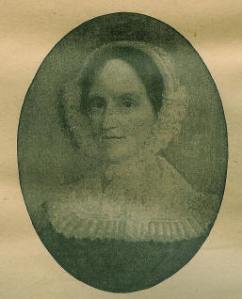
Eliza Wilson Bertrand Cunningham was the First Lady of Little Rock.  She literally was the first lady and the founding mother.

She became the first permanent female resident when she joined her husband Matthew Cunningham in Little Rock.  She gave birth to Chester Ashley Cunningham, the first baby born in Little Rock, as well as several other children with Cunningham.  When he became the first Mayor of Little Rock, she was the first First Lady of Little Rock. They hosted the first Little Rock Council meeting at their house on what is now the block downtown bounded by Third, Main, Fourth and Louisiana Streets.  Her son Charles P. Bertrand, from her first husband, later served as Mayor of Little Rock, making her the only woman to be married to a Mayor and be mother of a Mayor.

Born in Scotland in December 1788, she emigrated with her parents to the United States as a young girl.  In 1804 or 1805, she married a French businessman, Pierre Bertrand in New York City.  She lived in New York City, while he traveled to his various business ventures.  He never returned from a trip to his coffee plantation in Santo Domingo and was presumed to have died in 1808 or 1809.  She and Bertrand had three children, Charles Pierre, Arabella and Jane. (Jane may have died in childhood, because records and lore only indicated Charles and Arabella coming to Little Rock with their mother.)

Eliza married Dr. Matthew Cunningham in New York City.  He later moved to Saint Louis and settled in Little Rock in early 1820.  Eliza and her two children came to Little Rock in September 1820.  In 1822, she gave birth to Chester Ashley Cunningham, the first documented baby born in Little Rock.  (There are unsubstantiated reports that at least one slave child may have been born prior to Chester.)  She and Matthew also had Robert, Henrietta, Sarah and Matilda.  The latter married Peter Hanger, after whom the Hanger Hill neighborhood is named.

Dr. Cunningham died in June 1851.  Eliza died in September 1856. They and Chester (who died in December 1856) are buried in the Hanger family plot at Mount Holly Cemetery.

World War I is focus at Old State House today

Join the Old State House Museum from 10 a.m. to 3 p.m. on May 12 to explore what life was like for Arkansans during WWI. Visitors can meet a variety of living history interpreters portraying the men and women who helped with the Great War Effort, including:

• Soldiers who will give first-hand demonstrations on infantry, cavalry and artillery training methods
• Suffragists
• Red Cross nurses
• Women working on food conservation programs
• Donut Dollies with the Salvation Army
• Silhouette artist

There will be games and hands-on activities ongoing throughout the day.

Admission is free. The museum can validate parking at the DoubleTree hotel; metered parking near the museum is free on weekends.

45th Historic Arkansas Museum Territorial Fair today from 10 to 4

hamlogoHistoric Arkansas Museum will host the 45th Annual Territorial Fair on Saturday, May 12, from 10 a.m. to 4 p.m. This popular annual event is a fun and free opportunity for adults and children of all ages to experience what life was like during Arkansas’s Territorial era. Living history performances, blacksmith demonstrations, historical dances and pioneer games will be happening on the museum’s historic grounds, a preserved and meticulously recreated section of an early downtown Little Rock neighborhood.

Pioneer games and crafting
Cooking and blacksmithing demonstrations
Living history with the Early Arkansas Reenactors Association
Animals from Heifer International
Mother’s Day cards in the Old Print Shop with print blocks designed by Neal K Harrington
Performances by the Arkansas Country Dance Society
Live music by Suzanne and Jim
Balloon art with Hanson’s Balloon Twisting
FREE Loblolly Creamery ice cream and Diamond Bear Brewing Company root beer
Heritage food from Cypress Knee Food Truck

The Museum Store will be open for Mother’s Day shopping with a variety of unique Arkansas-made gifts and books.

Historic Arkansas Museum is a historic site museum of Arkansas’s frontier days. Five pre-Civil War houses, on their original block, are restored to antebellum appearances, so you can learn about life pre-Civil War in Arkansas. Guided tours of the historic houses encounter actors portraying original residents, making it easy to step back in time and learn about the history of Arkansas.