
LR Women Making History – Ellen Turner Carpenter

Ellen Turner Carpenter was born on July 30, 1916 on West Ninth Street.  At the time of her death at the age of 93, her life had come full circle.

As a young girl, she was an active participant in the thriving African American life along west Ninth Street in downtown Little Rock. She attended many events at the Mosaic Templars Hall which sat at Ninth and Broadway.

A longtime Little Rock educator, she became the moving force behind preserving the Mosaic Templars building in the 1980s.   In 1992, she became president of the Mosaic Templars Building Preservation Society, which worked to preserve the Mosaic Templars building in Little Rock to create a museum for black history in Arkansas. Mrs. Carpenter served as president of the society until her death.

In the 1990s, the City of Little Rock purchased the building to keep it stable while the Preservation Society sought to raise the funds.  Due to lobbying efforts led by Mrs. Carpenter, the State of Arkansas purchased the building from the City with the intention of turning it into a museum under the auspices of the Department of Arkansas Heritage.  At a ceremony in 2003, Vice Mayor Willie Hinton handed the keys of the building to Governor Mike Huckabee with Mrs. Carpenter nearby beaming.  Governor Huckabee appointed her to the state advisory committee for this new museum.  She would serve as chair of that committee.

On March 16, 2005, tragedy struck.  The building burned to the ground.  That afternoon at a press conference at the State Capitol, leaders expressed their resolve that the project would move forward with a new building following the original design.  One of the speakers that afternoon was Mrs. Carpenter. She started out in her usual quiet voice. But as she recalled her youth spent at the Mosaic Templar’s building, the years melted away. She demonstrated some of the step dancing she had done as a teenager.

On September 20, 2008, she presided over the grand opening of the new Mosaic Templars Cultural Center. It was the culmination of 15 years of official work and many more years of dreaming.  At the ceremonies, she declared “We made it!” “We made it! We made it!”

Mrs. Carpenter remained an active supporter of the MTCC until her death on July 27, 2010, just three days shy of her 94th birthday.

Throughout her life she wore many hats (including numerous ones to church on Sunday). She was an educator, neighborhood organizer, and public servant. Everyone who met her was positively impacted by her.  Due to her vision and endurance, thousands each year are still positively impacted by her when they visit the Mosaic Templars Cultural Center.  Fittingly, the conference room at MTCC is named in her memory.

LR Women Making History – Charlie May Simon

Charlie May Simon is known today for being the eponym of a children’s literature award. But during her lifetime she was a prolific author for children and for adults.

Born in South Arkansas, she was raised in Memphis and then resided in Chicago and Paris. With her then-husband (who would serve as illustrator for her books even after they divorced) she moved to Perry County in the 1930s. She returned to writing, with Robin on the Mountain being published in 1934.  In 1936, she married longtime friend and Arkansas poet John Gould Fletcher. The couple resided in Little Rock.

Following his 1950 death, Simon continued to live in Little Rock, though she traveled all over the world. Her books for children and adults covered a variety of topics and themes.

In 1971, the Arkansas Department of Education named its annual Children’s Literature Award the Charlie May Simon Award.

After her death in 1977, she was buried next to her husband in Mount Holly Cemetery.

LR Women Making History – Adolphine Fletcher Terry

Adolphine Fletcher Terry was born on November 3, 1882 to former Little Rock Mayor John Gould Fletcher and his wife Adolphine Krause Fletcher.

Raised in Little Rock, in 1889 she moved into the Albert Pike House on East 7th Street, when her aunt transferred the title to her father. That house would be her primary residence the rest of her life.  Her sister Mary Fletcher Drennan never lived in Arkansas as an adult after marriage. Her brother John Gould Fletcher spent much of his adulthood in Europe before returning to Little Rock and establishing his own house, Johnswood.

At age 15, Adolphine attended Vassar. She later credited that experience as broadening her views on many issues.  After graduating at age 19, she returned to Little Rock.  Her parents both died prior to her 1910 wedding to David D. Terry, which took place at what was then known as the Pike-Fletcher House (and today is known as the Pike-Fletcher-Terry House).

She is perhaps best known today for establishing the Women’s Emergency Committee in 1958 and for her subsequent deeding of the family house to the City for use by the Arkansas Arts Center.  But her entire life was based on civic engagement.

She was instrumental in establishing the first juvenile court system in Arkansas and helped form the first school improvement association in the state. She was long an advocate for libraries, serving 40 years on the Little Rock public library board.  Through her leadership, the library opened its doors to African Americans in the early 1950s. Today a branch of the Central Arkansas Library System (the successor the Little Rock public library) is named after her.  Another branch is named after her Pulitzer Prize winning brother.

Adolphine formed the Little Rock chapter of the American Association of University Women, the Pulaski County tuberculosis association and the Community Chest.

In 1958, when the Little Rock public high schools were closed instead of allowing them to be desegregated again, she called Harry Ashmore the editor of the Gazette and exclaimed, “the men have failed us…it’s time to call out the women.”  With this, she formed the Women’s Emergency Committee to Open Our Schools. This group played a major role in getting the four high schools open the following year.

From 1933 to 1942, David Terry served in the U.S. Congress. During that time, Adolphine alternated her time between Washington DC and Little Rock. But she spent much time in Little Rock raising her five children.

After her husband’s death in 1963, she continued to remain active in civic affairs. In the 1960’s, she and her sister deeded the Pike-Fletcher-Terry House to the City of Little Rock for use by the Arkansas Arts Center upon both their deaths.  Following Adolphine Fletcher Terry’s death in 1976, Mary turned over the title to the City.

Adolphine Fletcher Terry is buried in Mount Holly Cemetery alongside her husband. Three of her children are also buried in that plot.  Her parents and brother are buried in a nearby plot.

Her granddaughters and their families carry on Adolphine Fletcher Terry’s commitment to making Little Rock better.

Little Rock Look Back: Sen. William Marmaduke Kavanaugh

On March 3, 1866, William Marmaduke Kavanaugh was born in Alabama. He later moved with his family to Kentucky before coming to Little Rock as a newspaper reporter.
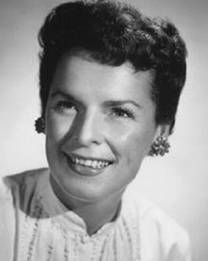
Kavanaugh served as editor and manager of the Arkansas Gazette before entering politics.  From 1896 until 1900, he served as Pulaski County Sheriff, which at the time also included the duties of tax collector.  From 1900 until 1904, he was County Judge of Pulaski County.  In that capacity he helped wrangle several cities, railroads and trolley lines to create a compromise which lead to the completion of the Third Street Viaduct which connected Little Rock with Pulaski Heights. It is still in use today.

After leaving his post as County Judge, he had a varied career in banking and business interests.

When Senator Jeff Davis died in early January 1913, he left the last few weeks of his term incomplete as well as the new term he was set to start in March 1913.  There was much interest in who would fill the remainder of Davis’ current term, because that person might be the frontrunner to also fill out the new term.  (This was at the time that the U.S. Senators were still selected by state legislatures.) Defeated Governor George Donaghey appointed J. N. Heiskell to fill out the term. But once the Arkansas General Assembly convened in mid-January, they overrode Donaghey’s appointment and replaced Heiskell with Kavanaugh.

Kavanaugh served in the Senate from January 29, 1913 until March 3, 1913.  He was succeeded by Joseph T. Robinson who had only recently taken office as Governor.  Speculation was that Kavanaugh would not want the full six year term, so that he was acceptable choice to all of the politicians jockeying for the full appointment.  From 1912 until 1915, he was an Arkansas member of the Democratic National Committee.

Another interest of Kavanaugh’s was baseball.  He served as president of the Southern Association minor league starting in 1903.  The baseball field in Little Rock situated at West End Park was named Kavanaugh Field in his honor.  It stood until the 1930s when it was replaced by what is now known as Quigley Stadium.  (In 1927, Little Rock High School had opened on the land which had been West End Park.)

Kavanaugh died on February 2, 1915 at the age of 48.  He is buried in Oakland Cemetery.

Prospect Road was renamed Kavanaugh Boulevard in his memory.

Rock the Oscars: Mercedes McCambridge

Mercedes McCambridge won the Oscar for Best Supporting Actress for her film debut.  The film was All the King’s Men.  She played political operative Sadie Burke.  Seven years later, she received an additional Oscar nomination for her role in Giant with Elizabeth Taylor, James Dean, and Rock Hudson.

By the 1960s, she was spending most of her time on television.  In the early 1970s, she alternated between film, TV and stage.  She provided the voice of the demon in the multiple Oscar nominated film The Exorcist.

In the 1980s, she moved to Little Rock. Her son and granddaughters lived here.  While in Little Rock, she appeared at the Arkansas Repertory Theatre in ‘Night, Mother.  Following her son’s death in 1987 (in a grisly murder suicide following financial improprieties on the job and his forger her signature on documents), she moved away from Little Rock.

LR Women Making History: Dr. Sybil Jordan Hampton

Dr. Sybil Jordan Hampton made history as the first African American student to attend each high school year at and graduate from Little Rock Central High School.  But her impact on history exceeds that and extends into classrooms throughout Arkansas.
After a career which took her from elementary classrooms to corporate boardrooms, Dr. Hampton returned to Little Rock in 1996 to become the President of the Winthrop Rockefeller Foundation.  In that capacity, she oversaw many opportunities to broaden the ways the arts and humanities were used in classrooms and outside of classrooms.  Dr. Hampton led the WRF until her retirement in 2006.  Through her vision and leadership, many tens of thousands of dollars of support went to cultural institutions and organizations during her decade at the helm.

Following the untimely death of the Arkansas Symphony Orchestra’s executive director, Dr. Hampton served as acting executive director of the ASO while a national search could be conducted.  She had long been a supporter of the ASO and other cultural institutions as a patron.

During the Central High Integration 60th Anniversary, Dr. Hampton served as emcee of the Commemoration Ceremony.  She continues to be involved with Little Rock’s cultural life through her involvement in the Mount Holly Cemetery Association. She is a tireless advocate for this living museum of Little Rock’s past.

Little Rock Look Back: Arkansas Territory Established

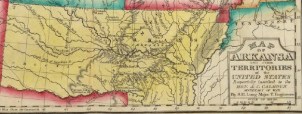
Arkansas TerritoryOn March 2, 1819, the Arkansas Territory was authorized by an act of Congress, to take effect  on July 4, 1819.

The Arkansas Territory was created from the portion of the Missouri Territory. It originally encompassed all of what is now Arkansas and much of what is now Oklahoma. The westernmost portion of the territory was removed on November 15, 1824, a second westernmost portion was removed on May 6, 1828, reducing the territory to the extent of the present state of Arkansas.

The Territorial capital was Arkansas Post from July 1819 until June 1821. At that point in time it was moved to Little Rock. In 1819, there was no permanent settlement in Little Rock. It would not be until early February 1820 that a permanent settlement would be established.  On 1818, the Quapaw Treaty had anticipated a future settlement in Little Rock.