Little Rock Look Back: Mayor David Fulton

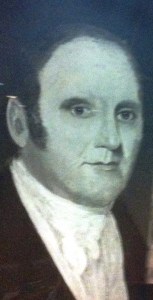
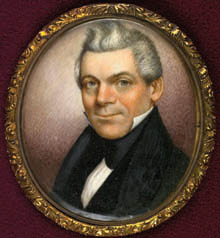
MayorFultonOn January 2, 1771 in Ireland, future Little Rock Mayor David Fulton was born.

He served as the fourth and final mayor of the Town of Little Rock in 1835. His term was cut short by the transition of Little Rock from town to city status. Once that happened in November 1835, a new election had to be held.

Mayor Fulton was also proprieter of the Tan Yard, a tanning operation in Little Rock.   He later served as a judge and was appointed as  Surveyor General of Public Lands in Arkansas by President Martin Van Buren in 1838.

Mayor Fulton married Elizabeth Savin in June 1795 in Maryland.  She died in November 1829, while they resided in Alabama.  Among their children was William Savin Fulton who served as Territorial Governor of Arkansas in 1835 and 1836 and was one of Arkansas’ first US Senators upon statehood in 1836.  Mayor Fulton was serving as Mayor at the same time his son was Governor.

Mayor Fulton came to Little Rock in 1833.  His daughter Jane Juliet Shall and her four children came to Little Rock as well.  The family made the move to be nearer to the future governor.  The Fultons and Shalls rented the Hinderliter House (now part of Historic Arkansas Museum) in 1834.

In addition to serving as Mayor, he was president of the Anti-Gambling Society and a Pulaski County Justice of the Peace.  From 1836 until 1838, he was County Judge of Pulaski County.

Mayor Fulton died on August 7, 1843 and is buried at Mount Holly Cemetery as are several other members of his family.

Happy New Year – Sixteen “16”s for 2016

Here are sixteen images of various 16s from throughout Little Rock.


1616 Scott

The intersection of 16th and Scott Streets


1616 Bus route

Rock Region Metro route 16


1616 fox

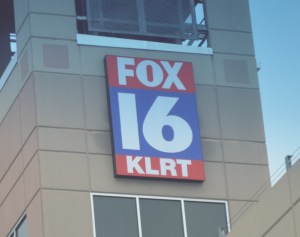
KLRT Fox 16 tower in downtown


1616 Firebird

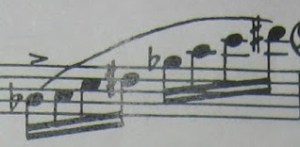
Sixteenth notes from FIREBIRD SUITE which will be played by the Arkansas Symphony Orchestra later this month.


1616 candles

Sixteen Candles movie is available for checkout from the Central Arkansas Library System


1616 june novel

The novel THE SIXTEENTH OF JUNE is available at Barnes & Noble


1616 Gas

Gas for $1.60 9/10 a gallon in Little Rock. (Yes, this is a slight cheat on the 16, but the 1 and 6 are still next to each other)


1616 Tons

Tennessee Ernie Ford’s LP “Sixteen Tons” available at music stores and in many homes in LR


1616 street

A street address which reverses the year – 1620 instead of 2016


1616 LRFD

Little Rock Fire Station Number 16 servicing Walton Heights and parts of Pleasant Valley


A clock in the Culture Vulture's car

A clock in the Culture Vulture’s car


A detail from an Arkansas license plate

A detail from an Arkansas license plate


A 16th birthday card

A 16th birthday card


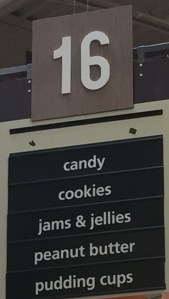
A grocery store aisle

A grocery store aisle


Roswell Beebe, Little Rock's 16th Mayor

Roswell Beebe, Little Rock’s 16th Mayor


Little Rock has the 16th square on the new Monopoly Here & Now Game. And rent is $160

Little Rock has the 16th square on the new Monopoly Here & Now Game. And rent is 160

2015 In Memoriam – Parker Westbrook

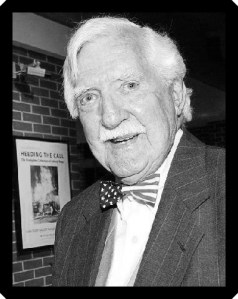
1515 WestbrookParker Westbrook WAS Mr. Preservation for Arkansas. But even though he is gone, it does not mean that preservation efforts in Arkansas are dormant.  Quite the contrary.  Like any good teacher, Parker used his knowledge to inspire others to share his interest in preservation.

It is no surprise that the organization he helped found, the Historic Preservation Alliance of Arkansas (now called Preserve Arkansas), names its lifetime achievement award after him.  He was not only the founding President of Preserve Arkansas, he was active in it until his final days.  It was not his only founding: he was a founder of Pioneer Washington Foundation (the oldest historic preservation organization in the state), the Main Street Arkansas Advisory Board, Historic Arkansas Museum Commission, the Arkansas State Capitol Association, and the Arkansas State Review Board for Historic Preservation. He served on the latter board from 1975 until his death this year, with the exception of five years from 2002 to 2007.  In recognition of his work in the field of heritage tourism, he was a 2007 inductee into the Arkansas Department of Parks and Tourism’s Hall of Fame.

His work was not limited by the boundaries of his home state.  He was an Advisor Emeritus to the National Trust for Historic Preservation and a 2001 recipient of a Preservation Honor Award from the Trust. Rep. Mike Ross declared him a “National Treasure” in the Congressional Record. He also served for two terms on the President’s Advisory Council on Historic Preservation and was named Chairman of the Committee on National Historic Landmarks on the National Park System Advisory Board.

A public servant, he worked for several federal officials from Arkansas, most notably Senator J. William Fulbright. He returned to Arkansas to work for Governor David Pryor.  But whether he worked in Washington DC; Little Rock; or his beloved hometown of Nashville, he was always interested in ensuring the past came alive. It might be through historic preservation, or it might be recounting a colorful moment of Arkansas history. Either way, Parker was a proponent of living history. He did not want it to be relegated to a musty, dusty book or building.
In 2007, he donated papers collected by his late sister Lucille and himself. The Lucille and Parker Westbrook Arkansas and Genealogy Collection is housed in the $20 million Arkansas Studies Institute, a joint project of the Central Arkansas Library System (CALS) and the University of Arkansas at Little Rock.  This collection has three parts: the first part focuses on Southwest Arkansas and contains genealogical sources and 3,000 historic photographs; the second highlights his public service and political career including much about the state’s architectural history; the third part consists of family papers, letters and photographs which document the Westbrooks’ deep roots in Arkansas.
He was the epitome of the Southern gentleman.  Not only did he look the part, he acted it. He was gracious in sharing credit with others; generous with his time, labor and talent; and did his best to keep up the lost art of writing letters and notes.

15 Highlights of 2015 – Recital featuring restored 1927 Steinway at Central High

 In September, the LRCH Tiger Foundation and Little Rock Central High School hosted a recital to celebrate the successful completion of the renovation of the 1927 Steinway & Sons grand piano.
It took place in the Roosevelt Thompson Auditorium at the school. The concert was free and open to the public and all were welcome.

The recital showcased the variety of music that has been played on the Model A III Steinway over the past 88 years. The piano was purchased for the school when it opened in September 1927. Over the years, it had fallen into disrepair and been improperly maintained. 

Due to the efforts of the Tiger Foundation (led by project chair Julie Keller), LRCHS Principal Nancy Rousseau and choral director Scott Whitfield, money was raised to restore the piano. A new onsite storage facility was also completed, paid for by donations.  

At the concert, it was announced that the piano would now be named “Scott” in honor of Mr. Whitfield. 

The $38,000 restoration project was undertaken by Mike Anderson of Anderson’s Piano Clinic who assembled a team of experts from Arkansas and Texas.

The Tiger Foundation is led by a 21-member board of dedicated volunteers, many of whom are Central alumni, who are passionate about the continued growth and success of Little Rock Central High School.

2015 In Memoriam – Milton Crenchaw

1515 Crenchaw

In these final days of 2015, we pause to look back at 15 who influenced Little Rock’s cultural scene who left us in 2015.

Milton Pitts Crenchaw, was one of the first in the country to be trained by the federal government as a civilian licensed pilot. While an instructor at the Tuskegee Institute, he trained hundreds of cadet pilots and started the aviation program at Philander Smith College.

Crenchaw graduated from  Dunbar High School and attended Dunbar Junior College before enrolling at the Tuskegee Institute in 1939.  After the bombing of Pearl Harbor on December 7, 1941, his focus shifted from living the life of a normal college student to flying in the Civilian Pilot Training Program (CPTP), sponsored by the Army Air Corps, and becoming a flight instructor.

Early in his career, Crenchaw worked as a civilian pilot training officer contracted by the military. Crenshaw instructed scores of pilots and cadets, including Judge Robert Decatur, Charles Flowers, Lieutenant Colonel Charles (Chuck) Dryden, Earl V. Stallcups, and fellow Arkansan Woodrow Crockett.  Crenchaw returned to Little Rock and taught aviation at Philander Smith from 1947 to 1953. He was also employed by the Central Flying Service and worked as a crop-duster in the central Arkansas and Delta regions.

Then he served as a flight instructor at several airbases from 1953 until 1972.   In 1972, with over 10,000 hours on record logged in the air, Crenchaw was signed on as an equal employment opportunity officer with the Department of Defense and as a race relations officer at Fort Stewart in Georgia until 1983.

Crenchaw was inducted into the Arkansas Aviation Hall of Fame in 1998. Nine years later, he was inducted into the Arkansas Black Hall of Fame.  He was also honored by Governor Mike Beebe in 2007 and the City of Little Rock in 2012.   On March 29, 2007, Crenchaw, along with the other members of the Tuskegee Airmen, was awarded the Congressional Gold Medal by President George W. Bush in Washington DC.

Today at noon, Mosaic Templar’s Cultural Center celebrates Kwanzaa

mtcc

The Mosaic Templar’s Cultural Center, in partnership with the Sue Cowan Williams library, Pyramid Art Books and Custom Framing, and other community partners, will celebrate Kwanzaa from noon to 1 p.m. on Thursday, December 31.

MTCC’s Kwanzaa celebration is a citywide event that will celebrate the principle of Kuumba or creativity. This year’s event will feature saxophonist Ricky Howard and poet and educator Marquese McFerguson.

Kwanzaa is an African American holiday celebration that focuses on family, community, and culture.

The Mosaic Templar’s Cultural Center is an agency of the Department of Arkansas Heritage.

2015 In Memoriam – Jim Porter

1515 Porter

In these final days of 2015, we pause to look back at 15 who influenced Little Rock’s cultural scene who left us in 2015.

Jim Porter, Jr., spent a lifetime promoting music in Little Rock.  Along the way, he created social change as well.

A native of Little Rock, he graduated from Little Rock High School and the University of Arkansas.  After college, Jim started out in the family businesses and tried to follow a “traditional” path that his father had paved for him. Working in sales and public relations, he became active doing volunteer work.  Jim realized that the “traditional” path was not for him, and while working in the family businesses, he started bringing in top name entertainers, many of them black, to perform in Little Rock. He was not a singer, nor did he play any instrument, but his love for music and all things connected to music led him towards his calling as an agent/manager and promoter of musicians.

As a promoter of national artists and bands, Jim ran into southern racism and segregation. The Central High crisis in 1957 caused many black artists to refuse to come to Little Rock, fearful for their safety. Jim was forced to concentrate more on booking and managing local musicians through what was at the time Arkansas’ only full time booking and talent agency, Consolidated Talent Corporation (later to become Porter Entertainment). During his booking career from the late 50’s until his retirement in 2001, Jim placed talent across Arkansas (and even in Las Vegas) at clubs, hotels, restaurants, and private functions- anywhere that people needed entertainment.

Jim saw first hand the inequities of black musicians in Arkansas, the separate and very unequal accommodations, and the segregated venues. Never giving up promoting national artists, the 60’s led him and his co-investors to bring in such national names (mostly jazz artists) such as Louis Armstrong, Count Basie, Dizzy Gillespie, Al Hirt, Pete Fountain, Woody Herman, the Four Freshman, Dave Brubeck, George Shearing, Harry James and others.

In 1961, he was arrested for integrating a concert at Robinson Auditorium. A white man, he had entered the segregated balcony.  Knowing the challenges of booking acts in a segregated house (indeed Duke Ellington would cancel his booking at Robinson), Porter had tried to get the facility to change its rules.  It was 1966, when Louis Armstrong returned to Little Rock and played before an integrated house that the new rules were here to stay.  In the early 1970s, he helped bring the musical Hair to Little Rock, with the specter of full nudity causing consternation to Robinson Auditorium and some of the citizenry.

Jim was inducted into the Arkansas Entertainers Hall of Fame in 2005, and the Arkansas Jazz Heritage Foundation Hall of Fame in 2006. He was appointed to the Martin Luther King Commission in 2005 and entered politics to serve as a member of the Pulaski County Quorum Court from 1998 until 2006.

Always an entrepreneur, Jim also started MusAd Recording Studio, where commercial jingles were produced and bands could record demo tapes. The Hot Air Balloon Theatre (in the old Center Theatre on Main Street) was the site for G-movies and live entertainment for kids. The Yellow Rocket, an arcade in the “Heights” is still remembered by now middle-aged adults who spent afternoons and weekends feeding money into the game machines and eating snacks. Jim wrote several books, hosted TV shows (“After Five” and “Scene Around”) featuring restaurants, bars, clubs and their patrons and employees. He was featured on a weekly radio show about dining and entertainment, and wrote “Scene Around” columns and a dining and entertainment guide for the Arkansas Democrat.