
New book EMPIRE OF COTTON focus of Clinton School lecture

In “Empire of Cotton,” Sven Beckert tells the epic story of the rise and fall of the cotton industry, its centrality to the world economy, and its making and remaking of global capitalism. The empire of cotton was, from the beginning, a fulcrum of constant global struggle between slaves and planters, merchants and statesmen, workers and factory owners. Beckert makes clear how these forces ushered in the world of modern capitalism, including the vast wealth and disturbing inequalities.
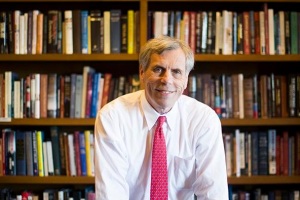
“Empire of Cotton” weaves together the story of cotton with how the present global world came to exist. The book won the Bancroft Award, The Philip Taft Award, and was a finalist for the Pulitzer Prize.

Sven Beckert is an American historian and Laird Bell professor of American History at Harvard University, with a particular emphasis on the history of capitalism, including its economic, social, political, and transnational dimensions.

The program starts at 6pm tonight at the Clinton School of Public Service.

Little Rock Look Back: Clinton Center Opened 11 Years Ago Today

SkipMany remember November 18, 2004, for the rain and cold wind which greeted visitors to the opening of the William Jefferson Clinton Presidential Center and Park.  In the years which lead up to that day, November 18, 2004, was known simply as “Game Day” for a group of people.  The chief one was Skip Rutherford.

Overseeing the planning for the Clinton Presidential Center and the events surrounding it had been the focus of James L. “Skip” Rutherford for many years. A FOB for decades, he had stayed in Little Rock when so many went to Washington DC in 1993.

He oversaw the planning for the Clinton Library and led the Clinton Foundation.  No detail was too small or insignificant for him to consider. For months leading to the opening he led meetings to help restaurants, hotels, and attractions understand the scope of the opening.

Together with Dean Kumpuris and Bruce Moore on behalf of the City of Little Rock and Stephanie Streett of the Clinton Foundation, he reviewed plans for the Clinton Presidential Park and the streets and neighborhoods around the Clinton Presidential Center.

He used his connections with the business community in Little Rock and throughout the state to discuss the importance of a Presidential Library regardless of one’s personal political affiliations.  He withstood critics who second-guessed everything from the cost, the design, the location, the purpose, and even the anticipated tourism and economic impacts.

Finally the big day had come.  If the weather was not ideal, that was almost inconsequential. It was still the culmination of more than seven years hard work.

However, the opening of the Clinton Presidential Center was not the end of the task. It merely was the move from one phase to another. A few years later, Skip’s role would change as he would leave the Foundation and become the second Dean of the Clinton School of Public Service.

New Public Radio Network in Arkansas launched

natural state newsThe Corporation for Public Broadcasting (CPB) awarded a $278,300 grant to four Arkansas public radio stations to support the creation of a statewide multimedia journalism collaboration based at the University of Arkansas at Little Rock.  Natural State News will be a statewide news service focusing on reaching rural areas of the state.

KUAR, UALR’S public radio station, will be the lead station for the project, joined by Fayetteville’s KUAF, Jonesboro’s KASU, and Texarkana’s KTXK. Ben Fry, general manager of KUAR and classical station KLRE, will coordinate the collaboration to create and broadcast thematically unified content relevant to the interests and needs of Arkansans.

Though the stations have often collaborated, the radio news service marks their first official joint venture. Together, the stations’ staff members at the stations will report stories centered on three themes:

  • Education
  • Health
  • Energy

NSN will report breaking news as well as produce related special interest stories. The resulting multimedia content will be published online and heard on local and national public radio programs such as NPR’s Morning Edition, All Things Considered, and Here and Now.

“CPB is pleased to support this historic collaboration of Arkansas public media stations,” said Bruce Theriault, senior vice president of journalism and radio, CPB. “The Natural State News collaboration is an example of increased media integration and a pathway for stations to work together to maximize resources while expanding their high-quality journalism.”

The grant will help fund four new positions: a managing editor, two additional reporters, and a partner manager, who will raise additional funds for the project. Three of the new positions will be based in Little Rock, with one reporter to work out of Jonesboro.

Natural State News plans to break new ground with in-depth multimedia reporting to reach extensively into rural Arkansas to tell unfolding stories about wealth, poverty, race, and decision-making in education, healthcare, and the environment. Little-told stories from the region will give a distinctive vantage point for understanding larger national experiences.

NSN will partner with the UALR Institute on Race and Ethnicity, the Butler Center for Arkansas Studies, Arkansas Educational Television Network (AETN), and the print publication El Latino to provide and promote its diverse, nuanced content. All stories will be available in both Spanish and English, and NSN is committed to supporting diversity in its staff, student interns, and stories.

For more information on the partner stations, go to their websites: KLRE/KUARKUAFKASU and KTXK.


Four Elections which shaped 20th Century focus of Clinton School lecture tonight

Pivotal Tuesdays: Four Elections that Shaped the Twentieth Century
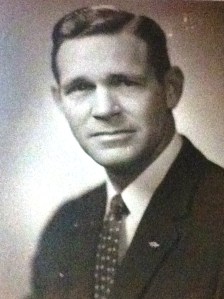
6pm, November 16 – Clinton School Sturgis Hall

In her book, “Pivotal Tuesdays,” Margaret O’Mara looks back at four pivotal presidential elections of the past 100 years to show how they shaped the twentieth century. Exploring personalities, critical moments, and surprises of the elections of 1912, 1932, 1968, and 1992, this book shows how elections are windows into changing economic times and how history is made when ordinary people cast their ballots. A book signing will follow.

Margaret O’Mara is an associate professor of History at the University of Washington in Seattle, specializing in the political and economic history of the twentieth century United States. Her research and writing focuses on the history of the high-tech industry, the history of American politics, and the connections between the two. In addition to her academic work, she has collaborated with government, business, and civic organizations on a range of projects exploring how innovation drives growth and change.

Coke is it! in new Clinton Center exhibit

The Clinton Presidential Center celebrates the art and history of the Coca-Cola Bottle’s 100-year anniversary during its upcoming temporary exhibit, Coca-Cola: An American Original. The exhibit is divided into two sections and occupies both the Garden View room, located on the first floor, and the Temporary Gallery, located on the third floor.
Illustrations of an American Original will be located in the Garden View Room and will have as its focus the now-iconic images and advertising campaigns that have helped define the Coca-Cola brand. Illustrations will include three original paintings by Norman Rockwell, an American artist who created a total of six paintings that were ultimately used in finished Coca-Cola ads. The three others, known as the “Missing Rockwells,” have yet to be located. Additionally, Illustrations feature several images of Santa Claus, including the first Coca-Cola Santa painted by Fred Mizen that appeared in The Saturday Evening Post in December of 1930, as well as nine original Haddon Sundblom illustrations.
An American Original at 100 is housed in the Temporary Gallery, bringing together historic bottle “firsts.” It features a 13-bottle chronology, including an original glass bottle produced in 1902, a replica of the prototype contour bottle created by the Root Glass Company in 1915, and a prototype of the aluminum bottle that debuted in 2008.
Also, the exhibit showcases pop art by Andy Warhol—including videos, photographs, prints, and other original works—and folk art by Howard Finster, who incorporated the Coca-Cola bottle into dozens of his pieces over his prolific career. Another portion of this exhibit is dedicated to American presidents and their connection to the global brand. An American Original at 100 was recently on display at the High Museum of Art Atlanta.
In addition to Illustrations of an American Original and An American Original at 100, the Center is also displaying a full-size antique Coca-Cola delivery truck produced in 1949 by the White Motor Company and a spectacular hanging installation comprised of more than 750 3D-printed, ribbon-shaped interpretations of the bottle’s classic shape.
Coca-Cola: An American Original is the Center’s 42nd temporary exhibit. It will close on February 15, 2016.  Admission to temporary exhibits is included in the price of Library admission.

Little Rock Look Back: Mayor Woodrow Mann

IMG_3231Future Little Rock Mayor Woodrow Wilson Mann was born on November 13, 1916, in Little Rock.

In 1955, he ran as the Democratic nominee for Mayor of Little Rock and defeated two term incumbent Pratt C. Remmel, a Republican.  He took office in January 1956 and immediately set about to make a lot of changes.  In addition to revitalizing the City’s bus system, and removing some color barriers at City Hall, he oversaw the dismantling of the copper dome on top of Little Rock City Hall (as opposed to the repair of the dome championed by Mayor Remmel).

Mayor Mann was caught up in a grand jury investigation into purchasing practices at City Hall as well as within the City government in North Little Rock.  Partially in response to this, Little Rock voters approved a new form of government in late 1956.  Mayor Mann opposed the switch to the City Manager form and refused to set the election for the new officials but was ultimately compelled to do so.

He was also Mayor during the 1957 integration of Little Rock Central High School.  He sought to keep the peace and to broker a deal between President Dwight Eisenhower and Governor Orval Faubus.  His powers within the city were, no doubt, hampered because of his lame duck status as Mayor.  In November 1957 following the election of the new City Board of Directors, he chaired his last City Council meeting and left office.

In January of 1958, a series of articles written by Mayor Mann detailed his perspective on the events at Central High. These were carried by newspapers throughout the US.

Because of ill will toward him due to the Central High crisis (he was criticized by both sides) and grand jury investigation, Mayor Mann felt it would be difficult to maintain his insurance business in Little Rock. He moved to Texas in 1959 and remained there the rest of his life.  He died in Houston on August 6, 2002.

“Lost + Found: Saving Downtowns in Arkansas” exhibit by Old State House Museum and Cromwell firm runs through December 11

The Old State House Museum and Cromwell Architects Engineers present a new exhibit: “Lost + Found: Saving Downtowns in Arkansas.” The exhibit will highlight eight different structures in Arkansas and raise awareness of the need for the preservation of Arkansas’s architectural heritage, and will be on exhibit for four weeks from November 13, 2015, until December 11, 2015.

“This exhibit takes a close look at eight pieces of Arkansas’s architectural heritage; some of those are in dire need of preservation, and others are outstanding examples of restoration and creative reuse,” said Bill Gatewood, Old State House Museum director. “The Old State House Museum is a natural venue for this exhibit, as the repository of the drawings of Charles L. Thompson and as one of the state’s earliest historic preservation success stories.”

“Lost + Found” highlights eight different projects completed or renovated by Cromwell during its 130 year history. These include projects in Little Rock (Little Rock City Hall, the Federal Reserve Bank Building and 615 Main Street), North Little Rock, (St Joseph’s Home for Children) Pine Bluff (the Temple Building and the Pines Hotel) and Hot Springs (the de Soto and Majestic Hotels). Many of these structures were designed by Charles L. Thompson, one of the founders of Cromwell and one of the most-known and prolific architects in Arkansas in the 20th century.

The Old State House Museum will also host several programs to showcase the exhibit. “Lost + Found” will take center stage on Second Friday Art Night at the Museum on Friday, November 13. The Museum will be open until 8 p.m. for the opening of the exhibit. On Thursday, December 3, at noon, Dan Fowler of Cromwell will present a Brown Bag Lunch Lecture chronicling his firm’s 130 year history. The Museum will also release articles weekly on its blog which will enhance the information provided in the exhibit. Admission is free to the Museum and all events.

About the Old State House Museum The Old State House Museum is a museum of the Department of Arkansas Heritage and shares the goal of all seven Department of Arkansas Heritage agencies, that of preserving and enhancing the heritage of the state of Arkansas. The agencies are Arkansas Arts Council, Arkansas Historic Preservation Program, Arkansas Natural Heritage Commission, Delta Cultural Center in Helena, Historic Arkansas Museum, Mosaic Templars Cultural Center, and the Old State House Museum.

About Cromwell Architects Engineers

Cromwell Architects Engineers is an international client-focused, integrated building services firm based in Little Rock, Arkansas. Celebrating its 130th anniversary in 2015, Cromwell is committed to the state of Arkansas and its people, who have been the foundation for its success. For more information, visit online at cromwell.com.

About Abandoned Arkansas

Abandoned Arkansas is dedicated to preserving Arkansas’ most precious history that may be on the verge of being lost forever. Through photography, video, articles and an active social media presence, Abandoned Arkansas documents the stories that go along with each structure. Online at abandonedar.com.
