Marking 150th anniversary of 13th Amendment – CALS will “Let Freedom Ring”

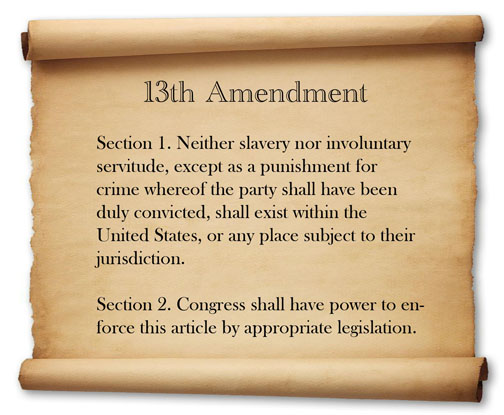
2014-06-21-13thAmendmentIn honor of the 150th anniversary of the 13th Amendment, which abolished slavery, the Central Arkansas Library System (CALS) will join the Arkansas Civil War Commission in “Let Freedom Ring,” a ringing of bells 13 times at 13:00 (1 p.m.) on Tuesday, April 14. Staff and volunteers will ring bells and read the 13th Amendment.

Locations

  • Main Library, 100 Rock Street
  • Butler Center for Arkansas Studies, 401 President Clinton Avenue
  • McMath Library, 2100 John Barrow Road
  • Dee Brown Library, 6325 Baseline Drive

“Let Freedom Ring” honors the 150th anniversary of the amendment, and is a statewide initiative sponsored by the Arkansas Civil War Sesquicentennial Commission’s commemoration of the 150th anniversary of the Civil War.

The 13th Amendment reads as follows:

“Neither slavery nor involuntary servitude, except as a punishment for crime whereof the party shall have been duly convicted, shall exist within the United States, or any place subject to their jurisdiction. Congress shall have power to enforce this article by appropriate legislation.”

The Arkansas Civil War Sesquicentennial Commission is part of the Arkansas Historic Preservation Program, an agency of the Department of Arkansas Heritage. The Arkansas Historic Preservation Program is responsible for identifying, evaluating, registering and preserving the state’s cultural resources.
Little Rock Look Back: Thomas Jefferson

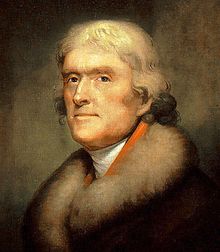
220px-Thomas_Jefferson_by_Rembrandt_Peale_1805_croppedOn April 13, 1743, Thomas Jefferson was born in Virginia.  Along with Benjamin Franklin, he was one of the first American multi-hyphenate Renaissance men.  Author, musician, inventor, diplomat, epicurean, architect, educator, and President. Certainly his writing of the Declaration of Independence was of paramount importance to the US, even if he had never served as President.

It was during his Presidency that Thomas Jefferson actively pursued the Louisiana Purchase which brought what is now Arkansas into the United States.  While he never visited the area, he did send explorers to chart out the Louisiana Purchase.  The subusequent surveying which took place during the Madison presidency was based on standards developed by Jefferson for the surveying of Ohio.

In Little Rock, Jefferson is remembered with Jefferson Elementary and Jefferson Street. He is also the eponym for Bill Clinton’s middle name.

Little Rock Look Back: First proposal for a municipal auditorium

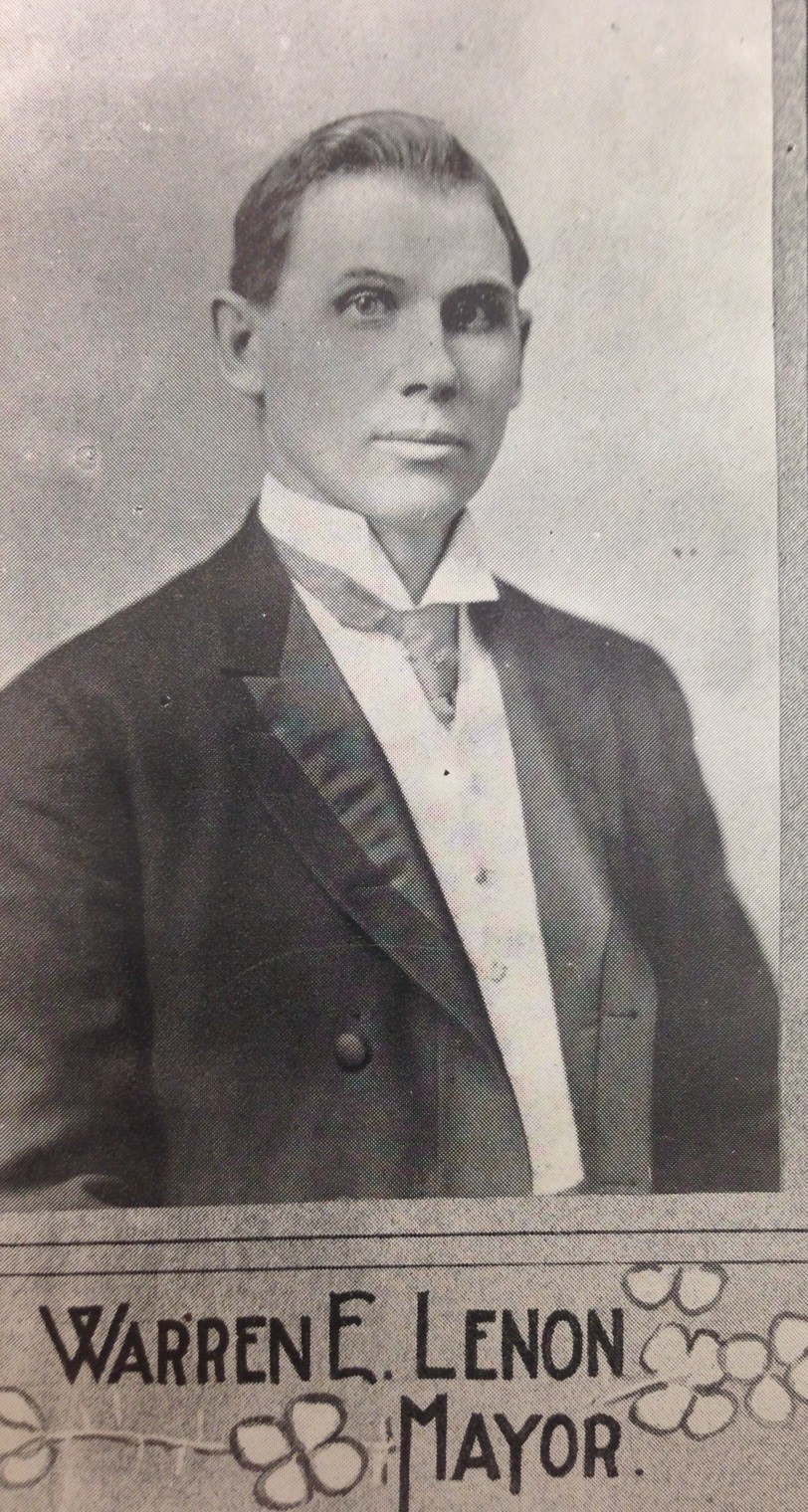
On April 12, 1904, Mayor W. E. Lenon made what was the first official proposal for a municipal auditorium in Little Rock.  Little did he know at the time that it would take from April 1904 until February 1940 to make this dream a reality.

Elected as a progressive, Lenon was focused on not just providing city services, but also had an interest in initiatives which would move the city forward.  With that background it is not surprising that Mayor Lenon would be a champion for the construction of both a new city hall as well as a municipal auditorium building.  During his first annual address to the City Council in April 1904 he noted:

Recently a number of our citizens have taken an active interest in building an auditorium in our city.  This being a project of such worthy consideration should not go unnoticed by us.  Apparently this is one of the greatest needs.  Our business, social, commercial and financial interests, in fact, our entire city, would be benefitted by the building of same.  It has therefore occurred to me that an auditorium might be built in conjunction with a new city hall.

The mayor further discussed that these new structures could either be built on the site of the current City Hall or at a new location.  He also touched on possible financing options including the collection of a one percent assessment.

The mayor would bring this up again in his 1905 annual address.  It would not be until December 1905 that the City Council would officially take any action on the plan.


Pulaski County Historical Society tours the Holtzman-Vinsonhaler House this afternoon

VinsonhalerWhile often the Pulaski County Historical Society hears presentations at its meetings, today the meeting focuses on a tour of a historic Little Rock residence. Refreshments start at 2pm with the tour commencing at 2:30pm.

The Holtzman-Vinsonhaler House stands on the northeast comer of Ninth and Commerce Streets, in Little Rock. This large brick home was constructed about 1898 by William D. Holtzman, a contractor.  Holtzman also built the house two doors to the east, the Holtzman-Vinsonhaler-Vogler House, designed in the Queen Anne Revival style and constructed in the early 1890s (note the stained glass window on its porch) and the W. D. Holtzman house three doors to the east, constructed about 1905 and designed in the Colonial Revival style.  The extended Holtzman family built and/or occupied almost the entire 500 block of East Ninth Street at various times from the 1850s through the 1930s.

Join the PCHS for this wonderful tour to learn the full rich history of one of Little Rock’s most prominent residences.

The Pulaski County Historical Society is dedicated to the following:


  • Documenting the history of Pulaski County from the earliest known period to the present.
  • Promoting interest in locating, collecting and preserving historical information on the county’s history.
  • Identifying the contributions of individuals and institutions to the broader community.
  • Popularizing stories of the county’s citizens, its business life and its institutions.
  • Recognizing the relationship of Pulaski County history with that of Arkansas and the South
  • Stimulating research and its presentation.
  • Publishing information about the county’s history.
  • Marking historic places.

Poetry Month: Peggy Vining and “Arkansas, The Natural State”

pviningPeggy Vining is Arkansas’s Poet Laureate.  She was appointed to this position in 2003 by Gov. Mike Huckabee.

Since 1963, Vining has been a member of Poet’s Roundtable of Arkansas (PRA) which is associated with the National Federation of State Poetry Societies.  She attributes her writing success to the “wonderful poets of PRA that mentored, encouraged and inspired me to keep writing”.  Vining has served as state PRA President for three separate terms.  She has been director of the Ozark Creative Writers Conference, the Arkansas Writers Conference and still serves on the official Board of each.  She has also served as state President of Arkansas Penwomen and Arkansas Songwriters Association and is a member of Fiction Writers of Central Arkansas.  Her bio is listed in Who’s Who of Editors, Writers and Poets and several other such books and anthologies.  She is presently compiling a collection of her published works entitled “Tethered to the Moment”.

Loved and appreciated for her artistic abilities and her work with children, Vining has nurtured over 6000 pre-schoolers during her teaching career.  For twenty one years, she was Instructor and Director of the UALR Children’s Center having earned a Masters Degree in Early Childhood Education.  She has also worked with children’s groups at her church for many years.

Married for over 60 years, Vining cherishes her family; She is a mother, grandmother and great-grandmother. other of five (four daughters and one son)and grandmother of eleven and Greatgrandmother of eight. Vining is also active in many other community organizations.  A twenty-seven year cancer survivor, she was honored with a “Point of Light Award” from President Bush for her volunteer work with CARTI.

Arkansas, The Natural State

I stood today on top of Petit Jean
And felt a kindredship to all I found,
And I, intrigued by such a lovely scene,
Was grateful for the beauties that abound.
The spirit of a mountain miss was host,
Her phantom figure hovered, light as wind,
And I became enchanted by her ghost,
As we stood on the ledge at river’s bend.
I asked her of her legend and its truth;
Of how she stowed away to sail from France,
Of how she cropped her hair; became uncouth,
To give her love and lover one more chance.
            “It is all truth; the future will proclaim
            My spirit guards this mount which bears my name.”
 
Then, as we talked, my personage subdued,
And I became, as Petit Jean, a ghost,
And with uncanny knowledge I reviewed
Historic deeds of others who could boast,
Of coming to this great green state to live;
To homestead and to plow their plots of land;
To mine the hills; to hunt the woods and give
Their very lives to make it far more grand.
I spoke to men who also came to look
For ways of life upon the river’s road;
They pushed their crafts to every shallow nook
And rounded bends of hardship with each load.
            The Indians told me their tales of woe,
            Of how they battled as both friend and foe.
 
They told me how De Soto searched for gold
And, trudging through the swamps to look for it,
As upward, through the mountains and the cold,
He traded with the natives, matching wit.
La Salle then came to claim the Arkansas
But left to join another group of men,
De Tonty came to start, as did John Law,
A river post where trading could begin.
These men with whom I talked could really boast
Of being first to settle on this land,
Of fighting long and hard to save the Post
Where then was housed the laws and all command.
            My spirit saw the past and lived it through,
            A vision of the old when it was new.
 
As history passes, the seasons came in view,
And time and space and beauty knew no date.
I saw each month in its most brilliant hue
And gazed at it as if I tempted fate.
 I looked at Spring and thought it surely best,
For everywhere the land was newly green,
The pristine white of dogwood seemed to test
The worthiness and beauty of each scene.
Then summer came with nesting meadowlarks,
And I beheld the golden days of fun,
As tourists came with camping gear to parks,
And found their pleasures under shade and sun.
            I watched the summer visitors with awe,
            They loved this state of mine . . .this Arkansas.
 
Perhaps they liked spelunking in a cave,
Or digging for a diamond at the mine,
Or floating trips that made of them a slave
To mountain streams, to setting out trotline.
Perhaps they liked the baths at old Hot Springs,
Or climbing under rushing waterfalls,
Or smelling the sweet air that summer brings,
Or listening to whippoorwills’ faint calls.
I think they surely liked the little creeks,
That tumble down deep-set against tall bluffs.
I think they liked the deer and quail that seeks
New hideouts when invaders find their roughs.
            The eager tourists came to see our state
            Because the opportunities are great.
 
Then suddenly, as Autumn took her turn,
The Ozark Hills became a brilliant hue.
In blazing reds the forest seemed to burn
Across the valleys, up the mountains too.
In delta lands I saw vast cotton crops,
And harvest fields of rice, bowed down with grain.
The short-leaf pines were green with heavy tops,
And muscadines hung heavy down the lane.
Then winter came attired in snowfall white,
And lovely landscapes suddenly seemed bare.
The prairie sky was filled with ducks in flight,
And sounds of happy hunters filled the air.
            O Arkansas, which season is your best?
            Each one seems far more lovely than the rest.
 
What makes you great?  I wondered as I looked.
Is it your timber, standing straight and tall?
Is it your rivers wide and roughly crooked?
Is it your lovely Ozarks in the fall?
Is it your heritage that makes you grand,
Your opportunities . . . yet still unknown?
Is it your rich oil fields, or delta land
That makes men proud to choose you for their own?
O Arkansas, I see your very breath,
In hazy clouds that skim your vast terrain.
I know about your struggling with death
And I have felt your birth with labored pain.
            O land of mine, I find you truly great,
No wonder you are called “The Natural State”.

Little Rock Look Back: LaHarpe Sees a Rock

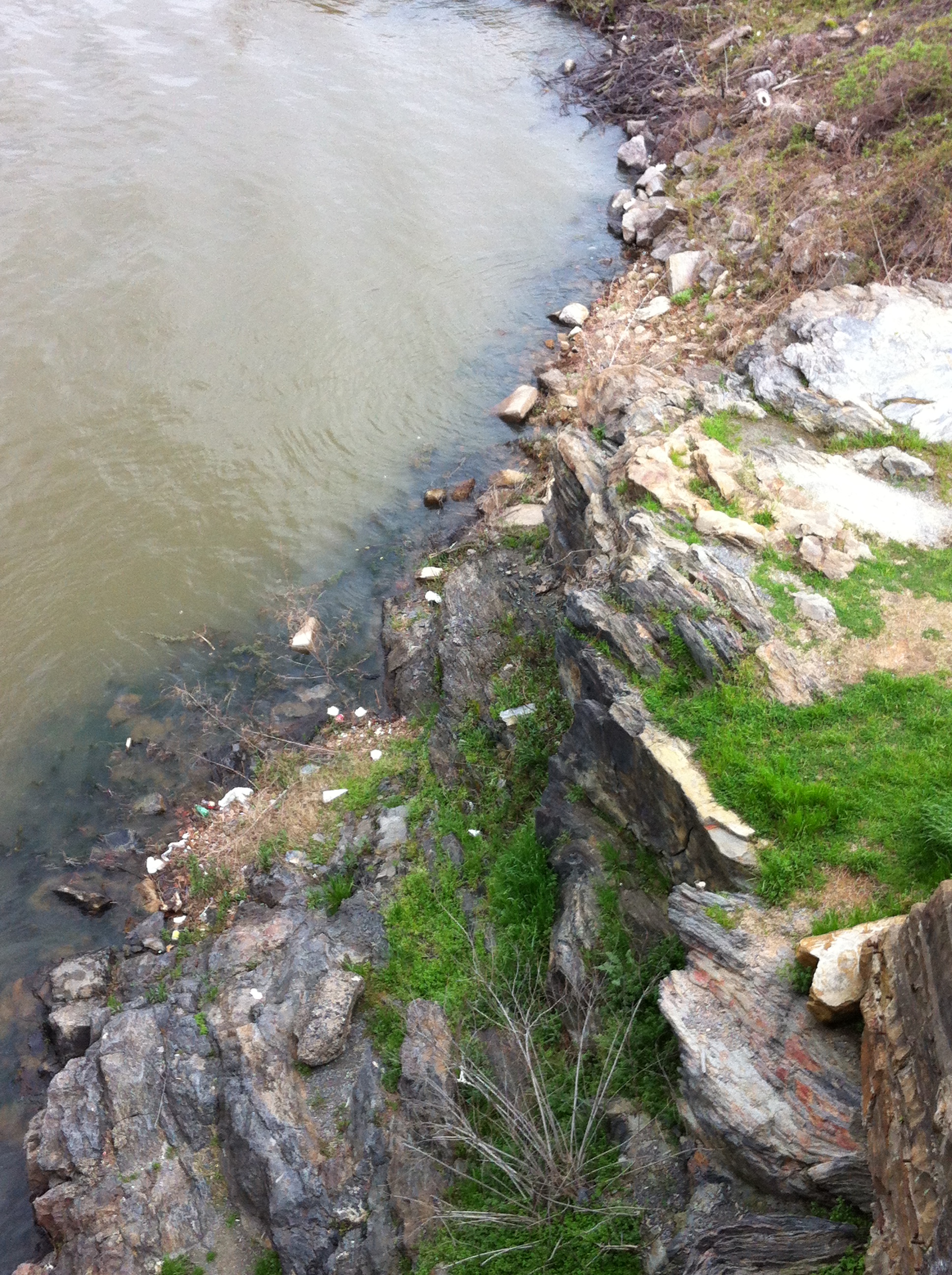
IMG_4805On April 9, 1722, French explorer Jean-Baptiste Bénard de La Harpe rounded the bend of the Arkansas River and saw La Petite Roche and Le Rocher Français.  He had entered the mouth of the Arkansas River on February 27 after traveling up the Mississippi River from New Orleans.

Though La Harpe and his expedition are the first Europeans documented to have seen La Petite Roche, the outcropping of rocks was well-known to the Quapaw Indians in the area.  The outcropping jutted out in the Arkansas River and created a natural harbor which provided a perfect place for boats to land.

The rock outcropping is the first one visible along the banks of the Arkansas River.  It marks the place where the Mississippi Delta meets the Ouachita Mountains.  Geologists now believe that the Little Rock is not the same type of rock as the Ouachita Mountains and more closely matches the composition and age of mountains in the western US.

In 1813, William Lewis became the first European settler to live near La Petite Roche but only stayed a few months.  Speculators and trappers continued to visit the area throughout the 1810s. During that time, the outcropping became known informally as the Little Rock.

La Petite Roche had become a well-known crossing when the Arkansas Territory was established in 1819. The permanent settlement of ‘The Rock’ began in the spring of 1820, and the first building has been described as a cabin, or shanty, and was built on the bank of the river near the ‘Rock.’ In March 1820, a Post Office was established at the ‘Rock’ with the name “Little Rock.”

Over the years, La Petite Roche was altered.  In 1872, Congress authorized the building of a railroad bridge. A pier for the bridge was built at the location of the La Petite Roche which caused the removal of several tons of rock.  The bridge was never built.  When the Junction Bridge was built in 1899, even more rock was removed in the process of erecting part of the bridge on top of the rock.  It was not viewed as being disrespectful of the City’s namesake at the time.  Indeed, it was viewed as a testament to the sturdiness of the rock.

In 2010, La Petite Roche plaza opened in Riverfront Park.  It celebrates the history of La Petite Roche and explores its importance to various aspects of Little Rock’s history and geography.

Tonight at the MacArthur Museum of Arkansas Military History, a FREE film: LAST DAYS IN VIETNAM

IMG_5596

In partnership with AETN, the MacArthur Museum of Arkansas Military History will host a preview screening of the “American Experience: Last Days in Vietnam.”  The screening starts at 6:30pm tonight at the museum in MacArthur Park.

Free admission. Free popcorn and beverages provided.

During the chaotic final days of the Vietnam War, the North Vietnamese Army closes in on Saigon as South Vietnamese resistance crumbles. The United States has only a skeleton crew of diplomats and military operatives still in the country. As Communist victory becomes inevitable and the U.S. readies to withdraw, some Americans begin to consider the certain imprisonment and possible death of their South Vietnamese allies, co-workers, and friends.

Meanwhile, the prospect of an official evacuation of South Vietnamese becomes terminally delayed by Congressional gridlock and the inexplicably optimistic U.S. Ambassador. With the clock ticking and the city under fire, a number of heroic Americans take matters into their own hands, engaging in unsanctioned and often makeshift operations in a desperate effort to save as many South Vietnamese lives as possible.

Last Days in Vietnam was produced and directed by Rory Kennedy, an Emmy Award-winning independent documentary filmmaker and co-founder and president of Moxie Firecracker Films. Her work has been shown on PBS, HBO, A&E, MTV, and Lifetime.

The MacArthur Museum of Arkansas Military History is a program of the City of Little Rock’s Parks and Recreation Department.