Emancipation & Reconstruction focus of Civil War 150 Seminar today at Old State House Museum

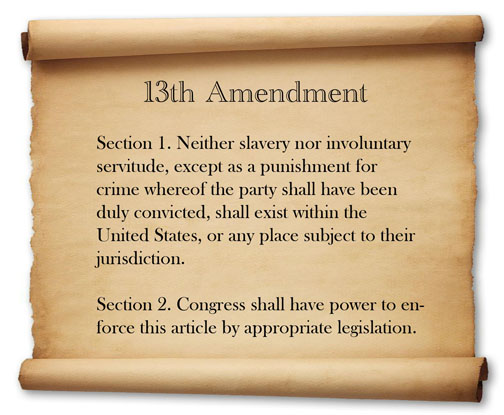
oldstatehouseAs part of its celebration of the passage of the 13th Amendment in Arkansas, the Old State House Museum and the Arkansas Civil War Sesquicentennial Commission will hold a mini-seminar this afternoon from 1pm to 5pm.  The seminar’s topic will be “Emancipation and Reconstruction.”

1:00 pm Introduction
1:15 pm Speaker – Tom DeBlack, End of the war
2:00 pm Speaker – Angela Walton-Raji, Emancipation
2:4 5pm Break
3:00 pm Speaker – Carl Moneyhon, Reconstruction
3:45 pm Q & A/Wrap-up
4:15 pm Program Ends

The Old State House Museum and the Arkansas Civil War Sesquicentennial Commission are programs of the Department of Arkansas Heritage.

Bio Information:

Tom DeBlack: End of the war
Thomas DeBlack is a professor of history at Arkansas Tech University in Russellville, Arkansas. He is a 1969 graduate of Nashville (Arkansas) High School and holds a B. A. from Southern Methodist University in Dallas, Texas (1973), an M.S.E. from Ouachita Baptist University (1979), and a PhD from the University of Arkansas (1995). Tom taught in the public schools in Arkansas for twelve years. He is a past president of the Arkansas Historical Association and the Arkansas Association of College History Teachers and currently serves on the board of the Arkansas Humanities Council.He is co-author Arkansas: A Narrative History (University of Arkansas Press, 2002; 2nd edition, 2013 ), and author of With Fire and Sword: Arkansas 1861-1874 (University of Arkansas Press, 2003). In 2003 Arkansas: A Narrative History was named the winner of the Arkansas Library Association’s Arkansiana Prize, and With Fire and Sword was named the first winner of the Butler-Remmel Arkansas History Literary Prize. Tom is currently working on a book on Lakeport Plantation in Chicot County and on a centennial history of Arkansas Tech University. He lives in Conway with his wife Susan, an optometrist, and their eleven-year-old daughter, Susannah.

Angela Walton-Raji: Emancipation
Angela Walton-Raji is a genealogist and researcher specializing in the Freedmen of Indian Territory. She is the author of Black Indian Genealogy Research, African Ancestors Among the Five Civilized Tribes and the co-publisher of VOICES of Indian Territory a scholarly journal with focus on the historical documents pertaining to the Freedmen of the Five Tribes. She has spoken at a number of national conferences and institutes throughout the nation. A native of western Arkansas, Ms. Walton-Raji earned a bachelor’s degree in Romance Languages from St. Louis University and a master’s degree from Antioch University. She works at the University of Maryland Baltimore County as Director of Graduate Recruitment, and continues to study, research and lecture on the history of Indian Territory Freedmen.

Carl Moneyhon: Reconstruction
Dr. Moneyhon joined University of Arkansas-Little Rock faculty in 1973 and holds a Ph.D. from the University of Chicago. He is faculty liaison with the University History Institute, an organization that develops closer ties between the department and the community. He also serves on the editorial boards of the Arkansas Historical Quarterly and the Encyclopedia of Arkansas History and Culture. He was won the UALR Faculty Excellent Award for Research and the UALR Faculty Excellence Award for Teaching. Dr. Moneyhon is a specialist in the history of the American Civil War and the South and is widely published in the field. His work has been supported by the National Endowment for the Humanities, and he recently received one of the first College of Arts, Humanities, and Social Sciences Summer Fellowships for Research. He is a Fellow of the Texas Historical Association.

Little Rock Look Back: LR Mayor Charles Moyer

Mayor MoyerOn April 18, 1880, future Little Rock Mayor Charles E. Moyer was born in Glenwood, Minnesota. A man of contradictions, he was both a candidate backed by (and probably personally involved in) the Ku Klux Klan, yet he also brought the Goodwill Industries organization to Little Rock and Arkansas to help those less fortunate.

He came to Little Rock shortly after the turn of the 20th century as a clerk in the Post Office, and later served as a mail carrier. He then worked for Plunkett-Jarrell Wholesale Grocer Company in Little Rock. On January 1, 1921, he took office as County Judge for Pulaski County. In 1924, he ran against incumbent mayor Ben Brickhouse in the Democratic primary. Since Brickhouse had displeased the Klan, which was an active part of Democratic politics in Little Rock and throughout the nation at the time, Moyer won the primary.

Mayor Moyer led the City of Little Rock from April 1925 through April 1929. In 1927, the last lynching in Little Rock took place. While race-baiting crowds were surrounding City Hall demanding an African American prisoner be released to them for vigilante justice, Mayor Moyer was in hiding at an undisclosed location. Not able to get the prisoner they wanted, they took out their venom on another man who had assaulted a white woman and her daughter.

After leaving office in 1929, Moyer moved for a time to Batesville. He returned to Little Rock and was a chief deputy sheriff. From 1937 to 1941, he served as Pulaski County Assessor. In 1941, he returned to the office of Little Rock Mayor after J. V. Satterfield opted to serve only one term and did not seek re-election. Mayor Moyer led Little Rock through most of World War II. He left office in April 1945 and died on May 29, 1945, barely only one month after leaving City Hall.

150th Anniversary of 13th Amendment marked today at Old State House’s Arguments for Freedom

2014-06-21-13thAmendmentJoin the Old State House Museum’s “Arguments For Freedom,” today at 11 am.

Living History Interpreters will reenact the ratification of the 13th Amendment, which abolished slavery in the United States. Learn about the reasons Arkansas ratified the 13th Amendment and the concerns the political leaders faced at the end of the Civil War. Arrive early to meet the statesmen and find out their views on this topic.

The Old State House Museum is an agency of the Department of Arkansas Heritage.

Little Rock Look Back: President Benjamin Harrison becomes first sitting president to visit LR

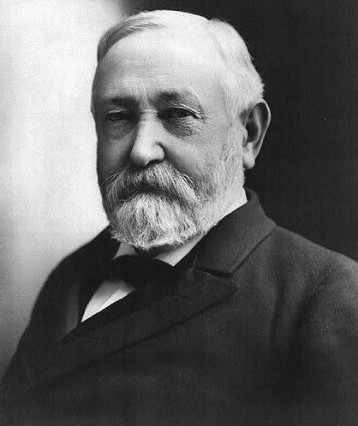
Benjamin-Harrison-by-Joseph-Gray-Kitchell-1897-358x426On April 17, 1891, Benjamin Harrison became the first sitting president to visit Arkansas.  He was on a cross-country railroad trip having left DC on April 13.

The morning of the 17th he spoke in Memphis and then took the train to Little Rock.  Accompanying him from Memphis to Little Rock were a delegation which included Governor and Mrs. James P. Eagle, Mayor H. L. Fletcher and Col. Logan H. Roots.  Also in the party was Mrs. W. G. Whipple, a former first lady of Little Rock.

They arrived in Little Rock in the afternoon.  A parade took them from the train station to the State House (now the Old State House Museum) where the Governor formally welcomed the President and his party.

In his brief remarks, President Harrison spoke of the hospitality and the natural resources available in Arkansas.  He also touched on the Civil War, which at the time was less than 30 years in the past. He noted “The commonwealth rests upon the free suffrage of its citizens and their devotion to the Constitution and the flag is the bulwark of its life.  We have agreed, I am sure, that we will do no more fighting among ourselves.” These remarks were met enthusiastically by the crowd assembled.

The President concluded is brief remarks thanking the State officials and the citizenry.  He then took the train to Texarkana where he made his third remarks of the day.

Benjamin Harrison was on the Presidential ticket two times. The first time he lost the popular vote but won the Electoral College defeating incumbent Grover Cleveland. The second time he lost both the popular and electoral votes to Cleveland.  He did not carry Arkansas in either election. Though he was the first sitting president to visit Little Rock, there is nothing here named for him.  Since there was already a Harrison Street named after his grandfather, he is skipped between Cleveland and McKinley in the presidential streets.

Little Rock Look Back: 107 years of City Hall at Markham & Broadway

CityHa78107 years ago today, Little Rock City Hall officially opened at the corner of Markham and Broadway.

On April 15, 1908, the Italian Renaissance Revival style building, which had been designed by local architect Charles Thompson, played host to an open house. Staff had started moving into the building in March of that year.   This was, as often is the case, behind schedule.  The date in the cornice toward the top of the building is 1907, but the building was not completed until 1908.

In 1903, W. E. Lenon became Mayor of Little Rock. Back then, the terms were two-year terms.  By the start of his second term in 1905, he realized that the City was outgrowing City Hall, which was, at the time, on the northeast corner of Markham and Louisiana – where part of the Statehouse Convention Center sits today.

In February 1906, Mayor Lenon appointed a committee of five aldermen to over see the planning for the building of a new City Hall. In July 1906, the City Council approved plans, which called for a City Hall with an municipal auditorium wing. There was some hue and cry about wasteful spending and a resulting lawsuit, so, in September 1906, those plans were scrapped and a simpler City Hall was approved for the cost of $175,000.

The last resolution in the old City Hall called for the banning of smoking in the new Council Chambers – while the Council was in session. This may well have been the first smoking ban in a public government building in the history of Arkansas.

When the building opened, the third floor was not finished out. The space was not needed. When the Museum of Natural History and Antiquities (now the Museum of Discovery) moved into City Hall in 1929, they had to finish out their space.

In 1913, the new Central Fire Station, designed in the Beaux Arts style, was constructed adjacent to City Hall. During the 1930s, as the City grew, more space was needed. A garage, designed in the “austere, utilitarian” style was built in 1936 and a City Jail Annex, built by the WPA in the modified Art Deco style was built in 1938.

City Hall prior to 1912

By 1955, the copper-clad dome which sat on top of City Hall needed severe repairs. The wooden supports and the copper cladding were both in dire shape. Mayor Pratt Remmel set aside money for the dome to be repaired. After defeating Remmel in his bid for a third term, Mayor Woodrow Mann scrapped plans for the repair and, indeed, scrapped the dome.

Following the lead of County Judge Arch Campbell who had removed the tower at the County Courthouse, Mann proposed removal of the dome. He had an informal survey which had three options: repair the dome, replace the dome with an aluminum one, or remove it. This was open to anyone to respond – voting eligibility or Little Rock residency did not matter. By a slim margin, remove the dome won – so the dome was removed.

In 1960, as air conditioning was installed, windows were bricked in to promote energy efficiency. At the time, the feeling was that a new City Hall would be constructed in the 1970s somewhere more central to the growing city. Relocation talk persisted throughout the 1970s and early 1980s. By that time, City Hall had been modified a great deal – with no thought about historic preservation. When the Police and Fire Department had moved out into their new facilities, their old spaces had become storage.

By 1984, the decision was made to stay at Markham and Broadway. An extensive renovation and restoration effort was undertaken. In 1988, the building reopened, and the interior had been restored to its 1908 appearance.

J. William Fulbright’s domestic, international politics is focus of Old State House Brown Bag Lunch Lecture today

Today at noon at the Old State House Museum, the next installment of their regular “Brown Bag Lunch Lecture” will take place.  

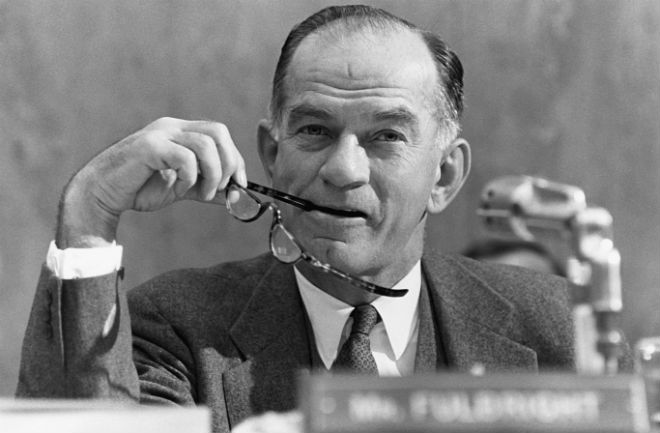
This edition features Micah Roberts discussing “Fulbright’s Balancing Act: How Domestic and International Politics Converged in 1959.”

Senator J. William Fulbright’s 1959 “Face the Nation” interview is used to assess how the Arkansas senator prioritized the Civil Rights agenda in Arkansas with his ambitions as a Cold War statesman. Response letters from Arkansans following the interview and also used to assess the importance of domestic vs. international politics for Arkansans.

Micah Roberts is a graduate student at the University of Arkansas where he studies United States foreign relations and politics during the Cold War, with special attention devoted to the Eisenhower-Khrushchev relationship and their use of personal and public diplomacy.

The Old State House is an agency of the Department of Arkansas Heritage.


Little Rock Look Back: Gen. Grant speaks in Little Rock but does not ride horse in Capital Hotel elevator

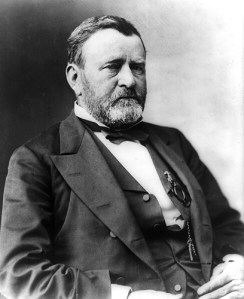
US_Grant_fOn April 15, 1880, former president Ulysses S. Grant spoke in Little Rock as part of his world tour. While here he made a couple of appearances and participated in a parade. It was Grant’s first visit to Arkansas either as a soldier or a politician.

At his outdoor speech, his remarks followed brief comments by Governor William R. Miller and Mayor John Gould Fletcher (erroneously referred to as John C. Fletcher in the Memphis Appeal story the next day). Grant’s comments were brief and flowery. He thanked Arkansans for a warm welcome, praised the future prospects of Arkansas and discussed the demise of what he termed “sectionalism” which was undoubtedly a reference to the division between the Union and and former Confederate states.

Also that day, Grant addressed a banquet in Concordia Hall (now part of the Arkansas Studies Institute complex on the Central Arkansas Library downtown campus). His was one of fifteen toasts that evening. It was simply “The United States of America, forever United.” He expounded briefly on the theme of unity of citizens from all states. He also discussed immigration noting, “All foreigners find a welcome here. We make them American citizens. After we receive them, it is but one generation until they are Americans.” He noted that he could speak much more on the topic, but that since he was but one of fifteen toasts and that there was to be music after each toast, “It will be to-morrow (sic) morning when we get through if we all take as much time as the subjects admit of.”

Not everyone was thrilled to have the former commander of the Union Army in Little Rock. The story goes that when he was parading down the street, some Little Rock women (in a display of Souther un-hospitality) sat in chairs with their backs to the parade route. But all in all, it appears to have been a successful visit for the man who was the only Republican in the 19th Century to win Arkansas’ Electoral votes.Grant arrived in Little Rock on the night of April 14 and lodged at the Capital Hotel. He undoubtedly enjoyed some whiskey and cigars while at the Capital. Grant had originally planned on departing in the afternoon of April 15, but Little Rock leaders pled with him to stay so that he could be honored at the banquet. He assented.

Incidentally, there is an urban myth that, while in Little Rock, General Grant rode his horse in the oversized elevator of the Capital Hotel.  This is a relatively recent story. The oversized elevator was not installed until the 1980s, over 100 years after Gen. Grant was a guest of the facility.