
Little Rock Look Back: St. Patrick’s Day with Mayor Pat L.  Robinson 

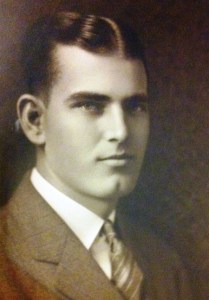
On this date in 1900, future Little Rock Mayor Pat L. Robinson was born.  While I cannot verify that he was indeed named after St. Patrick, it would be fairly reasonable to assume there might be a connection, especially given the fact that he was Catholic.

Robinson was a rising star of Little Rock Democratic politics.  In April 1929, just weeks after his 29th birthday, he was elected Mayor.  He had twice been elected as City Attorney (1926 and 1928) and was one of the youngest to serve in that position.

During Mayor Robinson’s tenure, he announced plans to construct a new airport.  That project led to the creation of what is now the Bill and Hillary Clinton National Airport.  Mayor Robinson was also involved in helping Philander Smith College secure the property where it is now located.  In addition, during his tenure, what is now the Museum of Discovery was folded into the City of Little Rock.

Single at the time he was in office and generally considered good looking, Mayor Robinson was sometimes referred to as the “Jimmy Walker of the Southwest.” Walker was the handsome and charming Mayor of New York City at the time.

Mayor Robinson ran afoul of some of the Democratic party leaders. Records don’t seem to indicate exactly what actions he took or did not take.  One thing that is brought up is that the City went into financial distress during his tenure.  Considering the Wall Street crash happened shortly after he took office, that financial state was not unique to Little Rock.

IMG_4532During this era in Little Rock, it was customary for an incumbent mayor to be given a second term. But City Clerk Horace Knowlton challenged Robinson in the primary.  It was a bitter campaign with Robinson linking Knowlton to disreputable denizens and Knowlton charging Robinson with “an orgy of spending.”  Robinson initially came out 17 votes ahead. But after a review and a lawsuit, it was found that Knowlton ended up with 10 more votes and became the nominee.  At the time, being the Democratic nominee was tantamount to election.

After he left office, Robinson practiced law for a few years in Little Rock and then left the city.  Records do not indicate where he went but he no longer appeared in the City of Little Rock directory by the early 1940s.

The Ides of March Are Come

“The Ides of March are come” – so wrote William Shakespeare.

In tribute to the day on which Julius Caesar was felled by assassins in Rome, a look at a two pieces of art featuring views of Rome, which are in the Arkansas Arts Center collection.    
The first presents a classical take on Rome. View of the Piazza del Campidoglio (Veduta della Piazza del Campdoglio) was created in 1774 by Giovanni Battista Piranesi (1720 – 1778). The print is an etching, acquired by the Arts Center in 1990; it was a gift of John and Grace Marjorie Wood Keppel and Nell Wood.

According to the Arkansas Arts Center,

The Campidoglio has been the seat of the city government of Rome from ancient times to the present. At the top of the Capitoline Hill-one of the famed Seven Hills of Rome-the buildings in Piranesi’s etching are the work of Michelangelo. These elegant Renaissance palaces, perched on this ancient site, were important tourist destinations in the 18th century just as they are today.

Piranesi takes a viewpoint from the side of the site, giving us a dramatic diagonal view of one palace and a head-on view of the other. In the foreground are Grand Tourists in their three-cornered hats as well as a number of less well dressed, slightly suspicious-looking figures.

The second piece is John Heliker’s Pertaining to Rome. Heliker was a 20th Century artist from New York living from 1909 to 2000. His painting is an abstract look at the Italian capital city. It was a gift in 2005 to the Arkansas Arts Center from the Heliker-LaHotan Foundation, Inc.

The Brown Sisters Speak:featuring Phyllis Brown and Minnijean Brown Trickey

 Little Rock Central High School NHS invites you to upcoming community programs in commemoration and celebration of Women’s History Month.  


Saturday, March 14th – 1:30 to 3:00 P.M. 
Ron Robinson Theater
100 River Market Avenue
Little Rock, AR 72201 
501-320-5715

Phyllis Brown and Minnijean Brown Trickey will sit down for a candid conversation about their personal experiences with segregation and being catalysts for change.  Phyllis, social activist and former member of SNCC, and sister Minnijean, member of the Little Rock Nine and social justice advocate, will share their views on the reality of social control and their knowledge of spiritual violations during times of resistance.

 
Presented in partnership with our friends at Central Arkansas Library System and the Ron Robinson Theater.  


         photos courtesy of Wayne Newton,   Isaiah Trickey

Women’s History Month Throwback Thursday: The Fine Arts Club

In 1914, a group of women interested in visual art came together in Little Rock and formed The Fine Arts Club of Arkansas. 

In the early years, they gathered for regular discussions and taught art classes. 

Over time, the Fine Arts Club started acquiring artworks through donations. Originally they displayed these in the Pulaski County Courthouse in a room loaned to them for that purpose. 

Eventually, the County needed the space and the Fine Arts Club needed more room.  In the early 1930s, members approached Mayor Horace Knowlton with the suggestion of the City constructing a fine art museum. 

After securing funding for construction from the WPA, ground was broken and the Museum of Fine Arts opened in 1937 in City Park (now MacArthur Park).

Members of the Fine Arts Club staffed the museum as volunteers and docents as well as arranged for traveling exhibits. From the museum, the club continued to offer classes and guest lectures

By the mid-1950s, there was a desire for larger exhibit space, and the Fine Arts Club joined with the Junior League and the City of Little Rock in creating a new art museum.  

In 1963, the Arkansas Arts Center opened in MacArthur Park. This new facility encompassed the previous museum as well as additional spaces. With the hiring of professional staff to curate exhibits and teach classes, the Fine Arts Club transitioned to a volunteer corps and continued special monthly programming. 

Today, the purpose of the Fine Arts Club is to promote and extend the activities, usefulness and enjoyment of the Arkansas Arts Center.  The Fine Arts Club supports the Arkansas Arts Center by hosting programs featuring knowledgeable and dynamic speakers, and providing volunteers.  

Marines of Montford Park focus of film at MacArthur Museum tonight 

The winter weather delayed this event twice, but tonight the MacArthur Museum of Arkansas Military History will show the film The Marines of Montford Point: Fighting for Freedom.  the movie will start at 6:30 at the museum in MacArthur Park.
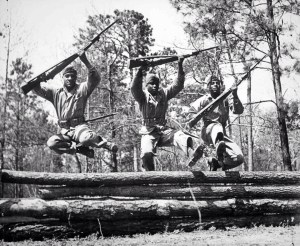
Hosted and narrated by Oscar winner Louis Gossett Jr., this movie profiles the first African Americans recruits in the United States Marine Corps. It begins with their experiences at Montford Point Base, a segregated boot camp in the heart of the Jim Crow South.

All-black battalions from Montford Point loyally served their country (some as officers) in three major conflicts: World War II, Korea and Vietnam.  All the while they were fighting for their country, they were also fighting for their own civil rights back home.

During the film, Montford Point veterans recount the racism they encountered both within and outside the military. They also reminisce about the rigors of basic training, the harsh conditions of the barracks, and the perils of combat.

There is no admission cost.  Light refreshments will be available.

The MacArthur Museum of Arkansas Military History is a program of the City of Little Rock Parks & Recreation Department.

Little Rock Look Back: Little Rock becomes a City of the First Class


On March 9, 1875, the Arkansas General Assembly approved legislation  creating the classification of City of the First Class, and designating Little Rock as the first city with that nomenclature. 

This action by the General Assembly grew from the 1874 Constitution, which replaced the 1868 Constitution. 

In April 1875, Little Rock voters approved a new slate of City Council members and elected John Gould Fletcher as Mayor. 

Little Rock Look Back: City Park becomes MacArthur Park

GOn March 9, 1942, Little Rock’s first public park was renamed by the Little Rock City Council.  By a vote of fourteen ayes, zero nays and four absent, the alderman approved Ordinance 6,388 which renamed the park in honor of General Douglas MacArthur. 

The text of the ordinance says that “it is fitting and proper that the bravery and glorious deeds of General Douglas MacArthur, a native son of Little Rock, should be commemorated.”  This was passed a few months after the United States’ entry into World War II. 

Though he was already a well-established military figure, most of the MacArthur legend during the war would take place after this naming. 

The park land had originally served as a horse racetrack in the early days of Little Rock.  By 1836, the federal government purchased the land for construction of a military arsenal.  The flagship building, the Arsenal Tower building, is the only remaining structure from that time period.  

The land served as a military outpost until 1892.  On April 23, 1892, a land swap took place where in the City of Little Rock was given the property with the stipulation that it would be “forever exclusively devoted to the uses and purposes of a public park.” (Never mind that the federal government took part of the land back for the construction of the Wilbur Mills Freeway.)  

In return for giving the City this land, the federal government took possession of land on the north side of the Arkansas River (then part of Little Rock) – that 1,000 acres became Fort Logan H. Roots. The park opened on July 4, 1893, with the name Arsenal Park. Since it was the City’s first and only park at the time, residents started referring to it as City Park. In time, the designation Arsenal Park fell from use.  In fact, it is referred to as City Park exclusively and officially in City documents throughout the first 42 years of the 20th Century. 

The action of the City Council in March 1942, was accompanied by petitions encouraging the action which were submitted by the Arkansas Authors and Composers Society, the Arkansas Engineers Club and the Pulaski County Republican Central Committee.  

City records do not indicate if anyone registered opposition to the name change. It would be another decade before General MacArthur would return to the site of his birth, a place he had not visited since his infancy.MacPark ordinance