Little Rock Look Back: President Taft Comes to Town

taftOne hundred and five years ago today (October 24, 1909), William Howard Taft became the third sitting president to visit Little Rock.  His visit is the shortest presidential visit to the city.  In this day of touchdowns at airports by politicians on the political stump, it is interesting to note that the shortest visit was made on a train.  It was a true “whistle stop” visit.

Taft’s train arrived at Union Station (then a new building which burned in 1920 and was replaced by the one standing there today) in Little Rock to a crowd of 15,000. President Taft stepped from the train, made brief remarks in a hoarse voice that few heard, stepped back onto the train and departed.

That same day he spoke in Texarkana and Arkadelphia.  He was on his way to Helena to speak at a ceremony.

Healthcare Pioneers focus of this year’s Civil Rights Heritage Trail

crht-banner-2014-thru-banner32Drs. Thomas A. Bruce, M. Joycelyn Elders, Henry Foster Jr., Edith Irby Jones, and Billy Ray Thomas, and five posthumous honorees will be recognized for their efforts to provide quality healthcare to all citizens at 2 p.m. Friday, Oct. 24, in the Little Rock River Market District at the entrance of the St. Vincent Medical Mile.

Posthumous honors will be bestowed upon Drs. Cleon A. Flowers Sr., Samuel Lee Kountz, and John Marshall Robinson; registered nurse Lena Lowe Jordan; and scientist and educator Phillip Leon Rayford, Ph.D., during the fourth annual Arkansas Civil Rights Heritage Trail Commemoration.

Commemorative markers will be added to the Heritage Trail in honor of pioneers in health care, individuals who were either first of their race to graduate from medical school, or who have shared their professional talents generously in ways that have championed racial equity in Arkansas.

“This year, the Institute turned to healthcare because even though it is a profession by which African Americans in particular have been grossly underrepresented and underserved, Arkansas has a rich tradition of producing some of the nation’s best and brightest medical professionals,” said Dr. Michael R. Twyman, director of the UALR Institute on Race and Ethnicity.

The Institute is partnering with the University of Arkansas for Medical Sciences Center for Diversity Affairs to honor these healthcare professionals. The center specializes in encouraging young persons of color to seek careers in health and STEM professions.

“I am honored to be recognized with such accomplished people,” said Thomas, vice chancellor for diversity affairs at the University of Arkansas for Medical Sciences. “It is also a very humbling experience because many of the other honorees are also my mentors.”

Like Thomas, the other nine honorees have made significant contributions toward social and racial equity in Arkansas – most of whom received their professional education and training during the the Civil Rights Movement era, during a time of deep civil unrest in the country and state.

“It is not lost on us that this year marks the 60th anniversary of the Brown vs. Board of Education court decision that prohibited public institutions from discriminating on the basis of race,” said Twyman.

“Access to quality education and healthcare have become the predominant civil rights issues of our time,” he added.

Learn more about each honoree at  arkansascivilrightsheritage.org supported in part by a grant from the Arkansas Humanities Council and the National Endowment for the Humanities.

In addition to the Center for Diversity Affairs at UAMS, the Central Arkansas Planning and Development District; East Harding Inc.; Arkansas Medical, Dental, and Pharmaceutical Association; Just Communities of Arkansas; the Little Rock Alumnae Chapter of Delta Sigma Theta Sorority, Inc.; and the Little Rock Alumni Chapter of Kappa Alpha Psi Fraternity, Inc. are sponsors for the event.


About the Civil Rights Heritage Trail

The Arkansas Civil Rights Heritage Trail was created in 2011 to acknowledge the sacrifices and achievements made by those who have fought for racial justice in the state. The Heritage Trail begins at the Old State House and currently stretches to the front of the Little Rock Regional Chamber of Commerce. As commemorative bronze markers are added each year, it will continue toward the William J. Clinton Presidential Center and beyond.     


About the UALR Institute on Race and Ethnicity

The UALR Institute on Race and Ethnicity was founded in July 2011. With a vision to make Arkansas the best state in the country for promoting and celebrating racial and ethnic diversity, the Institute conducts research, promotes scholarship and provides programs that address racial inequities. It does so by facilitating open and honest dialogue aimed at empowering communities and informing public policy to achieve more equitable outcomes.

LR Cultural Touchstone: Cheryl Griffith Nichols

C NicholsCheryl Griffith Nichols is a historian, with an emphasis on historical structures, who has lived and worked in Arkansas since 1978.

She was born and raised in Indiana and graduated from Hanover College in 1974. After working for three years as the executive director of the Bartholomew County Historical Society in Columbus, Indiana, she enrolled in George Washington University in Washington DC, majoring in American studies with a concentration in historic preservation. While living in Washington, she worked for the National Register of Historic Places.

She moved to Little Rock in 1978, where she married attorney Mark Nichols and completed her Masters degree by writing a thesis on the Pulaski Heights community; the thesis was accepted in 1981. Meanwhile, Nichols became acquainted with Charles Witsell (a prominent Little Rock architect and historic preservation advocate) while he was working with F. Hampton Roy (a Little Rock ophthalmologist, historic preservation advocate and Little Rock City Director) to write a book about the history of Little Rock. Nichols did extensive research for the book, which was published in 1984 by August House as How We Lived: Little Rock as an American City.

Nichols then became a free-lance researcher, operating a business in Little Rock which she called History, Inc. This business did research and documentation of historic structures in Arkansas, mostly but not entirely in Pulaski County. Nichols also worked for the Museum of Science and History (now the Museum of Discovery) in Little Rock, served as the Executive Director of the Quapaw Quarter Association from 1984 through 1987 and again from 1991 through 1997, and wrote several books for the Arkansas Historic Preservation Program (Little Rock: Driving Tour of Three Historic Neighborhoods, 1989; MacArthur Park Historic Tours, 1993, Governor’s Mansion Area, 1993; Historically Black Properties in Little Rock’s Dunbar School Neighborhood, 1999, The Arkansas Designs of E. Fay Jones, 1999, Hillcrest: The History and Architectural Heritage of Little Rock’s Streetcar Suburb, 1999, and Construction of the Military Road Between Little Rock, Arkansas, and Fort Gibson, Oklahoma, 2003.)

She has remained active in historic preservation efforts.  She has served on the board of the Historic Preservation Alliance of Arkansas and the National Trust for Historic Preservation.  She also served on a task force to determine the best use of Curran Hall.  Much of her research has been donated to the Arkansas Studies Institute.

An Arkansas Made Tales from the South tonight at Historic Arkansas Museum

talesfromsouthWith a theme of “Arkansas Made,” where better to find Tales from the South than the home of the “Arkansas Made” exhibits – Historic Arkansas Museum?

The featured storytellers are Haley Villines, Alan Hale, and Denise Parkinson.  Live music is provided by Amy & Brad Williams and bluesman Mark Simpson.

“Tales From the South” is a radio show created and produced by Paula Martin Morell, who is also the show’s host. The show is taped live on Tuesday. The night is a cross between a house concert and a reading/show, with incredible food and great company. Tickets must be purchased before the show, as shows are usually standing-room only.

“Tales from the South” is a showcase of writers reading their own true stories. While the show itself is unrehearsed, the literary memoirs have been worked on for weeks leading up to the readings. Stories range from funny to touching, from everyday occurrences to life-altering tragedies.

Doors open for dinner, socializing at 5 pm; Live music at 6 pm; Dinner available for purchase from Southern Salt Food Truck.  Show starts at 7 pm Tickets $10

You MUST purchase your ticket before the show.

Previous episodes of “Tales from the South” air on KUAR Public Radio on Thursdays at 7pm.  This program will air on November 13.

LR Cultural Touchstone: Louise Loughborough

louise_loughborough_fLouise Loughborough could be called the mother of historic preservation and history museums in Arkansas.

Born Louisa Watkins Wright in Little Rock 1881, her ancestors included many early Arkansas leaders. At age 21 she married attorney J. Fairfax Loughborough.  She became active in several organizations including the Little Rock Garden Club, Colonial Dames and Mount Vernon Ladies Association.

Her involvement in historic structures in Little Rock began when the Little Rock Garden Club sought to improve the appearance of the War Memorial Building (now known as the Old State House Museum) in 1928. The grounds were littered with signs and monuments, and the roof of the Greek Revival building sported figurative statues of Law, Justice, and Mercy, which had been installed above the pediment after being salvaged from the Arkansas exhibit at the Philadelphia Centennial of 1876. To take the façade of the edifice back to its original 1830s appearance, Loughborough had the statues removed—without the permission of the War Memorial Commission, which had legal authority over the building.

In 1935, Loughborough was appointed to the Little Rock Planning Commission, and it was in this role that she first heard about the plan to condemn the half-block of houses that she had grown up admiring on Cumberland and East Third streets. Although the neighborhood had fallen on hard times, becoming a red-light district and slum, Loughborough feared the loss of several historic structures, including the Hinderliter House, the oldest building in Little Rock and thought to be Arkansas’s last territorial capitol. She mobilized a group of civic leaders to save these buildings. She enlisted the aid of prominent architect Max Mayer and coined the term “town of three capitols” to try to capture the imagination of potential supporters, grouping the “Territorial Capitol” with the Old State House and the State Capitol.

In 1938, Loughborough secured a commitment from Floyd Sharp of the federal WPA to help with the project, on the condition that the houses be owned by a governmental entity. She persuaded the Arkansas General Assembly to create and support, with general revenues, the Arkansas Territorial Capitol Restoration Commission (Act 388 of 1939). This satisfied Sharp’s condition, and the WPA provided labor and material for the new historic house museum. A private fundraising campaign brought in the remaining monetary support necessary for the completion of the project.

The Arkansas Territorial Restoration opened on July 19, 1941. The project was the first Arkansas agency committed to both the restoration of structures and the interpretation of their history, and it served as a model and inspiration for historic preservation in the state. Around the same time, she was a moving force behind the creation of a museum at the Old State House as well.  Today both Historic Arkansas Museum (as the Territorial Restoration is now known) and the Old State House Museum are agencies of the Department of Arkansas Heritage.

As founding Chairman of the Arkansas Territorial Restoration Commission, Louise Loughborough provided daily direction for the museum house complex through the first twenty years of its existence, yielding her authority to architect Edwin B. Cromwell only as her health began to fail. She died in Little Rock on December 10, 1962 and was buried at Mount Holly Cemetery.

Quilts, Women in Ads focus of exhibits at Historic Arkansas Museum

In addition to the exhibit on 40 years of the Arkansas Times, Historic Arkansas Museum features several other exhibits.

The Great Arkansas Quilt Show 3 is a juried quilt show that celebrates contemporary Arkansas quilters and features more than 30 quilts from across the state. You’ll be surprised by the variety in size, technique and composition. These quilts are works of art.

Prizes were awarded for Best of Show, Best Hand Quilting and Best Machine Quilting, as well as awards in the following categories: Pieced, Appliqué, Mixedand Group.

The Great Arkansas Quilt Show 3 continues in the Horace C. Cabe Gallery through  May 3, 2015.

Group Category
1st Place Group, Buttons and Beads on a Winding Road, Bonnie Kastler, Hot Springs Village
2nd Place Group, My Carolina Lily, Phyllis Holder, Mabelvale
3rd Place Group, Reminiscence, Gail Zukowski, Hot Springs
Mixed Category
1st Place Mixed, Irish Knots and Golden Coins, Jaynette Huff, Conway
2nd Place Mixed, Feathered Friends, Darlene Garstecki, Hot Springs Village
3rd Place Mixed, Rose Cottage, Terrie Newman, Hot Springs
Pieced Category
1st Place Pieced, Forest Primeval, Karen Harmony, Eureka Springs
2nd Place Pieced, Starry Starry Bright, Donna Toombs, North Little Rock
3rd Place Pieced, Old Military Road, Victoria Kauth, Mountain Home
Appliqué Category
1st Place Appliqué, Victorian Elegance—Newel Posts and Wrought Iron, Jaynette Huff, Conway
2nd Place Appliqué, Just a Little Snack, Linda Tiano, Hot Springs Village
3rd Place Appliqué, If Only it was that Easy, Karen Harmony, Eureka Springs
Best Machine Quilting, Winter Sky, Wilma Richter, Little Rock
Best in Show, Irish Knots and Golden Coins, Jaynette Huff, Conway
Viewer’s Choice Award, Chinoiserie, Pamela Davis, Edgemont

The Thirteenth Annual Eclectic Collector Series

A Beauty on It Sells: Advertising Art from the collection of Marsha Stone

Women have been used in modern advertising since its inception.  Marsha Stone’s vintage collection of advertising materials from the late 19th and early 20th century showcases a rare glimpse into the world of advertising in days gone by.

The exhibit continues in the Study Gallery through  January 1, 2015.

 

LR Cultural Touchstone: Agnes Loewer

Photo from Arkansas History Commission

Photo from Arkansas History Commission

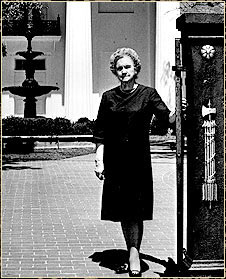
Agnes McDaniel Loewer was a driving force and the first curator of the Old State House Museum.

Born June 26, 1893, in Searcy, she moved to Little Rock with her family in 1900.  After turning 18, she began her business career working for the Underwood Typewriter Company, Mayor Charles Taylor, and the Little Rock YWCA.  In 1919, at age 26, she married Charles F.W. Loewer.

Throughout the years, Agnes McDaniel Loewer was active in numerous civic organizations, devoting her business and organizational skill to a great many causes. She served as secretary, treasurer, and president of various organizations, and filled leadership roles in accomplishing goals and missions. Loewer was a member of the Arkansas Federation of Women’s Clubs, the Business and Professional Women’s City Club, the Women’s Division of the State Fair, the Arkansas Conference of Welfare Legislation, the National Youth Association, the Canteen Corps of the American Red Cross, and the Arkansas Federation of Garden Clubs, among others.
Around 1939 Loewer and Louise Loughborough lobbied daily in the halls of the State Capitol for the preservation of the Old State House. Successful in this endeavor, Loewer was appointed a member of the Arkansas Commemorative Commission of 1947, which was formed that year to oversee the restoration of the Old State House and create a future museum of Arkansas history. She served as secretary to the commission, a position that later evolved into director.
When the restoration was completed, Loewer was hired as the first curator of the Old State House, beginning July 1951.  Utilizing a small paid staff and an army of well-instructed volunteers, she oversaw the museum.  Throughout her curatorship, she promoted the Old State House as a historic shrine and tourist attraction, and continued to battle threats to its preservation.

Her interest in history extended beyond the Old State House, she was a member of the Quapaw Quarter Association, Arkansas State Historical Society, Pulaski County Historical Society, and Arkansas Landmarks.

In March 1972, she retired at age 78, after 21 years as curator.  Among the honors she received were a commendation from the Arkansas Legislative Council in 1971 for her public service; a certificate of appreciation from the Arkansas Parks, Recreation and Travel Commission in 1974; and an award from the National Trust for Historic Preservation in 1974, presented by former first lady Lady Bird Johnson.
Loewer died on September 18, 1975 and is buried in Roselawn Memorial Park.