Opening of War Memorial Stadium on Sept. 18, 1948

On September 18, 1948, the Arkansas Razorbacks took on Abilene Christian and won the game by a score of 40 to 6.  It was the first game of the season, and the Razorbacks went into the game ranked #13. They maintained that ranking for four weeks before falling out of national standings.  The team ended up with a season record of five wins and five losses. Playing four of their games at War Memorial that season, they were two and two in Little Rock. They were one and two in Fayetteville and amassed a 2-1 record on the road.

Dedication ceremony in 1948. Photo courtesy of the War Memorial Stadium Commission.

Prior to the game, the stadium was dedicated to the veterans of World War I and World War II in a ceremony led by former Razorback standout and Medal of Honor recipient Maurice “Footsie” Britt.

Though Britt would later be known for entering politics and becoming Arkansas’ first Republican Lieutenant Governor, in his college days he was known statewide as an outstanding Razorback football and baseball athlete.  During World War II, his bravery and courage allowed him to become first person in American history to earn all the army’s top awards, including the Medal of Honor, while fighting in a single war.

Also participating in the opening ceremony were a mass of high school marching bands from across the state. Reports indicate up to forty bands were on the field to play the National Anthem as part of the event.

The construction of the stadium had been the brainchild of Razorback coach John Barnhill and Arkansas Secretary of State C. G. “Crip” Hall.  The duo shepherded it through the 1947 Arkansas General Assembly.   As a student at the University, Hall had been a team manager for the Razorbacks and had remained a longtime, active supporter.

In August of 1947, Little Rock was chosen as the location over Hot Springs and North Little Rock. West Memphis had abandoned its bid when it was unable to secure the necessary financial pledges.  Construction started in 1947 and continued up until opening day.  On the day of the game, newspaper photos showed heavy equipment grading the parking lot prior to paving.

The park in which the stadium sat would be renamed War Memorial Park in June 1949 and dedicated by President Harry S. Truman in a nationally-broadcast ceremony from War Memorial Stadium.
Concert in memory of longtime ASO violinist Eric Hayward presented tonight

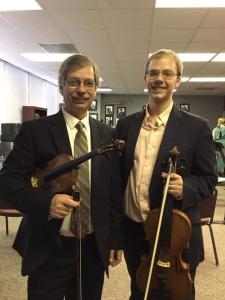
Eric and Christopher Hayward

On Tuesday, September 17, in the first concert of Festival of the Senses’ 2019-20 performing arts season, a string ensemble will play Tchaikovsky’s celebrated Piano Trio in A Minor and a new piano quartet, “The Black Rose,” composed by Little Rock’s Dustin Yoder in memory of Eric Hayward of the Arkansas Symphony Orchestra (ASO).

The free concert will be held at 7:00 p.m. at St. Luke’s Episcopal Church, 4106 JFK Boulevard in North Little Rock, and will feature ASO Concertmaster Kiril Laskarov on violin, Stephen Feldman on cello, May Tsao-Lim on piano, and Eric Hayward’s son, Christopher Hayward, on the viola. A reception will be held in the parish hall following the performance.

“Eric Hayward was our friend and colleague in the Arkansas Symphony and we miss him dearly,” says Kiril Laskarov. “Eric loved chamber music, so we thought the best way to honor his memory was to present this program. We combine one of the greatest chamber music pieces in the literature, Tchaikovsky’s Piano Trio, which was dedicated to another great musician, the pianist Nikolai Rubinstein, with the world premiere of a piano quartet entitled ‘The Black Rose,’ which was composed by Eric’s student Dustin Yoder and will feature Chris Hayward, Eric’s son, on the viola.”

Eric Hayward (1954-2018) was an associate concertmaster and principal second violinist with the ASO for 38 years and a founding member of Arkansas’ premier string quartet, the Quapaw String Quartet. Following his death in 2018, the ASO established a principal second violin chair in his memory. He held degrees from Oregon State and Northwestern Universities and studied at the University of Iowa, taught violin and viola privately and in a number of local schools, and played in various concerts at St. Luke’s since before the inception of Festival of the Senses.

Christopher Hayward began his musical education following in his father’s footsteps on violin but later changed to the viola. A 2006 graduate of Little Rock Central High School, he attended Evangel University in Springfield, Missouri, and is now married and lives and works in Maumelle. He has played in the Arkansas Youth Orchestra, All-Region Orchestra, All-State Orchestra, and the Missouri All-Collegiate Orchestra.

Dustin Yoder, currently resident composer for WAMA, the music and arts camp of Little Rock’s Wildwood Park for the Arts, is a local musician and former student of Eric Hayward. He was a 2015 violin finalist for the High School Honors Performance Series Orchestra at Carnegie Hall. He teaches private lessons locally, plays part-time in the ASO, has composed scores for a number of short films, and is a self-taught painter.

THE PROGRAM

Piano Trio in A Minor, Opus 50 – Pezzo Elegiaco
  Dedicated to Nikolai Rubinstein (1835−1881)
by Peter Ilich Tchaikovsky (1840−1893)

Piano Quartet in C Minor, “The Black Rose”
  Dedicated to Eric Hayward (1954−2018)
by Dustin Yoder (b. 1996)

Piano Trio in A Minor, Opus 50 – A. Tema con Variazioni; B. Finale e Coda
by Tchaikovsky

THE ONLY PLANE IN THE SKY by Garrett Graff is focus of Clinton School program this evening

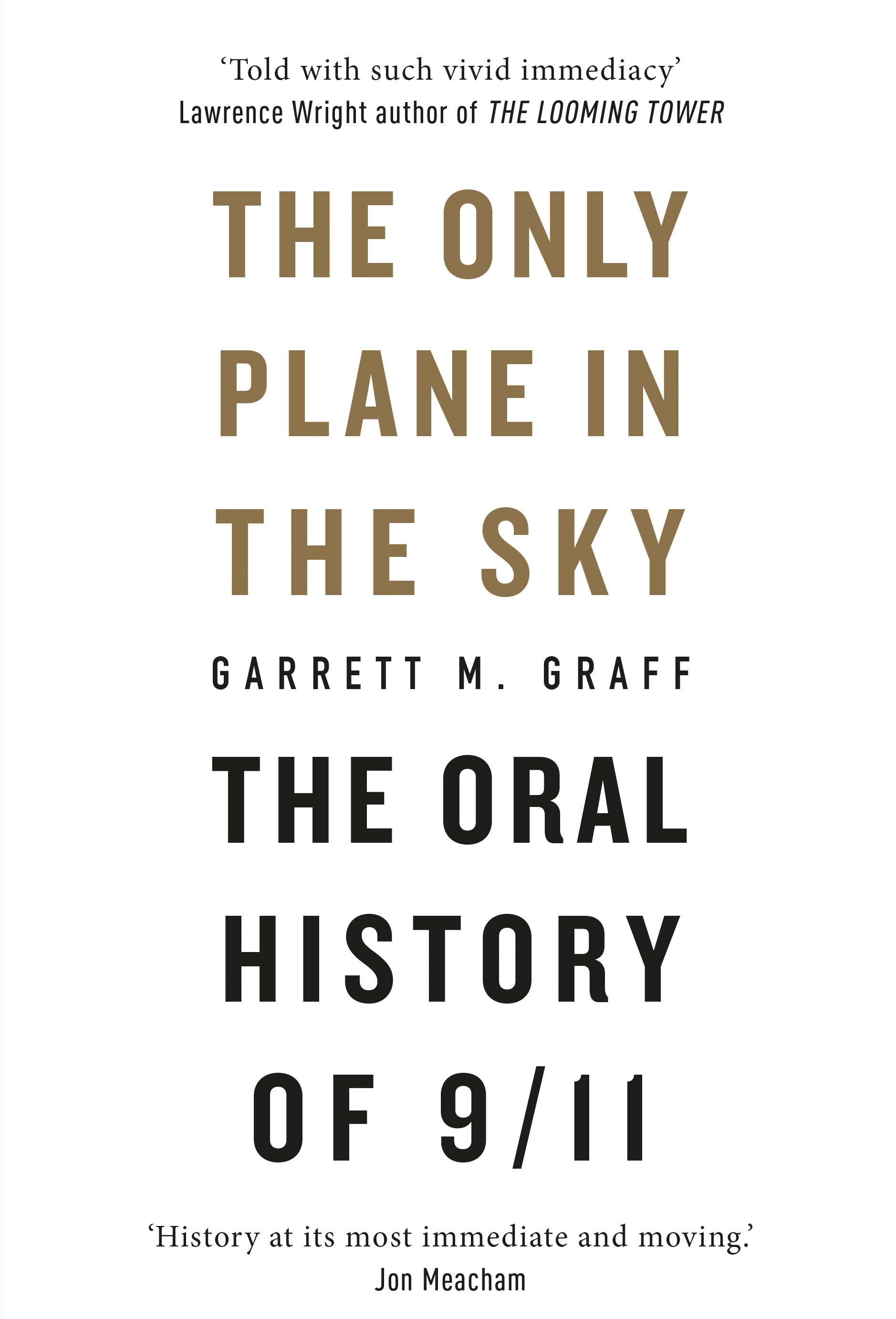
Image result for only plane in the skyLast week was the 18th anniversary of the events of September 11, 2001. Tonight, the Clinton School of Public Service presents journalist and author Garrett M. Graff discussing his book about that day, The Only Plane in the Sky.
This book represents the first comprehensive oral history of the American experience on September 11th, pulling together 500 oral histories from New York, the Pentagon, and Shanksville, as well as air traffic controllers, fighter pilots, on Capitol Hill, families of victims, and so forth, as well as a lot of unexpected perspectives too—the captain of the USS Enterprise aircraft carrier, a guard at the Tomb of the Unknown Soldier, and what it was like to be a schoolchild and college student across the country that day.

It’s a unique and illuminating perspective on a day that forever changed our country told only in the voices of those who lived it.

Garrett M. Graff is an American journalist and author. He is a former editor of Politico Magazine, editor-in-chief of Washingtonian magazine in Washington, D.C., and instructor at Georgetown University in the Masters in Professional Studies Journalism and Public Relations program

All Clinton School Speaker Series events are free and open to the public. Reserve your seats by emailing publicprograms@clintonschool.uasys.edu or by calling (501) 683-5239.

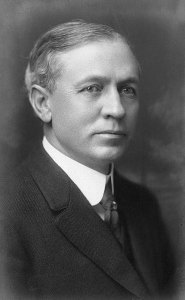
Birth of Little Rock’s 42nd Mayor – Charles E. Taylor

Bill Clinton has the distinction of being both the 42nd President of the United States and the 42nd Governor of Arkansas.  But the 42nd Mayor of Little Rock was Charles E. Taylor.

On September 15, 1868, future Little Rock Mayor Charles E. Taylor was born in Austin, Mississippi.  After locating to eastern Arkansas, his family moved to Little Rock around 1880.

Taylor graduated from Scott Street High School in Little Rock and proceeded to work for various hardware stores and other businesses.  In 1895 he married Belle Blackwood, with whom he would have four children.

In 1910, Taylor announced his intention to run for mayor of Little Rock.  Though he had never held elective office, he had been involved in several civic organizations.  Taylor was the main challenger to Alderman John Tuohey.  Seen as a reformer, Taylor initially lost to Tuohey.  But after an investigation of voter fraud and a subsequent runoff, Taylor was elected Mayor.

Upon taking office in August 1911, Mayor Taylor focused on improving health conditions in the city, upgrading the fire department and enhancing the overall moral tone of the city.

As a progressive of the era, he fought against gambling, drinking and prostitution.  He created a Health Department and enhanced the City Hospital.  His efforts led to a decrease in the death rate in Little Rock.  As mayor, Taylor introduced motorized vehicles to the Fire Department.  He also led the City Council to establish building and electrical codes.  Mayor Taylor also oversaw the construction of the 1913 Beaux Arts Central Fire Stations (which today serves as the City Hall West Wing).

Under his leadership, the City of Little Rock annexed Pulaski Heights. One of the selling points to Pulaski Heights residents was Mayor Taylor’s ability to provide modern services such as paved streets, water mains, fire hydrants and street lights.

Though neither his 1911 Parks Master Plan nor his dreams for a civic auditorium came to fruition, they paved the way for future successes in both of those areas.

Funding for projects continued to be a problem throughout Mayor Taylor’s four terms in office.  He believed that one obstacle to city funding was the prohibition by the state constitution against cities issuing bonds.  Though that ban has since been lifted, Taylor tried three times unsuccessfully to get it changed while he was Mayor.

In April 1919, Taylor left office after having served eight years.  He was the longest serving Mayor of Little Rock until Jim Dailey served in the 1990s and 2000s.  Following several business ventures, Taylor moved to Pine Bluff and led their chamber of commerce from 1923 through 1930.

Mayor Charles E. Taylor died in Pine Bluff in 1932. He was buried at Oakland Cemetery in Little Rock.

During his time in office, Mayor Taylor was presented with an unofficial flag of Little Rock by a group of citizens.  During Mayor Dailey’s tenure, that flag was restored by some private citizens and presented to the City.  It is framed on the 2nd Floor of Little Rock City Hall.

Birth of Little Rock’s 35th Mayor – H. L. Fletcher

Little Rock has had several familial combinations serve as mayor, but only one set of brothers have both been mayor.  One half of that duo was born on this date in 1833.

On September 15, 1833, future Little Rock Mayor Henry Lewis Fletcher was born in Saline County.  His parents were Henry Lewis and Mary Lindsey Fletcher.  One of his siblings was future Little Rock Mayor John Gould Fletcher.

Though the life of John Gould Fletcher is fairly well documented, not much information is out there on his brother Henry Lewis (and some of what is out there is incorrect).  He married Susan Bricelin August 30, 1855, in Pulaski County.  During the Civil War, he served as a sergeant in the cavalry for the Confederate Army in Captain Ed Nowland’s Company.

As a civic leader, Fletcher oversaw Arkansas’ contribution to the Philadelphia Centennial Exposition in 1876. Fletcher served as Mayor of Little Rock from 1891 to 1893.  When Fletcher became Mayor he appointed a new Police Chief (as most Mayors did) and the entire police force was dismissed (which was not always the case).  A new police force was hired by E. H. Sanders, who served as chief for 18 months.

Mayor Fletcher died on June 30, 1896 and is buried at Oakland Cemetery next to his wife (who died in 1911).