Butler Center’s Legacies & Lunch: The Thousand-Year Flood

The Central Arkansas Library System’s Butler Center for Arkansas Studies sponsors the “Legacies & Lunch” conversation each month.  November’s program features David Welky discussing his new book, The Thousand-Year Flood: The Ohio-Mississippi Disaster of 1937.

In this book, Dr. Welky, an associate professor of history at the University of Central Arkansas, discusses the 1937 deluge which was one of the biggest natural disasters in American history.

Welky

David Welky, associate professor of history at the University of Central Arkansas, specializes in 1930s America and has written several other books, including Everything Was Better in America: Print Culture in the Great Depression and The Moguls and the Dictators: Hollywood and the Coming of World War II.

Legacies & Lunch is sponsored in part by the Arkansas Humanities Council. Bring a sack lunch; drinks and dessert are provided. This event is free and open to the public

UALR History Institute Continues Evenings with History

The 21st year of the UALR History Institutes’ Evenings with History continues on November 1.

Tonight’s presenter is Dr. Story Matkin-Rawn, a special guest from the University of Central Arkansas.  Her talk is entitledFrom Land Ownership to Legal Defense: The World War I Watershed in Black Arkansan Organizing.”  The session takes place at the Ottenheimer Auditorium of Historic Arkansas Museum. Refreshments are served at 7 with the program beginning at 7:30 pm. The cost is $50 for admission to all six programs.

Dr. Matkin-Rawn examines the time period around The Great War and how that affected blacks in the South, especially Arkansas.  A rise in farm commodity prices during World War I should have helped many black farm families break the cycle of sharecropping.  But due to fraud and exploitation, it did not.  This caused hundreds of black farmers to organize Progressive Farmers and Householders Union.  The Elaine Massacre destroyed their movement and claimed scores of black Arkansan lives. Though the organization was ended, the movement and quest for economic stability was far from over.

Matkin-Rawn

Matkin-Rawn

This talk traces how a rising generation of activists regrouped from broken wartime promises and white terrorism to create new strategies, new networks, a new vision, and indeed, a new generation who would confront white supremacy through a constellation of statewide political, civic, and legal justice campaigns.

Dr. Matkin-Rawn is an Assistant Professor in the History Department at UCA.  She received her Ph D from the University of Wisconsin-Madison.  Her specialty fields are Southern and African American History, 20th Century US History and the history of Education.

The corporate sponsors for the 2011-2012 season are Delta Trust, Union Pacific Railroad, the Little Rock School District—Teaching American History Program; the law firms of  Friday, Eldredge & Clark and Wright, Lindsey & Jennings. Support and gifts in kind have been provided by the UALR Ottenheimer Library; Historic Arkansas Museum, a museum of the Department of Arkansas Heritage; UALR Public Radio–KLRE-KUAR; and Grapevine Spirits.

Arts & Humanities Month: MacArthur Museum of Arkansas Military History

Located in the historic Arsenal Tower in MacArthur Park, the MacArthur Museum of Arkansas Military History honors the Arkansans who have served in the armed forces.  Exhibits feature artifacts, photographs, weapons, documents, uniforms and other military items that vividly portray Arkansas’s military history at home and abroad.

The exhibits include “Through the Camera’s Eye: The Allison Collection of World War II Photographs,” “Alger Cade Gun,” “By the President in the Name of Congress: Arkansas’ Medal of Honor Recipients,” “Camden Expedition,” “Conflict and Crisis: The MacArthur-Truman Controversy,” “David Owen Dodd,” “In Search of Pancho Villa: the Mexican Punitive Expedition of 1916,” “The Forgotten War: Arkansas and the Korean War,” “From Turbulence to Tranquility: The Little Rock Arsenal,” “The Sun Never Sets on the Mighty Jeep: The Jeep During World War II,” “War and Remembrance: The 1911 United Confederate Veterans Reunion, “The War to End All Wars: Arkansas Fights World War I.”

The newest exhibit is “A Splendid Little War: Arkansas and the Spanish-American War” which runs through April 2012.  It explores America’s role in the brief war with Spain over territory, the destruction of the “USS Maine” and the many Arkansans who volunteered for service during the war. On display are uniforms, weapons, a battle flag from the 2nd Arkansas Volunteer Infantry, memorabilia surrounding the war and many other artifacts used by Arkansans serving in the war.

The MacArthur Museum of Arkansas Military History is a museum of the City of Little Rock.  It is led by executive director Stephan McAteer who works with the MacArthur Military History Museum Commission.  The museum is open Tuesday through Friday from 9am to 4pm, Saturday from 10am to 4pm and Sunday from 1pm to 4pm.

Arts & Humanities Month: Mosaic Templars Cultural Center

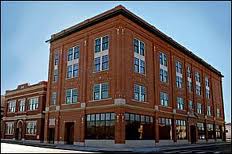
The newest museum of the Department of Arkansas Heritage, the Mosaic Templars Cultural Center is located at Ninth Street and Broadway in downtown Little Rock.  The Center is located in a site that was once the hub of Arkansas’ African American life and culture.

The Mosaic Templars Cultural Center The museum is dedicated to collecting, preserving, interpreting, and celebrating African American history, culture and community in Arkansas from 1870 to the present, and informs and educates the public about black achievements – especially in business, politics and the arts. Through special events, outreach and exhibits such as the Arkansas Black Hall of Fame, the museum celebrates Arkansas’s African American heritage.

Permanent exhibits include “A Building for the Community,” “A City within a City,” “Brotherhood and the Bottom Line,” “Entrepreneurial Spirit” and “African Americans in Arkansas.”  In addition, it currently features the exhibits “Soul Sanctuary: Images of the African American Worship Experience” and “Capturing Greatness.”

The roots of the Mosaic Templars Cultural Center date back to 1992 when a group of concerned citizens fought to save the Mosaic Templars of America Headquarters building from being demolished.  The building had been built in 1913 as one of what would eventually be a three-structure complex which was home to the Mosaic Templars of America organization.  In 1993, the City of Little Rock purchased the building in order to save it.  In 2001, the structure became property of the State of Arkansas and the fourth museum of the Department of Arkansas Heritage.

While renovation plans were underway in March 2005, a fire destroyed the historic structure. But the State, City and other supporters worked to ensure that the museum facility would be rebuilt.  Using the original design as inspiration, the new museum opened in September 2008.

The Mosaic Templars Cultural Center is opened Tuesday through Saturday from 9am to 5pm.

Arts & Humanities Month: Rowher Art Exhibit at Arkansas Studies Institute

The Arkansas Studies Institute (ASI) is a collaboration between the Central Arkansas Library System’s Butler Center for Arkansas Studies and the University of Arkansas at Little Rock.

Rohwer Camp #23 artist unknown

In addition to being a repository for historical collections, the ASI houses four art galleries, , featuring the work of Arkansas artists and art related to the state. The exhibit galleries feature rotating exhibits including works from the CALS permanent collection.

Currently on display is the multi-media exhibit entitled “The Art of Living: Japanese American Creative Experience at Rowher.”  Curated by Butler Center staff from the Mabel Rose Jamison Vogel/Rosalie Santine Gould Collection, it showcases art created by internees at the Rohwer Relocation Center in Desha County and tells the story of creativity in the face of dire circumstances. It is on display through November 26.


Also on display at the ASI are the following exhibits:

  • Thomas Harding, Pinhole Photography – October 14 – December 31
  • Arkansas Pastel Society’s National Exhibition – October 14 – January 14
  • Leon Niehues: 21st Century Basketmaker – October 14 – January 28

Designed by the architectural firm of Polk Stanley Wilcox, the ASI campus is comprised of three buildings from three different centuries which were combined seamlessly.  In recognition of this effort, the Arkansas Studies Institute (ASI) received the 2011 AIA/ALA Library Building Award—one of only five awards given worldwide. The award, presented every two years by the national American Institute of Architects and the American Library Association, honors excellence in the architectural design and planning of libraries.

“We worked diligently to design a facility that would both connect the public with Arkansas’s rich history and enliven the streetscape, drawing people in,” said Reese Rowland, project design principal with Polk Stanley Wilcox Architects. “This national recognition is a testament to the public’s trust and continued investment in one of our community’s most critical assets, the public library. Our firm takes great pride in contributing to that trust. It’s always an honor to work with the visionary leadership at CALS.”

Arts & Humanities Month: Clinton Presidential Center

The William J. Clinton Presidential Center offers visitors a variety of permanent and temporary exhibits, lectures, the official archives of the Clinton presidency, special events and a restaurant.

The facility consists of 20,000 square feet of exhibit space, including a White House Cabinet Room reconstruction and a full-scale replica of the Oval Office. The permanent exhibits are divided into the following areas: the Campaign, Inauguration, the Vice President, White House at Work, Life in the White House, and the Work Continues.  There is also a film produced by award-winning filmmaker Harry Thomason which introduces visitors to Clinton and the Clinton Library.  (As hard as it is to believe, there are now voters who were born during the Clinton White House years.)

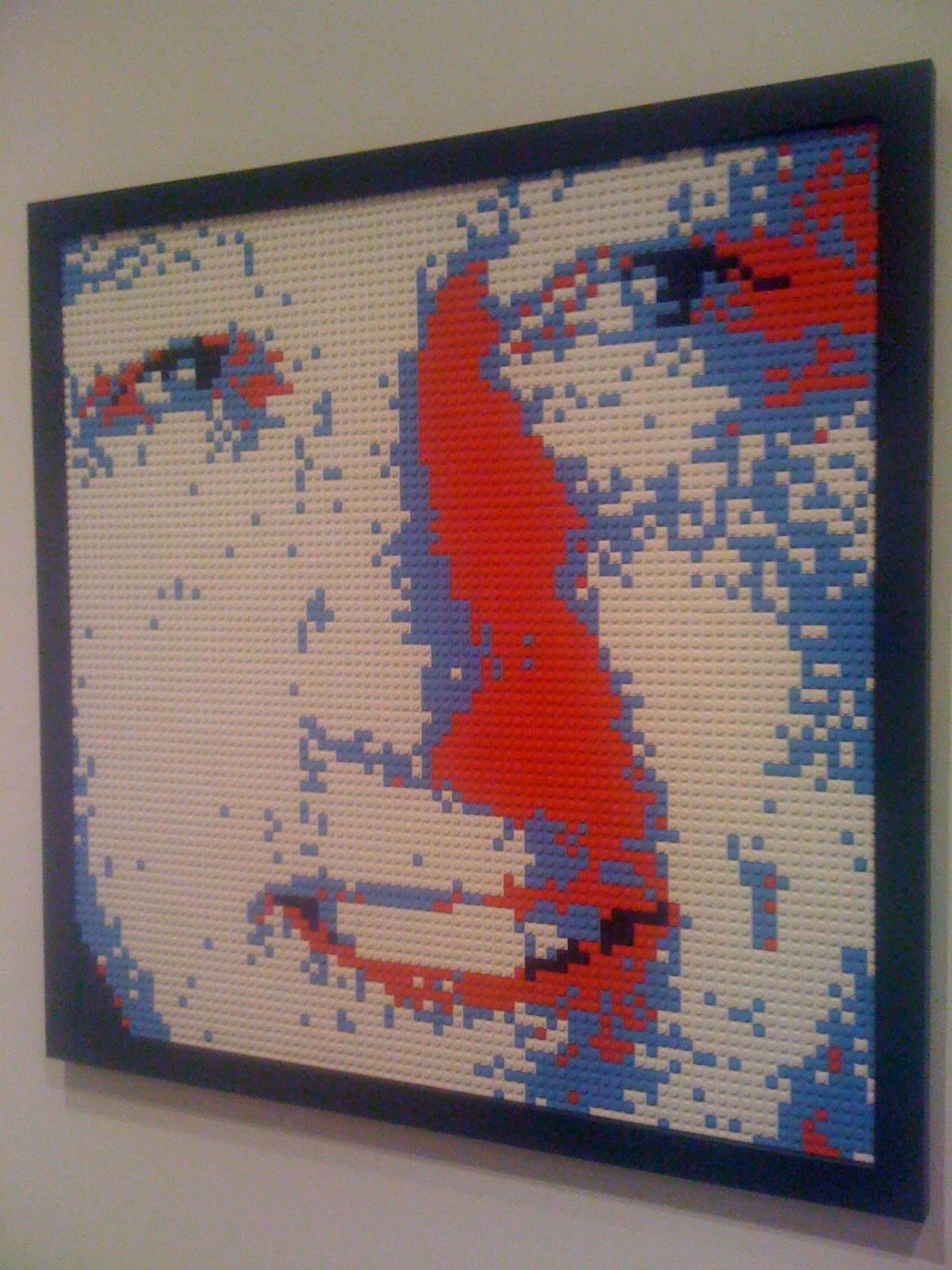
LEGO Clinton Library

Currently the temporary exhibit “Nathan Sawaya’s Art of the Brick” features a variety of structures that this lawyer-turned-artist has created out of LEGOs.

LEGO Clinton portrait

The Clinton President Center is open for exhibits from 9am to 5pm on Monday through Saturday and from 1pm to 5pm on Sunday.  Prices range from $3 to $7 with active US military and children under 6 admitted for free.

Forty-Two is the restaurant at the Clinton Presidential Center.  It is open from 11am to 2pm seven days a week.  Lunch is served Mondays through Saturdays with a brunch served on Sunday.  Forty-Two also offers special events such as cooking demonstrations, kids chef camps, and Around the World Thursdays one night each month.

LEGO Clinton Museum Store

The Clinton Museum Store is located down the street from the Clinton Presidential Center. It is open Monday through Saturday from 10am to 5:30pm, and Sunday from 2pm to 5:30pm. It is the official gift shop of the Clinton Presidential Center.  (Federal law prohibits the sale of merchandise on National Archives property.)  It features a variety of merchandise celebrating not only the Clinton presidency, but also politics, political parties (Democrat and Republican), and issues which are important to Bill Clinton.

Arts & Humanities Month: Historic Arkansas Museum

Arkansas’ frontier history is on display at Historic Arkansas Museum in downtown Little Rock.  A museum of the Department of Arkansas Heritage, Historic Arkansas Museum (or HAM as it affectionately known) works as both a history and a historic site musem to preserve and interpret the early history of Arkansas.  Bill Worthen, whose roots in Arkansas go back to the 18th century, serves as Executive Director of HAM.

A centerpiece for HAM is the tours of four restored early 19th century structures.  Guided tours are offered daily on the hour, except noon.  The structures are the Hinderliter Grog Shop, the Brownlee House, the Woodruff Print Shop and the McVicar House.  Across the street from the original block, there are also the Plum Bayou Farm House and the 1850s Farmstead.  The newest structure is the Blacksmith Forge.

While perhaps best known for its historic houses, HAM is home to a variety of galleries with exhibits. Among its galleries are exhibits of Arkansas Art (in the Trinity Gallery for Arkansas Artists), the Sturgis Children’s Gallery, the Knife Gallery and the Horace C. Cabe Gallery.  Currently the Cabe Gallery is host to Reel to Real: Gone with the Wind & The Civil War in Arkansas which examines not only artifacts from the Academy Award winning film, but juxtaposes them with artifacts from Arkansas life during the Civil War.  The exhibit We Walk in Two Worlds tells the story of the first Native Arkansans, the Caddo, Osage and Quapaw Indian tribes from early times to today.

On Saturdays in October, HAM is playing host to “Step Back Saturdays: At the Forge.” The Step Back Saturdays program takes place each Saturday from March through October.  This month’s theme is “At the Forge.”  Programs are at 10:45, 11:45, 1:45, 2:45 and 3:45.

On Sunday, October 23, HAM will offer its members a Pie Party from 2pm to 3:30pm.  For more information on becoming a member and supporting all of HAM’s endeavors, call 501-324-9351.

Historic Arkansas Museum is open Monday through Saturday from 9am to 5pm and Sunday from 1pm to 5pm.  There is no cost to tour the galleries, but tours of the historic structures range from $1 to $2.50.