Little Rock Look Back: Nixon Out


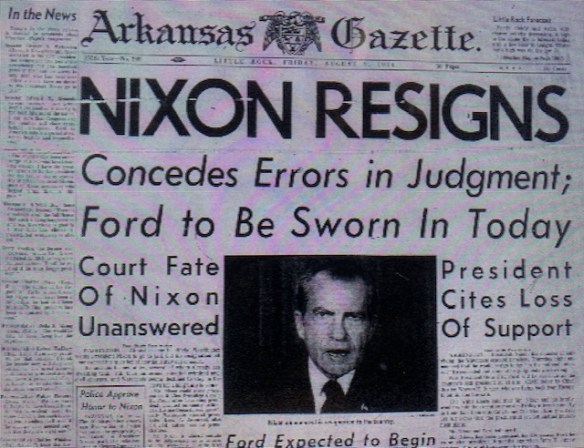
On August 8, 1974, Richard Milhous Nixon announced he would resign the Presidency of the United States the following day.  On August 9, 1974, after the Nixons left the White House escorted by Vice President and Mrs. Gerald Ford, the oath of office was administered and Gerald R. Ford became the 38th President of the United States.

With the Arkansas Democrat being an afternoon paper, by the time their August 9 issue came out, Nixon had announced his resignation and the oath had been given to Ford.  (Though the afternoon of August 8 did carry a headline saying that resignation seemed imminent.) The morning Gazette carred the headline “NIXON RESIGNS” on August 9 and on August 10 carried coverage of the transfer of power.

In their headlines, both the Democrat and the Gazette included the phrase “nightmare is over” from Ford’s speech.

August 9, 1947 – Little Rock chosen as site for War Memorial Stadium

War Memorial Stadium was approved by the Arkansas General Assembly in March 1947.  The work then began on the finalization of the location.

Four cities were in the running:  Little Rock, North Little Rock, Hot Springs, and West Memphis.  Each of the cities was required to donate the land for the stadium, provide parking for it, and sell local subscriptions equivalent to $250,000 to raise money for it as well.

On May 19, 1947, the Little Rock City Council approved Resolution 1,747 to donate the land for the stadium in Fair Park if Little Rock was selected.  This was not the first mention of a stadium in City records.  In March of 1947, the City Council had set aside land in Fair Park to use for a playground — with the stipulation that if it was eventually needed for a stadium, it would be relinquished for that purpose.

On August 9, 1947, the War Memorial Stadium Commission met in the House Chambers of the Arkansas State Capitol to select the location for the stadium.  West Memphis dropped out prior to the meeting; they had not been able to raise the sufficient local funds.  That left the three remaining cities.  (Cities had until June 24 to file paperwork expressing their interest in applying and were to submit their proposals by August 1.)

Instead of meeting in a usual committee room, the meeting was held in the House Chambers of the State Capitol.  The location for the meeting had been set because a large crowd was expected.  And the attendance did not disappoint.  City government and business leaders from all three cities turned out in full force.

The members of the Commission were Ed Keith, Chairman, Magnolia; Gordon Campbell, Secretary, Little Rock; Ed Gordon, Morrilton; Senator Lee Reaves, Hermitage; Senator Guy “Mutt” Jones, Conway; Dallas Dalton, Arkadelphia; Judge Maupin Cummings, Fayetteville; Dave Laney, Osceola; and Leslie Speck, Frenchman’s Bayou.

For several hours the nine heard proposals from the three cities.  Little Rock’s location was in Fair Park, North Little Rock’s was near its high school, and Hot Springs was on land next to Highway 70 approximately 2.5 miles from downtown.  Finally it was time to vote.  After two rounds of voting, Little Rock was declared the winner on a weighted ballot.

The north shore’s leadership was magnanimous in their defeat.  Hot Springs, however, was far from it.  In the coming days they filed suit against the Stadium Commission alleging flaws in Little Rock’s proposal as well as improprieties by members of the commission.  A preliminary decision sided with the state.  Ultimately, Hot Springs’ relatively new mayor Earl T. Ricks opted to drop the suit.  The Spa City’s business community was concerned that fighting the location might delay construction – and could negatively impact legislative and tourists’ feelings toward Hot Springs.  (And it was entirely possible that the State Police could have been used to “discover” that there was gambling going on in Hot Springs.)

Though ground was broken later in the year, by December 1947, the stadium was still $250,000 shy of funding for the construction.  This was after the state and Little Rock had previously both upped their commitments to $500,000 each.

The building did eventually open on schedule in conjunction with the 1948 Arkansas Razorback football games.

As for Mayor Ricks of Hot Springs, he moved to Little Rock to serve as Adjutant General of the Arkansas National Guard during the governorship of Sid McMath.  He later held leadership positions in the National Guard Bureau in Washington DC.  He died in 1954 at the age of 45.  Among the ways he was memorialized was a National Guard armory in Little Rock, which stood in the shadow of War Memorial Stadium.

August 2nd Friday Art Night – Old State House Museum features Rodney Block Jazz Project

Join the Old State House Museum for Second Friday Art Night, Friday, August 9, from 5 to 8 p.m.

They will present the Rodney Block Jazz Project in concert!

Led by trumpet king Rodney Block, the quartet will perform their unique blend of traditional jazz, gospel, hip-hop, bebop, funk and soul, live on the iconic lawn of the
Old State House.

August 2nd Friday Art Night at Historic Arkansas Museum

Join Historic Arkansas Museum for 2FAN in August!

Fire & Brimstone Duo will provide the live entertainment. Phil G. and Lori Marie provide Caribbean-inspired tunes and old classics.

Slate Rock Brewing will be the evening’s featured brewery.

If the weather is nice, HAM will open their brick plaza as well as the historic grounds for a stroll.  This is a chance to see the current exhibits.  In the HAM store, there will be a trunk show by Malvern jewelry artists Rob and Cathy Feather.

The reception is sponsored by the Historic Arkansas Museum Foundation, with special thanks to 107 Liquor. Beverages and appetizers will be served in the Stella Boyle Smith Atrium. The exhibits and reception are free and open to the public.

Latest Quapaw Quarter Association Preservation Conversation focuses on Quapaw Tribal Pottery

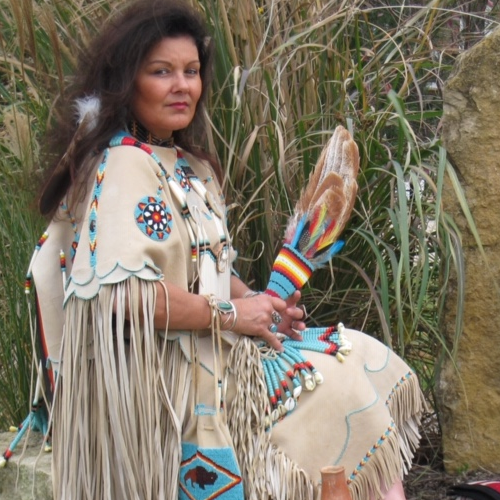
1c2d437f 4244 41b6 b953 0d7bf560b583Join the Quapaw Quarter Assocation for their next Preservation Conversation which features a lecture about Quapaw Tribal Pottery by Betty Gaedtke, a member of the Quapaw Nation. The program is supported, in part, by the Arkansas Humanities Council.

It is tonight, August 8, at the Mixing Room at the Old Paint Factdory, 1306 East 6th Street.  The 6pm lecture is preceded by a 5:30pm reception.
5:30 pm (reception), 6:00 pm (lecture)

RSVP: The event is free and open to the public, but space is limited. Please RSVP .

Parking: There is parking directly in front of the doors that are marked “live”, “print”, “meet.” If those spots are taken. park in the parking lot to the right. There is also street parking in front of the building.

Entrance: Enter the event space through the door facing 6th Street marked “Meet.”

Questions? Call 501-371-0075 ext. 3 or email qqa@quapaw.com

Betty Gaedtke Artist’s Statement:

“My interest in making pottery began decades ago, but since I had a full time job with the US Postal Service, it was nearly impossible for me to dedicate the time for it. When I retired early, my husband and I bought property near Yellville, Arkansas. In 2010 we built a house there and moved to our getaway in the Ozark Mountains. I was very fortunate that in our local area there are numerous potters, many whom studied and taught all over the country and the world. I soon became friends with many of them and began personal one on one lessons and monthly group workshops with experienced potters.

I was mentored by Helen Phillips, a world renowned potter and teacher, Robin MacGrogan, a lifelong potter and professor in pottery and the arts, Sue Whittington, an experienced potter, and Marian Yancey, an experienced potter. As I became more comfortable making my own pottery, in 2012 I decided to dive into where my real passion was, pottery made by my Quapaw tribal ancestors. I took personal one on one lessons with Lisa Crews, experienced in Mississippian pottery, who taught me how to make head pots and animal & human effigy pots in Quapaw and Mississippian styles.

I have since made about 300 Quapaw and Mississippian pots making them in the styles and decorations unearthed in Quapaw villages. My inspiration comes from my many visits to museums that display Quapaw pottery and twice viewing hundreds of Quapaw pots stored at the University of Arkansas. I have read many books that are dedicated to some of the best Quapaw and Mississippian pottery ever found. I have pots displayed at several museums around the country. “

Birth of Little Rock’s 22nd and 24th mayor – William Eliot Ashley

On August 6, 1823, future Little Rock Mayor William Eliot Ashley was born in Little Rock.  He would go on to become the first Little Rock Mayor to be born in Little Rock.  Ashley was the son of Mary and Chester Ashley; his father would later serve as a U. S. Senator from Arkansas.  He was the second of the couple’s seven children.

Though he was raised in Little Rock, he did receive some schooling out of state. The State History Commission has correspondence between eleven year old William, studying in New York, and his father. Part of the letter is a request for money.

On October 26, 1846, he married Frances Eliza Grafton at Christ Episcopal Church.  They were the first Little Rock residents to be married in that church.  The couple had five children, including triplets.  Only one of the children, Frances (who was one of the triplets) survived to adulthood.

Ashley was first elected Mayor of Little Rock in 1857. After completing a two year term, he was succeeded by Gordon N. Peay (another scion of a prominent Little Rock family).  In 1861, Ashley returned to the office of Mayor.  He was reelected to a third term in 1863.  In September 1863, following the defeat of Confederate troops by the Union forces at the Battle of Little Rock, the City of Little Rock ceased operations.  On September 21, 1863, Little Rock municipal government closed its doors, stopped collection of taxes and disbanded.  Thus Ashley’s third term ended.

In addition to his interest in local government, Ashley was a member of St. John’s College Board and a director of the newly-formed Little Rock Gas Company.

William Eliot Ashley died on August 16, 1868, at the age of 45.  He was buried in Mt. Holly Cemetery (which sat partially on land that had once belonged to his family). His parents, wife and children are all buried in Mt. Holly as well.

Interestingly, for someone who grew up in a prominent family, there does not appear to be a surviving likeness of Mayor Ashley – either in painting or photograph.  Several exist of his parents, but none of him.

LR Movies Monday: THE STORY OF DR. WASSELL and MACARTHUR

With the Arkansas Cinema Society’s FILMLAND 2019 later this month (August 21 to 25), Mondays in August will feature movies with Little Rock connections.  Today’s films are both about World War II military heroes and both had their world premieres in Little Rock.

One was released during World War II and starred Gary Cooper as Dr. Corydon Wassell. The other was released in the 1970s and starred Gregory Peck as General Douglas MacArthur.
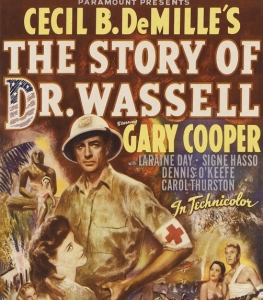
Dr. WassellBorn in Little Rock on July 4, 1884, Corydon McAlmont Wassell (called “Cory”) was born to Albert and Leona Wassell. A grandson of Little Rock Mayor John Wassell, he graduated from what is now UAMS in 1909. In 1911, he married Mary Irene Yarnell, with whom he would have four children.  In 1914, the couple volunteered to be Episcopal missionaries in China.  He served there until 1927. Following Mary’s death and his remarriage, he and new wife Madeline Edith Day Wassell returned to Arkansas in 1927.

Dr. Wassell resumed his medical practice. Given his experience with malaria in China, he proved to be an asset fighting malaria among Civilian Conservation Corps members in Arkansas. He was subsequently called to active duty in the Navy in 1936 and stationed in Key West.

After the outbreak of World War II, he was stationed in Indonesia. In early 1942, he refused to abandon his patients after the Japanese started invading Indonesia. Instead, he was able to evacuate a dozen severely wounded men over 150 miles to get to a ship. It took ten days for the ship to get to Australia, during which time it was attacked numerous times.  His official Navy Cross citation notes that he disregarded personal safety while caring for others.

He became an instant international hero. During the early days of the war, his heroism was one of the few bright spots.  President Roosevelt praised him in a fireside chat. James Hilton wrote of Dr. Wassell in a book which was then adapted by Cecil B. DeMille into the 1944 movie starring Cooper.  Originally Arkansan Alan Ladd was wanted to play Cooper’s sidekick, but Ladd was pressed into military service and unavailable.

From April 24 to 26, 1944, Cecil B. DeMille was in Little Rock for the world premiere screening of The Story of Dr. Wassell. Little Rock rolled out the red carpet (literally and figuratively) for DeMille and a contingency from Hollywood.  Dr. and Mrs. Wassell also returned to Little Rock for the festivities.  Unfortunately, Gary Cooper (who played Wassell in the film) was unable to attend due to illness.  His costar, Laraine Day, was making another film and could not attend either.    Those in attendance with DeMille (and Mrs. DeMille) included actresses Signe Hasso and Carol Thurston, and actor Melvin Francis.  The latter played himself; he had actually been one of the sailors saved by Dr. Wassell.

Sold-out screenings of the movie took place at the Capitol and Arkansas Theatres. On April 27, 1944, a regular run of the movie started at the Capitol Theatre.  It would be released nationally on July 4, 1944, which also happened to be Dr. Wassell’s birthday.

Thirty-three years after The Story of Dr. Wassell was released, MacArthur was brought to the screen by Universal Pictures.  It was their attempt to capitalize on the success of the movie Patton, including sharing some of the same members of the production team.

macarthur-gregory-peck-1977-everettTold entirely in flashback, it stars Gregory Peck as the fabled World War II general who was born in Little Rock. It focuses primarily on events in 1942 during the war, his dismissal by Truman in 1952, and his famous address to West Point in 1962.

Peck initially did not care for the subject or the script, but eventually stated that he grew to admire the challenges MacArthur faced.  Peck later called it one of his favorites roles, if not one of his favorite movies.

Producer Frank McCarthy, who worked on both Patton and MacArthur once said of Patton and MacArthur: “Both were complex men but General MacArthur was complex on a much broader scale. Patton had no ambition except to be a soldier and to command a field army. He was strictly command.”

Most of the film was shot on the backlot at the movie studio, which impacted the quality of the film.  The production budget simply would not allow for overseas location filming.

The film was released in July 1977.  One of the premieres was held in Little Rock. Peck attended a reception in the Arsenal Building where MacArthur was born. Now the home to the MacArthur Museum of Arkansas Military History, in 1977 the building still housed the Museum of Science and Natural History (now the Museum of Discovery).  Since MacArthur only spent a few hours in Little Rock as an adult, it is possible that Peck spent more time in the building than the General did.

The evening of August 5, 1977, started with an exclusive reception for 100 people with Gregory and Veronique Peck.  The movie itself was shown at the Cinema 150, where its general run would start on Saturday, August 6.  Following the film, a reception and silent auction brought people back to the museum.  Tickets ran $250 a person for all events, $100 a person for the film and post-show reception, and $25 for the movie.  It sold out.

Governor and Mrs. David Pryor escorted the Pecks into the theatre.  Former Governor (and World War II hero) Sid McMath introduced Mr. Peck to the crowd.  He extolled the virtues of Peck and MacArthur.  (It is interesting that he should admire MacArthur so much, since the General and President Truman had a well-publicized tiff, and McMath and Truman had enjoyed a warm relationship.)  Little Rock City Director Jim Dailey presented Peck with a Key to the City.