Little Rock Look Back: 1936 groundbreaking of Museum of Fine Arts

On January 3, 1936, the ground was broken for the Museum of Fine Arts building in City Park.  The facility would face Ninth Street and be to the west of the Arsenal Tower Building.   That building was the one remaining structure of more than 30 which had populated the grounds when it was a federal military establishment.

Excavation for the building uncovered the foundation for another structure.  New footings for the Museum would be poured into the old footings.

The cornerstone would be laid in October 1936, and the building would open in October 1937.  The building would serve as the museum’s home until the new construction for the new Arkansas Arts Center began in 1961. That construction would enclose the original Museum of Fine Arts.  By that time, the City had long renamed the park in honor of General Douglas MacArthur, who was born there when it had been a military installation.

Subsequent additions to the Arkansas Arts Center over the decades have further expanded the museum’s footprint.  After the 2000 expansion, the original 1937 facade was featured prominently in a gallery, giving it more visibility than since 1963. With the Arkansas Arts Center again slated for renovation and expansion, the original 1937 facade will be maintained and re-exposed as an entrance to the building.

But it all began on January 3, 1936.

Will Trice named next leader of Arkansas Rep

Arkansas Repertory Theatre announced that William Trice has been named the theatre’s new executive artistic director. Trice, a Little Rock native, has served as Broadway producer in New York since 2010, producing work that has earned him three Tony Awards and five nominations.

“After the year we’ve been through with suspending productions and re-evaluating our entire operations, we’re thrilled to have Will join our team,” said Ruth Shepherd, The Rep’s board chair. “He is uniquely positioned with his vast experience and ties to central Arkansas to lead at this specific point in The Rep’s history.”

As executive artistic director, a newly-created position, Trice will be responsible for management and budgeting in addition to providing the artistic vision. He assumes his new role officially in August but has been serving as a consultant since December.

“I couldn’t be more excited to join The Rep’s staff, board, supporters, and audiences, as we continue its rich tradition of entertaining and inspiring theatre in Arkansas,” Trice said. “The way this organization has rallied over the past year shows how much The Rep is cherished, and it’s an honor to have a role in mapping its future.”

Trice has served as a producer for nearly 30 productions on Broadway, the West End, and National Tours. He is a three-time Tony Award Winner forAll The Way, staring Bryan Cranston; the Steppenwolf Theatre Company’s Who’s Afraid of Virginia Woolf; and Porgy and Bess, starring Audra McDonald. He was also nominated for five Tony awards for his work on Fiddler on the Roof; The Royal Shakespeare Company’s Wolf Hall, You Can’t Take It With You starring James Earl Jones and Rose Byrne, The Glass Menagerie starring Cherry Jones and Zachary Quinto; and Gore Vidal’s The Best Man starring John Larroquette and Candice Bergen.

Prior to his career in producing, Trice served as a business analyst with management consulting firm McKinsey & Company, an artistic administration associate with The Metropolitan Opera, and a strategic growth associate with alternative asset managers D.E. Shaw & Company. He holds degrees from Southern Methodist and Northwestern Universities.

Trice, a 1997 graduate of Central High School, began his theatre career on stages in central Arkansas. In fact, he appeared on The Rep stage in 1994 as a young actor in the production of Neil Simon’s Lost in Yonkers.

“The Rep taught me what it means to be a professional theatre-maker,” Trice said. “I was lucky enough to grow up in a community that values the arts and supports institutions presenting music, dance, opera, visual arts, and theatre – all with superb quality. I can’t wait to come back home and help create The Rep’s next edition of a great night out.”

18 Cultural Events from 2018 – 60th Anniversary of Women’s Emergency Committee

Image result for the giants wore white glovesOn Sunday, September 16, 2018, the Clinton School of Public Service in conjunction with the CALS Butler Center for Arkansas Studies screened the documentary “The Giants Wore White Gloves” at the Ron Robinson Theater.

The film tells the story of the Women’s Emergency Committee. It was shown on the 60th anniversary of the first meeting of that group.

“The Giants Wore White Gloves” tells the story of the women of Little Rock and their accomplishments during the Little Rock Desegregation Crisis.

The 1958 school year began with a vote to close four high schools in the city of Little Rock and once again avoid integration. A group of middle-class white women, faced with the prospect of no schools as well as the further loss of their city’s good name, turned militant. They quickly put together the Women’s Emergency Committee to Open Our Schools (WEC). Largely inexperienced in politics, these women became articulate, confident promoters of public schools and helped others understand that those schools must remain open.

Years later, these women are honored for their work in changing the course of civil rights history. With integrity, they withstood the challenges of the battle, and accomplished their goal of reopening the city high schools.

A few WEC members were in the audience for the film screening. Many children and grandchildren of WEC members were also in attendance as was filmmaker Sandy Hubbard.

Earlier in the day, a full-page ad ran in the Arkansas Democrat-Gazette listing the membership of the WEC.  In 1998, the paper carried the first public listing of the names of WEC members. It was, in fact, the first time all the names had been compiled in one place.

18 Cultural Events from 2018 – Dedication of Elizabeth Eckford Bench

Sixty-one years after Elizabeth Eckford took the long walk down Park Street as she was trying to enter Little Rock Central High for her first day of classes there, she again went down the street. But on September 4, 2018, her journey was to celebrate the dedication of a new bench.
Met by a mob and kept out of the school by the soldiers she thought were there to protect her, Eckford finally made her way to a bus bench at Sixteenth and Park Streets.  This year, a replica of that bench is being dedicated at that location.

Little Rock Central High School National Historic Site collaborated with the Central High Memory Project students and additional partners for the ceremony.

September 4, 1957, was supposed to be the first day of school for the African American students who were selected to integrate Little Rock Central High School.  Due to the mobs gathered outside of the school and interference from Governor Orval Faubus, the students would not get in the school that day.

The most famous images from that day are the photos of Elizabeth Eckford walking in front of the school, only to be rebuffed by soldiers and tormented by the crowds. Elizabeth’s decision to walk through the mob of protesting segregationists to enter school, only to be turned away became world news. The story of the desegregation of Central High School was thrust into a defining role within the Civil Rights Movement. Elizabeth’s efforts to overcome the fear and uncertainty that she faced that morning resulted in her seeking refuge at a lonely bus stop bench.

In order to highlight this aspect of the story and create more personal connections with this turning point in history for students and visitors, the National Park Service and the Central High Memory Project Student Team will work with community partners in a new public history project.  The Bench Project includes building a replica of the bus stop bench, creating a mobile app for the students’ audio walking tour of eyewitness accounts of that first day of desegregation, and developing a storycorps recording booth for interviews and student podcasts.

The partnership includes: Bullock Temple C.M.E., Central High School and their EAST LAB, the Little Rock School District, the City of Little Rock, the Clinton School of Public Service, Central Arkansas Library System’s Butler Center for Arkansas Studies, Good Earth Garden Center, Friends of Central High Museum Inc., Home Depot, Little Rock Club 99 and other Rotary International Clubs,  Unity in the Community, and others.

Little Rock Look Back: David Fulton, LR’s 4th Mayor

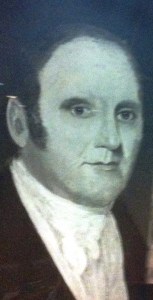
On January 2, 1771 in Ireland, future Little Rock Mayor David Fulton was born.

He served as the fourth and final mayor of the Town of Little Rock in 1835. His term was cut short by the transition of Little Rock from town to city status. Once that happened in November 1835, a new election had to be held.

Mayor Fulton was also proprieter of the Tan Yard, a tanning operation in Little Rock.   He later served as a judge and was appointed as  Surveyor General of Public Lands in Arkansas by President Martin Van Buren in 1838.

Mayor Fulton married Elizabeth Savin in June 1795 in Maryland.  She died in November 1829, while they resided in Alabama.  One of their children was William Savin Fulton who served as Territorial Governor of Arkansas in 1835 and 1836 and was one of Arkansas’ first US Senators upon statehood in 1836.  Mayor Fulton was serving as Mayor at the same time his son was Governor.

Mayor Fulton came to Little Rock in 1833.  His daughter Jane Juliet Shall and her four children came to Little Rock as well.  The family made the move to be nearer to the future governor.  The Fultons and Shalls rented the Hinderliter House (now part of Historic Arkansas Museum) in 1834.  One of his descendants, Louise Loughborough was the person who saved the Hinderliter House from destruction and was founder of what is now Historic Arkansas Museum.

In addition to serving as Mayor, he was president of the Anti-Gambling Society and a Pulaski County Justice of the Peace.  From 1836 until 1838, he was County Judge of Pulaski County.

Mayor Fulton died on August 7, 1843 and is buried at Mount Holly Cemetery as are several other members of his family.

Legacies & Lunch today at noon – When Arkansas was part of Missouri

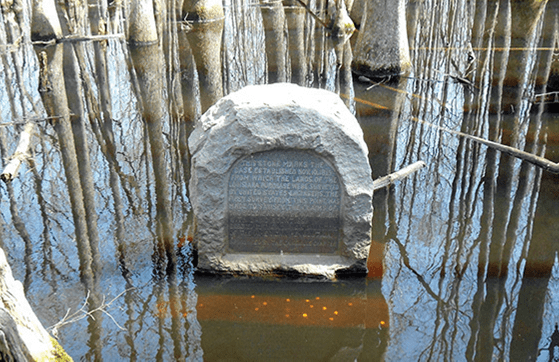
Survey marker erected in 1926 at what is now Louisiana Purchase Historic State Park, photo by Brandon Rush

Today (January 2) at 12 noon, the Central Arkansas Library System Butler Center for Arkansas Studies kicks off its programming for 2019. First up is the monthly Legacies & Lunch program. Today’s focus is on the creation of the Arkansas Territory. The year 2019 marks 200 years since Arkansas was separated from Missouri.

Author and professor S. Charles Bolton, who taught history at University of Arkansas Little Rock for over three decades, will discuss the early history of the geographical region that became the state of Arkansas.

The state was formed on land that was part of the Louisiana Territory for a time before becoming the Missouri Territory. The federal government eventually sent the Hunter-Dunbar Expedition up the Ouachita River, and designated a spot in eastern Arkansas as the starting point for land surveys west of the Mississippi River. The U.S. government also built a military installation on the future site of Fort Smith. These actions  led to the eventual creation of Arkansas Territory in 1819, followed by statehood in 1836.

About Legacies & Lunch

Legacies & Lunch is a free monthly program of the CALS Butler Center for Arkansas Studies that highlights Arkansas-related topics. Programs are held from noon to 1 pm on the first Wednesday of the month. Attendees are invited to bring a sack lunch; drinks and dessert are provided. A library parking discount is available upon request. For more information, contact 501-918-3030.


18 Cultural Events from 2018 – OXFORD AMERICAN celebrates 50 years of TRUE GRIT

Image result for true grit 50 oxford americanThroughout April, the Oxford American magazine haled a series of events to mark “50 Years of True Grit.” It culminated with programs over the weekend of April 20-21, 2018, to celebrate the anniversary of the publication of the beloved novel by Charles Portis, one of the magazine’s most acclaimed contributors.

The festivities included panel discussions, readings, tours, museum exhibits, film screenings, and a special Saturday-night variety show, featuring comedy, music by Portis’s fellow Arkansas native Iris DeMent, and appearances and performances by the book’s notable fans.

Published by Simon & Schuster in 1968 (after it was first serialized in the Saturday Evening Post), True Grit earned immediate popularity and critical praise as a rousing frontier adventure tale in which fourteen-year-old Mattie Ross seeks to avenge her father’s murder with the aid of a down-at-the-heels federal marshal named Rooster Cogburn. Over the past half-century, readers of all ages have come to treasure the book as a classic of American literature. The book has inspired two award-winning films-the 1969 version, which earned John Wayne his sole Academy Award, and the 2010 remake by Joel and Ethan Coen starring Hailee Steinfeld and Jeff Bridges.

“So few books stand the test of time but True Grit’s literary reputation and its popularity have only grown in fifty years,” said Jay Jennings, a senior editor at the Oxford American and editor of the collection Escape Velocity: A Charles Portis Miscellany. “We thought the book’s landmark anniversary deserved a big celebration in the state that is the setting for much of the book and the home of both the author and the magazine.” Portis has published a number of humor pieces in the Oxford American and in 2010 was awarded the magazine’s inaugural prize for Lifetime Achievement in Southern Literature.

In October it was announced that the Oxford American was the 2019 recipient of the Arkansas Arts Council’s Governor’s Arts Award for Folklife.