
 The 2019 Pulitzer Prizes are announced later today. Over the years, there have been several Pulitzer winners with connections to Little Rock.
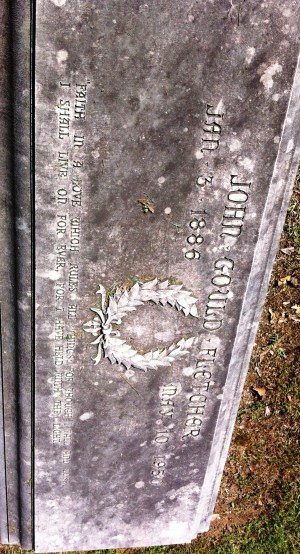
In 1939, Little Rock native John Gould Fletcher, a scion of a politically prominent family, won the Pulitzer Prize in Poetry for his work Selected Poems. He appears to be the first Pulitzer Prize winner with Little Rock connections.
The 1950 Pulitzer Prize for Drama went to South Pacific. With a leading lady who is from Little Rock, this Richard Rodgers, Oscar Hammerstein II, and Joshua Logan musical explores race against the backdrop of World War II. It is based on James Michener’s Tales of the South Pacific, which won the 1948 Pulitzer for Fiction. (Because it was a collection of interrelated short stories, the category was changed from Novel to Fiction from that year onward.) But in the Michener book, Forbush is not from Little Rock.
The Arkansas Gazette made Pulitzer history in 1958 by winning both the Public Service and Editorial prizes in the same year. This was the first time that one organization had received both awards in the same year. These were for the coverage of and response to the 1957 integration of Central High School by the Little Rock Nine. J. N. Heiskell was the paper’s owner and editor, while Harry Ashmore led the editorial page. Relman Morin of the Associated Press received the Pulitzer for National Reporting for his coverage of the events at Central. Apparently Will Counts of the Arkansas Democrat was the jurors’ choice to receive the Pulitzer for Photography. But the Board opted to give the prize to another photographer. Some speculate that the Pulitzer Board did not want to give four prizes in the same year for the same story.
Current Little Rock resident Paul Greenberg won the 1969 Pulitzer for Editorial Writing. at the time, he worked for the Pine Bluff Commercial. In 1986, he was a finalist in the same category. Greenberg moved to Little Rock to join the staff of the Arkansas Democrat-Gazette in 1992. While no longer the Editorial Page Editor, Greenberg continues to write columns for the newspaper.
Former Little Rock resident Richard Ford received the 1996 Pulitzer for Fiction for his novel Independence Day. As a young boy of eight, and for several years after, Ford spent much time at Little Rock’s Marion Hotel with his grandparents. In making the presentation, the Pulitzer Board noted it was, “A visionary account of American life, Independence Day reveals a man and country with unflinching comedy and the specter of hope and even permanence…”
The Pulitzer Prize for Drama in 2001 went to David Auburn. A 1987 graduate of Hall High School, Auburn was recognized for his play Proof. The Pulitzer Board described Proof thus: “This poignant drama about love and reconciliation unfolds on the back porch of a house settled in a suburban university town, that is, like David Auburn’s writing, both simple and elegant.” Auburn also served as a 2014 juror for the Pulitzer Prize for Drama. While a student in Little Rock, Auburn participated in theatre at the Arkansas Arts Center.
 The Pulitzer Prizes are to be announced tomorrow (Monday, April 15). This year marks the 102nd anniversary of the prizes, though not all of the current categories have been around since 1917.
 The other Pulitzer Prize winner buried in Mount Holly is J. N. Heiskell, the longtime editor of the Arkansas Gazette. It was Heiskell, in fact, who asked Fletcher to compose the poem about Arkansas. Heiskell served as editor of the Gazette from 1902 through 1972. He died at the age of 100 in 1972.
 The Bookstore at Library Square
 Who will claim the Iron Throne and why? On the eve of the premiere of the final season of Game of Thrones, M.L. Cavanaugh’s new book brings together 30 expert strategists to answer that question and engage in questions surrounding the most popular television series of our time.
 The 2018–2019 Arkansas Arts Center Children’s Theatre continues this spring with Charlotte’s Web. The closes on Sunday, March 31, 2019. Performances of Charlotte’s Web are Fridays at 7 p.m. and Saturdays and Sundays at 2 p.m. Tickets are $10 each for Arkansas Arts Center members or $12.50 for non-members.
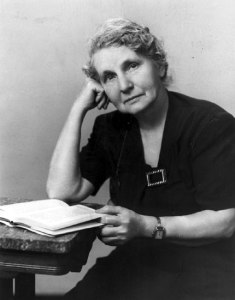 Julia Burnelle “Bernie” Smade Babcock was an author and museum founder. When her husband died, leaving her with five children, she starting writing for money. She published several temperance novels and later wrote for the Arkansas Democrat. She also published a magazine, wrote plays which were performed in New York, and authored a poetry anthology.
 Little Rock Culture Vulture