Little Rock Look Back: Mayor Sam Wassell

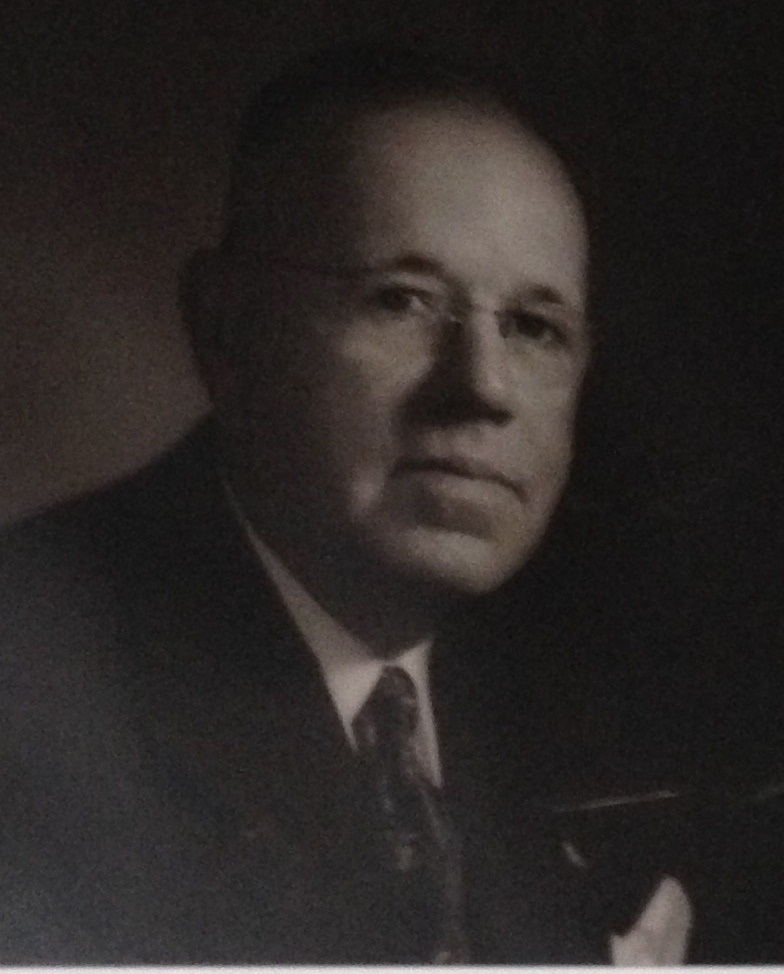
S WassellOn this date in 1883, future Little Rock Mayor Sam M. Wassell was born.  His grandfather John W. Wassell had been appointed Mayor of Little Rock in 1868.  He is the only Little Rock Mayor to be a grandson of another Little Rock Mayor.

Sam Wassell served on the Little Rock City Council from 1928 through 1934 and again from 1940 through 1946.  He is one of the few 20th Century Little Rock Mayors who previously served on the City Council.

Wassell was an attorney.  He practiced law privately and also served as an Assistant US Attorney.  In 1930, he ran unsuccessfully for the Democratic nomination for the US Congress representing the 5th Congressional District, which at the time included Little Rock.

Wassell ran for Mayor in 1947 and was unopposed in the general election.  He was unopposed in his bid for re-election in 1949.  During his second term, President Harry S. Truman visited Little Rock.  In 1951, he sought a third term as Mayor.  No Little Rock Mayor had sought a third consecutive term since 1923.  Though he received the Democratic nomination, the Republican party nominated Pratt Remmel who defeated Wassell by a 2 to 1 margin.

With a new USS Little Rock under construction, it is interesting to note that Mrs. Sam Wassell christened the previous USS Little Rock in 1944.  At the time, she was a City Councilor’s wife.

Mayor Wassell died on December 23, 1954 and is buried at Roselawn Cemetery in Little Rock.

Little Rock Look Back: Ulysses S. Grant

US_Grant_f

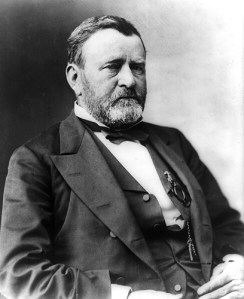
On April 27, 1822, future US President Ulysses S. Grant was born.  His birth name of Hiram Ulysses Grant. There are various stories as to the reason for the change, but was is not in dispute is that as an adult his name was Ulysses Simpson Grant.  Simpson was his mother’s maiden name.

After leadership in the Mexican-American War, Grant retired from the Army. He rejoined after the Civil War broke out.  After success in Kentucky, Tennessee and the Siege of Vicksburg, President Lincoln promoted Grant to Commanding General of the US.  After the war ended, he led the Army’s efforts during Reconstruction.

Elected president in 1868 and reelected in 1872, Grant stabilized the nation during the turbulent Reconstruction period.  As President, he continued Reconstruction efforts as well as oversaw efforts to reduce frontier violence (though the Great Sioux War did take place during his presidency).  He restored relations with Great Britain and avoided war with Spain, but was unsuccessful in annexing the Dominican Republic. While he staved off immediate problems from the Panic of 1873, the country still fell into a five year economic depression.

Out of the White House for four years, he sought a return in 1880. He was not successful in obtaining the GOP nomination.  Likely in an effort to build support for his Presidential quest, he embarked on a nationwide tour.  On April 15, 1880, he spoke in Little Rock. It was his first visit to Arkansas either as a soldier or a politician.  He spoke at Concordia Hall (now part of the CALS campus) and stayed at the Capital Hotel during this visit. Though he had not visited previously, Grant did become the first Republican Presidential candidate to win Arkansas’ electoral votes in 1868; he repeated this feat in 1872. It would be 100 years later, with Nixon’s second term, that Arkansas would cast her electoral votes for the GOP nominee.

General Grant died on July 23, 1885.  Grant Street in Little Rock is named for him.

Little Rock Look Back: James Buchanan

On April 23, 1791, future President James Buchanan was born in Pennsylvania.  Prior to becoming President, he served as a congressman, a senator and a diplomat.  To date, he is the most recent Secretary of State to later serve as President.

It was perhaps his quest for diplomatic reconciliations which led him to repeatedly make blunders during his presidency when it came to policies in the US. He realized that slavery was a weakness for the US morally, but refused to step in and do anything to stop it.  In addition to vacillating on issues of slavery, he vetoed the Morrill Act and Homestead Act (both of which his successor, Abraham Lincoln signed).  The Homestead Act accelerated westward expansion, while the Morrill Act accelerated agricultural and engineering research and education to develop the young nation.

He served only one term (1857 to 1861) and was not seriously considered for renomination by the divided Democratic Party in its 1860 convention.  Several Democrats ran in November 1860 including southerner John C. Breckenridge (Buchanan’s Vice President) and Illinois Senator Stephen Douglas, who was Buchanan’s nemesis.  Buchanan backed Breckenridge. Abraham Lincoln handily won the 1860 election, and Buchanan spent the rest of his life pretty much in exile.

Buchanan Street in Little Rock is named for him.

Little Rock Look Back: SOUTH PACIFIC wins Pulitzer Prize for Drama

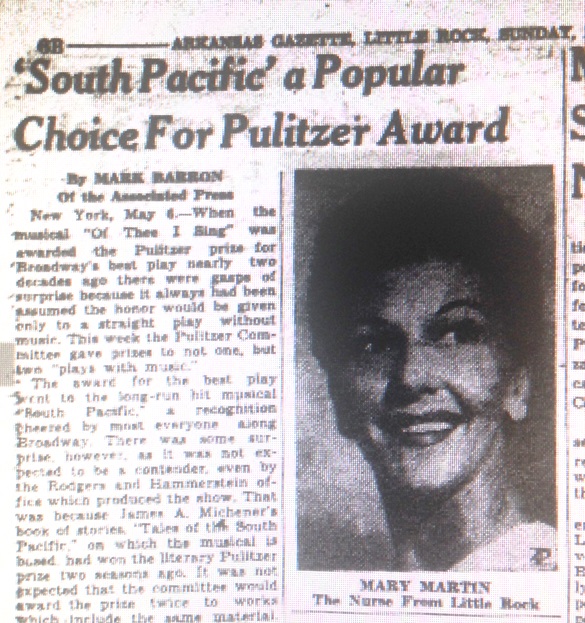
SoPa Pul GazThe Pulitzer Prizes will be announced today.  In 1950, one of the recipients in the “Letters, Drama and Music” categories featured a character from Little Rock.

The 1950 Pulitzer for Drama went to a musical, for only the second time in the history of the awards.  The recipient was South Pacific by Richard Rodgers, Oscar Hammerstein II and Joshua Logan.  The character was the leading lady of Nellie Forbush. She was an Navy ensign and a nurse stationed on an exotic island during World War II.  The musical was based on a Pulitzer Prize winning novel, James Michener’s Tales of the South Pacific.

In the Michener novel, Miss Forbush is not from Little Rock.  She is actually from a small town in Alabama.  The part was written for Mary Martin from Weatherford, Texas.  Rodgers, Hammerstein & Logan did not discuss why they relocated Nellie’s birthplace.

In the musical, Nellie struggles with her own prejudices. This issue of prejudice became an instance of fact meeting fiction. In 1957, a few weeks after Eisenhower sent troops into Little Rock to ensure that Central High would be desegregated, a production of South Pacific on Long Island was temporarily halted when the audience booed and yelled after Nellie mentioned she was from Little Rock.


Little Rock Look Back: LR Mayor Charles Moyer

Mayor MoyerOn April 18, 1880, future Little Rock Mayor Charles E. Moyer was born in Glenwood, Minnesota. A man of contradictions, he was both a candidate backed by (and probably personally involved in) the Ku Klux Klan, yet he also brought the Goodwill Industries organization to Little Rock and Arkansas to help those less fortunate.

He came to Little Rock shortly after the turn of the 20th century as a clerk in the Post Office, and later served as a mail carrier. He then worked for Plunkett-Jarrell Wholesale Grocer Company in Little Rock. On January 1, 1921, he took office as County Judge for Pulaski County. In 1924, he ran against incumbent mayor Ben Brickhouse in the Democratic primary. Since Brickhouse had displeased the Klan, which was an active part of Democratic politics in Little Rock and throughout the nation at the time, Moyer won the primary.

Mayor Moyer led the City of Little Rock from April 1925 through April 1929. In 1927, the last lynching in Little Rock took place. While race-baiting crowds were surrounding City Hall demanding an African American prisoner be released to them for vigilante justice, Mayor Moyer was in hiding at an undisclosed location. Not able to get the prisoner they wanted, they took out their venom on another man who had assaulted a white woman and her daughter.

After leaving office in 1929, Moyer moved for a time to Batesville. He returned to Little Rock and was a chief deputy sheriff. From 1937 to 1941, he served as Pulaski County Assessor. In 1941, he returned to the office of Little Rock Mayor after J. V. Satterfield opted to serve only one term and did not seek re-election. Mayor Moyer led Little Rock through most of World War II. He left office in April 1945 and died on May 29, 1945, barely only one month after leaving City Hall.

Little Rock Look Back: President Benjamin Harrison becomes first sitting president to visit LR

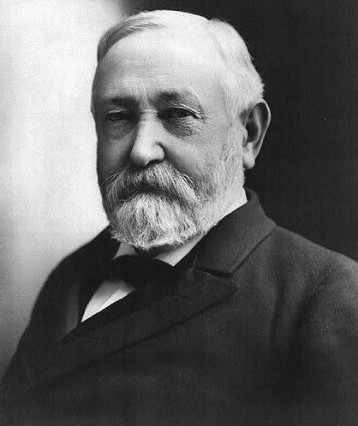
Benjamin-Harrison-by-Joseph-Gray-Kitchell-1897-358x426On April 17, 1891, Benjamin Harrison became the first sitting president to visit Arkansas.  He was on a cross-country railroad trip having left DC on April 13.

The morning of the 17th he spoke in Memphis and then took the train to Little Rock.  Accompanying him from Memphis to Little Rock were a delegation which included Governor and Mrs. James P. Eagle, Mayor H. L. Fletcher and Col. Logan H. Roots.  Also in the party was Mrs. W. G. Whipple, a former first lady of Little Rock.

They arrived in Little Rock in the afternoon.  A parade took them from the train station to the State House (now the Old State House Museum) where the Governor formally welcomed the President and his party.

In his brief remarks, President Harrison spoke of the hospitality and the natural resources available in Arkansas.  He also touched on the Civil War, which at the time was less than 30 years in the past. He noted “The commonwealth rests upon the free suffrage of its citizens and their devotion to the Constitution and the flag is the bulwark of its life.  We have agreed, I am sure, that we will do no more fighting among ourselves.” These remarks were met enthusiastically by the crowd assembled.

The President concluded is brief remarks thanking the State officials and the citizenry.  He then took the train to Texarkana where he made his third remarks of the day.

Benjamin Harrison was on the Presidential ticket two times. The first time he lost the popular vote but won the Electoral College defeating incumbent Grover Cleveland. The second time he lost both the popular and electoral votes to Cleveland.  He did not carry Arkansas in either election. Though he was the first sitting president to visit Little Rock, there is nothing here named for him.  Since there was already a Harrison Street named after his grandfather, he is skipped between Cleveland and McKinley in the presidential streets.

Little Rock Look Back: 107 years of City Hall at Markham & Broadway

CityHa78107 years ago today, Little Rock City Hall officially opened at the corner of Markham and Broadway.

On April 15, 1908, the Italian Renaissance Revival style building, which had been designed by local architect Charles Thompson, played host to an open house. Staff had started moving into the building in March of that year.   This was, as often is the case, behind schedule.  The date in the cornice toward the top of the building is 1907, but the building was not completed until 1908.

In 1903, W. E. Lenon became Mayor of Little Rock. Back then, the terms were two-year terms.  By the start of his second term in 1905, he realized that the City was outgrowing City Hall, which was, at the time, on the northeast corner of Markham and Louisiana – where part of the Statehouse Convention Center sits today.

In February 1906, Mayor Lenon appointed a committee of five aldermen to over see the planning for the building of a new City Hall. In July 1906, the City Council approved plans, which called for a City Hall with an municipal auditorium wing. There was some hue and cry about wasteful spending and a resulting lawsuit, so, in September 1906, those plans were scrapped and a simpler City Hall was approved for the cost of $175,000.

The last resolution in the old City Hall called for the banning of smoking in the new Council Chambers – while the Council was in session. This may well have been the first smoking ban in a public government building in the history of Arkansas.

When the building opened, the third floor was not finished out. The space was not needed. When the Museum of Natural History and Antiquities (now the Museum of Discovery) moved into City Hall in 1929, they had to finish out their space.

In 1913, the new Central Fire Station, designed in the Beaux Arts style, was constructed adjacent to City Hall. During the 1930s, as the City grew, more space was needed. A garage, designed in the “austere, utilitarian” style was built in 1936 and a City Jail Annex, built by the WPA in the modified Art Deco style was built in 1938.
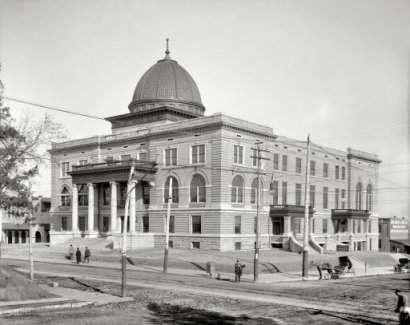
City Hall prior to 1912

By 1955, the copper-clad dome which sat on top of City Hall needed severe repairs. The wooden supports and the copper cladding were both in dire shape. Mayor Pratt Remmel set aside money for the dome to be repaired. After defeating Remmel in his bid for a third term, Mayor Woodrow Mann scrapped plans for the repair and, indeed, scrapped the dome.

Following the lead of County Judge Arch Campbell who had removed the tower at the County Courthouse, Mann proposed removal of the dome. He had an informal survey which had three options: repair the dome, replace the dome with an aluminum one, or remove it. This was open to anyone to respond – voting eligibility or Little Rock residency did not matter. By a slim margin, remove the dome won – so the dome was removed.

In 1960, as air conditioning was installed, windows were bricked in to promote energy efficiency. At the time, the feeling was that a new City Hall would be constructed in the 1970s somewhere more central to the growing city. Relocation talk persisted throughout the 1970s and early 1980s. By that time, City Hall had been modified a great deal – with no thought about historic preservation. When the Police and Fire Department had moved out into their new facilities, their old spaces had become storage.

By 1984, the decision was made to stay at Markham and Broadway. An extensive renovation and restoration effort was undertaken. In 1988, the building reopened, and the interior had been restored to its 1908 appearance.