Little Rock Look Back: LR City Council authorizes expansion of Museum of Fine Arts

Twenty-two years after authorizing the creation of the Museum of Fine Arts in City Park, the Little Rock City Council was asked to consider expanding the facility.

By 1957, the existing structure was felt to be inadequate.   There was a desire for more gallery space as well as for more space for educational programming.

On July 8, 1957, the Little Rock City Council passed an ordinance authorizing the Board of the Museum of Fine Arts to be able to raise the funds for an expansion.  This was merely the start of the process which would eventually lead to the creation of the Arkansas Arts Center.

The ordinance allowed for the expansion or extension of the building. It also authorized the museum’s board to accept gifts for the project and to invest those gifts for the purpose of the museum.  Since the museum only received City funds for maintenance and salary, the ability to raise funds for the expansion was key to the future of the institution.

Lastly, the ordinance gave the museum’s board the ability to increase its membership by up to six positions without having to get additional approval by the City Council.  With a fundraising drive underway and a larger facility planned, these additional board members could certainly prove to be key.

The ordinance passed with nine Ayes, zero Noes, and one absent.
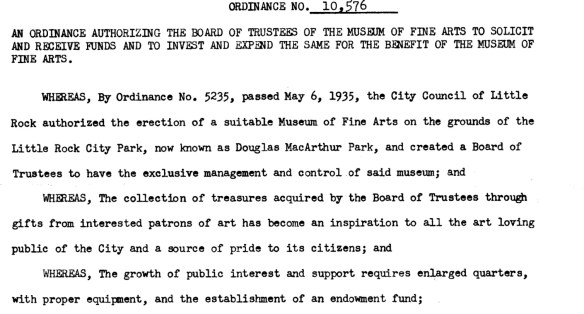
Birthday of Haco Boyd, Little Rock Mayor and Hijack Victim

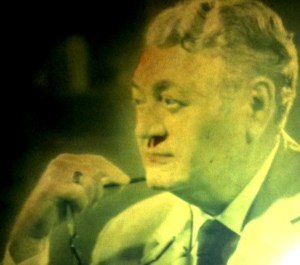
On July 6, 1902, future Little Rock Mayor Haco O. Boyd was born in Leslie, Arkansas.  At the age of four, his family moved to Little Rock; he graduated from the Little Rock public schools.  He attended and graduated from Hendrix College.
In World War II, he was in the Army Air Corps.  He was a very decorated soldier earning two Purple Hearts, a Legion of Merit, and a Bronze star among other designations from the United States.  He also received high military honors from numerous European governments.  Boyd would remain in the Air National Guard and retired with the rank of Colonel in 1964.

As a businessman, he was a founder of Rebsamen Ford and then state manager of Benjamin Moore for Arkansas.  In 1952, he joined Union Life Insurance.  Throughout his career, he received most any recognition and honor and designation that the field of life insurance offered.

In November 1968, he won a three-candidate race for the Little Rock City Board of Directors. One of the candidates he defeated was former (and future) Director and Mayor Byron Morse.  In January 1969, he was selected to serve as Mayor of Little Rock.

One week later, Mayor Boyd and 70 others were on an Eastern Airlines plane headed for a life insurance convention in  Nassau, departing from Miami.  A passenger hijacked it and the plane was diverted to Cuba.   The next morning the passengers were returned to Miami and then sent to Nassau without incident. Once the media found out that one of the passengers was the Mayor of Little Rock, he was interviewed by numerous newspapers.  Mayor Boyd expressed that they had been treated well by the Cuban government, but that all in all he had rather not made that leg of the trip.

In other civic involvement, Boyd served on the Little Rock Airport Commission, including a term as chair.  He was also honored for his involvement with the Boy Scouts of America and Easter Seals.

In September 1923, Boyd married Mary Josephine “Polly” Goodrum.  They were married until her death in February 1977.  Haco Boyd died on March 27, 1988.  The couple are buried at Roselawn Cemetery.  They had two children and four grandchildren.

Birthday of Little Rock’s 66th mayor, Buddy Benafield

Future Little Rock Mayor James Weldon “Buddy” Benafield was born on July 5, 1927 in Coy, Arkansas.  As a child he spent part of his time chopping cotton.  He graduated from England High School and then served in the U.S. Navy.  Following his stint in the military, he enrolled in Arkansas State Teachers College (now the University of Central Arkansas).

After college he returned to England.  From 1967 to 1974 he served as Mayor of England.  While in England, he also worked to establish a hospital there. While he was Mayor, Benafield also served as a legislative aide to Governor Dale Bumpers.

After moving to Little Rock, Benafield served as legislative aide to Governor Frank White.  He had been a donor to former Governor Bill Clinton, who had been defeated by White. Though a staunch Democrat, he remarked to the media at the time that he had been a friend of White’s and never declined a Governor’s request for help.

Long active in Democratic politics, he had served as Secretary of the State Democratic Party.  (One of his daughters, Dawne Benafield Vandiver has carried on the family tradition serving in several leadership positions in the State Democratic Party.)

In January 1982, Benafield was appointed to fill a vacancy on the Little Rock City Board of Directors. He ran for election to a full term in November 1982 and was reelected in November 1986.  From January 1983 to December 1984, Benafield served as Mayor of Little Rock.

After leaving the Little Rock City Board in January 1991, he has remained engaged in civic matters.  He served a term on the Arkansas Highway and Transportation Commission.  He was first appointed in January 1993 by Gov. Jim Guy Tucker to fill out the remainder of Rodney Slater’s term. Slater had resigned to to take a job in the Clinton Administration in Washington DC.  In 1995, he was reappointed, this time to a full ten year term.  This was only the second time a member of the Highway Commission had been reappointed.

Buddy Benafield is the only Little Rock Mayor to have also been a mayor of another Arkansas city.  He continues to be involved in farming and a variety of business ventures and has maintained his interest in politics.

Birthday of Little Rock’s first Mayor: Dr. Matthew Cunningham

Future Little Rock Mayor Dr. Matthew Cunningham was born on July 5, 1782, in Pennsylvania. After receiving his medical degree from the University of Pennsylvania, he ended up in New York City.  He also served in the Army during the War of 1812.

It was in New York, he met and married a young widow, Eliza Wilson Bertrand. After a brief stint in St. Louis, Dr. Cunningham was one of the first settlers of Little Rock in February 1820. With his arrival, he became the first physician in Little Rock.

In September 1820, Mrs. Cunningham and her children joined him. She became the first female in the Little Rock settlement. Dr. and Mrs. Cunningham had a son, Chester, who was the first white baby born in Little Rock. (Though not supported by any public records, there is some unsubstantiated thought that one of the African-American slaves they had gave birth to a child before Chester was born.) The Cunninghams had several other children.  One daughter, Matilda, would marry Little Rock businessman Peter Hanger.  (The Hanger Hill neighborhood is named after Peter Hanger.)

In 1831, Dr. Cunningham was elected the first Mayor of Little Rock. He won the race with 23 vote to 15 votes over Rev. W. W. Stevenson. The first City Council meeting took place at the Cunningham house on the block which is the southwest corner of what is now 3rd and Main Streets. Records are incomplete as to where on the block the Cunningham house was located, but a plaque is on 3rd Street near Main on the side of the Fulk Building which CJRW now calls home.

Dr. Cunningham served one year as Mayor. He lived until June 15, 1851, and is buried at Mount Holly Cemetery. His wife, son Chester, and the Hanger family are buried next to him.  Because he lived for two decades after serving as mayor, he was able to see Little Rock continue to grow.

His stepson – Charles P. Bertrand – also served as Mayor of Little Rock.  While there have not been any Little Rock father-son combinations serve as mayor, Dr. Cunningham and Mr. Bertrand certainly shared a kinship.

Descendants of Dr. Cunningham still reside in Little Rock.

125 years of MacArthur Park

On July 4, 1893, Arsenal Park opened in Little Rock.  This was the City’s first municipal public park.  Though it predated the establishment of a formal Parks and Recreation Department by several decades, it is the oldest part of that department.
The land now known as MacArthur Park had originally served as a horse racetrack in the early days of Little Rock.  By 1836, the federal government purchased the land for construction of a military arsenal.  The flagship building, the Arsenal Tower building, is the only remaining structure from that time period.

The land served as a military outpost until 1892.  On April 23, 1892, a land swap took place where in the City of Little Rock was given the property with the stipulation that it would be “forever exclusively devoted to the uses and purposes of a public park.” (Never mind that the federal government took part of the land back for the construction of the Wilbur Mills Freeway.)  Congressman William L. Terry was active in negotiating the land swap.

In return for giving the City this land, the federal government took possession of land on the north side of the Arkansas River (then part of Little Rock) – that 1,000 acres became Fort Logan H. Roots.

The park officially opened on July 4, 1893, with the name Arsenal Park. Since it was the City’s first and only park at the time, residents started referring to it as City Park. In time, the designation Arsenal Park fell from use.  In fact, it is referred to as City Park exclusively and officially in City documents throughout the first 42 years of the 20th Century.

On March 9, 1942, Little Rock’s first public park was renamed by the Little Rock City Council.  By a vote of fourteen ayes, zero nays and four absent, the alderman approved Ordinance 6,388 which renamed the park in honor of General Douglas MacArthur.

In 1952, General MacArthur (contemplating a run for the GOP nomination for President) visited Little Rock in March.  Later that year, the eventual GOP nominee (and 34th US President) General Dwight Eisenhower visited the park.

Today, MacArthur Park is the anchor of the burgeoning MacPark district as well as the MacArthur Park Historic Distric.

Little Rock Look Back: Robinson Center closes in preparation for Second Act

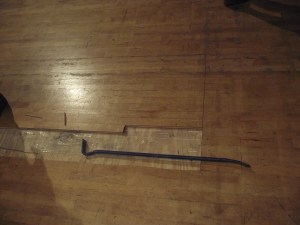
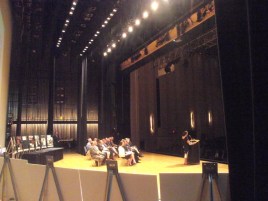
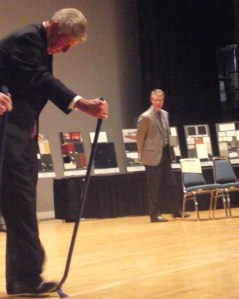
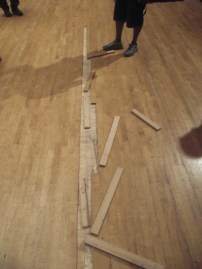
On July 1, 2014, Robinson Center Music Hall closed so that renovations could commence.  Instead of having a groundbreaking ceremony, Gretchen Hall and LRCVB arranged for a “stage breaking.”  Slats from the stage flooring were pried up with crowbars.

Twenty-eight months later, Robinson Center reopened on-time and on-budget.

(As a side note:  the Culture Vulture announced the countdown before Governor Mike Beebe and various Little Rock leaders used their crowbars for the first breaking of the stage flooring.)

Here are some photos from that ceremony.

Little Rock Look Back: Groundbreaking of Vogel Schwartz Sculpture Garden

Wayne Salge’s SIZZLING SISTERS, one of the original sculptures installed in the Vogel Schwartz Sculpture Garden

On June 25, 2009, members of the Sculpture at the River Market committee and City leaders broke ground on the Vogel Schwartz Sculpture Garden in Riverfront Park.

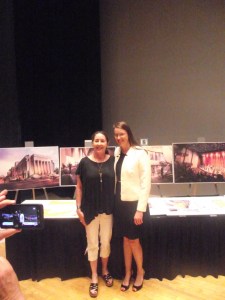
The groundbreaking followed an unveiling of the design plans for the new sculpture garden, which will be located east of the Peabody Hotel near the Forever a Rose garden and the Jack Fleischauer Garden.

“As part of the continuing improvements to Riverfront Park, we wanted to put more sculpture into the park to complement the new gardens, Peabody Park, and the upcoming La Petite Roche plaza,” said City Director Dean Kumpuris. “At the 2008 Sculpture at the River Market, six pieces were bought through proceeds from the show and sale to be placed in the park in 2009.”

According to Kumpuris, seven new pieces will join a dozen other sculptures in the park and along President Clinton Avenue that have been installed since 2004.

The sculpture garden features natural terraces and walkways. The design creates a space to host receptions, weddings or other events as well as to allow visitors to enjoy the sculptures in solitude.

The seven pieces which will be installed are “Full of Himself” by Jan Woods, “Cascade” by Chapel, “Bateleur Eagle” by Pete Zaluzec, “Sizzling Sister” by Wayne Salge, “Conversation with Myself” by Lorri Acott,  “First Glance” by Denny Haskew, and “Straight and Narrow” by Lisa Gordon.

“This is only the start,” said Sculpture at the River Market Chair Jane Rogers. “In addition to continuing to place sculpture in Riverfront Park, the committee is discussing ways to place public art throughout the city. In the months to come, we hope to be able to make some more announcements about sculpture and public art in Little Rock.”

The sculpture garden is made possible through the support of the Vogel Schwartz Foundation. Robert Vogel represented the family during the ground-breaking ceremony commending the city of Little Rock on their efforts to support the art community.