Little Rock Look Back: Hollywood in Little Rock

All right Mr. DeMille, Little Rock was ready for its close up.

From April 24 to 26, 1944, Cecil B. DeMille was in Little Rock for the world premiere screening of The Story of Dr. Wassell.  This 1944 Paramount Pictures Technicolor release told the story of wartime hero Dr. Corydon Wassell.

Why was Little Rock chosen?  It was the hometown of Dr. Wassell.  His paternal grandfather, John Wassell, was Little Rock’s 27th mayor.  His first cousin, Sam Wassell, was serving on the City Council at the time of the film’s release and would become Little Rock’s 51st mayor.

Based on a book by James Hilton, it was inspired by the heroic efforts of Dr. Wassell, a naval officer, as he led the evacuation of several sailors (and treated their wounds) in Java in February 1942.  President Roosevelt highlighted Dr. Wassell in his May 26, 1942, fireside chat.

Little Rock rolled out the red carpet (literally and figuratively) for DeMille and a contingency from Hollywood.  Dr. and Mrs. Wassell also returned to Little Rock for the festivities.  Unfortunately, Gary Cooper (who played Wassell in the film) was unable to attend due to illness.  His costar, Laraine Day, was making another film and could not attend either.    Those in attendance with DeMille (and Mrs. DeMille) included actresses Signe Hasso and Carol Thurston, and actor Melvin Francis.  The latter played himself; he had actually been one of the sailors saved by Dr. Wassell.

On April 24, 1944, DeMille and Dr. Wassell appeared on a radio program broadcast live from the music hall of Robinson Auditorium.  The next day, the troupe toured Camp Robinson and spoke to the soldiers there.  Later that day, Miss Hasso and Miss Thurston sold war bonds at Pfeiffers and M.M. Cohn’s.

April 26, 1944, was a full day for the DeMilles, the Wassells, and the others.  It started with a luncheon at the Hotel Marion, hosted by the Lions Club and Little Rock Chamber of Commerce.  Governor Homer Adkins presented DeMille with an Arkansas Traveler certificate.  DeMille, in return, presented Governor Adkins with a copy of the script.

When it was Dr. Wassell’s time to speak, he praised Little Rock’s efforts on the home front.  He also asked for a standing tribute to longtime Little Rock school superintendent R.C. Hall, who had died the day before.  Dr. Wassell had taught with Mr. Hall decades earlier.

Following the lunch, there was a parade on Main Street.  It started at 10th and Main and proceeded to Markham before ending at the War Memorial Building (now the Old State House Museum).  Newspaper accounts said that it was four miles long and featured many military units and marching bands.

Dinner that evening was at the Lafayette Hotel before screenings of the movie at the Capitol and Arkansas Theatres. Both screenings were sold out.  On April 27, 1944, a regular run of the movie started at the Capitol Theatre.  It would be released nationally on July 4, 1944, which also happened to be Dr. Wassell’s birthday.
Little Rock Look Back: 199 Years of the Quapaw Line

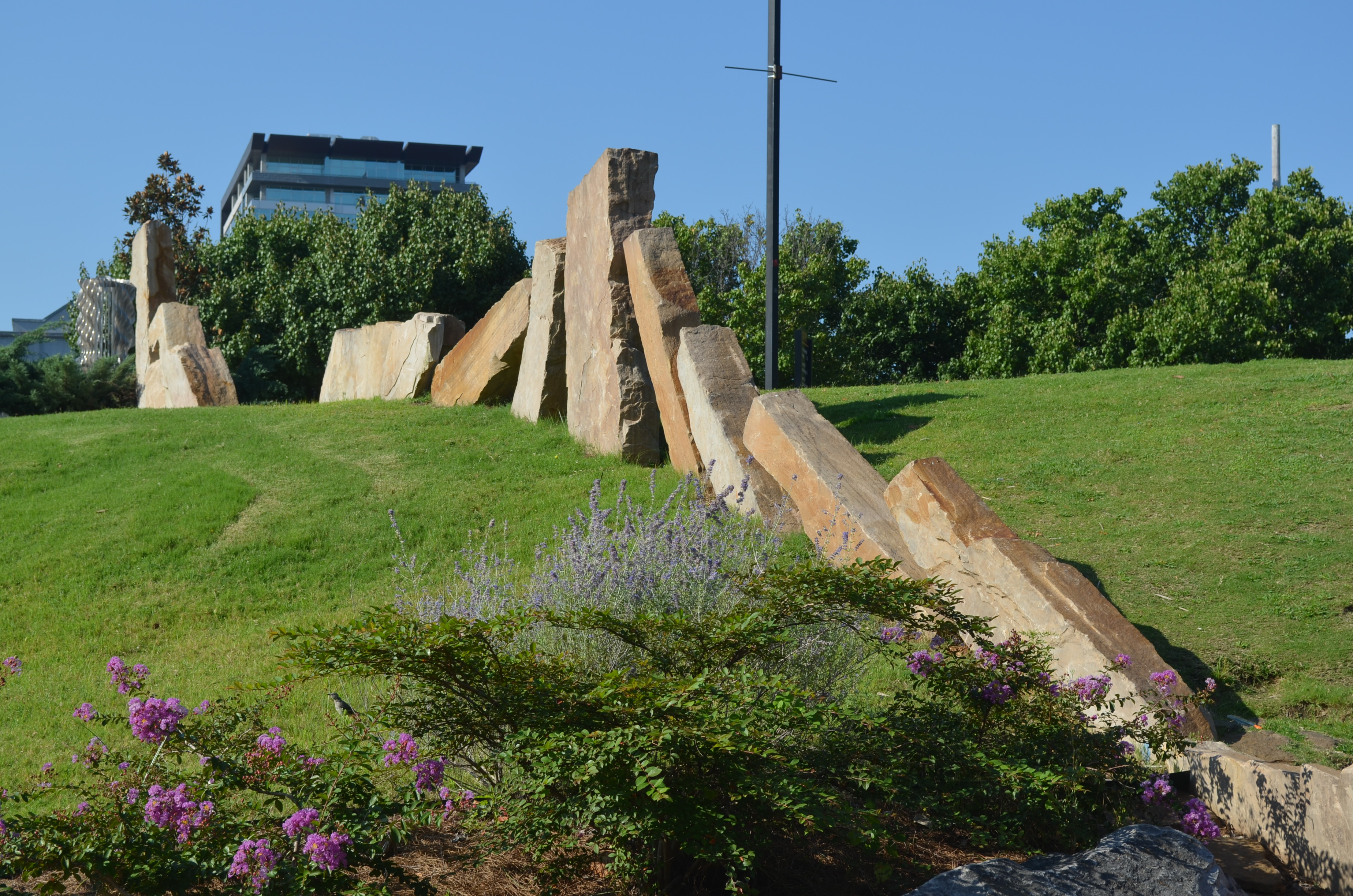
Stones placed in Riverfront Park denote where there Quapaw Line started from La Petite Roche

Stones placed in Riverfront Park denote where there Quapaw Line started from La Petite Roche

On August 24, 1818, the Quapaw Line was drawn.  Starting at La Petite Roche and heading due south, this line formed the boundary between the Quapaw tribe lands and public lands available for settlement.  Though by 1824, the Quapaw were forced to give up all of their lands, the line continued serve as an important marker.  In the ensuing six years, the first permanent settlement of Little Rock took place and streets were planned.It is interesting to note that the 1818 treaty referred to La Petite Roche as the Little Rock.  Some have speculated that this is the first official use of “Little Rock” to designate the outcropping.  When the Post Office was established in March 1820, it was given the name Little Rock.

There is a marker commemorating the beginning of the Quapaw Line located at La Petite Roche in Riverfront Park.  The first segment of the line is also noted in the park.  There are also sunken markers place along the line at various points.  In MacArthur Park, at the corner of 9th and Commerce Streets, there is a marker noting that the line passed through at that location.

A good account of walking the Quapaw Line through downtown Little Rock can be found on this website.

Most of what is now called the Quapaw Quarter was located to the west of the Quapaw Line.  However, it did take its name from the fact that the tribe had once lived in that area and was later sequestered to lands near it.  The name for the area was chosen by a committee composed of David D. Terry, Peg Newton Smith, Mrs. Walter Riddick Sr., Dr. John L. Ferguson, and James Hatcher. They had been appointed to a Significant Structures Technical Advisory Committee to advocate for preservation of important structures as a component of the City of Little Rock’s urban renewal efforts.

Little Rock Look Back: War Memorial Stadium location approved

As was noted in a previous post, War Memorial Stadium was approved by the Arkansas General Assembly in March 1947.  The work then began on the finalization of the location.

Four cities were in the running:  Little Rock, North Little Rock, Hot Springs, and West Memphis.  Each of the cities was required to donate the land for the stadium, provide parking for it, and sell local subscriptions equivalent to $250,000 to raise money for it as well.

On May 19, 1947, the City Council approved Resolution 1747 to donate the land for the stadium in Fair Park if Little Rock was selected.  This was not the first mention of a stadium in City records.  In March of 1947, the City Council had set aside land in Fair Park to use for a playground — with the stipulation that if it was eventually needed for a stadium, it would be relinquished for that purpose.

On August 9, 1947, the War Memorial Stadium Commission met in the House Chambers of the Arkansas State Capitol to select the location for the stadium.  West Memphis dropped out prior to the meeting; they had not been able to raise the sufficient local funds.  That left the three remaining cities.  (Cities had until June 24 to file paperwork expressing their interest in applying and were to submit their proposals by August 1.)

The location for the meeting had been set because a large crowd was expected.  And the attendance did not disappoint.  City government and business leaders from all three cities turned out in full force.  The members of the Commission were Ed Keith, Chairman, Magnolia; Gordon Campbell, Secretary, Little Rock; Ed Gordon, Morrilton; Senator Lee Reaves, Hermitage; Senator Guy Jones, Conway; Dallas Dalton, Arkadelphia; Judge Maupin Cummings, Fayetteville; Dave Laney, Osceola; and Leslie Speck, Frenchman’s Bayou.

For several hours the nine heard proposals from the three cities.  Little Rock’s location was in Fair Park, North Little Rock’s was near its high school, and Hot Springs was on land next to Highway 70 approximately 2.5 miles from downtown.  Finally it was time to vote.  After two rounds of voting, Little Rock was declared the winner on a weighted ballot.

North Little Rock’s leadership was magnanimous in their defeat.  Hot Springs, however, was far from it.  In the coming days they filed suit against the Stadium Commission alleging flaws in Little Rock’s proposal as well as improprieties by members of the commission.  A preliminary decision sided with the state.  Ultimately, Hot Springs’ relatively new mayor Earl T. Ricks opted to drop the suit.  The Spa City’s business community was concerned that fighting the location might delay construction – and could negatively impact legislative and tourists’ feelings toward Hot Springs.  (And it was entirely possible that the State Police could have been used to “discover” that there was gambling going on in Hot Springs.)

Though ground was broken later in the year, by December 1947, the stadium was still $250,000 shy of funding for the construction.  This was after the state and Little Rock had previously both upped their commitments to $500,000 each.

The building did eventually open on schedule in conjunction with the 1948 Arkansas Razorback football games.

As for Mayor Ricks of Hot Springs, he moved to Little Rock to serve as Adjutant General of the Arkansas National Guard during the governorship of Sid McMath.  He later held leadership positions in the National Guard Bureau in Washington DC.  He died in 1954 at the age of 45.  Among the ways he was memorialized was a National Guard armory in Little Rock, which stood in the shadow of War Memorial Stadium.

Little Rock Look Back: Verdict rendered in 1906 City Hall-Jail-Auditorium case

The 1906 plans for City Hall with the Municipal Auditorium on the left portion.

Last week: Little Rock Mayor Warren E. Lenon had been advocating for a new City Hall a municipal auditorium since shortly after taking office in April 1903. After plans were approved in July 1906, a group of citizens, led by Arkansas Gazette publisher J. N. Heiskell, filed suit to stop the City.

The closing arguments in the trial against plans for a new City Hall and auditorium complex had been heard on Monday, July 30.  The case was heard by Chancery Judge J. C. Hart.  Serving as an advisor to Chancellor Hart throughout the trial (though with no official legal standing) was Pulaski County Circuit Court Judge Robert J. Lea.  To accommodate the expected large attendance, the trial had been moved into his courtroom which was larger than Chancellor Hart’s.

On Friday, August 3, Pulaski County Chancery Judge J. C. Hart issued an injunction to keep the City from signing a contract for the construction of a city hall, jail and auditorium.  Chancellor Hart concurred with the plaintiffs that Arkansas’ constitution and laws dictated all taxation must be for public purposes.  He found there was nothing in Arkansas case law which defined an auditorium to be used for conventions as a public purpose.

As had been the case throughout the trial, the tone of the coverage of the decision differed greatly in the city’s two daily papers.  The subheading in the Democrat noted that the plaintiffs would be liable for any losses to the municipal government’s coffers due to a delay in commencing the construction if Little Rock eventually prevailed.  That fact is not mentioned by the Gazette.  Both papers did make note that Judge Lea agreed with the Chancellor’s decision.

For now, it looked as if the City of Little Rock would be stuck in the 1867 City Hall on Markham between Main and Louisiana.  Mr. Heiskell and his compatriots waited to see if the City would appeal the decision.

While August would be a quiet month publicly, work would go on behind the scenes.  More on that, in the future.

Little Rock Look Back: Mahlon A. Martin

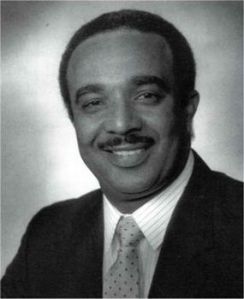
On July 19, 1945, future Little Rock City Manager Mahlon A. Martin was born in Little Rock.

After graduating in 1963 from Horace Mann High School, he attended Philander Smith College.  (He had received a baseball scholarship to Grambling, but chose to remain in Little Rock to be near his ailing grandmother.)  Martin graduated from Philander Smith in 1967 with a degree in business administration.

After working in the private sector for two years, Martin was hired by City Manager Jack T. Meriwether to work for the City of Little Rock in 1969 after the City had received a Model Cities grant.  Martin started working with community organizations and then became promoted to the City’s recruiting officer.

In 1972, he was named to leadership posts at the four-county Central Arkansas Manpower Program.  Three years later, he returned to the City of Little Rock to work on the staff of City Manager Carleton McMullin.  In 1976, Martin was named Assistant City Manager for Little Rock.

Martin left City Hall in 1979 to become a top executive at Systematics, Inc.  However, his stint in the private sector was short-lived.  In 1980, the City Board of Directors asked him to come back and be Little Rock’s sixth City Manager.  At thirty-four, he was one of the youngest chief administrators of a major city in the country and the first African American City Manager for Little Rock.

In 1983, Governor Bill Clinton asked him to join the state of Arkansas as the Director of the Department of Finance and Administration.  He was the first African American to lead that or any major Arkansas state department.  Throughout his tenure with the State, he oversaw numerous initiatives to restore the state to sound financial footing.

Martin joined the Winthrop Rockefeller Foundation as president in 1989.  He held that position until his death in 1995.

The name Mahlon Martin lives on in a son and grandson named after him, in an apartment complex on south Main Street, in a street in Clinton Presidential Park, and in the City of Little Rock’s Employee of the Year award.  The latter was created by City Manager Bruce T. Moore in 2004.  At the time Moore noted that Martin had been so popular while City Manager, “It was said you could criticize the Razorbacks to a City of Little Rock employee, but you better not say anything bad about Mahlon Martin to them.”

In 2001, Mahlon Martin was posthumously inducted into the Arkansas Black Hall of Fame.  A decade later, the Butler Center for Arkansas Studies created a fellowship in his memory.  It supports research and programming in the field of public policy in Arkansas.  In 2015, he was included in the Arkansas Civil Rights Heritage Trail.

Little Rock Look Back: USS Little Rock (LCS9) is launched

On July 18, 2015, the new U.S.S. Little Rock (LCS9) was christened and officially launched in a ceremony in Marinette, Wisconsin.

Among those in attendance at the ceremony were Little Rock Mayor Mark Stodola and US Senator John Boozman.   Then-Secretary of the Navy Ray Mabus, who served on the original U.S.S. Little Rock during the Vietnam War, was also present at the ceremony.

The U.S.S. Little Rock will be the nation’s ninth littoral combat ship.  It has been built for the U.S. Navy by Lockheed Martin and Marinette Marine Corporation (MMC) at the MMC shipyard in Marinette, Wisconsin.

The  christening ceremony celebrated the ship’s physical transition from land to sea.  The ceremony was a symbolic transition from a hull number to a ship with a name and spirit of its own.

Following Janee Bonner’s shattering of the champagne bottle on the hull, the U.S.S. Little Rock was side launched into the Menominee River.  A side launch is unique, because the ship enters the water broadside. It is mostly used on inland waters, rivers and lakes.

There will be a commissioning ceremony later in 2017 in Buffalo, New York. At that time, the ship will formally join the Fleet and become sovereign U.S. territory wherever she sails.

Little Rock Look Back: Death of Joseph Taylor Robinson

Eighty years ago today, on July 14, 1937, U.S. Senator Joseph Taylor Robinson died in his apartment in Washington D.C.

The Senator’s wife, Ewilda, was in Little Rock making preparations for a trip the couple was to take. (She was informed of her husband’s death when her sister-in-law called to express condolences. No one had yet notified her in Little Rock.) Following his demise, Mrs. Robinson went to Washington to accompany her husband’s body back to Arkansas.

As the Senate Majority Leader, Senator Robinson was usually President Franklin Roosevelt’s point person to shepherd legislation on Capitol Hill.  The Democrat’s 1928 Vice Presidential nominee, Senator Robinson was particularly close to FDR. He had successfully steered numerous pieces of New Deal legislation through Congress.  However, at the time of his death, the Senator was facing an uphill climb trying to build consensus on the President’s unpopular Court Packing scheme.

The Senator was honored with a memorial service in the Senate chambers on Friday, July 17.  President Roosevelt and the cabinet joined members of the senate on the floor in what was described as a state funeral without pomp.  Mrs. Robinson sat with her brothers and two nephews as well as Bernard Baruch and Arkansas Power & Light’s Harvey Couch, who were Senator Robinson’s closest friends.  Eleanor Roosevelt was one of the many crowded in the senate galleries observing the service.  Following the service his body remained in the chambers until it was transferred to a train to make the journey to Little Rock.

The funeral train bore his body, his family, 50 senators and over twenty congressmen. It reached Little Rock around 8am on Sunday the 19th.  From there, Senator Robinson’s body was taken to his house on Broadway Street until noon.  It subsequently lay in state at the Arkansas State Capitol until being escorted by military to First Methodist Church.

1,500 people packed the church a half hour before the service began. The sun shone through the windows onto the flag-draped coffin as Rev. H. Bascom Watts led the service. Among the pallbearers was former Vice President Charles G. Dawes. Governor Carl Bailey of Arkansas was joined by Governors Richard Leche of Louisiana and E.W. Marland of Oklahoma.

As the funeral procession reached Roselawn Cemetery, thunder echoed. The skies which had alternated between sun and rain that day, returned to rain. A deluge greeted the end of the service and sent visitors hurrying for shelter at the end.

Five months after her husband’s death, Mrs. Robinson participated in the groundbreaking of the Joseph Taylor Robinson Memorial Auditorium.  The groundbreaking ceremony was the first time it was announced that building would be named in his memory.   On a plaque inside that building today, a quote from President Roosevelt stands as a further testament of the importance of Senator Robinson to the US.  Taken from President Roosevelt’s remarks upon learning of the Senator’s death, the plaque reads, in part, “A pillar of strength is gone.”

Seventy-eight and a half years later, the church was the site of the funeral of longtime US Senator Dale Bumpers in January 2016.