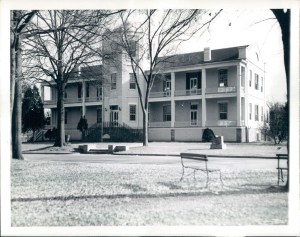
Arts+History Throwback Thursday: Arsenal Building in 1942

Associated Press photo

Associated Press photo

On February 9, Little Rock voters will have the chance to say Yes to improving the MacArthur Museum of Arkansas Military History, Arkansas Arts Center, and MacArthur Park.

Leading up to that election is a good time to look back at the development of these two MacArthur Park sited museums.

This is a 1942 Associated Press photo of the Arsenal Building.  Completed in 1840, it was decommissioned in 1890 after fifty years as a military arsenal and later officer barracks.  In 1893, the land on which it sits was transferred from the Federal Government to the City of Little Rock. The land became Little Rock’s first public park.  Briefly known as Arsenal Park, it was known as City Park until 1942, when it was renamed MacArthur Park after the five star general who was born there in 1880.

From 1942 until 1996, it was home to the Museum of Science and History (under several different names). The building was restored in preparation for the museum moving in.  After the building was vacated again in 1997 (when the museum moved to the River Market to become the Museum of Discovery), it stood vacant in preparation for a proposed military history museum. In 1999, the building was hit by a tornado which severely damaged part of the roof and caused some interior flooding.  The building was repaired and restored while plans for the new museum were underway.  In May 2001, the MacArthur Museum of Arkansas Military History opened.

Tonight’s Movies at MacArthur is “4-4-43” about a daring escape from a POW camp

The MacArthur Museum of Arkansas Military History will host a screening of the documentary 4-4-43. The screening starts at 6:30pm tonight at the museum in MacArthur Park.

Free admission. Free popcorn and beverages provided.

On April 4, 1943, ten American prisoners-of-war and two Filipino convicts broke out of an escape-proof Imperial Japanese Army prison plantation in the Philippines. The secret that they carried out with them would shock the world. Called the “Greatest Story of the War in the Pacific” by the U.S. War Department in 1944, the full, uncensored true action adventure tale has been lost to history for nearly seven decades – until now.

The MacArthur Museum of Arkansas Military History is a program of the City of Little Rock’s Parks and Recreation Department.

Arts+History campaign event this evening from 4:30 to 6:30

CfAandHGrab a drink, listen to some music and learn about how you can support Arts + History in Arkansas. Donations of all levels will be appreciated.

When: Wednesday, January 20 at 4:30 – 6:30 p.m.

Where: Arkansas Arts Center Lobby

The Committee for Arts and History is a group of citizen advocates campaigning for Little Rock residents to vote FOR a bond issue backed by an already approved hotel tax on out-of-town visitors to improve the Arkansas Arts Center, MacArthur Museum of Arkansas Military History, and MacArthur Park in a special election on February 9, 2016.

The improvements are of vital importance for the Arkansas Arts Center to keep its accreditation in 2016, to preserve a National Historic Landmark, and for Little Rock citizens to protect our cultural attractions.

Nathalia Edenmont: Force of Nature exhibit brings larger than life photographs to Arkansas Arts Center

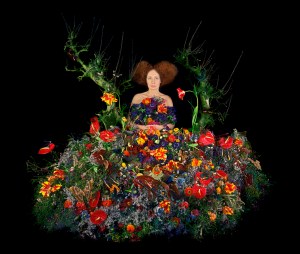
AAC LargerLifeToday through May 1, the Arkansas Arts Center plays host to photographer Nathalia Edenmont’s first major U.S. exhibition.

Nathalia Edenmont: Force of Nature is the artist’s first solo exhibition in a major American museum and features ten, richly colored, large-format photographs. Five of the photographs, including Eden, a self-portrait of the artist, are recent works and have never before been exhibited. Force of Nature is organized by the Arkansas Arts Center and Nancy Hoffman Gallery (New York City) and is presented in conjunction with the Garden Club of America Zone 9 annual meeting, which occurs in Little Rock in late-April 2016.

“Nathalia Edenmont’s photos are striking both in terms of their scale and colorful content,” said Brian J. Lang, chief curator and curator of contemporary craft at the Arkansas Arts Center. “We look forward to hosting Edenmont’s first major U.S. exhibition, giving Arkansans the opportunity to be among the first to see some of her most recent photos.”

Born in 1970 in Yalta, Ukraine, Nathalia Edenmont moved to Sweden by the age of 20, realizing that life in the former Soviet Union was disintegrating and held no future for her. At 27, Edenmont enrolled in the Forsbergs Skola to study graphic design. At the school her artist-mentor, Per Hüttner, encouraged her to visualize her inner pictures and to try to capture them with the camera.

All of Edenmont’s photographs derive from her life experience. “I only look inside my head,” the artist explains. “What I see in my mind is what I create. I do not sketch; the image is complete and sharp within me. I have absolute control over all aspects of what I do.”

Using a large-format Sinar camera with 8×10 film and many lenses, Edenmont works with a team of eight to twelve people over the course of one day to compose a single “shot.” She has two camera assistants (both professional photographers), a hair stylist and a dressmaker.

What each figure wears is central to the meaning of each work. The artist’s “portraits” reflect intensity, each subject stands expressionless and motionless against a pitch-black background, cloaked in flowers revealing only her neck and shoulders; light emanates from within. It is the “flower pile” or dress the artist composes that tells the tale, sometimes with birds or snakes, sometimes with fresh flowers or vegetables, and at other times with wilted blooms. “Since my childhood I have heard that a woman’s beauty is like a flower, it passes quickly,” Edenmont says. “That is why I switch from fresh flowers to dry and very old. I see much beauty in dried flowers. I grew up as a Russian Orthodox and in the cemetery the fresh graves covered in flowers looked like my flower piles from which I compose my dresses.”

Edenmont is a two-time recipient of the Konstnarsnamndens Arbetsstipendium, a grant awarded by the Culture Department in Stockholm, Sweden. Her work has been exhibited internationally, including museums in Sweden, Russia and Germany; Nathalia Edenmont: Force of Nature is the artist’s first solo exhibition in a major American museum.

Edenmont will speak at an AAC Member Lecture & Late Night event at 6 p.m. on Thursday, January 21. A book signing will immediately follow the lecture.

Nathalia Edenmont: Force of Nature is sponsored by Tipton & Hurst, Kara and David Dowers for Annie Dowers and Dr. and Mrs. Charles Cole.

Final day to see OUR AMERICA exhibit at the Arkansas Arts Center

Today is the final day to enjoy the Arkansas Arts Center exhibition Our America: The Latino Presence in American Art.  This major collection of modern and contemporary Latino art from the Smithsonian American Art Museum has been here since October.

The exhibition Our America includes 93 works in all media by 72 artists who participated in various artistic styles and movements, including abstract expressionism; activist, conceptual and performance art and classic American genres such as landscape, portraiture and scenes of everyday life.

Our America presents the rich and varied contributions of Latino artists in the United States since the mid-20th century, when the concept of a collective Latino identity began to emerge. The exhibition is drawn entirely from the Smithsonian American Art Museum’s pioneering collection of Latino art.


Our America features bilingual labels for each work and a Spanish-language website created by the Smithsonian American Art Museum. Select works also feature podcasts with the artist’s commentary. Museum goers can simply call a number, scan a QR code or visit a website for more background on the artist and background on each piece—in English and Spanish.

Artists featured in the exhibition reflect the rich diversity of Latino communities in the United States. Our Americashowcases artists of Mexican, Puerto Rican, Cuban and Dominican descent, as well as other Latin American groups with deep roots in the United States. By presenting works by artists of different generations and regions, the exhibition reveals recurring themes among artists working across the country.

The 72 artists featured in the exhibition are ADÁL, Manuel Acevedo, Elia Alba, Olga Albizu, Carlos Almaraz, Jesse Amado, Asco (Harry Gamboa Jr., Gronk, Willie Herrón and Patssi Valdez), Luis Cruz Azaceta, Myrna Báez, Guillermo Bejarano, Charles “Chaz” Bojórquez, María Brito, Margarita Cabrera, María Magdalena Campos-Pons, Melesio “Mel” Casas, Leonard Castellanos, Oscar R. Castillo, José Cervantes, Enrique Chagoya, Roberto Chavez, Carlos A. Cortéz, Marcos Dimas, Ricardo Favela, Christina Fernandez, Teresita Fernández, iliana emilia garcía, Rupert García, Scherezade García, Carmen Lomas Garza, Ignacio Gomez, Ken Gonzales-Day, Hector González, Luis C. “Louie the Foot” González, Muriel Hasbun, Ester Hernandez, Judithe Hernández, Carmen Herrera, Carlos Irizarry, Luis Jiménez, Miguel Luciano, Emanuel Martinez, María Martínez-Cañas, Antonio Martorell, Ana Mendieta, Amalia Mesa-Bains, Franco Mondini-Ruiz, Delilah Montoya, Malaquias Montoya, Abelardo Morell, Jesús Moroles, Raphael Montañez Ortiz, Pepón Osorio, Amado M. Peña Jr., Chuck Ramirez, Paul Henry Ramirez, Sophie Rivera, Arturo Rodríguez, Freddy Rodríguez, Joseph Rodríguez, Frank Romero, Emilio Sánchez, Juan Sánchez, Jorge Soto Sánchez, Rafael Soriano, Ruben Trejo, Jesse Treviño, John M. Valadez, Alberto Valdés and Xavier Viramontes.

The exhibition is organized by E. Carmen Ramos, curator of Latino art at the Smithsonian American Art Museum.

Our America: The Latino Presence in American Art is organized by the Smithsonian American Art Museum. Generous support for the exhibition has been provided by Altria Group, the Honorable Aida M. Alvarez, Judah Best, The James F. Dicke Family Endowment, Sheila Duignan and Mike Wilkins, Tania and Tom Evans, Friends of the National Museum of the American Latino, The Michael A. and the Honorable Marilyn Logsdon Mennello Endowment, Henry R. Muñoz III, Wells Fargo and Zions Bank. Additional significant support was provided by The Latino Initiatives Pool, administered by the Smithsonian Latino Center. Support for “Treasures to Go,” the museum’s traveling exhibition program, comes from The C.F. Foundation, Atlanta.

Our America is sponsored in Arkansas by Donna and Mack McLarty, The Brown Foundation, Inc., of Houston, Consulate of Mexico in Little Rock and Alan DuBois Contemporary Craft Fund. Media sponsors include ¡Hola! Arkansas and Telemundo Arkansas.

Evolution of Jazz and its place on 9th Street focus of forum by Clinton School, Oxford American and Mosaic Templars

jazz forumTonight (January 14) at 6pm at the Mosaic Templars Cultural Center, the Clinton School Speaker Series is presenting a forum on Jazz.  “Jazz: Evolution of an American Art Form and Its Place on 9th Street,” Jazz Symposium will be presented in partnership with the Oxford American and Mosaic Templars Cultural Center.

This panel discussion will be moderated by musician and lifelong jazz enthusiast, Chris Parker, and feature panelists Amina Claudine Myers (born in Blackwell, Ark.), a New York-based jazz singer and pianist; John Cain, a Little Rock-based activist and 9th Street historian; and Nathan Hood, a Hot Springs-based baritone saxophone player. The panel will share personal experiences as jazz musicians and lovers of the genre, as well as the art form’s historical context within the African American microeconomics that existed in U.S. cities prior to the Civil Rights movement.

At 7:30 p.m. — following the 60-minute symposium — a jazz ensemble led by Chris Parker will play a 60-minute set of music. Featured members of the ensemble will include bassist Bill Huntington, drummer Yvette ‘Babygirl’ Preyer, and saxophonist Nathan Hood. Parker, Huntington, Preyer, and Hood have worked with an impressive and wide range of musicians, including Ellis Marsalis, Dr. John, Benny Powell, Art Pepper, Isaac Hayes, and Harold Ousley, among others. Admission for the performance is $10 regular or $5 for students/artists.

Art+History Throwback Thursday: Museum of Fine Arts

MFA postcardOn February 9, Little Rock voters will have the chance to say Yes to improving the Arkansas Arts Center, MacArthur Museum of Arkansas Military History and MacArthur Park.

Leading up to that election is a good time to look back at the development of these two MacArthur Park sited museums.

The Museum of Fine Arts opened in October 1937.  The groundbreaking was held on January 3, 1936, with the cornerstone laid on October 6 of that year.  Nearly one year later, the Fine Arts Club held its first meeting in the building and hosted a grand open house on October 5, 1937.

The front doorway to the museum is visible today inside a gallery of the Arkansas Arts Center.