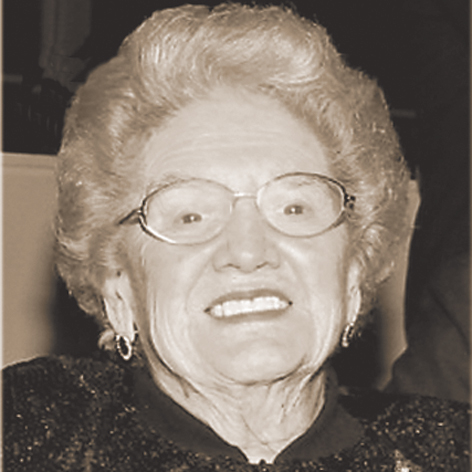
LR Cultural Touchstone: Lucy Lockett Cabe

lucy-cabeLucy Lockett Cabe grew up in Missouri and died in Texas, but made an enormous impact on the cultural life of Little Rock and Arkansas.

While best known as the major benefactor of Wildwood Park for the Performing Arts, she also supported many other cultural organizations including the Arkansas Arts Center, Ballet Arkansas, Arkansas Symphony Orchestra, Arkansas Repertory Theatre and many smaller organizations. For over 30 years, it was rare for there to be a musical performance in Little Rock without Lucy as either a performer or in the audience.

A lifelong musician, as she aged, her voice shifted from soprano to alto to tenor while singing. She also served as a church organist. She studied piano from the age of eight.  Meeting her future husband Harold Cabe while summering in Michigan, she moved to Arkansas in 1940. From that time until 1975, she lived in Gurdon but was actively involved in the arts scenes of Arkadelphia and Little Rock.  The couple moved to Little Rock in 1975.  Harold died in 1984.

In 1971 she was one of the original appointees to the state Arts and Humanities Council. For her work with musical and volunteer groups, she was honored as the Arkansas Democrat-Gazette Woman of the Year in 1986. In 1993 she received the Arkansas Arts Council’s Lifetime Achievement Award and the Little Rock Arts and Humanities Ed Hanlin Memorial Award for Outstanding Individual Contribution to the Arts.

Lucy was an honorary life member of the Arkansas Symphony, the Community Theatre of Little Rock and Wildwood Park for the Performing Arts. She was involved in every step of the formation of the Arkansas Opera Theatre, which subsequently evolved into the Wildwood Park. She supported and was honored by Wildwood with the 625-seat Lucy L. Cabe Festival Theatre on the grounds.

In the early 2000s she moved to Dallas to be closer to her family.  She died in 2005.

It is fitting that she be remembered in October, as Halloween was her favorite holiday.  Starting on October 1, the Halloween jewelry, socks and shirts would be donned.

LR Cultural Touchstone: Phyllis D. Brandon

phyllisbrandon_t180Phyllis D. Brandon has played a unique role in shaping and supporting Little Rock’s cultural life.  As the first and longtime editor of the Arkansas Democrat-Gazette‘s High Profile section, she promoted cultural institutions, supporters and practitioners.

Since it started in 1986, being featured in High Profile has been akin to the Good Housekeeping Seal of Approval.  It exposes cultural institutions and events to new and wider audiences.  There is no way to put a monetary measure on the support Brandon gave to Little Rock’s cultural life during her time leading High Profile from 1986 to 2009.  From 2009 to 2011, she served as editor of Arkansas Life magazine, again supporting and promoting cultural life.

With her unassuming manner, she coaxed stories out of interview subjects and captured photos which highlighted events.  A journalist since her junior high school days in Little Rock, Brandon has also been a witness to history.  As a recent graduate of the University of Arkansas, Brandon returned to her alma mater, Little Rock Central High, to cover the events in early September 1957 for the Arkansas Democrat.  Eleven years later, she was in Chicago for the contentious and violent 1968 Democratic National Convention as a delegate.

From 1957 until 1986, she alternated between careers in journalism and the business world, as well as being a stay-at-home mother.  Upon becoming founding editor of High Profile, she came into her own combining her nose for news and her life-long connections within the Little Rock community.  As a writer and photographer, she created art in her own right. A look through High Profile provides a rich historical snapshot of the changes in Little Rock and Arkansas in the latter part of the 20th Century and start of the 21st Century.

Since retiring in 2011, Brandon has kept a relatively low profile. She can be seen from time to time spending time with friends and family and enjoying attending events. Only this time she generally does not have her trusty camera or notepad.

Visit the Little Rock Zoo on Saint Francis Day weekend

Little-Rock-zoo-logo-4-c-with-tagYesterday, October 4, was officially Saint Francis Day. But most churches commemorate it on the Sunday closest to the Feast Day, which is today.

Saint Francis of Assisi is the patron saint of animals.  As such, many churches have “Blessing of the Animals” services.

While the Little Rock Zoo does not have a “Blessing of the Animals” event, it does provide an opportunity to see and learn about many different types of animals.

No longer a space where animals are kept in tightly confined concrete and steel cages, the focus of the Little Rock Zoo is education about animals and the environment.  This mission is in keeping with Saint Francis’ belief in the importance of animals as part of the larger community.

The Little Rock Zoo has long been one of Arkansas’ great treasures. It all began modestly in 1926, with just two animals — an abandoned timber wolf and a circus-trained brown bear. Today, the Zoo has grown to include nearly 700 animals representing 200+ species, many on the endangered list. The Zoo itself, has become one of the state’s greatest educational and conservation resources.

The Little Rock Zoo is accredited by the Association of Zoos and Aquariums.  Look for the AZA logo whenever you visit a zoo or aquarium as your assurance that you are supporting a facility dedicated to providing excellent care for animals, a great experience for you and a better future for all living things.  With its more than 200 accredited members, AZA is a leader in global wildlife conservation and your link to helping animals in their native habitats.  For more information, visit http://www.aza.org.

LR Cultural Touchstone: Deborah Baldwin

9 Deborah BaldwinAs a historian, arts patron, and administrator, Deborah Baldwin has had a hand in shaping Little Rock’s cultural scene for nearly thirty years.   As Chair of the UALR History Department from 1986 to 1992, she lead the department as it created the History Institute which sponsors the “Evenings with History” lecture series.  At the time it was started, it was one of the few lecture series in Little Rock (if not the only one).

A member of the UALR faculty since 1980, Baldwin is a specialist in modern Mexican history with a Ph.D. from the University of Chicago. She has published a book on the Mexican Revolution of 1910 and a variety of articles, primarily on Mexican social history topic.

As a History Department faculty member, she has lead the Public History seminar. This program has documented the history of several Little Rock cultural institutions over the years including the Arkansas Arts Center, Arkansas Symphony Orchestra and Museum of Discovery.  The Public History program has trained many of the museum professionals working in Little Rock today.  The Central High Museum, a private forerunner of the National Park Service Central High National Historic Site Visitor Center, was lead in a large part by persons associated with the UALR Public History Program.

Starting in the mid-1990s, Baldwin led the College of Arts, Humanities and Social Sciences.  In that capacity, she oversaw the visual and performing arts programming at UALR.  Under her leadership, the Departments of Art, Music, and Theatre & Dance were all revitalized.  As a part of this, she ensured that cutting-edge technology was being integrated to arts curriculum.  She also led efforts to upgrade the performance facilities.  During her tenure as Dean, the College also played leading roles in the commemoration of the 40th and 50th anniversaries of the integration of Central High School, the centennial of the Mexican Revolution, and the “Life Interrupted” exhibit which highlighted the Japanese-American internment experience in Arkansas.  She also oversaw the creation of Finale!, an event each spring which celebrates the arts in Little Rock and honors arts patrons.

With the creation of the Arkansas Studies Institute (a collaboration between UALR and Central Arkansas Library System), Baldwin took on additional duties as UALR’s supervisor on the project.

In 2014, UALR underwent a campus-wide administrative and academic reorganization.  In conjunction with that, Baldwin became Associate Provost for UALR Collections and Archives.  In that capacity she oversees the campus library system, Center for Arkansas History and Culture and the Sequoyah National Research Center.  She continues to teach in the Department of History.

She is a past member of the board of the Arkansas Humanities Council and the MacArthur Military History Museum Commission.


LR Cultural Touchstone: Bernie Babcock

BabcockBernie_fLittle Rock’s rich cultural history has been influenced by many outstanding men and women.  This October, during Arts & Humanities Month 2014, the Culture Vulture is looking at 31 outstanding women who have shaped cultural life in Little Rock…and beyond.

Julia Burnelle “Bernie” Smade Babcock was an author and museum founder.  Born in April 1868 in Ohio, she moved with her family to Arkansas as a child.  Marrying and starting a family, she also continued to write, which had been a passion since she was younger.  When her husband died, leaving her with five children, she starting writing for money. She published several temperance novels and later wrote for the Arkansas Democrat.  She also published a magazine and a poetry anthology.  She later became recognized as an expert on Abraham Lincoln and wrote several books about him, as well as other historical figures.

In 1927, after professional curmudgeon H. L. Mencken wrote derisively of Arkansas, she decided to start a museum. The Museum of Natural History and Antiquities was first located in a Main Street storefront.  In 1929, she “gave the City of Little Rock a Christmas present” by giving the museum to the city.  It was relocated to the unfinished third floor of City Hall, with her as its employee.  In 1933, as New Deal programs were ramping up, the space was needed for WPA offices, and the museum was shuttered. Many of the museum’s artifacts were lost during this time.    She became folklore editor for the Federal Writers’ Project in 1935.

In 1941, she and businessman Fred Allsopp convinced the City of Little Rock to reopen the museum (then known as the Museum of Natural History) by locating it in the old Arsenal Building in City Park.  She lived in the basement of the building.  She was involved in the efforts to rename City Park in honor of Douglas MacArthur (who had been born there) and welcomed him when he came to Little Rock in 1952.  Retiring from the museum in 1953, she donated some items and billed the City $800 for others. That money was her retirement pension at age 85.

Moving to Petit Jean Mountain, she wrote, painted and published poetry.  She died in June 1962 at age 94.  She is buried in Little Rock’s Oakland Cemetery.

After more name changes and a relocation, her museum is now known as the Museum of Discovery and is an anchor in the River Market district.

Go In the Dark at the Museum of Discovery

mod darkThe Museum of Discovery will reveal what thrives in caves, beneath the soil, under the sea, in the shadows of night and within other dark environments in the special exhibition In the Dark, on view September 27 through January 4, 2015.

In the Dark features five immersive zones, enabling visitors to see and experience some of these dark and largely unseen worlds, including the ways people have reacted to darkness throughout history. Each diorama uses mechanical displays, life-size animal models and informational panels to surround visitors with the sights, sounds, smells and sensations of several dark ecosystems. In the Dark‘s walk-through areas are:


The Darkness of Night

Visitors encounter animals that dwell in two different environments as darkness falls in The Darkness of Night component of the exhibition: a forest in the Great Smoky Mountains, and a habitat in the Sonoran Desert. Visitors walk through the mountainous forest and witness how bobcats, barred owls, spotted skunks, flying squirrels and salamanders forage for meals. They also see how bats feed on night-blooming cacti in the Sonoran Desert.


Darkness within the Soil

Next the exhibition reveals what lurks below the soil as visitors learn about the animals that thrive just beneath the Earth’s surface. Here, the relationships among the world’s complex underground ecosystems as well as the plants, animals and humans living above ground are emphasized. Visitors will get a look at what dwells below the soil in a typical backyard with a life-size diorama featuring a cross-section of earth that reveals moles, cicadas, bumblebees, worms, millipedes, slugs and other animals that call the soil “home.”

 Darkness Deep within Caves

 As visitors examine open and closed cave systems, they learn the natural processes that form each type of cave and the unique organisms found inside. The dioramas include a walk-through recreation of a limestone solution cave and a closed ecosystem found in Romania’s Movile cave. Interactive elements explore animal adaptations and cavern environments, such as the cave cricket’s fine hair-like structures, called mechanoreceptors, which collect information about its dark environment. “Be a Bat” is a computer “cave maze” where visitors rely on sounds to find their way out of a simulated cave like their small, winged mammal counterparts.


Darkness and Humans

The Darkness and Humans area of In the Dark tells past and present human interactions with dark environments and the resulting effect of these ecosystems. Humans have found ways to adapt to the total lack of light, including incredible adaptations for the blind, and also how to bring light into the dark world. Stories and folklore reveal cultural interpretations of night and darkness, while modern technology such as sonar, radar and image enhancers reveal how humans mimic the adaptations of animals like dolphins, bats and owls.


Darkness and the Deep Sea

The sea component highlights two deep sea environments – a deep sea vent field and a section of the open deep sea. The exhibit compares the two diverse ecosystems, the organisms that live in each and deep sea creature survival methods.   This area features a 60-square-foot life-size diorama of the deep sea vents similar to those at the Galapagos Rift Vent Field, located two and a half kilometers beneath the ocean’s surface, as well as a smaller diorama of a column of water in the Pacific Ocean.

To learn more about In the Dark, visit www.museumofdiscovery.org or call 501-396-7050.

LR Cultural Touchstone: Kay Kelley Arnold

(Photo courtesy of Bill & Hillary Clinton National Airport)

(Photo courtesy of Bill & Hillary Clinton National Airport)

Little Rock’s rich cultural history has been influenced by many outstanding men and women.  This October, during Arts & Humanities Month 2014, the Culture Vulture is looking at 31 outstanding women who have shaped cultural life in Little Rock…and beyond.

Kay Kelley Arnold.  While attending law school, she worked at the Arkansas Arts Council.  As she relayed to Soiree, she helped artists who taught in schools. Through that job, she met many creative people “and developed a love of all types of artistic expression.”  During Bill Clinton’s first term in office as Governor, she was on his staff. In that capacity, she served as his liaison to what is now known as the Department of Arkansas Heritage.  When he left office in January 1981, so did she.

In 1986, Governor Clinton tapped Arnold to lead the Department of Arkansas Heritage.  In addition to supervising six cultural departments, she stepped into the job as plans were being made for Arkansas’ Sesquicentennial. She also oversaw those efforts which were heavily tilted toward artistic and historic events.

During the 1987 Arkansas General Assembly, Arnold led the successful effort for the legislators to approve a real estate transfer tax.  The legislation proved immensely beneficial to historic properties.  She entered the corporate world in 1988 joining Arkansas Power & Light. While serving in various capacities for AP&L and Entergy, Arnold split her time between Little Rock and Washington DC.  She maintained close ties to Little Rock’s cultural community including service on the Arkansas Symphony Orchestra Board.  She served as Chair of the ASO Board at a crucial time in the organization’s history.  In addition, she has served as a member of the Arkansas Natural Heritage Commission.

Arnold has recently completed two terms on the Little Rock Airport Commission.  During her time on that body, the airport purchased and installed several pieces of public art.

Now retired from Entergy, she is often seen around Little Rock enjoying cultural events.