 Today, October 10, 2019, Jane DeDecker’s Every Word We Utter sculpture and the Women’s Suffrage Centennial Plaza will be dedicated in the Vogel Schwartz Sculpture Garden in Riverfront Park.
The ceremony will take place at 11:00am. Among the speakers will be Gov. Asa Hutchinson and Mayor Frank Scott, Jr. as well as the sculptor.
In July 1919, in part largely to the leadership of Gov. Charles Brough and First Lady Anne Roark Brough, the Arkansas General Assembly approved the 19th Amendment to the US Constitution, making Arkansas the 12th state of the 36th needed.
Two years earlier, Arkansas had given women the right to vote, but only in party primaries. This was not the first attempt at granting Arkansas women the vote. In 1868, a bill was introduced to allow voting regardless of gender but it failed.
As throughout the United States, the efforts to establish women’s suffrage in Arkansas began prior to the Civil War. By 1869, articles started appearing in local newspapers about women’s suffrage efforts. In 1881, the Arkansas Woman Suffrage Association had been founded. The Arkansas Equal Suffrage Association was created in 1888. Both of these early groups disbanded when their leaders died. However they planted the seeds for future efforts.
The Political Equality League was founded in Little Rock in 1911. That year an amendment to the Arkansas Constitution was proposed which would have granted women the right to vote. While it failed, the effort created momentum, and women’s suffrage leagues were created throughout Arkansas which led to ultimate victory in 1919.
DeDecker’s sculpture features Susan B. Anthony, Elizabeth Cady Stanton, Sojourner Truth, Harriet Stanton Blatch, Alice Paul, and Ida B. Wells, all national leaders in the Women’s Suffrage movement.
It also features two Arkansas women who played important roles: Josephine Miller Brown and Bernie Babcock.
This sculpture features two Arkansas women: Josephine Miller Brown and Julia Burnell “Bernie” Babcock. Brown came to Arkansas to work on the woman’s suffrage movement and decided to make it her home, while Babcock grew up in the state and learned about the suffrage effort as a teenager. Both have descendants in Arkansas to this day. This duo were chosen to represent the many women who worked on the suffrage movement. Some were from Arkansas, others came here–all of them worked for decades in this state to advance the cause of women’s suffrage.
Other courageous women who were part of the decades-long women’s suffrage effort in Arkansas include: Frances Reeve Edmonson Almand, Freda Hogan Amerigner, Dr. Ida Joe Brooks, Mary Ascena Burt Brooks, Anne Wade Roark Brough, Haryot Holt Cahoon, Florence Lee Brown Cotnam, Cate Campbell Cuningham, Eliza Bradshaw Dodge, Mary Fletcher Drennan, Pauline Floyd, Elizabeth Wallin Foster, Minnie Ursula Oliver Rutherford Fuller, Lizzie Dorman Fyler, Mary Knapp, Mary W. Loughborough, Clara Alma Cox McDiarmid, Josephine Irvin Harris Pankey, Charlotte Andrews Stephens, Adolphine Fletcher Terry, and Gertrude Watkins.





 This spring, the Central Arkansas Library System (CALS) unveiled a new strategic plan effective through 2022. The CALS strategic plan describes the library system’s mission, core values, and vision while also identifying goal areas where CALS will direct its energy and resources over the next several years.
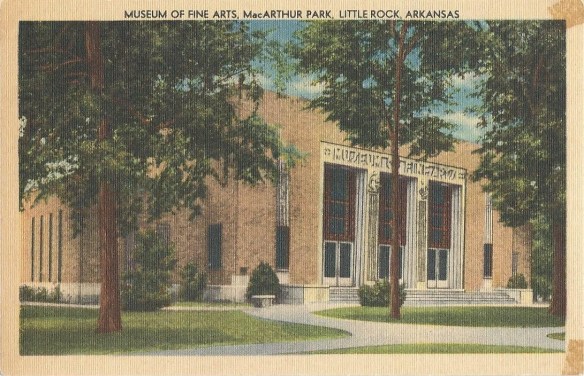 On Tuesday, October 5, 1937, the Fine Arts Club of Little Rock held its first meeting in the new Museum of Fine Arts. But it was not a typical meeting. It was an Open House and Dedication for the new building.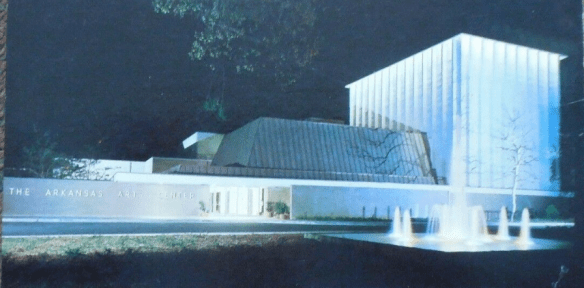


 Little Rock Culture Vulture