
Vivion Brewer, Adolphine Terry, and Pat House with an award presented to the WEC around the time the group disbanded.
On Tuesday, September 16, 1958, the first meeting of the Women’s Emergency Committee to Open Our Schools took place at the Pike-Fletcher-Terry House in downtown Little Rock. Fifty-eight women were in attendance at the initial meeting.
The group had been envisioned four days earlier, on September 12. At the time, Adolphine Fletcher Terry had invited Vivion Lenon Brewer and Velma Powell to her house to discuss the current school situation. Terry and Brewer were both daughters of former Little Rock mayors. They were frustrated with the stalemate that was taking place with the Little Rock School District, the State, and the Federal Government.
In a conversation about the group with her friend Arkansas Gazette editor Harry Ashmore, Mrs. Terry stated, “The men have failed, it’s time to call out the women.”
The same day the trio met, an immediate concern superseded their general discontent.
On September 12, Governor Faubus had signed several segregationist bills into law. One of them gave him the authority to temporarily close schools in order to keep the from being integrated. After signing the bills, he issued an order closing Little Rock’s four high schools. He set October 2 as the election day for Little Rock voters to ratify or reject the closing.
The closure of the schools and impending election, gave an urgency and an immediate focus for the WEC. The women sprung into action.
The way the election law was written, keeping the schools open would require a majority of all registered voters — not just those voting in the election. There were several other requirements written into the law that made it all but impossible to reject the closure. Nonetheless the WEC went to work. They wrote letters, made phone calls, made personal pleas, raised money, and placed newspaper ads.
Their need for a quick and efficient organization became even more paramount with the Governor moved the election forward to September 27. His public reason was to remove the uncertainty; but privately he was likely concerned that there was organized opposition.
Though the voters approved keeping the high schools closed, the WEC was undaunted. They continued to work throughout the 1958-59 school year in a variety of ways. They backed candidates in the December 1958 school board elections, and succeeded in getting three moderates elected. In May 1959, they were a crucial bloc in the campaign to recall of three segregationist school board members.
Following the reopening of the schools in 1959, the WEC continued to focus on social issues until disbanding in 1963.
The membership of the WEC was kept a secret. No official roll was kept. With a membership which swelled to over 1,300, obviously not all attended meetings at once. There were well organized phone trees which quickly got the word out to the membership. During elections, they would create files on all registered voters with codes for Saints, Sinners and Savable.
In an effort of intimidation (as if anyone could intimidate Adolphine Fletcher Terry), there were efforts to force the WEC to disclose membership lists. The officers and their legal counsel replied that there were no lists in existence, so there was nothing to disclose.
On March 13, 1998, the names of the WEC were made public for the first time when they were published in the Arkansas Democrat-Gazette. This was done in conjunction with the 40th anniversary of the year of the founding. Later in the year, the names were etched in glass in the solarium of the Pike-Fletcher-Terry House. (In the 1970s, the house was given by the family to the City of Little Rock for use by the Arkansas Arts Center.)
A ceremony at the house in October 1998 celebrated the 40th anniversary and the names permanently etched there. First Lady Hillary Rodham Clinton came back to Little Rock to deliver remarks at the ceremony.
Sara Murphy, a member of the WEC wrote a book about the organization which was published in 1997, shortly after her death. Around the same time, Sandra Hubbard produced a documentary called The Giants Wore White Gloves. On the 60th anniversary of the first WEC meeting, a sold out screening of the film was shown at the CALS Ron Robinson Theatre as a presentation of the Clinton School Speaker Series in conjunction with the Butler Center for Arkansas Studies.

 In partnership with the Fay Jones School of Architecture and Design, the June Freeman Lecture Series is excited to welcome Jennifer Bonner, Director of MALL and Associate Professor of Architecture and Director of the Master in Architecture II Program at the Harvard University Graduate School of Design.
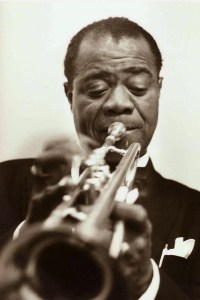 As the Civil Rights movement started taking hold in the mid-1950s, many African American entertainers were vocal in their support. Louis Armstrong generally stayed silent. Until, that is, September 17, 1957.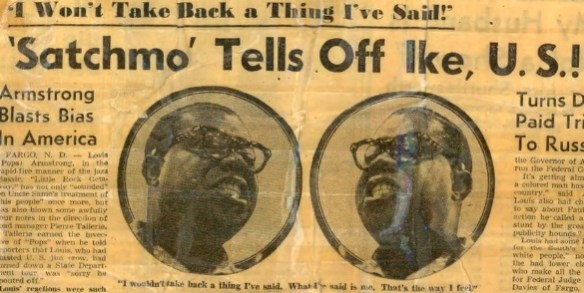
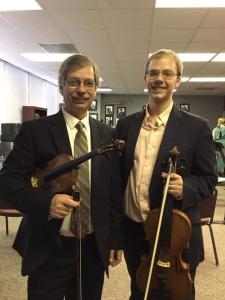
 The Arkansas Arts Center presents Ansley West Rivers tonight as part of its Distinguished Lecture Series.
 Last week was the 18th anniversary of the events of September 11, 2001. Tonight, the Clinton School of Public Service presents journalist and author Garrett M. Graff discussing his book about that day, The Only Plane in the Sky.
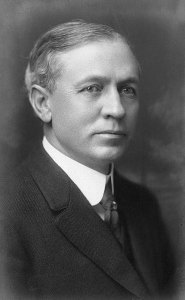 Bill Clinton has the distinction of being both the 42nd President of the United States and the 42nd Governor of Arkansas. But the 42nd Mayor of Little Rock was Charles E. Taylor.
 Little Rock Culture Vulture