
15 Highlights of 2015 – Arkansas Arts Center exhibits “Our America” and “30 Americans”

Since the 1960s, the Arkansas Arts Center has worked to showcase artists from a variety of backgrounds.  This year, Dr. Todd Herman and his staff brought two outstanding exhibits to Little Rock.

From April to June, the Arkansas Arts Center was home to 30 Americans.

30americans30 Americans showcased works by many of the most important African American artists of the last three decades. This provocative exhibition focused on issues of racial, sexual, and historical identity in contemporary culture while exploring the powerful influence of artistic legacy and community across generations.

“This exhibition presents a sweeping survey of artwork by many of the most influential African-American artists of the last four decades,” said Arkansas Arts Center executive director Todd Herman. “For years, I’ve searched for an exhibition of this kind but couldn’t quite find what I was looking for – an exhibition with powerful interpretations of cultural identity and artistic legacy. When I came across 30 Americans, I knew this was exactly what I wanted patrons and visitors of the Arts Center to experience. These themes are universal in nature and speak to the larger human experience.”

30 Americans features work by such early and influential artists as Barkley L. Hendricks, Robert Colescott and Jean-Michel Basquiat, and those of younger and emerging artists, such as Kehinde Wiley, Wangechi Mutu and Shinique Smith. Often provocative and challenging, 30 Americans explores what it means to be a contemporary artist through an African-American point of view – whether addressing issues of race, gender, sexuality, politics or history.

Drawn from the collection of Mera and Don Rubell, 30 Americans contains 41 works in a variety of media – paintings, drawings, sculptures, installations, digital videos and photographs – by 30 of the leading contemporary African American artists. The Rubells began acquiring contemporary art in the late 1960s, often forging close friendships with living artists, particularly young artists.

On display since October and there until January 17, 2016 is Our America: The Latino Presence in American Art.

A major collection of modern and contemporary Latino art from the Smithsonian American Art Museum, the exhibition Our America includes 93 works in all media by 72 artists who participated in various artistic styles and movements, including abstract expressionism; activist, conceptual and performance art and classic American genres such as landscape, portraiture and scenes of everyday life.

Our America presents the rich and varied contributions of Latino artists in the United States since the mid-20th century, when the concept of a collective Latino identity began to emerge. The exhibition is drawn entirely from the Smithsonian American Art Museum’s pioneering collection of Latino art.

Artists featured in the exhibition reflect the rich diversity of Latino communities in the United States. Our Americashowcases artists of Mexican, Puerto Rican, Cuban and Dominican descent, as well as other Latin American groups with deep roots in the United States. By presenting works by artists of different generations and regions, the exhibition reveals recurring themes among artists working across the country.

The 72 artists featured in the exhibition are ADÁL, Manuel Acevedo, Elia Alba, Olga Albizu, Carlos Almaraz, Jesse Amado, Asco (Harry Gamboa Jr., Gronk, Willie Herrón and Patssi Valdez), Luis Cruz Azaceta, Myrna Báez, Guillermo Bejarano, Charles “Chaz” Bojórquez, María Brito, Margarita Cabrera, María Magdalena Campos-Pons, Melesio “Mel” Casas, Leonard Castellanos, Oscar R. Castillo, José Cervantes, Enrique Chagoya, Roberto Chavez, Carlos A. Cortéz, Marcos Dimas, Ricardo Favela, Christina Fernandez, Teresita Fernández, iliana emilia garcía, Rupert García, Scherezade García, Carmen Lomas Garza, Ignacio Gomez, Ken Gonzales-Day, Hector González, Luis C. “Louie the Foot” González, Muriel Hasbun, Ester Hernandez, Judithe Hernández, Carmen Herrera, Carlos Irizarry, Luis Jiménez, Miguel Luciano, Emanuel Martinez, María Martínez-Cañas, Antonio Martorell, Ana Mendieta, Amalia Mesa-Bains, Franco Mondini-Ruiz, Delilah Montoya, Malaquias Montoya, Abelardo Morell, Jesús Moroles, Raphael Montañez Ortiz, Pepón Osorio, Amado M. Peña Jr., Chuck Ramirez, Paul Henry Ramirez, Sophie Rivera, Arturo Rodríguez, Freddy Rodríguez, Joseph Rodríguez, Frank Romero, Emilio Sánchez, Juan Sánchez, Jorge Soto Sánchez, Rafael Soriano, Ruben Trejo, Jesse Treviño, John M. Valadez, Alberto Valdés and Xavier Viramontes.

The exhibition is organized by E. Carmen Ramos, curator of Latino art at the Smithsonian American Art Museum.

Our America: The Latino Presence in American Art is organized by the Smithsonian American Art Museum. Generous support for the exhibition has been provided by Altria Group, the Honorable Aida M. Alvarez, Judah Best, The James F. Dicke Family Endowment, Sheila Duignan and Mike Wilkins, Tania and Tom Evans, Friends of the National Museum of the American Latino, The Michael A. and the Honorable Marilyn Logsdon Mennello Endowment, Henry R. Muñoz III, Wells Fargo and Zions Bank. Additional significant support was provided by The Latino Initiatives Pool, administered by the Smithsonian Latino Center. Support for “Treasures to Go,” the museum’s traveling exhibition program, comes from The C.F. Foundation, Atlanta.
Flying Solo is focus of final LR 2015 Tales from the South, tonight at the Arkansas Arts Center

talesfromthesouthThe saying goes “It takes a village,” but at times one can find herself “Flying Solo.” Tonight, Tales originates at Best Impressions at the Arkansas Arts Center. The storytellers exploring the theme for this edition are Lennie Dusek, Sherry Rankins-Robinson, and Deborah Carroll.

Music is by The Salty Dogs.

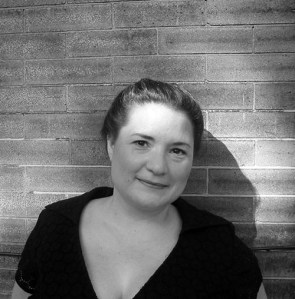
“Tales From the South” is a radio show created and produced by Paula Martin Morell, who is also the show’s host. The show is taped live. The night is a cross between a house concert and a reading/show, with incredible food and great company. Tickets must be purchased before the show, as shows are usually standing-room only.

“Tales from the South” is a showcase of writers reading their own true stories. While the show itself is unrehearsed, the literary memoirs have been worked on for weeks leading up to the readings. Stories range from funny to touching, from everyday occurrences to life-altering tragedies.

Dinner is served from 5pm to 6:30pm, the show starts at 7pm.  Admission is $15.  Dinner can be purchased separately.

You MUST purchase your ticket before the show.

Previous episodes of “Tales from the South” air on KUAR Public Radio.

Celebrate Diego Rivera Birthday by viewing Portrait of Two Women at Arkansas Arts Center

File:Diego Rivera, 1914, Two Women (Dos Mujeres, portrait of Angelina Beloff and Maria Dolores Bastian ), oil on canvas, 197.5 x 161.3 cm, The Arkansas Arts Center, Little Rock, Arkansas.jpgOn December 8, 1886, Diego Rivera was born as Diego María de la Concepción Juan Nepomuceno Estanislao de la Rivera y Barrientos Acosta y Rodríguez.
One of his masterpieces is 1914’s Portrait of Two Women which is part of the permanent collection of the Arkansas Arts Center. The official name is Dos Mujeres.  It is a portrait of Angelina Beloff and Maria Dolores Bastian.

This oil on canvas stands six and a half feet tall and five and a half feet wide.

Influenced by cubists such as Picasso, Rivera adopted fracturing of form, use of multiple perspective points, and flattening of the picture plane.  Yet his take on this style of painting is distinctive.  He uses brighter colors and a larger scale than many early cubist pictures. Rivera also features highly textured surfaces executed in a variety of techniques.

The painting was a gift to the Arkansas Arts Center by Abby Rockefeller Mauzé, sister of Arkansas Governor Winthrop Rockefeller.


Elysse Newman discusses “NEW (OLD) DIRECTIONS IN ARCHITECTURE” tonight at the ADN Lecture

AN_WENewman_ArchHeadElysse Newman, recently installed as Professor and Head of the Department of Architecture at the Fay Jones School of Architecture and Design (FJSAD), will be the final 2015 first speaker for the Architecture and Design Network’s lecture series. Her remarks are entitled “NEW (OLD) DIRECTIONS IN ARCHITECTURE.”

Newman will speak tonight at 6pm at the Arkansas Arts Center. A reception at 5:30 will precede the remarks.

She has been tasked with developing a “curriculum for the 21st Century”, one that will prepare students for new, unexpected and increasingly complex challenges likely to be encountered in the practice of architecture. Building on the “old” while incorporating the “new”, much of it research based, is what she and her staff will be doing. FJSAD dean, Peter MacKeith, calls Newman “one of a new generation of architectural educators.”

The focus of Newman’s academic research has been and will continue to be multidisciplinary studies involving the fields of perception, psychology and neuroscience, disciplines whose relationship to architecture is of increasing interest to the profession.

Newman received a Bachelor of Architecture and a Bachelor of Science in history, with psychology and anthropology minors, all from the University of Texas at Austin. She also received a Master of Architecture, a Master of Philosophy in history of technology and science, and a Doctorate of Philosophy in architecture, urban design, planning and landscape architecture, all from Harvard University. She has taught at Florida International University since 2011. She previously was a visiting professor at Washington University in St. Louis and the University of Tennessee, and a teaching fellow at Harvard University. Newman was a Fellow at the Max Planck Institute for the History of Science in Berlin.

Architecture and Design Network lectures are free and open to the public. For additional information contact ardenetwork@icloud.com.
Supporters of the non-profit Architecture and Design  Network (ADN) include the Arkansas Arts Center, the Fay Jones School of Architecture, the Central Section of the Arkansas Chapter of the American Institute of Architects and friends in the community.

Run as fast as you can to the THE GINGERBREAD MAN at the AAC Children’s Theatre

AACCT GIngerThe Arkansas Arts Center Children’s Theatre is excited to ring in the holiday season with The Gingerbread Man, through December 20.

Grandma Tic and Grandpa Toc couldn’t be more surprised (or pleased) when the Gingerbread Man springs to life and dances around their little clock shop. He’s a happy little cookie man made of ginger and molasses. But when the sly, hungry Fox comes along, playtime is over and the race is on!

You won’t want to miss this fun for the whole family, festive musical which will run Fridays at 7 p.m., Saturdays and Sundays at 2 p.m. through December 20. So strap on your sleigh-bell-Nikes and run, run as fast as you can. You can’t catch him! He’s the Gingerbread Man!

The cast includes:

  • Paige Carpenter as Sugarplum Fairy;
  • Aleigha Morton as Grandma Tic;
  • Jeremy Matthey as Grandpa Toc;
  • Madison Stolzer as Ginger;
  • Katie Campbell as Snow Fox;
  • Mark Hansen as Filbert;
  • John Isner as Adorable;
  • Max Green as Papa Penguin;
  • Amelia Bartholomew as Mama Penguin;
  • Morgan Stolzer as Junior the Penguin;
  • Matthew Thorne and Keith Smith as Mr. Nick;
  • Madison Fleck as Elf Clarissa;
  • John Michael Murphy as Elf Clyde.

Bradley D. Anderson is the artistic director for the production which was adapted for the stage and is directed by Keith Smith. Costumes are designed by Erin Larkin, technical direction by Drew Posey, lighting design by Mike Stacks, set design by Mary Alyce Hare, properties design by Miranda Young, choreographed by Erin Fowler, and Rivka Kupperman is the stage manager.

The Gingerbread Man is also sponsored by Target Corporation.

Show times: Fridays at 7 p.m., Saturdays and Sundays at 2 p.m.

Ticket prices: $12.50 General admission, $10 for Arkansas Arts Center members, $10 per person for groups of 10 or more

Best enjoyed by all ages.

For more information and to purchase tickets, visit ArkansasArtsCenter.org/theatre

Little Rock to vote on additional funds for Arts Center, Military Museum

The City of Little Rock Board of Directors tonight (December 1) voted to refer two hotel sales tax initiatives to the ballot.  The election will be on Tuesday, February 9. 

More details about the specifics of the proposals will be presented on this blog leading up to the election. 

In short, one tax is the third penny for hotels and the other tax is the fourth penny which state law allows for parks.  Because it would be for hotels and similar lodging establishments only, the money would be paid by visitors, not Little Rock residents. 

The City Board also passed a resolution outlining a formula by which the Museum of Discovery, Little Rock Zoo, other parks and other cultural institutions would be able to access any excess bond revenues from these taxes.  


Little Rock Look Back – Mayor Horace Knowlton

IMG_3227On November 25, 1872, future Little Rock Mayor Horace A. Knowlton Jr. was born.

In April 1920, he was elected City Clerk of Little Rock.  He served in that position until April 1931.  That year, he was chosen as the Democratic nominee for Mayor, denying incumbent Mayor Pat L. Robinson a second term.  The primary race against Mayor Robinson was close.  When the results were first announced, it looked as if Mayor Robinson had prevailed.  But after challenging ballots, Mr. Knowlton was declared the winner.  Since Little Rock was primarily a Democratic Party city, unsurprisingly Mr. Knowlton was elected Mayor in April 1931 and served two terms as Mayor.

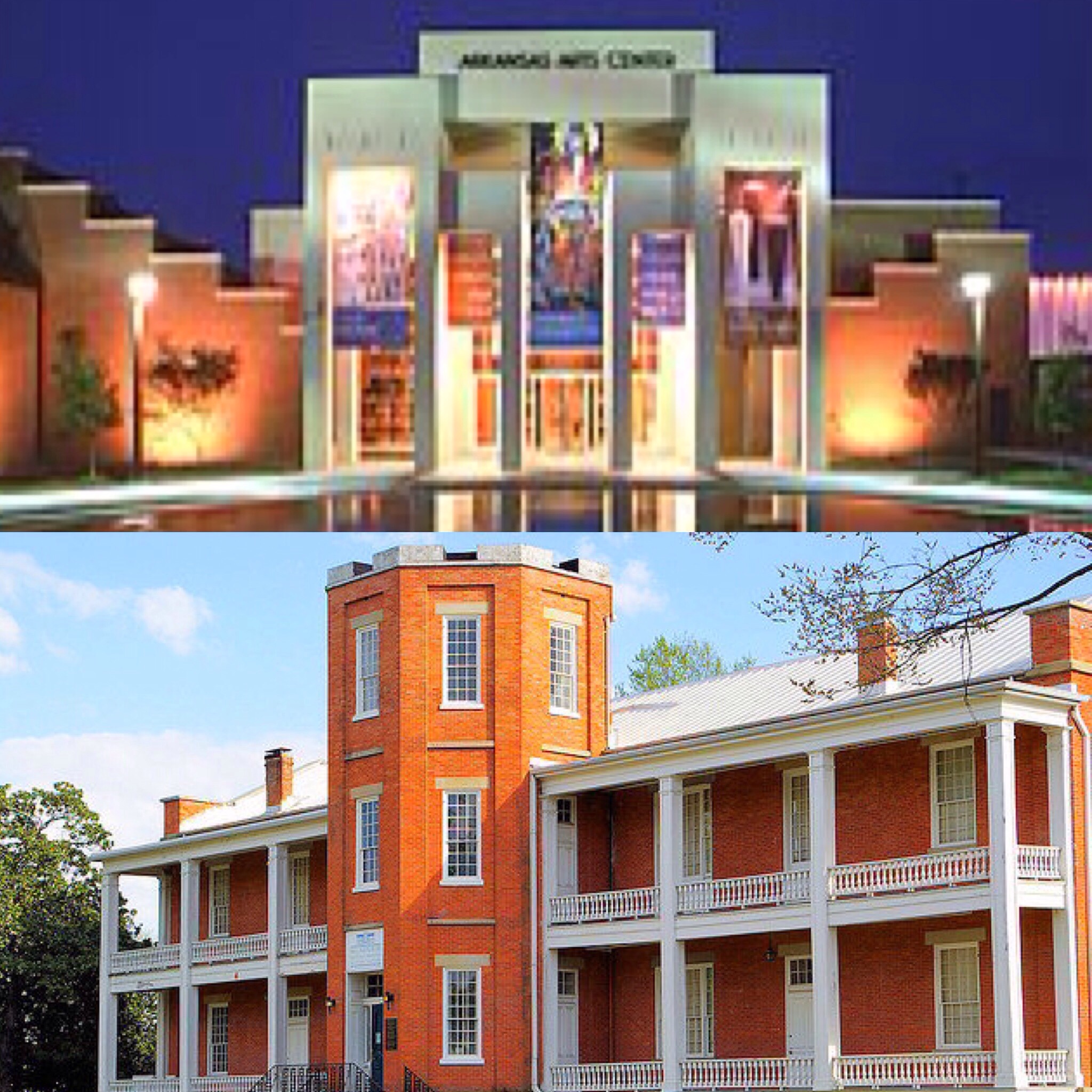
He oversaw the start of some of President Roosevelt’s New Deal programs in Arkansas during his tenure.  In 1934, he negotiated the purchase of Gillam Park for the City which established the first public park in Little Rock for African Americans.  While a segregated park would one day be viewed as wrong, he was viewed as very progressive at the time for providing a public park for African Americans.  One of his final acts as Mayor was to participate in the groundbreaking for the Museum of Fine Arts building in City Park (now a portion of the Arkansas Arts Center building in MacArthur Park).

Following his departure from public office, Mayor Knowlton and his wife (who had been an elementary school teacher) eventually moved to Florida and resided in the Tampa Bay area.  His son and grandson (Horace III and Horace IV) have both been lawyers in the Tampa Bay area.  Mayor Knowlton died on February 14, 1965.  He is buried in the Oak Grove cemetery in Conway.