
LR Cultural Touchstone: Louise Loughborough

louise_loughborough_fLouise Loughborough could be called the mother of historic preservation and history museums in Arkansas.

Born Louisa Watkins Wright in Little Rock 1881, her ancestors included many early Arkansas leaders. At age 21 she married attorney J. Fairfax Loughborough.  She became active in several organizations including the Little Rock Garden Club, Colonial Dames and Mount Vernon Ladies Association.

Her involvement in historic structures in Little Rock began when the Little Rock Garden Club sought to improve the appearance of the War Memorial Building (now known as the Old State House Museum) in 1928. The grounds were littered with signs and monuments, and the roof of the Greek Revival building sported figurative statues of Law, Justice, and Mercy, which had been installed above the pediment after being salvaged from the Arkansas exhibit at the Philadelphia Centennial of 1876. To take the façade of the edifice back to its original 1830s appearance, Loughborough had the statues removed—without the permission of the War Memorial Commission, which had legal authority over the building.

In 1935, Loughborough was appointed to the Little Rock Planning Commission, and it was in this role that she first heard about the plan to condemn the half-block of houses that she had grown up admiring on Cumberland and East Third streets. Although the neighborhood had fallen on hard times, becoming a red-light district and slum, Loughborough feared the loss of several historic structures, including the Hinderliter House, the oldest building in Little Rock and thought to be Arkansas’s last territorial capitol. She mobilized a group of civic leaders to save these buildings. She enlisted the aid of prominent architect Max Mayer and coined the term “town of three capitols” to try to capture the imagination of potential supporters, grouping the “Territorial Capitol” with the Old State House and the State Capitol.

In 1938, Loughborough secured a commitment from Floyd Sharp of the federal WPA to help with the project, on the condition that the houses be owned by a governmental entity. She persuaded the Arkansas General Assembly to create and support, with general revenues, the Arkansas Territorial Capitol Restoration Commission (Act 388 of 1939). This satisfied Sharp’s condition, and the WPA provided labor and material for the new historic house museum. A private fundraising campaign brought in the remaining monetary support necessary for the completion of the project.

The Arkansas Territorial Restoration opened on July 19, 1941. The project was the first Arkansas agency committed to both the restoration of structures and the interpretation of their history, and it served as a model and inspiration for historic preservation in the state. Around the same time, she was a moving force behind the creation of a museum at the Old State House as well.  Today both Historic Arkansas Museum (as the Territorial Restoration is now known) and the Old State House Museum are agencies of the Department of Arkansas Heritage.

As founding Chairman of the Arkansas Territorial Restoration Commission, Louise Loughborough provided daily direction for the museum house complex through the first twenty years of its existence, yielding her authority to architect Edwin B. Cromwell only as her health began to fail. She died in Little Rock on December 10, 1962 and was buried at Mount Holly Cemetery.

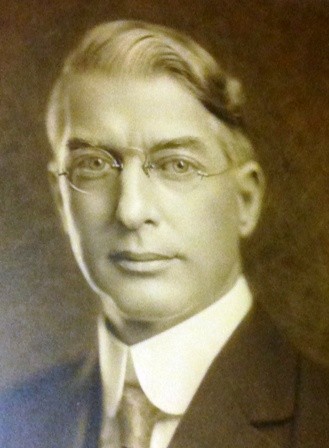
LR Cultural Touchstone: Kay Kelley Arnold

(Photo courtesy of Bill & Hillary Clinton National Airport)

(Photo courtesy of Bill & Hillary Clinton National Airport)

Little Rock’s rich cultural history has been influenced by many outstanding men and women.  This October, during Arts & Humanities Month 2014, the Culture Vulture is looking at 31 outstanding women who have shaped cultural life in Little Rock…and beyond.

Kay Kelley Arnold.  While attending law school, she worked at the Arkansas Arts Council.  As she relayed to Soiree, she helped artists who taught in schools. Through that job, she met many creative people “and developed a love of all types of artistic expression.”  During Bill Clinton’s first term in office as Governor, she was on his staff. In that capacity, she served as his liaison to what is now known as the Department of Arkansas Heritage.  When he left office in January 1981, so did she.

In 1986, Governor Clinton tapped Arnold to lead the Department of Arkansas Heritage.  In addition to supervising six cultural departments, she stepped into the job as plans were being made for Arkansas’ Sesquicentennial. She also oversaw those efforts which were heavily tilted toward artistic and historic events.

During the 1987 Arkansas General Assembly, Arnold led the successful effort for the legislators to approve a real estate transfer tax.  The legislation proved immensely beneficial to historic properties.  She entered the corporate world in 1988 joining Arkansas Power & Light. While serving in various capacities for AP&L and Entergy, Arnold split her time between Little Rock and Washington DC.  She maintained close ties to Little Rock’s cultural community including service on the Arkansas Symphony Orchestra Board.  She served as Chair of the ASO Board at a crucial time in the organization’s history.  In addition, she has served as a member of the Arkansas Natural Heritage Commission.

Arnold has recently completed two terms on the Little Rock Airport Commission.  During her time on that body, the airport purchased and installed several pieces of public art.

Now retired from Entergy, she is often seen around Little Rock enjoying cultural events.

Little Rock Look Back: Ben D. Brickhouse, LR’s 43rd Mayor

BrickhouseOn June 8, 1873, future Little Rock Mayor Ben D. Brickhouse was born in Virginia.  He moved to Texas as a child before his family settled in Arkansas.

His first job was with the Missouri Pacific Railroad.  He eventually attended law school at the University of Arkansas.  As an attorney, he remained interested in labor relations throughout the rest of his life.

In 1914, Brickhouse was elected to the Little Rock City Council.  He was reelected in 1916.  In 1918, he was appointed Labor Commissioner for the State of Arkansas by Governor Charles Brough.

Brickhouse was elected Mayor of Little Rock in 1919.  He was relected twice (1921 and 1923).  Prior to the change to the City Manager form of government in 1957, other Mayors would seek a third consecutive term, but none would be successful.

Mayor Brickhouse ran for a fourth term as Mayor but was defeated.  In 1923, he had openly opposed the Ku Klux Klan, which was then a major player in Democratic politics in Little Rock, in Arkansas and in the nation. The Klan had wanted to build a civic auditorium for Little Rock. The Mayor opposed it on the grounds that not all Little Rock residents would feel welcome there.  In the next Democratic primary for Mayor, Brickhouse did not secure the nomination.

During Mayor Brickhouse’s tenure the City purchased the land to make Fair Park (now War Memorial Park).  He also served as chair of the State Fairgrounds. Brickhouse remained active in civic affairs, often speaking out in favor or opposition to local issues.

Brickhouse retired from public life in 1925 but returned in 1938 when he was elected to the Arkansas House of Representatives.  He was reelected in 1940.  On June 1, 1941, not long after the conclusion of the legislative session, Brickhouse died.

Charlotte Schexnayder Brings Salt to Legacies & Lunch

legaciesschexnayderCharlotte Tillar Schexnayder has been called a “salty old editor,” and she is indeed worth her salt. She will be interviewed about her life and work in the Arkansas Delta by David Stricklin, manager of the Butler Center for Arkansas Studies, at Legacies & Lunch on Wednesday, April 2, at noon in the Main Library’s Darragh Center, 100 Rock Street.

Schexnayder has been an influential voice in the life and politics of the Delta, a member of the Arkansas House of Representatives, and a pioneer among women in the professions of politics and journalism. She and her husband, Melvin, owned the Dumas Clarion newspaper for many years. Schexnayder has served as president of every professional journalism organization she has joined, including the National Federation of Press Women and the National Newspaper Association, and she was the first female president of the Dumas Chamber of Commerce.

Copies of her memoir, Salty Old Editor, published by Butler Center Books in 2012, will be available for sale at the program or may be purchased from River Market Books & Gifts, 120 River Market Avenue, or online at http://www.uapress.com. Schexnayder will sign books after her program.

Legacies & Lunch is free, open to the public, and supported in part by the Arkansas Humanities Council. Programs are held from noon-1 p.m. on the first Wednesday of each month. Attendees are invited to bring a sack lunch; drinks and dessert are provided. For more information, contact 918-3033.

Little Rock Look Back: Mayor George Wimberly

https://www.meaningfulfunerals.net/fh_live/10300/10306/images/obituaries/1388392.jpgOn February 3, 1920, future Little Rock Mayor George Wimberly was born in Star City. He served his country first in the Civilian Conservation Corps and later aboard a U.S. Naval Department hospital ship in the Pacific during World War II.
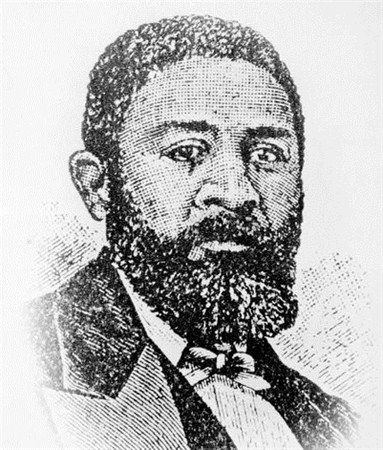
Wimberly was first elected to the Little Rock City Board in November 1968.  He was re-elected in November 1972 and served until December 1976.  In January 1971, he was selected to serve as Little Rock Mayor through December 1972.  In a rare move, he was again selected to serve as Mayor from January 1975 through December 1976.  During the era of the City Board selecting one of their own members to serve as Mayor, George Wimberly was the only one selected to two non-sequential terms.

In 1978, he was elected to the State House of Representatives and served until December 1988.  While in the House he led the effort for smoking to be banned in the House chambers (a move that predated many public smoking bans of the 1990s and onward).

For over fifty years he was an employee and later owner of Buice Drugstore located on Markham in the Stifft Station neighborhood. In 1986 he received the Arkansas Pharmacist of the Year Award and the Lifetime Achievement Award in 2009.

Mayor Wimberly died on February 5, 2012, two days after his 92nd birthday.  He was survived by his wife, two sons, a grandson and several other relatives.

Arkansas’ African-American legislators during Reconstruction

On display at the Arkansas State Capitol is a temporary exhibit – Arkansas’s African American Legislators, 1868-1893.  It was created by the Black History Commission of Arkansas and the Arkansas History Commission. It honors the African Americans who made up a significant part of Arkansas’s legislature during the 1860s and early 1870s, and who continued to serve until 1893.

State Rep. William H. Grey, one of first two African Americans to serve in Arkansas legislature

On Tuesday, February 14, 2012, State Representative Fred Allen and Black History Commission chair, Carla Coleman, spoke at the official opening of the exhibit in the lower-level foyer at the Arkansas State Capitol. African Americans participated in Arkansas politics for the first time following the Civil War. After the end of that conflict, the state adopted a new constitution in 1868. Its provisions included the right to vote and hold public office for black males.

Between 1868 and 1893, eighty-five African Americans are known to have served in the Arkansas General Assembly. These legislators included lawyers, merchants, ministers, educators, farmers, and other professionals. The majority served in the House, with nine being chosen for the Senate. Election laws passed by the General Assembly in 1891 and new poll tax regulations in 1893 effectively ended the election of African Americans to the legislature. Blacks did not serve again in the General Assembly until 1973.
Photographs survive for forty-five of the African Americans who served in the Arkansas General Assembly during the nineteenth century and are featured in this exhibit. Forty-three of these are from the holdings of the Arkansas History Commission.