

There is a shark on display in Little Rock which can be visited during Shark Week (and for a few weeks more.)
The Clinton Presidential Center’s temporary exhibit, Washed Ashore is a family-friendly exhibit that will feature more than 20 giant sea life sculptures – made entirely of trash and debris collected from beaches. This exhibit poignantly illustrates the toll trash takes on our oceans and waterways.
The incredible marine life sculptures will be accompanied by educational signage allowing visitors to learn about the fascinating species, environmental stewardship, responsible consumer habits, and how “every action counts” to help save our waterways.
Washed Ashore is a visual reminder of the disposable products that end up in our waters, and that each of us can take action to prevent further pollution. “Hope, creativity, [and] imagination will be required to meet the challenges that we face with our oceans,” said President Bill Clinton to the National Oceans Conference in June 1998. “But they are the traits that first enabled and inspired explorers to take to the sea. They are traits that allowed us to look at our inextricable ties to our environment and invent new ways to protect our natural wonders from harm in the last three decades. In the 21st century, these traits – hope, creativity, imagination – they must lead us to preserve our living oceans as a sacred legacy for all time to come.”
The Washed Ashore exhibit will be primarily displayed inside two of the Clinton Center’s
galleries. Visitors will see Eli the Eel, walk through the Reef at Risk, and be able to play the Styrofoam Drum Set. The exhibit will open to the public on April 27; a second phase featuring additional sculptures will open in June, when Priscilla the Parrot Fish, a 16-foot-long, 1,500-pound brightly-colored sculpture will greet visitors from the water fountains located outside the front doors.
“The sculptures are beautiful, truly works of art, but they are a poignant reminder that our oceans and waterways are precious resources that need our attention now more than ever,” said Stephanie S. Streett, executive director of the Clinton Foundation.
“From the student visitor to the grand parent, we hope that everyone who has the opportunity to enjoy Washed Ashore walks away with a renewed sense of awe and responsibility.”
Washed Ashore presents an opportunity to reflect on the Clinton administration’s efforts to safeguard essential bodies of water and promote environmental stewardship. “President Bill Clinton’s administration took strong action to protect our coasts and waterways,” said Terri Garner, director of the William J. Clinton Presidential Library. “He signed crucial legislation and issued key executive orders designed to improve water quality, protect wetlands and coasts, and reduce waste while increasing the use of recycled products.”
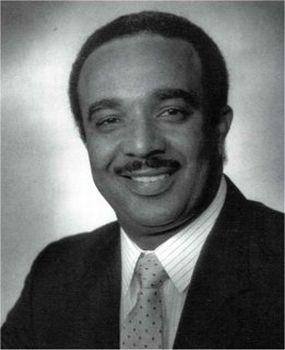 On July 19, 1945, future Little Rock City Manager Mahlon A. Martin was born in Little Rock.
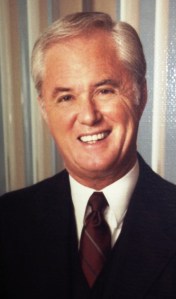 Future Little Rock Mayor James Weldon “Buddy” Benafield was born on July 5, 1927 in Coy, Arkansas. As a child he spent part of his time chopping cotton. He graduated from England High School and then served in the U.S. Navy. Following his stint in the military, he enrolled in Arkansas State Teachers College (now the University of Central Arkansas).
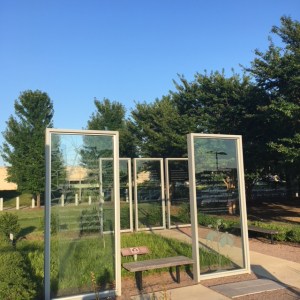 Anne’s tree would outlive her by more than 50 years before being weakened by disease and succumbing to a windstorm in 2010. But today, thanks to dozens of saplings propagated in the months before its death, Anne’s tree lives on in cities and towns around the world.
 Veteran journalist and political observer Ernie Dumas will talk about his new memoir The Education of Ernie Dumas. He’ll sign copies of the book both before and after his talk, beginning at 5:30 p.m.
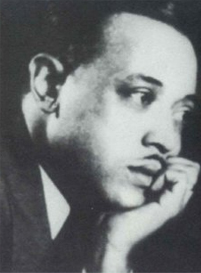 ong known as the Dean of African American composers, Dr. William Grant Still was a legend in his own lifetime. Though not born in Little Rock, he spent much of his youth in the city.
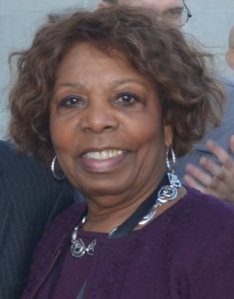 On April 30, 1941, future Little Rock Mayor Lottie Shackelford was born. Throughout her career in public service she has been a trailblazer.
 Little Rock Culture Vulture