Little Rock Look Back: Lottie Shackelford

Lottie at Civil RightsWhile this headline may say “Little Rock Look Back,” Lottie Shackelford is still very much focused on the present and the future!

On April 30, 1941, future Little Rock Mayor Lottie Shackelford was born. Throughout her career in public service she has been a trailblazer.

Active in community activities and politics, she ran for the City Board in 1974 and lost.  But she was appointed to the Little Rock City Board in September 1978 to fill a vacancy.  This made her the first African American woman to serve on he City Board, and indeed on any governing board for the City (during Reconstruction, there were at least three African Americans on the City Council, but they were all men.) She was subsequently elected to a full-term on the City Board in 1980 winning 55% of the vote over three male candidates.

She was subsequently re-elected in 1984 (unopposed) and in 1988 (with 60% of the vote).

In January 1987, Shackelford became the first female mayor of Little Rock when she was chosen by her colleagues on the City Board to serve in that position. She was Mayor until December 1988.

From 1982 until 1992, she served as Executive Director of the Arkansas Regional Minority Purchasing Council.  She left that position to serve as Deputy Campaign Manager of Clinton for President.  She subsequently served on the Clinton/Gore transition team. She later served on the Overseas Private Investment Corporation from 1993 to 2003. She was the first African American to be in that position.

A graduate of Philander Smith College, she has also studied at the Arkansas Institute of Politics at Hendrix College and the Kennedy School of Government at Harvard University.

Mayor Shackelford has also served on numerous boards including the Little Rock Airport Commission, Philander Smith College, Chapman Funds (Maryland) and Medicis Pharmaceutical Corporation (Arizona).  She has been the longest serving Vice-Chair of the Democratic National Committee.

Mayor Shackelford was in the first class of inductees for the Arkansas Black Hall of Fame.  In 2015, she was inducted into the Arkansas Civil Rights Heritage Trail.
Little Rock Look Back: Nicholas Peay

LR sealOn April 28, 1784, in Virginia, future Little Rock Alderman (and acting Mayor) Major Nicholas Peay was born the eleventh of at least thirteen children.  (His gravestone lists a May date for his birth, but other records indicate April 28, 1784.) A veteran of the War of 1812 and the Indian Wars, he later moved to Kentucky (where he met and married his wife, Juliet Neill, in 1814) before settling in Arkansas on September 18, 1825.  At the time, they were the ninth family to set up residence in Little Rock.

After arriving in Little Rock, he bought the Little Rock Tavern. This started a fifty year tradition of his family owning taverns and hotels in Little Rock. In 1828, he was appointed Assistant Postmaster of Little Rock.  From 1825 to 1831, Little Rock residents were allowed to elect five Trustees prior to the formal incorporation. Major Peay was one of those who served on the Board of Trustees.

He later served on the Little Rock City Council, and in 1839 served for seven months as Acting Mayor due to the prolonged absence of Mayor Jesse Brown.  In 1841, his friend Gen. Zachary Taylor, paid a visit to Little Rock and stayed with him on the General’s way to Fort Smith.

Nicholas and Juliet Peay had at least eleven children, though only five appeared to have lived until adulthood. One of those, Gordon Neill Peay, served as Little Rock’s 23rd Mayor from 1859 to 1861. Other descendants of Nicholas Peay who followed him into public service include his grandson Ashley Peay, who was an Alderman in the 1920s (son of John Coleman Peay) and great-great-grandson Joseph B. Hurst (a great-grandson of Mayor Peay), who was a City Director from 1967 to 1970. In addition, City Director Hurst’s daughter-in-law, Stacy Hurst served three terms on the City Board from 2003 to 2014; she is now Director of the Department of Arkansas Heritage.

Major Peay’s egg-nog recipe has been passed down for generations. It is the inspiration for the Historic Arkansas Museum yearly Nog-Off.  This past year, museum director Bill Worthen and his daughter were the sixth and seventh generation of the family to make Peay’s egg-nog. The Worthens are descended from Mayor Peay’s son who was also named Gordon Neill Peay.

Major Nicholas Peay is buried with his wife and many other family members in Mount Holly Cemetery.

The Smithsonian Institution records indicate they have an oil painting of Major Peay as well as of his wife. But there are conflicting records as to whether they have been lost or are in private collections.

Little Rock Look Back: Mayor Sam Wassell

S WassellOn April 28, 1883, future Little Rock Mayor Sam M. Wassell was born.  His grandfather John W. Wassell had been appointed Mayor of Little Rock in 1868.  He is the only Little Rock Mayor to be a grandson of another Little Rock Mayor.

Sam Wassell served on the Little Rock City Council from 1928 through 1934 and again from 1940 through 1946.  He is one of the few 20th Century Little Rock Mayors who previously served on the City Council.

Wassell was an attorney.  He practiced law privately and also served as an Assistant US Attorney.  In 1930, he ran unsuccessfully for the Democratic nomination for the US Congress representing the 5th Congressional District, which at the time included Little Rock.

Wassell ran for Mayor in 1947 and was unopposed in the general election.  He was unopposed in his bid for re-election in 1949.  During his second term, President Harry S. Truman visited Little Rock.  In 1951, he sought a third term as Mayor.  No Little Rock Mayor had been successful in achieving a third consecutive term since 1923.  Though he received the Democratic nomination, the Republican party nominated Pratt Remmel who defeated Wassell by a 2 to 1 margin.

With a new USS Little Rock nearing commissioning, it is interesting to note that Mrs. Sam Wassell christened the previous USS Little Rock in 1944.  At the time, she was a City Councilor’s wife.

Mayor Wassell died on December 23, 1954 and is buried at Roselawn Cemetery in Little Rock.

Sculpture Vulture: Harriet Tubman

With news that Harriet Tubman will replace Andrew Jackson on the $20, it is a good chance to revisit Little Rock’s Harriet Tubman sculpture.

In preparation for the opening of the Clinton Library in 2004, a series of sculptures were placed which linked a walkway between the River Market and the Clinton Presidential Park.

One of these sculptures is entitled Harriet Tubman.  Since she was from the era of President Lincoln, it seems fitting to feature this sculpture on this, Lincoln’s birthday.

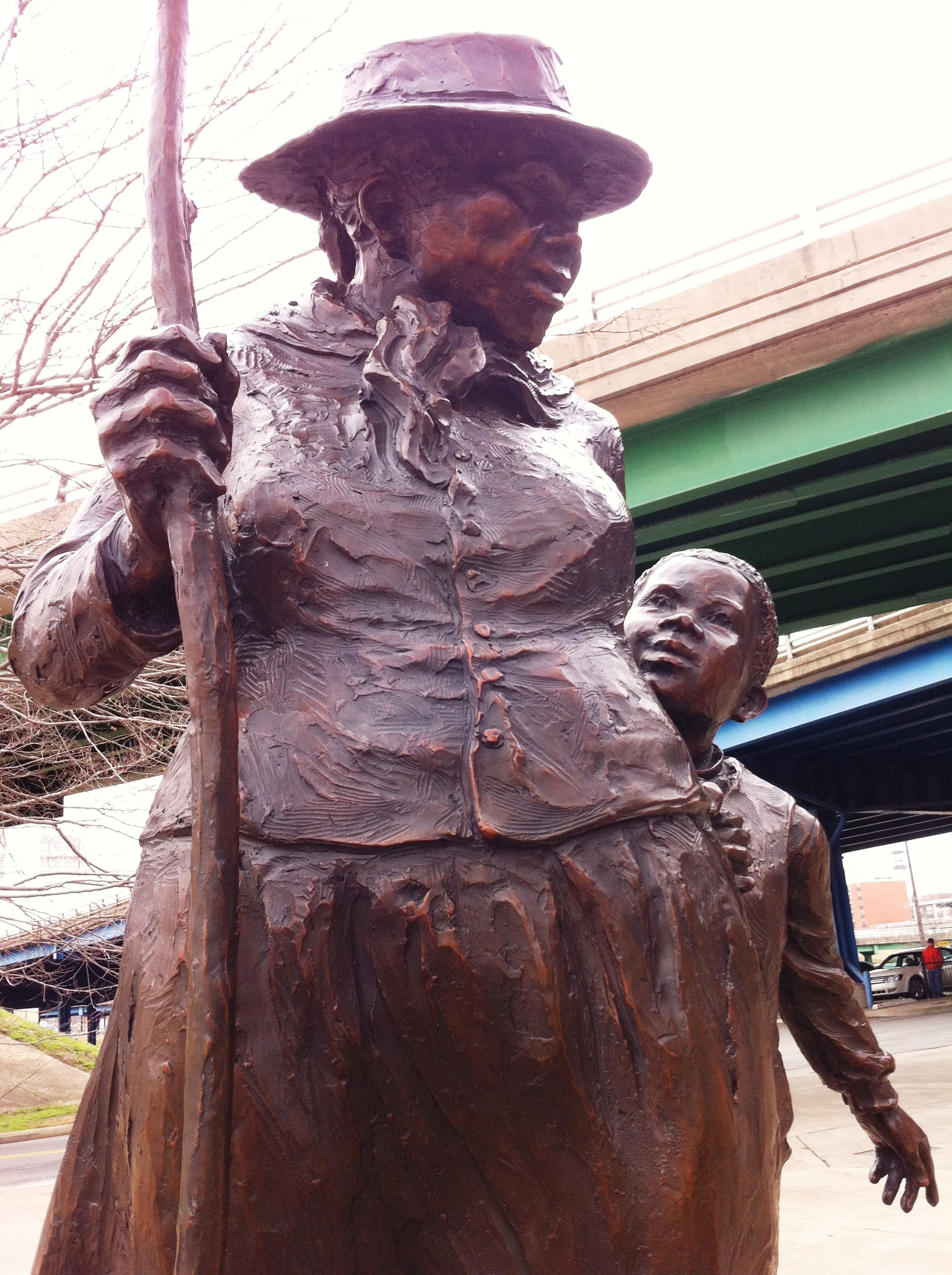
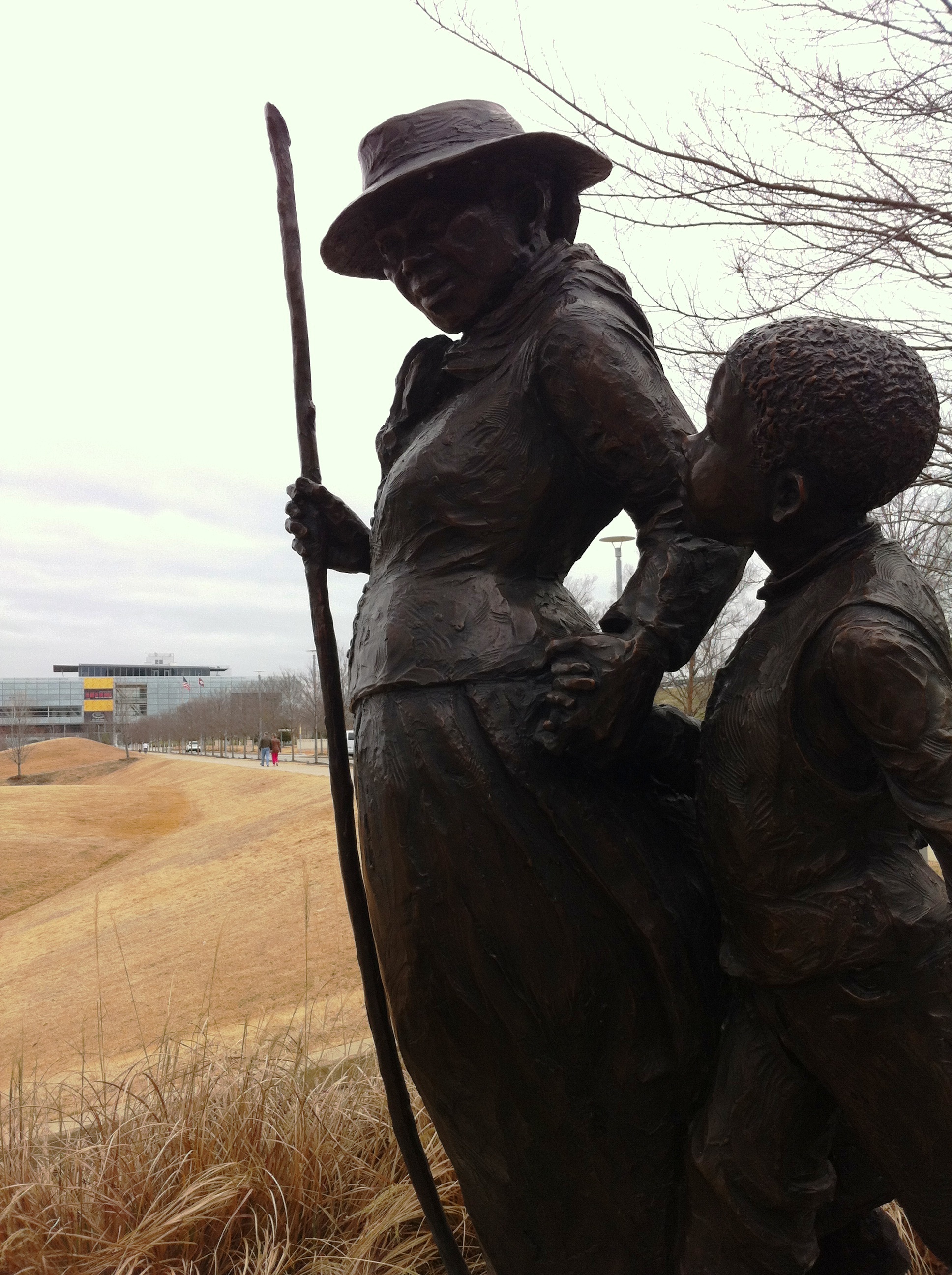
The bronze sculpture, by Jane DeDecker, depicts Miss Tubman grasping the hand of a young boy and leading him on a walk.  DeDecker captures both compassion and a steely determination in the features of Miss Tubman’s face.  The folds of their clothes indicate that they are on a journey.

Whether their walk is a part of the Underground Railroad or simply a walk along the path in post-war times is immaterial. Miss Tubman understood that there is always some form of oppression one must struggle against.

Etched into the base of the statue (and repeated on plaque on the pedestal) is a quote attributed to Miss Tubman.  “Children, if you are tired, keep going; if you’re hungry, keep going; if you’re scared, keep going. If you want a taste of freedom, keep going.”

The statue was originally located in Riverfront Park near the site of the current Game and Fish Nature Center.  It was relocated during the construction of that facility and now anchors the entrance to Clinton Presidential Park.  Harriet Tubman was a gift of Haskell and Peggy Dickinson to the City of Little Rock.

Little Rock City Hall – 108 years at Markham and Broadway

108 years ago today, Little Rock City Hall officially opened at the corner of Markham and Broadway.

On April 15, 1908, the Italian Renaissance Revival style building, which had been designed by local architect Charles Thompson, played host to an open house. Staff had started moving into the building in March of that year.   This was, as often is the case, behind schedule.  The date in the cornice toward the top of the building is 1907, but the building was not completed until 1908.

An open house took place on April 15, 1908, presided over by Acting Mayor John Herndon Hollis and his wife as well as former Mayor W. E. Lenon and his wife.

In 1903, W. E. Lenon became Mayor of Little Rock. Back then, the terms were two-year terms.  Before the start of his second term in 1905, he realized that the City was outgrowing City Hall, which was, at the time, on the northeast corner of Markham and Louisiana – where part of the Statehouse Convention Center sits today.

In February 1906, Mayor Lenon appointed a committee of five aldermen to over see the planning for the building of a new City Hall. In July 1906, the City Council approved plans, which called for a City Hall with an municipal auditorium wing. There was some hue and cry about the cost spending and a resulting lawsuit, so, in September 1906, those plans were scrapped and a simpler City Hall was approved for the cost of $175,000.

The last resolution in the old City Hall called for the banning of smoking in the new Council Chambers – while the Council was in session. This may well have been the first smoking ban in a public government building in the history of Arkansas.

When the building opened, the third floor was not finished out. The space was not needed. When the Museum of Natural History and Antiquities (now the Museum of Discovery) moved into City Hall in 1929, they had to finish out their space.

In 1913, the new Central Fire Station, designed in the Beaux Arts style, was constructed adjacent to City Hall. During the 1930s, as the City grew, more space was needed. A garage, designed in the “austere, utilitarian” style was built in 1936 and a City Jail Annex, built by the WPA in the modified Art Deco style was built in 1938.

City Hall prior to 1912

By 1955, the copper-clad dome which sat on top of City Hall needed severe repairs. The wooden supports and the copper cladding were both in dire shape. Mayor Pratt Remmel set aside money for the dome to be repaired. After defeating Remmel in his bid for a third term, Mayor Woodrow Mann scrapped plans for the repair and, indeed, scrapped the dome.

Following the lead of County Judge Arch Campbell who had removed the tower at the County Courthouse, Mann proposed removal of the dome. He had an informal survey which had three options: repair the dome, replace the dome with an aluminum one, or remove it. This was open to anyone to respond – voting eligibility or Little Rock residency did not matter. By a slim margin, remove the dome won – so the dome was removed.

In 1960, as air conditioning was installed, windows were bricked in to promote energy efficiency. At the time, the feeling was that a new City Hall would be constructed in the 1970s somewhere more central to the growing city. Relocation talk persisted throughout the 1970s and early 1980s. By that time, City Hall had been modified a great deal – with no thought about historic preservation. When the Police and Fire Department had moved out into their new facilities, their old spaces had become storage.

By 1984, the decision was made to stay at Markham and Broadway. An extensive renovation and restoration effort was undertaken. In 1988, the building reopened, and the interior had been restored to its 1908 appearance.

Little Rock Look Back: Rock On!, or the day LaHarpe saw La Petite Roche

IMG_4805On April 9, 1722, French explorer Jean-Baptiste Bénard de La Harpe rounded the bend of the Arkansas River and saw La Petite Roche and Le Rocher Français.  He had entered the mouth of the Arkansas River on February 27 after traveling up the Mississippi River from New Orleans.

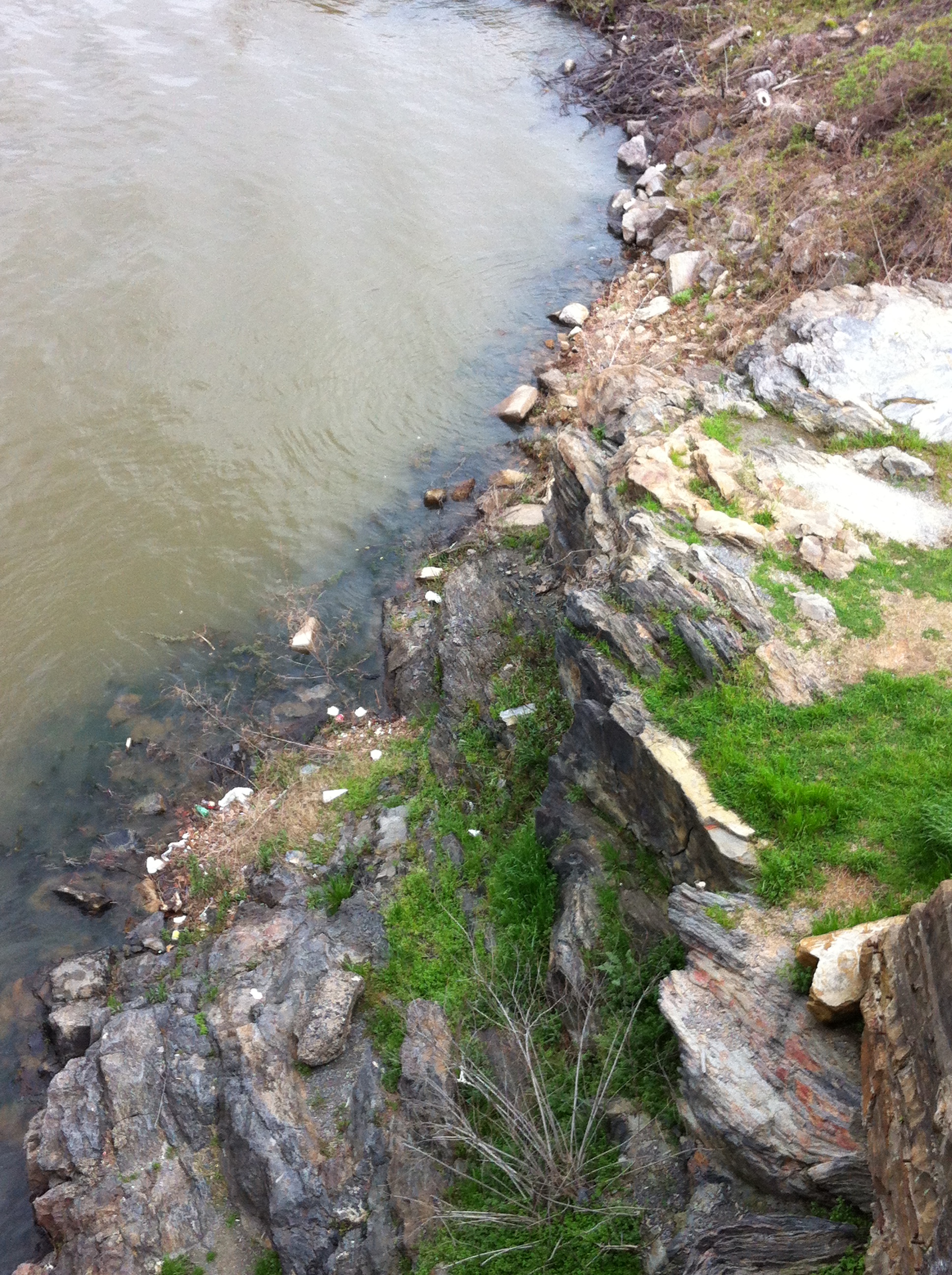
Though La Harpe and his expedition are the first Europeans documented to have seen La Petite Roche, the outcropping of rocks was well-known to the Quapaw Indians in the area.  The outcropping jutted out in the Arkansas River and created a natural harbor which provided a perfect place for boats to land.

The rock outcropping is the first one visible along the banks of the Arkansas River.  It marks the place where the Mississippi Delta meets the Ouachita Mountains.  Geologists now believe that the Little Rock is not the same type of rock as the Ouachita Mountains and more closely matches the composition and age of mountains in the western US.

In 1813, William Lewis became the first European settler to live near La Petite Roche but only stayed a few months.  Speculators and trappers continued to visit the area throughout the 1810s. During that time, the outcropping became known informally as the Little Rock.

La Petite Roche had become a well-known crossing when the Arkansas Territory was established in 1819. The permanent settlement of ‘The Rock’ began in the spring of 1820, and the first building has been described as a cabin, or shanty, and was built on the bank of the river near the ‘Rock.’ In March 1820, a Post Office was established at the ‘Rock’ with the name “Little Rock.”

Over the years, La Petite Roche was altered.  In 1872, Congress authorized the building of a railroad bridge. A pier for the bridge was built at the location of the La Petite Roche which caused the removal of several tons of rock.  The bridge was never built.  When the Junction Bridge was built in 1899, even more rock was removed in the process of erecting part of the bridge on top of the rock.  It was not viewed as being disrespectful of the City’s namesake at the time.  Indeed, it was viewed as a testament to the sturdiness of the rock.

In 2010, La Petite Roche plaza opened in Riverfront Park.  It celebrates the history of La Petite Roche and explores its importance to various aspects of Little Rock’s history and geography.

Little Rock Look Back: Werner Knoop

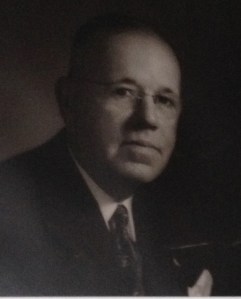
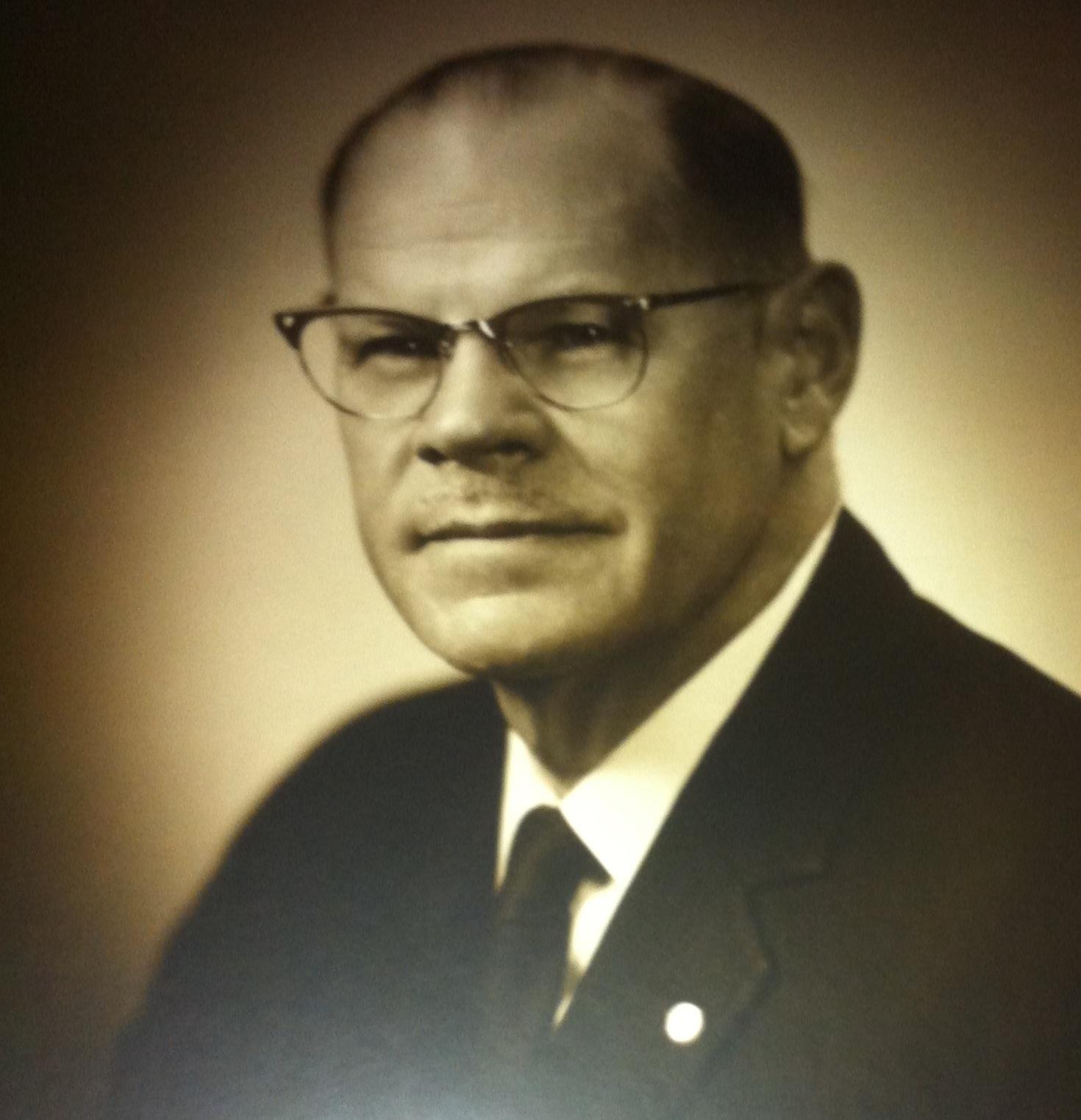
Mayor KnoopTo Little Rock citizens under a certain age, the name Knoop means Knoop Park — a picturesque park tucked away in a pocket of Hillcrest.  There are, however, still many who remember Werner C. Knoop as a business and political leader who helped shape Little Rock as a modern city.

Knoop was born on March 30, 1902.

In 1946, Knoop joined with Olen A. Cates and P. W. Baldwin to form Baldwin Construction Company in Little Rock.  Knoop had previously founded Capital Steel Company and established his business reputation there.  From 1945 through 1951, he served on the Little Rock School Board.

Following a series of political scandals, efforts were undertaken for Little Rock to shift from Mayor-Council to City Manager form of government.  Even before the desegregation of Little Rock Central put the city in the eyes of the world, an election for new leaders had been set for November 1957.  Knoop was on a “Good Government” slate and was one of the members elected.

At the first meeting of the new City Board, Werner C. Knoop was chosen by his fellow directors to serve as Little Rock Mayor.  Knoop served as Mayor until December 1962.  For the first several months in office, Little Rock had no City Manager so Knoop oversaw the transition of City staff as the forms of government changed.

Though City Hall generally stayed out of school district matters, that did not mean that the public viewed the two entities separately.  In September 1959, the Baldwin Construction offices were bombed as part of a series of terrorist activities protesting the desegregated reopening of all Little Rock high schools.

Downtown LR as viewed from Knoop Park

Downtown LR as viewed from Knoop Park

After two terms on the City Board, Knoop decided against seeking a third term.  He concluded his elected public service on December 31, 1962.  Following his time on the City Board, Knoop did not retire from Civic Affairs.  In 1970, he served as Chairman of the Little Rock Chamber of Commerce.   The previous year he served as President of the Arkansas Chapter of Associated General Contractors.

Mayor Knoop died in July 1983.  He is buried at Roselawn Memorial Park next to his wife Faith Yingling Knoop, a renowned author.

In the 1930s, Knoop moved into an Art Moderne house on Ozark Point in Hillcrest.  It was adjacent to Little Rock Waterworks property which was developed around the same time.  Eventually much of the land was deeded to the City for creation of a park.  In 1989, it was named in tribute to long-time neighbor Knoop in honor of his lifetime of service to Little Rock.