Arkansas Heritage Month – LR Mayor Taylor and a Municipal Auditorium

Taylor AuditIn anticipation of the November 2016 reopening of Robinson Center Music Hall, this week’s Arkansas Heritage Month entries look at seven Little Rock Mayors who worked on proposals for a municipal auditorium between 1904 and 1940.

Charles Taylor became Little Rock’s mayor in April 1911.  He inherited the temporary auditorium that was already showing signs of wear and tear after four years.  Throughout the eight years he was in office, he and the City Council wrestled with the question of what to do about the auditorium.

Time and time again, there would be calls to tear the building down. Its proximity to the 1913 fire station was causing the insurance rates on that building to be increased. It was viewed as structurally unsound and had outlived its useful life.  However, without that building, there would be no public space for conventions and community meetings.  While the Hotel Marion offered convention facilities in its ballroom, it did not necessarily lend itself to trade shows. In addition, as a private entity, it was able to set its own rules without necessary regard to the general public.

A 1913 proposal by planner John Nolen had called for an auditorium to be built on a new plaza area near City Hall.  Due to funding issues, that plan never gained traction, despite repeated attempts by its backers to push for it.

At the time he left office in April 1919, Mayor Taylor had still not been able to solve the problem of a municipal auditorium.

Arkansas Heritage Month – LR Mayor Lenon and a Municipal Auditorium

Mayor Lenon with the plans for the original City Hall/Auditorium and the temporary auditorium.

Mayor Lenon with the plans for the original City Hall/Auditorium and the temporary auditorium.

In anticipation of the November 2016 reopening of Robinson Center Music Hall, this week’s Arkansas Heritage Month entries look at seven Little Rock Mayors who worked on proposals for a municipal auditorium between 1904 and 1940.

In 1904, Little Rock Mayor W. E. Lenon first proposed that Little Rock construct at municipal auditorium.  After considering some options, he decided it would be easiest to build it in conjunction with a new City Hall and Jail.  In 1906 plans proceeded in that direction until a lawsuit by J.N. Heiskell to stop it. Following a judge’s ruling that a municipal auditorium was not deemed a proper use for public monies, the City changed course and constructed only a City Hall and Jail (sans auditorium) at the corner of Markham and Broadway. This building opened in 1908.

In 1906, the City gave permission to a private developer to build a temporary auditorium (which also served as a roller skating rink when the chairs were removed) adjacent to the City Hall site.  This opened in 1907.

Mayor Lenon left office in 1908.  He would later chair a committee involved in an auditorium proposal in 1925, but that one would come to naught, as well.  However, he planted the seed and started the public discourse which lasted for 36 years.

Little Rock Look Back: J V Satterfield

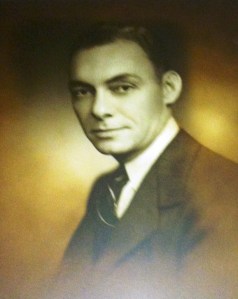
SatterfieldOn May 14, 1902, future Little Rock Mayor John Vines Satterfield, Jr. was born in Marion.   He grew up in Little Rock and Earle. J.V. was a star quarterback for the Earle football team and is featured in a painting of that team by respected painter Carroll Cloar.

Following high school, J.V. taught (including, much to his family’s amusement, a course in penmanship) and coached and sold Fords.  He then moved to Little Rock and sold insurance and later securities.  In 1931 he opened his own business; that same year he built a house at 40 Beverly Place in Little Rock, which would serve as his home until his death.

J. V. Satterfield was elected to serve as Mayor of Little Rock in 1939 and served one term, until 1941.  He was credited with saving the City from bankruptcy because of his fiscal policies. Among his efficiencies were the creation of a central purchasing office and using grass moved from the airport to feed the Zoo animals.  Though as a private citizen he had voted against the creation of a municipal auditorium in 1937, Mayor Satterfield fought valiantly to ensure that Robinson Auditorium opened to the public once he took office.  Shortly after he became Mayor, it was discovered that there were not sufficient funds to finish the construction. After the federal government refused to put in more money, he was able to negotiate with some of the contractors to arrange for the building to be completed. He also oversaw a successful special election to raise the money to finish the project.

Satterfield was a staunch supporter of the airport and worked to expand it.  He would serve as the chair of the first Municipal Airport Commission.  He also established the Little Rock Housing Authority (on which he would later serve on the board).  Mayor Satterfield also served as President of the Arkansas Municipal League in 1941.

Following the outbreak of World War II, Satterfield enlisted in the Army and was given the rank of a Major. He later was promoted to a Colonel and worked in the Pentagon during its early days.

In the late 1940s Satterfield became president of a small Little Rock bank called People’s Bank.  The bank changed its named to First National Bank when it moved into new offices at 3rd and Louisiana in 1953.  By focusing on smaller customers and courting corporate customers, Satterfield grew the bank into one of the state’s largest banks.  He maintained his desk in the lobby of the bank so he could interact with the customers and ensure they were having a positive experience.

Due to chronic health issues, Satterfield retired from the bank in 1964. He died in March 1966.

Arkansas Heritage Month – Jim Dailey

cna_commissioner_daileyDuring his years of public service, Little Rock Mayor Jim Dailey was a dedicated supporter of the arts. He has been involved in support of the arts prior to and after leaving office, but he was a 2005 Governor’s Arts Awards recipient in recognition of his work while in office.

Mayor Dailey’s understanding of the importance of the arts was essential to the revitalization of downtown Little Rock and the development of the River Market district. Little Rock’s arts district has become home to several art galleries and the 2nd Friday Night Art Walk and provides venues for local and regional musicians.

Other examples of Mayor Dailey’s leadership in the arts include the City of Little Rock’s support of the expansion and renovation of the Arkansas Arts Center and support of the establishment of the Kramer School Artists Cooperative, which provides residential and studio space for artists.  He was also a key player in the location of the Clinton Presidential Center in Little Rock.

The City of Little Rock doubled the number of art institutions it helps fund under Mayor Dailey’s tenure and has developed an Arts & Culture Commission to continue to integrate the arts into the daily fabric of city life. Mayor Jim Dailey has demonstrated outstanding leadership and commitment to the development of the arts community in Little Rock.

While in office, most Tuesday nights he would be a City Hall presiding over a City Board meeting. But many Monday nights he would be found at the Arkansas Arts Center taking a class a the museum school.

Since leaving office, Mayor Dailey has continued to explore art galleries and museums as he travels throughout the United States.  He also served as one of the three co-chairs for the successful campaign to renovate Robinson Center Music Hall. The building is set to reopen in November 2016.

Mother’s Day Little Rock Look Back: Eliza Cunningham, Founding Mother of Little Rock

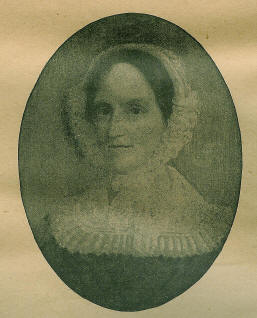
Eliza CunninghamEliza Wilson Bertrand Cunningham was the First Lady of Little Rock.  She literally was the first lady and the founding mother.

She became the first permanent female resident when she joined her husband Matthew Cunningham in Little Rock.  She gave birth to Chester Ashley Cunningham, the first baby born in Little Rock, as well as several other children with Cunningham.  When he became the first Mayor of Little Rock, she was the first First Lady of Little Rock. They hosted the first Little Rock Council meeting at their house on what is now the block downtown bounded by Third, Main, Fourth and Louisiana Streets.  Her son Charles P. Bertrand, from her first husband, later served as Mayor of Little Rock, making her the only woman to be married to a Mayor and be mother of a Mayor.

Born in Scotland in December 1788, she emigrated with her parents to the United States as a young girl.  In 1804 or 1805, she married a French businessman, Pierre Bertrand in New York City.  She lived in New York City, while he traveled to his various business ventures.  He never returned from a trip to his coffee plantation in Santo Domingo and was presumed to have died in 1808 or 1809.  She and Bertrand had three children, Charles Pierre, Arabella and Jane. (Jane may have died in childhood, because records and lore only indicated Charles and Arabella coming to Little Rock with their mother.)

Eliza married Dr. Matthew Cunningham in New York City.  He later moved to Saint Louis and settled in Little Rock in early 1820.  Eliza and her two children came to Little Rock in September 1820.  In 1822, she gave birth to Chester Ashley Cunningham, the first documented baby born in Little Rock.  (There are unsubstantiated reports that at least one slave child may have been born prior to Chester.)  She and Matthew also had Robert, Henrietta, Sarah and Matilda.  The latter married Peter Hanger, after whom the Hanger Hill neighborhood is named.

Dr. Cunningham died in June 1851.  Eliza died in September 1856. They and Chester (who died in December 1856) are buried in the Hanger family plot at Mount Holly Cemetery.

Little Rock Look Back: Longtime CALS trustee Rabbi Ira Sanders

SandersIraE_fOn May 6, 1894, Ira Eugene Sanders was born in Missouri.  After receiving an undergraduate degree and rabbinate degree in Cincinnati, he was ordained a rabbi in 1919.  He served congregations in Pennyslvania and New York before coming to Little Rock in September 1926.

Shortly after arriving to lead the B’nai Israel congregation, Rabbi Sanders became active in the Little Rock community.  Among his projects were the Little Rock Community Fund, Little Rock School of Social Work (which he founded), Central Council of Social Agencies, and University of Arkansas Extension Department. During the Great Depression, he helped organize the Pulaski County Public Welfare Commission.  Other areas of involvement over his career included the Arkansas Human Betterment League, Urban League of Greater Little Rock and Arkansas Lighthouse for the Blind.  On November 3, 1930, Rabbi Sanders debated Clarence Darrow about the existence of God in front of a packed house at Little Rock High School.

For his many involvements, he received an honorary Doctor of Humanities degree in 1951 from the University of Arkansas.  Three years later he received an honorary Doctor of Divinity degree from Hebrew Union College’s Jewish Institute of Religion.

A lifelong supporter of a Jewish state, he participated in nineteen bond drives for the state of Israel.  In August 1963, he retired as the leader of B’nai Israel after over 35 years. He would remain as Rabbi Emeritus until his deal in 1985.

In January 1978, Rabbi Sanders tendered his resignation from the Central Arkansas Library board of directors.  The City Board of Directors passed resolution 5873 which noted that he had served for 51 years on the Library Board. He was first appointed in 1926.  He served during 19 different Mayoral administrations from Charles Moyer’s first term through Donald Mehlburger’s.

On April 8, 1985, Rabbi Ira Eugene Sanders died of natural causes.  He is buried in the City’s Oakland Jewish Cemetery.  The Central Arkansas Library System honors his memory with an annual distinguished lecture series.

Little Rock Look Back: Jesse Brown

Map showing boundaries of original City of Little Rock

Map showing boundaries of original City of Little Rock

This is Teacher Appreciation Week.  In keeping with that, today highlights one of Little Rock’s first mayors, who was also a teacher.

Jesse Brown was Little Rock’s sixth mayor. He was also Little Rock’s first teacher. In the 1820s and 1830s he operated Little Rock’s first school.

On March 10, 1823, he founded the coeducational Little Rock Academy. One of his early pupils was C. P. Bertrand, stepson of Little Rock’s first physician, Dr. Matthew Cunningham.  Cunningham, Brown and Bertrand would each serve as Little Rock mayor prior to the Civil War.

By 1826, Brown had added a second employee.  In his advertisement in the Arkansas Gazette for March 7, 1826, he says: “Jesse Brown, principal of the Little Rock Academy, returns thanks for patronage during the past year and solicits its continuance.” His terms for spelling, reading, writing, and arithmetic were $24 per annum. (This is the equivalent of $556 in 2016–a bargain for private school!)  These branches, with geography, grammar, elocution, history, chronology, bookkeeping, and ”Italian method,” were taught for $36. Subscriptions less than a year were $1 per month extra. French was also offered.

In 1829, Brown started offering night classes. He continued to expand his offerings throughout the 1830s.  However, by 1837, he was forced to remind customers who were in arrears to pay up because he “could not live upon the wind.”

Brown served as mayor from January 1838 until January 1841.  He was out of Little Rock recovering from illness from April to November of 1839, but was subsequently elected to a third one-year term commencing in January 1840.