
Black History Month Spotlight – Mosaic Templars Cultural Center

The new Arkansas Civil Rights History Audio Tour was launched in November 2015. Produced by the City of Little Rock and the University of Arkansas at Little Rock allows the many places and stories of the City’s Civil Rights history to come to life an interactive tour.  This month, during Black History Month, the Culture Vulture looks at some of the stops on this tour which focus on African American history.

The Mosaic Templars Cultural Center and Museum collects, preserves, interprets and celebrates Arkansas’s unique African American political, economic, and social achievement from 1865 to 1950. The Center resides in the footprint of the original Mosaic Templars of America National Headquarters and Annex Buildings.

The permanent museum exhibits depict historic West Ninth Street as a thriving commercial and social hub, focusing on the black entrepreneurship, Templars organization, and the legacy of black legislators. Between 1868 and 1893, eighty-five African Americans served in the Arkansas General Assembly. The majority served in the House, with nine in the Senate. Election laws passed in 1891, together with a poll tax in 1832, ended the election of African Americans to the legislature. No black person served again until the General Assembly in 1973.

In addition to community educational programs, the Center offers a genealogy research room, an art collection created by local talent, and a well-stocked store. The Center’s third floor features a replica of the original Headquarters Building auditorium and the Arkansas Black Hall of Fame galleries.

The Center is a museum of the Department of Arkansas Heritage and admission is free.

The app, funded by a generous grant from the Arkansas Humanities Council, was a collaboration among UALR’s Institute on Race and Ethnicity, the City of Little Rock, the Mayor’s Tourism Commission, and KUAR, UALR’s public radio station, with assistance from the Little Rock Convention and Visitors Bureau.

Little Rock Look Back: LR Mayor George Wimberly

https://www.meaningfulfunerals.net/fh_live/10300/10306/images/obituaries/1388392.jpgOn February 3, 1920, future Little Rock Mayor George Wimberly was born in Star City. He served his country first in the Civilian Conservation Corps and later aboard a U.S. Naval Department hospital ship in the Pacific during World War II.

Wimberly was first elected to the Little Rock City Board in November 1968.  He was re-elected in November 1972 and served until December 1976.  In January 1971, he was selected to serve as Little Rock Mayor through December 1972.  In a rare move, he was again selected to serve as Mayor from January 1975 through December 1976.  During the era of the City Board selecting one of their own members to serve as Mayor, George Wimberly was the only one selected to two non-sequential terms.

In 1978, he was elected to the State House of Representatives and served until December 1988.  While in the House he led the effort for smoking to be banned in the House chambers (a move that predated many public smoking bans of the 1990s and onward).

For over fifty years he was an employee and later owner of Buice Drugstore located on Markham in the Stifft Station neighborhood. In 1986 he received the Arkansas Pharmacist of the Year Award and the Lifetime Achievement Award in 2009.

Mayor Wimberly died on February 5, 2012, two days after his 92nd birthday.  He was survived by his wife, two sons, a grandson and several other relatives.

Little Rock Look Back: Little Rock Public Library opens in 1910

On February 2, 1910, the Little Rock Public Library officially opened its doors.  There had been an open house the night before, but this was the first day of acquiring a library card and checking out books.

Various private libraries had existed sporadically in Little Rock throughout the 19th Century.  In November 1900, a Little Rock School District committee made the first inquiry into the the creation of a Carnegie Library in Little Rock.  Over the next several years, numerous entreaties were made, but funding for the City’s portion was an obstacle.  On December 17, 1906, the Little Rock City Council passed an ordinance to move forward with building, furnishing and equipping a library.  Finally, in February 1908, the City approved acceptance of $88,100 from Andrew Carnegie.  The building would be designed by Edward Tilton, who designed Carnegie libraries, working with local architect Charles Thompson.

Mary Maud Pugsley was hired as the first librarian for Little Rock in May 1909. She began her duties on September 15, 1909, in order to get ready for the opening of the library at the southwest corner of 7th and Louisiana Streets.

On February 2, 1910, formal circulation of books began.  J. N. Heiskell was issued library card number 1.  He was secretary of the Library’s Board of Trustees and had long been an advocate for a public library in Little Rock.  He had often used his bully pulpit as editor of the Arkansas Gazette to advocate for a public library since arriving in Little Rock in 1902.  (Years later — he lived until 1972 — he received a replica of the library card made out of gold.)

That first day of operation, 500 people had applied for library cards. The application process required one to be a Little Rock property owner or to have a property owner sign the application.

Within the first year of operation, 2.5% of Little Rock’s population of 45,951 had applied for a library card.

For more on the history of the transformation of the Little Rock Public Library into the Central Arkansas Library System, read Shirley Schuette and Nathania Sawyer’s From Carnegie to Cyberspace — 100 Years at the Central Arkansas Library System, published by Butler Center Books.

Black History Month Spotlight – Mosaic Templars of America

The new Arkansas Civil Rights History Audio Tour was launched in November 2015. Produced by the City of Little Rock and the University of Arkansas at Little Rock allows the many places and stories of the City’s Civil Rights history to come to life an interactive tour.  This month, during Black History Month, the Culture Vulture looks at some of the stops on this tour which focus on African American history.
The Mosaic Templars of America was formed as a business in the late 1870s by Arkansas freedmen John E. Bush and Chester W. Keatts to provide insurance and other services to black people, and was incorporated as a fraternal organization in 1882. The Mosaic Templars name was derived from the biblical Moses who led his people out of bondage and relates to black America’s journey out of slavery.

By the 1920s the Templars’ organization extended to 26 states and six Caribbean nations. At the time, as one of the largest black-owned business enterprises in the world, Templars’ holdings included the original insurance company, a building and loan association, a publishing company, a business college, a nursing school and a hospital. For more than 40 years, the Templars Headquarters Building and the adjoining Annex and State Temple buildings on Broadway anchored the city’s black business district on West Ninth Street. Like many businesses, black and white, the Templars did not survive the era of the Great Depression.

Though the original Headquarters building burned in 2005, the Mosaic Templars Cultural Center is modeled on the original design. Exhibits highlight black business and self-achievement from Reconstruction to the 1950s in Arkansas and the nation.

The app, funded by a generous grant from the Arkansas Humanities Council, was a collaboration among UALR’s Institute on Race and Ethnicity, the City of Little Rock, the Mayor’s Tourism Commission, and KUAR, UALR’s public radio station, with assistance from the Little Rock Convention and Visitors Bureau.


National Park Service Director, Local Leaders to Speak at Black History Month Town Hall Meeting

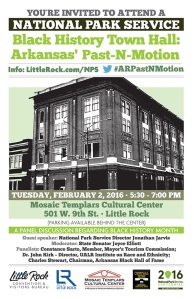
Feb 2 NPS eventLittle Rock Central High School National Historic Site in partnership with Little Rock Convention & Visitors Bureau, Mosaic Templars Cultural Center and the City of Little Rock, invite the public to join them for a Black History Month Town Hall Meeting entitled Arkansas’s Past-N-Motion to be held at Mosaic Templars Cultural Center at 5:30pm on February 2, 2016.

National Park Service Agency Director Jonathan Jarvis will serve as the guest speaker, and will discuss the National Parks Centennial Celebration, his tour to several of our nation’s civil rights-related historic sites and parks, and the importance of the National Park Service’s role in preserving and sharing our country’s history for future generations.  After his remarks, a panel discussion with local individuals will discuss several local institutions, and their roles and recent initiatives in preserving and sharing our city’s African American history, and its unique place in our nation’s civil rights movement.  This discussion will feature State Senator Joyce Elliott as moderator, and feature local panelists: Constance Sarto, Member, Mayor’s Tourism Commission; Dr. John Kirk – Director, UALR Institute on Race and Ethnicity; and Charles Stewart, Chairman, Arkansas Black Hall of Fame.

This Town Hall Meeting will highlight the resources of Civil Right institutions both from a national and local perspective, and the role of the National Park Service as the nation’s storyteller as it prepares to embark upon its Centennial 100th Birthday celebration on August 25, 2016.

During Director Jarvis’ time in Arkansas, he plans to visit Little Rock Central High School National Historic Site, engage Youth Leadership Academy members from Central High School as well as elementary students around the new White House youth initiative to get all 4th graders and their families to experience the places that are home to our country’s natural treasures, rich history, and vibrant culture FREE OF CHARGE! His visit to Arkansas will mark the start of Director Jarvis’ month-long endeavor to promote Civil Rights Sites during Black History Month.

They have also created the hashtag #ARPastNMotion to encourage local community groups to share information regarding any upcoming events relating to Black History Month.

For more information, please contact Enimini Ekong at (501) 396-3006 or Enimini_Ekong@nps.gov, or visit www.LittleRock.com/NPS.

Little Rock Central High School National Historic Site is located at 2120 Daisy L. Gatson Bates Drive, diagonally across the street from Central High School. The visitor center is open from 9:00 a.m. – 4:30 p.m. Monday through Sunday.  Admission is free. For more information call (501) 374-1957 or email chsc_visitor_center@nps.gov.

Black History Month Spotlight – West Ninth Street

BHM16 W9thThe new Arkansas Civil Rights History Audio Tour was launched in November 2015. Produced by the City of Little Rock and the University of Arkansas at Little Rock allows the many places and stories of the City’s Civil Rights history to come to life an interactive tour.  This month, during Black History Month, the Culture Vulture looks at some of the stops on this tour which focus on African American history.

As early as the 1840s and reaching 1880, the businesses of both black and white races existed in what is now known as Downtown Little Rock. In the last years of the 1800s, a prolific business broker and social center for African Americans dominated West Ninth Street.

In 1898, D. B. Gaines, a local black doctor who also served as pastor of the Mt. Pleasant Baptist Church, wrote a book called Racial Possibilities as Indicated by the Negroes of Arkansas. The last chapter, “Colored Business Directory of Little Rock,” documents the existence of a vibrant commercial center with almost twenty churches and hundreds of dealers of black people.

The black district was home to doctors, dentists, lawyers and entrepreneurs such as restaurant owners, newspaper editors, pharmacists, barbers, tailors, and merchants.

This city within a city, met the needs of the black community since the early 1880 to the 1950s. West Ninth Street saw its peak between 1870 and 1950. Since the 1960s, a number of factors including desegregation, urbanization, urban renewal and the construction of I-630 caused its decline.

The app, funded by a generous grant from the Arkansas Humanities Council, was a collaboration among UALR’s Institute on Race and Ethnicity, the City of Little Rock, the Mayor’s Tourism Commission, and KUAR, UALR’s public radio station, with assistance from the Little Rock Convention and Visitors Bureau.

Little Rock Look Back: Carol Channing

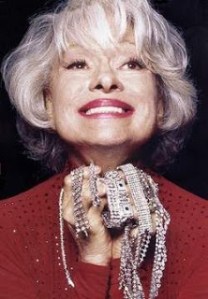
Carol C2On January 31, 1921, future “Little Girl from Little Rock” Carol Channing was born. Alas it was in Seattle.

After gaining the notice of New York critics and audiences in the musical revue, Lend an Ear, Channing achieved Broadway stardom playing fictional Little Rock native Lorelei Lee (the creation of Anita Loos) in Gentlemen Prefer Blondes.  In this show, which opened in December 1949, she introduced the Leo Robin-Jule Styne songs “Little Girl from Little Rock” and “Diamonds Are a Girl’s Best Friend.”  Her work in this show predated Tony Award nominations being announced.  (The Tony that year went to Mary Martin for playing another Little Rock native – Nellie Forbush in South Pacific).

Her first Tony nomination came for the The Vamp in 1956. Five years later, she earned a second nomination for Show Girl.  In 1964, she won the Actress in a Musical Tony for her second signature role playing the title character in Hello, Dolly!  Channing also earned a special Tony in 1968 for Dolly when it became the longest-running Broadway musical.

She returned to Lorelei Lee in the reworked update entitled Lorelei and earned a Tony nomination.  In 1995 she earned a Lifetime Achievement Tony.

In the 1960s, she visited Little Rock on a tour of Hello, Dolly! which played at Robinson Auditorium. It was arguably the biggest Broadway show to have played Robinson at that time.  While she was in Little Rock she spent time at the Governor’s Mansion and was made an honorary citizen of Little Rock.  (Nearly 30 years later, she recounted very glowingly her Little Rock visit to the Culture Vulture.)

In 1993, she spent her birthday in Washington DC at a White House dinner for the National Governors’ Association.  This was the Clintons’ first offiical White House dinner after moving in to the residence eleven days prior.  President Bill Clinton led the crowd in singing “Happy Birthday” to her.  She remarked to the President that she was Christian Scientist and didn’t celebrate birthdays, which meant she didn’t get any older.  He replied that it meant the night was her first birthday (it was her 72nd in actuality).