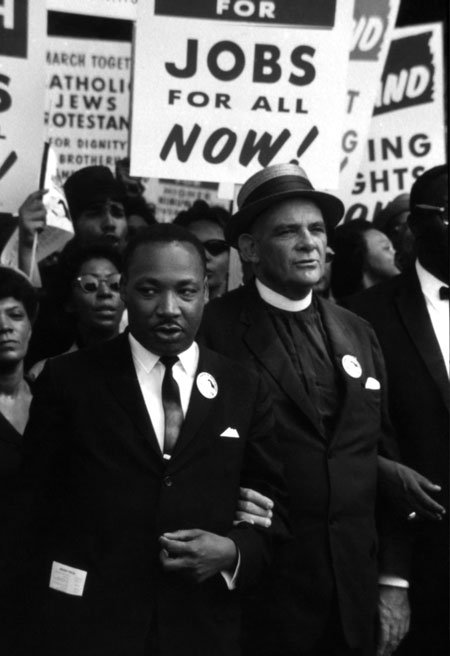
Little Rock Look Back: Rev. Dr. Martin Luther King, Jr.

Ernest Green, Dr. King and Daisy Bates share a relaxed moment -- which was probably rare for the three in 1958

Ernest Green, Dr. King and Daisy Bates share a relaxed moment — which was probably rare for the three in 1958

Today is the Martin Luther King Jr. Holiday.  It is an apt time to think about Dr. King and Little Rock.  A friend of L. C. and Daisy Bates, he attended the 1958 Central High School graduation to witness Ernest Green receiving a diploma. Each senior only received eight tickets to the ceremony at Quigley Stadium. Dr. King was in the state to address the Arkansas AM&N (now UAPB) graduation.

His attendance was briefly mentioned in the local press, but there was no media photo of him at the ceremony.  The Little Rock School District limited the press to one Democrat and one Gazette photographer. Other press were limited to the press box.

Ernest Green has a photo of him with Daisy Bates and Dr. King (pictured on this entry).

In 1968, when Dr. King was assassinated, Little Rock did not see the unrest that many cities did.  Part of that was probably due to quick action by Governor Winthrop Rockefeller. The Governor released a statement fairly quickly expressing his sorrow at the tragedy and calling for a day of mourning. He also made the State Capitol available for the NAACP to have a public memorial, as well as worked with a group of ministers to host an interdenominational service.

Little Rock Mayor Martin Borchert issued a statement as well:

We in Little Rock are disturbed about the incident in Memphis. We are disturbed regardless of where it had happened.  Killing is not the Christian solution to any of our problems today.

In Little Rock, we feel we have come a long way in 10 years toward solving some of our problems of living and working together regardless of race, creed or color.

The city Board of Directors in Little Rock has pledged itself toward continuing efforts to make Little Rock a better place in which to live and work for all our citizens.

We feel the efforts of all thus far have proved we can live in harmony in Little Rock and are confident such an incident as has happened will not occur in Little Rock.  We will continue our most earnest efforts toward the full needs of our citizens.

The day after Dr. King was assassinated, a group of Philander Smith College students undertook a spontaneous walk to the nearby State Capitol, sang “We Shall Overcome” and then walked back to the campus.  President Ernest T. Dixon, Jr., of the college then hosted a 90 minute prayer service in the Wesley Chapel on the campus.

On the Sunday following Dr. King’s assassination, some churches featured messages about Dr. King.  As it was part of Holy Week, the Catholic Bishop for the Diocese of Little Rock had instructed all priests to include messages about Dr. King in their homilies. Some protestant ministers did as well. The Arkansas Gazette noted that Dr. Dale Cowling of Second Baptist Church downtown (who had received many threats because of his pro-integration stance in 1957) had preached about Dr. King and his legacy that morning.

Later that day, Governor Rockefeller participated in a public memorial service on the front steps of the State Capitol. The crowd, which started at 1,000 and grew to 3,000 before it was over, was racially mixed. At the conclusion of the ceremony, Governor and Mrs. Rockefeller joined hands with African American ministers and sang “We Shall Overcome.”

That evening, Trinity Episcopal Cathedral was the site of an interdenominational service which featured Methodist Bishop Rev. Paul V. Galloway, Catholic Bishop Most Rev. Albert L. Fletcher, Episcopal Bishop Rt. Rev. Robert R. Brown, Rabbi E. E. Palnick of Temple B’Nai Israel, Gov. Rockefeller, Philander Smith President Dixon, and Rufus King Young of Bethel AME Church.

Earlier in the day, Mayor Borchert stated:

We are gathered this afternoon to memorialize and pay tribute to a great American….To achieve equality of opportunity for all will require men of compassion and understanding on the one hand and men of reason and desire on the other.

Mayor Borchert pledged City resources to strive for equality.

Another Little Rock Mayor, Sharon Priest, participated in a ceremony 24 years after Dr. King’s assassination to rename High Street for Dr. King in January 1992.  The name change had been approved in March 1991 to take effect in January 1992 in conjunction with activities celebrating Dr. King’s life.  At the ceremony, Daisy Bates and Annie Abrams joined with other civil rights leaders and city officials to commemorate the name change.

Explore Little Rock’s civil rights history with new app

Little Rock-area residents and visitors have a new way to explore the city’s rich civil rights history.

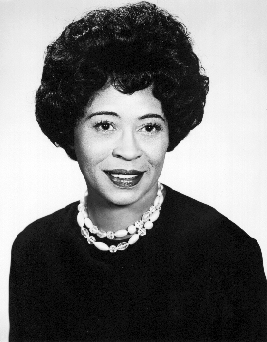
The University of Arkansas at Little Rock Institute on Race and Ethnicity and Little Rock city officials  have unveiled the Arkansas Civil Rights History Tour app.

The free Apple and Android app guides users on an excursion through some of the city’s most influential historical sites, going back to the 1840s. Each of the 35 stops on the GPS-guided tour includes compelling narratives, historic photos, audio, and links to related content.

Tour stops range from the L.C. and Daisy Bates House to the Trail of Tears. The tour includes a total of three National Historic Landmarks, three National Register Historic Districts, and numerous buildings on the National Register of Historic Places.

Narrated in both English and Spanish, the app also offers information about Jewish history in Little Rock, Hispanic migrations to Arkansas, and Native American tribes.

Organizers recommend app users begin their route at Broadway and West Ninth Street in downtown Little Rock, but the app can help people customize their own path.

A collaboration of the Institute on Race and Ethnicity, the City of Little Rock, the Mayor’s Tourism Commission, and KUAR, UALR’s public radio station, led to the creation of the Arkansas Humanities Council-funded app.

“The institute’s mission is to remember and understand the past, to inform and engage the present, and to shape and define the future in the area of race and ethnicity,” said Dr. John Kirk, director of the Institute on Race and Ethnicity.

“The tour app helps us to do all those things: It powerfully sheds light on the past, it allows people to engage with the past in the present moment, and it helps us to consider how those legacies and lessons can shape and define the future of the city and state.”

The app can be found in the Apple App Store and on Google Play by searching for “Arkansas history.”

Robinson Redux – April

RCMH AprilWhile Robinson Center Music Hall is closed for renovations, the Culture Vulture is taking a monthly look at past performances. Today’s entry looks at Aprils from 1940 to 2010 in years that end in a “0” or “5.”

Edward Everett Horton kicked off April 1940 at Robinson Auditorium on the 1st with the comedy Springtime for Henry. The performance was marred by the sound of the new building’s air conditioning system, which was being used for the first time during a performance.  Five years later, on April 1, 1945, the auditorium was home to An Evening of Sigmund Romberg which featured the composer in person with performers singing some of his songs.  April 1945 also saw a performance of Earl Carroll Vanities (the 3rd) and Carmen featuring the Metropolitan Opera singers (the 16th.)

Tenor James Melton performed on April 25, 1950.  In April 1955, the lineup included William Bendix in The Caine Mutiny Court-Martial on the 23rd. The next night the Spring Music Festival took place. It featured school children performing.

On April 25 1960, The Coasters, Bo Diddley, LaVerne Baker and others. The month ended with a youth concert aimed at children. April 1970 included a production of Arthur Miller’s The Price (the 6th), the Southwest Regional Ballet Festival (April 11) and drummer Buddy Rich (April 18).  In April 1975 (the 6th) Hair returned to Robinson for one performance. This time there was no controversy such as had met the first visit a few years earlier.

April 1985 was very busy. On the 13th, there was a Ballet Festival Gala. April 20 & 21 featured an Arkansas Symphony Orchestra classical concert.  A touring production of the musical Gigi performed on the 22nd.  It starred Louis Jourdan (who had appeared in the Oscar winning film, albeit in a different part), Betsey Palmer and Taina Elg. The ASO was back on April 28 with a children’s music concert.

Cathy Rigby flew into Robinson Center with a tour of Peter Pan from April 10 to 12.  On April 4, 1995, the Community Concert Association brought the Russian Seasons Dance Company for a performance.  The Arkansas Symphony Orchestra performed Verdi’s Requiem Mass in Memory of Manzoni on April 8 & 9, 1995. Singer Millie Jackson wrote and appeared in the play Young Man, Older Woman, which played on April 30 of that year.

Several Contemporary Christian music acts performed on April 3. The Arkansas Symphony Orchestra closed their 1999-2000 season on April 8 & 9 with a concert featuring Carolyn Brown on flute. On April 27, 2000, President Clinton headlined a memorial service for civil rights activist Daisy Bates.

April 2005 was full of a variety of performances. Natalie Cole was in concert on April 3 with the Arkansas Symphony Orchestra.  On William Shatner narrated David Itkin’s Exodus with the Arkansas Symphony Orchestra on April 9 & 10, 2005. Arkansan Kyle Dean Massey starred in the tour of 42nd Street which started its performances at Robinson Center on April 18, 2005. In conjunction with an exhibit at the Old State House Museum, a gospel concert featuring the Racy Brothers and the Hunter Brothers closed out April 2005 on the 30th.

David Itkin bid farewell to conducting the Arkansas Symphony Orchestra in April 10 & 11, 2010, with a performance of Mahler’s Resurrection Symphony.  On April 15, the Electrify Your Strings! concert took place. Comedian Gabriel Iglasias and his Fluffy Shop Tour stopped at Robinson on April 24.

Black History Month Spotlight – Annie Abrams

bhm annieThis year during Black History Month, the Culture Vulture will look at 28 cultural leaders who have Little Rock connections and have been inducted into the Arkansas Black Hall of Fame.  Though presented in alphabetical order, up first is a personal friend of the Culture Vulture – Annie Abrams, or as she is affectionately known, Miss Annie.

Annie Mable McDaniel Abrams is a retired educator by trade and civic activist by avocation.  She is included in this list because she is also a historian.  As a writer and preservationist, she has worked to document history and ensure historical properties and neighborhoods will long remain in Little Rock.

Born in Arkadelphia, she moved to Little Rock at age 13 to attend Dunbar Junior High School and High School.  She studied education at Dunbar Junior College and later taught in Marianna. In 1956, she returned to Little Rock to work for the Arkansas Teachers Association.  After her return to the capital city, she married Orville Abrams.  In addition to raising her four children, Miss Annie has helped raise countless others through her advice, support, love, and sometimes strong admonitions.  She also found time to return to school and receive a degree from Philander Smith College.

Among her many accomplishments are leading efforts to rename High Street for Martin Luther King, 14th Street for Daisy L. Gatson Bates and 20th Street for Charles Bussey.  Through her community activities, she had worked closely with both Bates and Bussey.  She was a friend to the Little Rock Nine (who were only a few years younger than she) and to their families. Perhaps, because she has been a personal friend of many Arkansas and national politicians over the past 60 years, it should come as no surprise that she and her husband were also acquainted with Governor Faubus.

Whether a leading political figure or a small child, Miss Annie isn’t afraid to give advice or to share her love.  Once an educator, always an educator, she loves to learn and teach. It is rare for her to miss a speech at the Clinton School or a Political Animals Club meeting.

In recognition of all her efforts she has been recognized with an honorary doctorate from Philander Smith College, the Brooks Hays Award, and an award award from the national Martin Luther King Jr. Commission.  In 2010, she was inducted into the Arkansas Black Hall of Fame.

For more on Annie Abrams and other inductees into the Arkansas Black Hall of Fame, visit the permanent exhibit at the Mosaic Templars Cultural Center. That museum is an agency of the Department of Arkansas Heritage.

Ernest Green leads event tonight at Clinton School commemorating 100 years since Daisy Bates was born

bates daisyDaisy Bates was an American civil rights activist, publisher, journalist, and lecturer who played a leading role in the Little Rock Integration Crisis of 1957. Daisy Bates would be 100 years old on November 11th. To mark the milestone the Clinton School of Public Service is hosting a celebration of Mrs. Bates featuring Ernest Green.

Daisy Lee Gatson Bates and her husband were important figures in the African American community in the capital city of Little Rock.  Realizing her intense involvement and dedication to education and school integration, Daisy was the chosen agent after nine black students were selected to attend and integrate a Little Rock High School.  Bates guided and advised the nine students, known as the Little Rock Nine, when they enrolled in 1957 at Little Rock Central High School. President Clinton presented the Little Rock Nine with the Congressional Gold Medal and spoke at the 40th anniversary of the desegregation while he was in office.  He returned as a speaker for the 50th anniversary and opening of the new museum and historical site in 2007.

Ernest ‘Ernie’ Green was one of the nine African-American students who integrated Central High School in Little Rock and the first of the nine to graduate.  Green is the managing director of public finance for Lehman Brothers in Washington, D.C., has served as the Assistant Secretary of Labor for Employment and Training during President Carter’s administration, Chairman of the African Development Foundation under President Clinton, and Secretary of Education, Richard W. Riley, appointed him Chairman of the Historically Black Colleges and Universities Capital Financing Advisory Board.

The event will take place at 6pm tonight at the Clinton School.

*Reserve your seats by emailing publicprograms@clintonschool.uasys.edu or calling 501-683-5239.

Spies and Pets Among Features at Clinton Presidential Center

Clinton LibraryToday is not Presidents’ Day. No such holiday exists within Federal or Arkansas governments.  However, a good way to celebrate the observation of George Washington’s Birthday (Federal holiday for today) would be to visit the Presidential Library of one of his successors – Bill Clinton.  Visiting that facility is also a good way to mark the Arkansas holiday of Daisy Gatson Bates Day since she and President Clinton were friends.

The Clinton Presidential Center features numerous permanent and temporary exhibits.  Two of the current temporary exhibits are:

Spies, Traitors, and Saboteurs: Fear and Freedom in America -Created by the International Spy Museum in Washington, DC, Spies, Traitors & Saboteurs: Fear and Freedom in America dramatically illustrates the challenge of securing our nation without compromising the civil liberties upon which it was founded.
Through artifacts, multimedia elements, and interactive exhibits, visitors can uncover stories of espionage, treason, and deception in the United States from 1776 to today.
Visitors can discover little-known accounts of foreign agents, militias, and radicals, and learn how responses to domestic attacks have driven counterintelligence measures that continue to affect our everyday lives.

This exhibit is designed to be viewed by families and schools, although the content is most appropriate for children ages 11 and up.

Presidential Pets. Socks. Buddy. Barney. Bo. The Clinton Center will debut a new temporary display, “Presidential Pets,” on Saturday, Feb. 1, 2014. “Presidential Pets” is a tribute to the presidential pets that helped make the White House a home.
From snakes to chocolate Labs, these famous pets provide an enjoyable look at presidential history. The display will include items from President George W. Bush, President Clinton, President George Bush, President Ford, President Nixon, President Johnson, and more.

Both exhibits run through April 27, 2014.

Exhibit at Clinton Library pays tribute to March on Washington

(Copyright Estate of Stanley Tretick LLC)

(Copyright Estate of Stanley Tretick LLC)

The William J. Clinton Presidential Library opened a new exhibit last month in conjunction with the 50th anniversary of the March on Washington.

Entitled, “And Freedom for All: The March on Washington for Jobs and Freedom,” this exhibit pays tribute to the 50th anniversary of The March on Washington. The March took place in Washington, D.C., on August 28, 1963.  It was attended by approximately 250,000 people, it was the largest demonstration ever seen in the nation’s capital.

Stanley Tretick was assigned by LOOK magazine to cover the march behind-the-scenes with organizers and program speakers.  The exhibit features his pictures and videos of speeches by Daisy Bates, John Lewis and a performance by Mahaila Jackson.

Dr. Martin Luther King Jr’s “I Have a Dream” speech is also featured in the exhibit.  President Clinton declared it to be “the clearest clarion call to the more perfect union of America in the 21 century.”

Stanley Tretick was an American photojournalist who worked for United Press International, Look and People (where he was a founding photo editor). He covered every president from Harry S. Truman through George H. W. Bush. For UPI, he followed the Kennedy presidential candidacy.  He resigned when UPI would not assign him to the White House once JFK took office.  The President promised his broad access which prompted Look to hire him.  His photos of the Kennedys helped form the collective iconic images for which the family is now remembered.

The exhibit runs through November 17.