
 Little Rock Central High School National Historic Site is collaborating with the Central High Memory Project students and additional partners for the groundbreaking ceremony of the Elizabeth Eckford Commemorative Bench on May 17, 2018. It will take place at 4:30 this afternoon at the corner of Park and 16th Streets.
The date for this groundbreaking was chosen to be on the 64th anniversary of the US Supreme Court’s Brown v. Board decision. It was that decision which paved the way for Little Rock Central High School to be a pivotal location in the Civil Rights struggle.
September 4, 1957, was supposed to be the first day of school for the African American students who were selected to integrate Little Rock Central High School. Due to the mobs gathered outside of the school and interference from Governor Orval Faubus, the students would not get in the school that day.
The most famous images from that day are the photos of Elizabeth Eckford walking in front of the school, only to be rebuffed by soldiers and tormented by the crowds. Elizabeth’s decision to walk through the mob of protesting segregationists to enter school, only to be turned away became world news. The story of the desegregation of Central High School was thrust into a defining role within the Civil Rights Movement. Elizabeth’s efforts to overcome the fear and uncertainty that she faced that morning resulted in her seeking refuge at a lonely bus stop bench.
In order to highlight this aspect of the story and create more personal connections with this turning point in history for students and visitors, the National Park Service and the Central High Memory Project Student Team will work with community partners in a new public history project. The Bench Project includes building a replica of the bus stop bench, creating a mobile app for the students’ audio walking tour of eyewitness accounts of that first day of desegregation, and developing a storycorps recording booth for interviews and student podcasts.
The partnership includes: Bullock Temple C.M.E., Central High School and their EAST LAB, the Little Rock School District, the City of Little Rock, Central Arkansas Library System’s Butler Center for Arkansas Studies, Good Earth Garden Center, Friends of Central High Museum Inc., Home Depot, Little Rock Club 99 and other Rotary International Clubs, Pam Brown Courtney and Willis Courtney M. D., the Clinton School of Public Service, Unity in the Community, and others.
The groundbreaking ceremony will be held at the corner of Park and 16th Street starting at 4:30 p.m. The program will include remarks by the NPS Superintendent and the directors of some of the partnering organizations regarding the projects that will be completed in connection with this effort. The Central High Memory Project Student Team will be on hand to meet the public and share details about their work.
 On May 6, 1894, Ira Eugene Sanders was born in Missouri. After receiving an undergraduate degree and rabbinate degree in Cincinnati, he was ordained a rabbi in 1919. He served congregations in Pennsylvania and New York before coming to Little Rock in September 1926.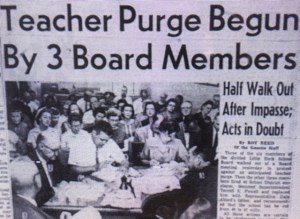
 On May 5, 1950, the Rodgers and Hammerstein musical South Pacific captured the Pulitzer Prize in Drama. This would receive special attention in the Arkansas Gazette. The reason this carried such weight in Arkansas was that the musical had a connection to Little Rock.
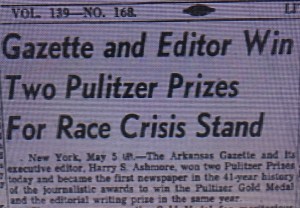 On May 5, 1958, it was announced that the Arkansas Gazette had received two Pulitzer Prizes. These were for the coverage of the 1957 integration (or lack thereof) at Little Rock Central High School.
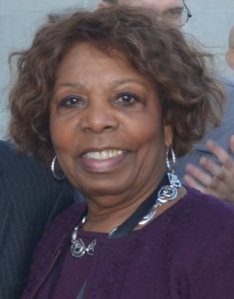 While this headline may say “Little Rock Look Back,” Lottie Shackelford is still very much focused on the present and the future!
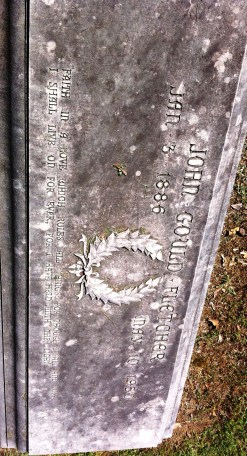 The Pulitzer Prizes are to be announced today. This year marks the 101st anniversary of the prizes, though not all of the current categories have been around since 1917.
 The other Pulitzer Prize winner buried in Mount Holly is J. N. Heiskell, the longtime editor of the Arkansas Gazette. It was Heiskell, in fact, who asked Fletcher to compose the poem about Arkansas. Heiskell served as editor of the Gazette from 1902 through 1972. He died at the age of 100 in 1972.
 Little Rock Culture Vulture