Little Rock Look Back: Jefferson Thomas

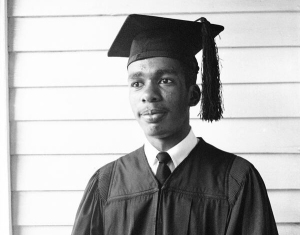
Jefferson Thomas was a track athlete at all-black Dunbar Junior High School in Little Rock when he volunteered to integrate all-white Central High School as a sophomore in 1957.  A few days before he entered the school, he celebrated his fifteenth birthday, having been born on September 19, 1942.

Mr. Thomas was a quiet, soft spoken, unique, and special person.  He had a subtle, infectious sense of humor that served him well throughout his life.  He would find that sense of humor and his love for humanity severely tested by the hate and violence directed toward him by some of the white students at Central High School.  Mr. Thomas graduated from Central High School in May 1960.

He served as the narrator of the Oscar winning documentary short, “Nine from Little Rock.”

Mr. Thomas married in 1965 and has one child (Jefferson, Jr.), still living in Los Angeles.  Mr. Thomas, Sr. was inducted into the United States Army in 1966.  He returned to civilian life in the summer of 1968.

After obtaining a Bachelor Degree in Business Administration from Los Angeles State College, Mr. Thomas went to work as an Accounting Clerk and later, Supervisor for Mobil Oil Corporation.  When Mobil Oil moved its Credit Card Operations, Mr. Thomas remained in Los Angeles, and entered Federal Service as an Accounting Clerk with the Department of Defense.  The DOD relocated parts of its LA operations to Columbus, Ohio, in 1989.  He sold his business and moved to Columbus.

After moving to Columbus, Mr. Thomas continued his commitment to serve the local community, Mr. Thomas took time to serve as a volunteer mentor in the Village to Child Program, co-sponsored by Ohio Dominican University.

He was a frequent speaker at numerous high schools, colleges and universities throughout the country, and an eager mentor to young people.  He was the recipient of numerous awards from local and federal governmental agencies.  These awards include the NAACP Spingarn Medal, and Congressional Gold Medal, this Nation’s longest-running tradition of honor, for helping make democracy work.  He was especially proud of the life-size sculpture of the Little Rock Nine at the Arkansas State Capital in Little Rock, the first in the state honoring living citizens.

Jefferson Thomas retired in September 2004, after 27 years of Federal Service. He departed this life in 2010.  His wife, Mary, still resides in Columbus, Ohio.

Little Rock Look Back: Minnijean Brown Trickey

On September 11, 1941, Minnijean Brown was born.

Although all of the Nine experienced verbal and physical harassment during their year at Central, Brown was first suspended, and then expelled for retaliating against the daily torment. She moved to New York and lived with Drs. Kenneth B. and Mamie Clark, the African American psychologists whose social science findings played a critical role in the Brown v. Board of Education Supreme Court case.

After graduating from the New Lincoln School in 1959, Mrs. Brown Trickey studied journalism at Southern Illinois University.  She received a Bachelor of Social Work in Native Human Services from Laurentian University and Master of Social Work at Carleton University, in Ontario Canada.

Mrs. Brown Trickey has pursued a career committed to peacemaking, environmental issues, developing youth leadership and social justice advocacy.  She served in the Clinton Administration as Deputy Assistant Secretary for Workforce Diversity at the Department of the Interior.   She has taught social work at Carleton University and community colleges in Canada.

Mrs. Brown Trickey is the recipient of numerous awards for her community work for social justice, including Lifetime Achievement Tribute by the Canadian Race Relations Foundation, and the International Wolf Award for contributions to racial harmony.  With the Little Rock Nine, she received the NAACP Spingarn Medal and the Congressional Gold Medal.

She is the subject of a documentary, Journey to Little Rock: the Untold Story of Minnijean Brown Trickey, which has received critical acclaim in international film festivals in Africa, the UK, the U.S., South America and Canada.  She was featured in People Magazine, Newsweek, the Ottawa Citizen, the BBC, the Canadian Broadcasting Corp, Donahue, as well as on numerous other television, radio and in print media.  She appeared with the Little Rock Nine on Oprah and the Today Show.

Mrs. Brown Trickey currently resides in Canada, and is the Shipley Visiting Writer for Heritage Studies at Arkansas State University. She is the mother of six children, Morning Star, Isaiah, Sol, Ethan, Spirit and Leila Trickey.

Little Rock Look Back: Labor Day Bombings of 1959

Labor Day Bomb

ARKANSAS GAZETTE photos showing the exterior and interior of the LRSD building after the bomb blast.

On September 7, 1959, a peaceful Labor Day in Little Rock was shattered by the explosions of three dynamite bombs.

The locations were Fire Chief Gene Nalley’s driveway on Baseline Road at 10:20pm, Baldwin Company offices at Fourth and Gaines at 10:53pm (where Little Rock Mayor Werner Knoop was a partner–the company is now known as Baldwin Shell), and the School District offices at 10:58pm (then located at Eighth and Louisiana streets).

Given the three targets, it was fairly quickly assumed that there was a connection between the bombings and the lingering effects of the 1957 integration crisis. In light of that, police officers were stationed at the homes of all Little Rock City Directors and School Board members.

The investigation into the bombings turned up a purported fourth location for a bomb. That was the office of Letcher Langford. (Culture Vulture Editorializing Note:  This could have been a ploy to throw investigators off the scent. Langford was the only City Director who had been backed by segregationist candidates and had been openly hostile to the Women’s Emergency Committee — to the point of threatening them with legal action for not disclosing their membership rolls.)

Investigators determined that the bombing had been planned in late August by members of the Ku Klux Klan.  Five individuals were arrested.  They were J. D. Sims, Jesse Raymond Perry, John Taylor Coggins, Samuel Graydon Beavers, and E. A. Lauderdale.  The latter had twice been an unsuccessful candidate for the City Board of Directors.

Sims pleaded guilty and started serving a prison term later in September 1959.  Perry, Coggins and Beavers all went to trial in October and November.  Each was found guilty. Their terms ranged from three to five years.  Lauderdale was convicted, but appealed his decision. Though the Arkansas Supreme Court upheld the verdict against him, he did not start serving his sentence until the court decision in February 1961.

Governor Faubus commuted the sentences of Perry, Coggins and Beavers.  All three served less than six months.  Lauderdale’s sentence was reduced by Faubus so that he, too, was eligible for release after six months.  Sims, who was first to plead, served the longest: nearly two years.

Sadly, this would not be the last bombing in Little Rock tied to 1957. In February 1960, Carlotta Walls’ house was bombed.

LR Look Back: A Photo Seen Around the World

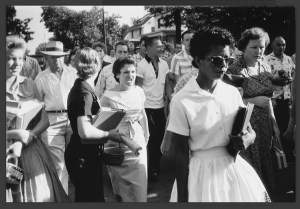
Will Counts (American, Little Rock, 1931 – 2001, Evansville, Illinois), It was not the plan for Elizabeth Eckford to walk along toward Central High, 1957 (printed 1997), gelatin silver print, 25 x 32 inches, Arkansas Arts Center Foundation Collection: Gift of the artist, Bloomington, Indiana. 1997.039.007

On September 4, 1957, the students known as the Little Rock Nine made their first attempt to enter all-white Little Rock Central High School.  This was the second day of the 1957-58 school year in Little Rock.  Over the preceding Labor Day weekend, it had been decided that the African American students would wait until the second day of school to officially start at Central.

As is now well known, NAACP leader Daisy Bates was not able to notify one of the students about meeting as a group of the Bates house.  That one student, Elizabeth Eckford, approached the school by herself and quickly realized the National Guard members surrounding the school were not their to protect her, but to ban her and the others.

Arkansas Democrat photographer Will Counts captured Eckford’s quiet determination in the face of the guards and the taunting crowds.  His photo of a white student screaming at Eckford was picked up by media outlets worldwide. It became not only a symbol for the Central High integration crisis, but for the Civil Rights movement.  Counts’ photo was the jury’s choice for the Pulitzer Prize in Photography in 1958. But the jury was overruled by the Pulitzer board, with no explanation given.

A copy of this photo is now on display at the Arkansas Arts Center.  In 1997, Counts gave the Arts Center several prints from his collection that were taken during the time period of August 1957 through September 1959.  The exhibit is on display through October 22.


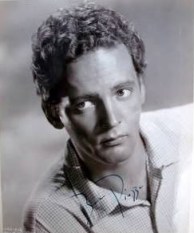
Little Rock Look Back: Ben Piazza

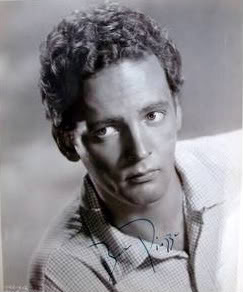
Actor-director-playwright-author Ben Piazza was born on July 30, 1933, in Little Rock.  Piazza graduated from Little Rock High School in 1951 as valedictorian. He also had starred in the senior play that year (The Man Who Came to Dinner) and edited the literary magazine.

Keeping the Tiger as his mascot, Piazza attended college at Princeton University.  While there he continued acting, including an appearance in a Theatre Intime production of Othello.  Following his 1955 graduation, he moved to New York City and studied at the Actor’s Studio.

piazza

Piazza was an understudy in the 1956 play, Too Late the Phalarope at the Belasco Theatre.  In February 1958, he starred in Winesburg, Ohio sharing the National (now Nederlander) Theatre stage with James Whitmore, Dorothy McGuire, and Leon Ames. Other cast members included Claudia McNeil (who originated the part of Lena in A Raisin in the Sun) and Sandra Church (who originated the part of Gypsy Rose Lee in Gypsy).

In April 1959, Piazza starred in Kataki at the Ambassador Theatre. This two actor play also featured Sessue Hayakawa, who played a Japanese soldier who spoke only his native l

anguage.  Therefore, Piazza’s part was largely a very lengthy monologue.  For his performance, Piazza received one of the 1959 Theatre World Awards.

As the 1960s dawned, Piazza joined a small cadre of actors who had achieved status on Broadway who then also returned to acting Off Broadway.  Colleen Dewhurst, George C. Scott, and James Earl Jones were others in this select group who helped establish Off Broadway as an entity in itself, instead of being just a farm team for Broadway.

Piazza started the 1960s on Broadway starring at the Eugene O’Neill Theatre in A Second String with Shirley Booth, Jean-Pierre Aumont, Nina Foch, Cathleen Nesbitt, and Carrie Nye.   Following that, he started his association with Edward Albee by appearing as the title character in The American Dream.  That play opened at the York Playhouse in January 1961.  Later that year, he appeared in Albee’s The Zoo Story opposite original cast member William Daniels at the East End Theatre.


Also in 1961 Piazza starred in several plays during a South American tour sponsored by the American Repertory Company.  He played Christopher Isherwood in I Am a Cameraand Chance Wayne in Sweet Bird of Youth.  In 1962, he starred in a series of plays at the Cherry Lane Theatre.  Piazza returned to Broadway to star along with Jane Fonda and Dyan Cannon in The Fun Couple at the Lyceum Theatre. This play had a troubled rehearsal period, which was documented in a short film about Jane Fonda.

Ben Piazza stayed on Broadway and returned to Albee in February 1963.  He took over the role of Nick in the original run of Who’s Afraid of Virginia Woolf? when original actor George Grizzard left to play Hamlet at the Guthrie Theatre.  (He had participated in earlier readings of the play prior to it being mounted on Broadway.)

This play was at the Billy Rose Theatre, which marked a return for Piazza. He had acted at this theatre when it was the National while appearing in Winesburg. Piazza played Nick for the remainder of the run and acted with Uta Hagen, Arthur Hill, fellow Arkansan Melinda Dillon, Eileen Fulton, Nancy Kelly, Mercedes McCambridge, Rochelle Oliver and Sheppard Strudwick.
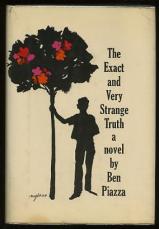
Exact and Very Strange cover

During the run of this show, Piazza’s novel The Exact and Very Strange Truth was published.  It is a fictionalized account of his growing up in Little Rock during the 1930s and 1940s.  The book is filled with references to Centennial Elementary, Westside Junior High, Central High School, Immanuel Baptist Church and various stores and shops in Little Rock during that era.  The Piazza Shoe Store, located on Main Street, was called Gallanti’s.

Following Virginia Woolf, he starred in The Zoo Story at the Cherry Lane Theatre in 1965.  In August of 1967, his play The Sunday Agreement premiered at LaMaMa.  This was Piazza’s first playwright output to be professionally staged.

As Sunday Agreement was opening, Piazza was in rehearsal for his next Broadway opening. He appeared with Alfred Drake in The Song of the Grasshopper in September 1967.  In 1968, he returned to Albee and starred in The Death of Bessie Smith and The Zoo Story in repertory on Broadway at the Billy Rose Theatre.

Later that season, in March 1969, a double bill of his one-acts: Lime Green/Khaki Blue opened at the Provincetown Playhouse.  It was directed by future Tony nominee Peter Masterson and starred Louise Lasser, Robert Walden (who starred in the 2013 production of Death of a Salesman at Arkansas Repertory Theatre), Clinton Allmon and Dolores Dorn-Heft, to whom Piazza was married at the time.

Throughout the 1960s and early 1970s, Piazza toured in many plays nationally and internationally. He also appeared in major regional theatres as an actor and a director.  During this time period he was in productions of Bus Stop, Who’s Afraid of Virginia Woolf?, You Know I Can’t Hear You when the Water’s Running  and Savages.  In 1970, he starred as Stanley Kowalski in a production of A Streetcar Named Desire in New Orleans.  As the 1970s progressed, he turned his focus to television and movies.
BDP early

Piazza’s film debut was in a 1959 Canadian film called The Dangerous Age. That same year, his Hollywood film debut came opposite Gary Cooper, Karl Malden, Maria Schell and George C. Scott in The Hanging Tree.  Though he received positive reviews for his performances, Piazza chose to return to New York and perform in stage and TV productions.

Throughout the 1950s and 1960s, he appeared in a number of TV shows including Studio One, Kraft Theatre, Zane Grey Theatre, The Naked City and Dick Powell Theatre.  He had a recurring role during one season of Ben Casey and appeared on the soap opera Love of Life.

In the 1970s, he starred in the films Tell Me That You Love Me, Junie Moon; The Candy Snatchers and I Never Promised You a Rose Garden.  He also starred as the City Councilman who recruits Walter Matthau to coach a baseball team inThe Bad News Bears.

Among his numerous TV appearances in the 1970s were The Waltons, Mannix, Switch, Barnaby Jones, Gunsmoke, Mod Squad and Lou Grant (where he was reunited with Walden).

BDP final

In the 1980s, he appeared in The Blues Brothers, The Rockford Files, Barney Miller, Hart to Hart, Family Ties, The Winds of War, Dallas, Dynasty, Too Close for Comfort, The A Team, Saint Elsewhere, Santa Barbara, The Facts of Life, Mr. Belvedere, Moonlighting and Matlock.

Piazza’s final big screen appearance was in the 1991 film Guilty by Suspicion.  He played studio head Darryl Zanuck in this Robert DeNiro-Annette Bening tale of Hollywood during the Red scare.

Ben Piazza died on September 7, 1991.

In November 2016, a room at the Robinson Conference Center was dedicated to his memory.

Little Rock Look Back: Ernest Green graduates from Little Rock Central High

Perhaps the most famous graduation ceremony in the long-storied history of Little Rock Central High took place on May 27, 1958.  It was on that date that Ernest Green became the first African American to graduate from the formerly all-white school.

Among those in the audience to witness this historic event was an up and coming minister named Dr. Martin Luther King, Jr.  A friend of L. C. and Daisy Bates, he attended the 1958 Central High School graduation to witness Green receiving a diploma. Each senior only received eight tickets to the ceremony at Quigley Stadium.   Dr. King was in the state to address the Arkansas AM&N (now UAPB) graduation.  Because he was going to be nearby, Dr. King wanted to witness the history.  Green did not know that Dr. King was in the stands until after the conclusion of the ceremony.  Later that evening, Dr. King gave Green a graduation present of $15.

Because of fears about the event becoming a media circus, the Little Rock School District limited the press on the field to one Democrat and one Gazette photographer. Other press were limited to the press box normally filled with sportswriters covering the gridiron exploits of the champion Tigers.  There were photos taken of Green prior to the ceremony as well as during the ceremony.

During the graduation rehearsal, there had been concerns that some students or other people might try to disrupt the practice.  But it went off without a hitch.  Likewise, the ceremony itself went smoothly.  Local press reported that some members of the class briefly chatted with Green during the ceremony.  That the event took place without incident was a relief on many levels to City leaders.  Also in the class of 1958 were a son of Little Rock Mayor Woodrow Mann and a daughter of LRSD Superintendent Virgil Blossom.

Little Rock Look Back: Rabbi Ira Sanders

On May 6, 1894, Ira Eugene Sanders was born in Missouri.  After receiving an undergraduate degree and rabbinate degree in Cincinnati, he was ordained a rabbi in 1919.  He served congregations in Pennsylvania and New York before coming to Little Rock in September 1926.

Shortly after arriving to lead the B’nai Israel congregation, Rabbi Sanders became active in the Little Rock community.  Among his projects were the Little Rock Community Fund, Little Rock School of Social Work (which he founded), Central Council of Social Agencies, and University of Arkansas Extension Department. During the Great Depression, he helped organize the Pulaski County Public Welfare Commission.  Other areas of involvement over his career included the Arkansas Human Betterment League, Urban League of Greater Little Rock and Arkansas Lighthouse for the Blind.  On November 3, 1930, Rabbi Sanders debated Clarence Darrow about the existence of God in front of a packed house at Little Rock High School.

For his many involvements, he received an honorary Doctor of Humanities degree in 1951 from the University of Arkansas.  Three years later he received an honorary Doctor of Divinity degree from Hebrew Union College’s Jewish Institute of Religion.

A lifelong supporter of a Jewish state, he participated in nineteen bond drives for the state of Israel.  In August 1963, he retired as the leader of B’nai Israel after over 35 years. He would remain as Rabbi Emeritus until his deal in 1985.

In January 1978, Rabbi Sanders tendered his resignation from the Central Arkansas Library board of directors.  The City Board of Directors passed resolution 5873 which noted that he had served for 51 years on the Library Board. He was first appointed in 1926.  He served during 19 different Mayoral administrations from Charles Moyer’s first term through Donald Mehlburger’s.

On April 8, 1985, Rabbi Ira Eugene Sanders died of natural causes.  He is buried in the City’s Oakland Jewish Cemetery.  The Central Arkansas Library System honors his memory with an annual distinguished lecture series.