Little Rock Look Back: Plans for a new City Hall finally move forward

City Hall circa 1908

City Hall circa 1908

After a judge ruled in August 1906 that the City of Little Rock could not build a new City Hall and Auditorium complex, it looked like Little Rock would be stuck with its existing inadequate building.

However on September 10 it became obvious that much work had been taking place behind the scenes after that ruling.  On that day, the Board of Public Affairs (a City body charged with overseeing municipal government construction projects and comprised of the mayor and two citizens approved by the City Council) voted to ask the aldermen to cancel plans and rescind legislation for the city hall, jail and auditorium complex.  The Board of Public Affairs then offered up a new plan for a city hall and jail building.  Because no auditorium was involved, these plans would not be in violation of the Chancery Court.

That same evening the City Council followed suit and revoked the plans for the original project.  The aldermen then voted to proceed with building a new city hall and jail without the auditorium.  There was only one dissenting vote; Alderman Jonathan Tuohey voted no.  He explained his negative vote was not a lack of support for the project, but he was not comfortable with the way it was rushed through.

Mayor Warren E. Lenon told the Gazette, “The Chancery Court has enjoined us from erecting an auditorium and the Board of Public Affairs has consequently rescinded all resolutions and orders pertaining to that structure.” He noted that there would “be no appeal from the injunction granted by Chancellor Hart, because there is nothing to appeal.”

The coverage of the actions of the City Council that night was in keeping with the manner in which the two daily newspapers had covered the lawsuit and the trial.  The Gazette headline cried “City Hall Ordinance Railroaded Through” while the staid Democrat merely stated “New $175,000 City Hall Provided by City Council.”  The tone of theGazette’s article matched the headline while the Democrat’s story was more straightforward.

Architect Charles Thompson adjusted his plan for the new City Hall by removing the auditorium wing.  With the revised Th0mpson plan and the approval of the City Council, Little Rock was at last on its way to a new City Hall.  This was over two years after Mayor Lenon had first broached the subject.

Originally slated to open in 1907, the building officially opened in April 1908.

Little Rock Look Back: A (Tom) Prince of a Mayor

Mayor PrinceFuture Little Rock Mayor Tom Prince was born on August 13, 1949.  After graduating high school in 1967 (where he was on the state championship golf team), he attended the United States Naval Academy.  He later received his law degree from the University of Arkansas at Little Rock and began practicing law in Little Rock.

In 1984 he ran for the City of Little Rock Board of Directors and was elected.  In January 1985, he was selected by his fellow City Directors to serve as Mayor of Little Rock.  He served as Mayor until January 1987.  During his term in office, Arkansas celebrated its Sesquicentennial. Mayor Prince oversaw the City’s participation in the celebratory activities.  As Mayor he was also a strong advocate for expanding the city’s involvement in quality of life issues through enhanced parks and arts while maintaining a commitment to public safety and public works issues. After the completion of his four year term on the City Board, he did not seek a second term.

City of Little Rock races are non-partisan.  After leaving office, he became involved in Democratic Party politics.  In 1992, he campaigned for Bill Clinton’s presidential bid in Iowa and other Midwest states.  When his law partner, Sheffield Nelson, ran for Governor in 1994 as a Republican, Prince resigned from his Democratic Party positions and worked on the Nelson campaign.  In 1997, he was elected chair of the Pulaski County Republican Committee.  In 1998, he ran for the United States Senate as a Republican.

In 1999, Prince experienced a family tragedy and took a sabbatical from practicing law. In 2000, he moved to St. Louis to become general counsel for a securities firm located there.  Following several years with the securities firm, he joined a St. Louis law firm in private practice.  After spending over a decade in St. Louis, Prince returned to Central Arkansas and is managing business interests.

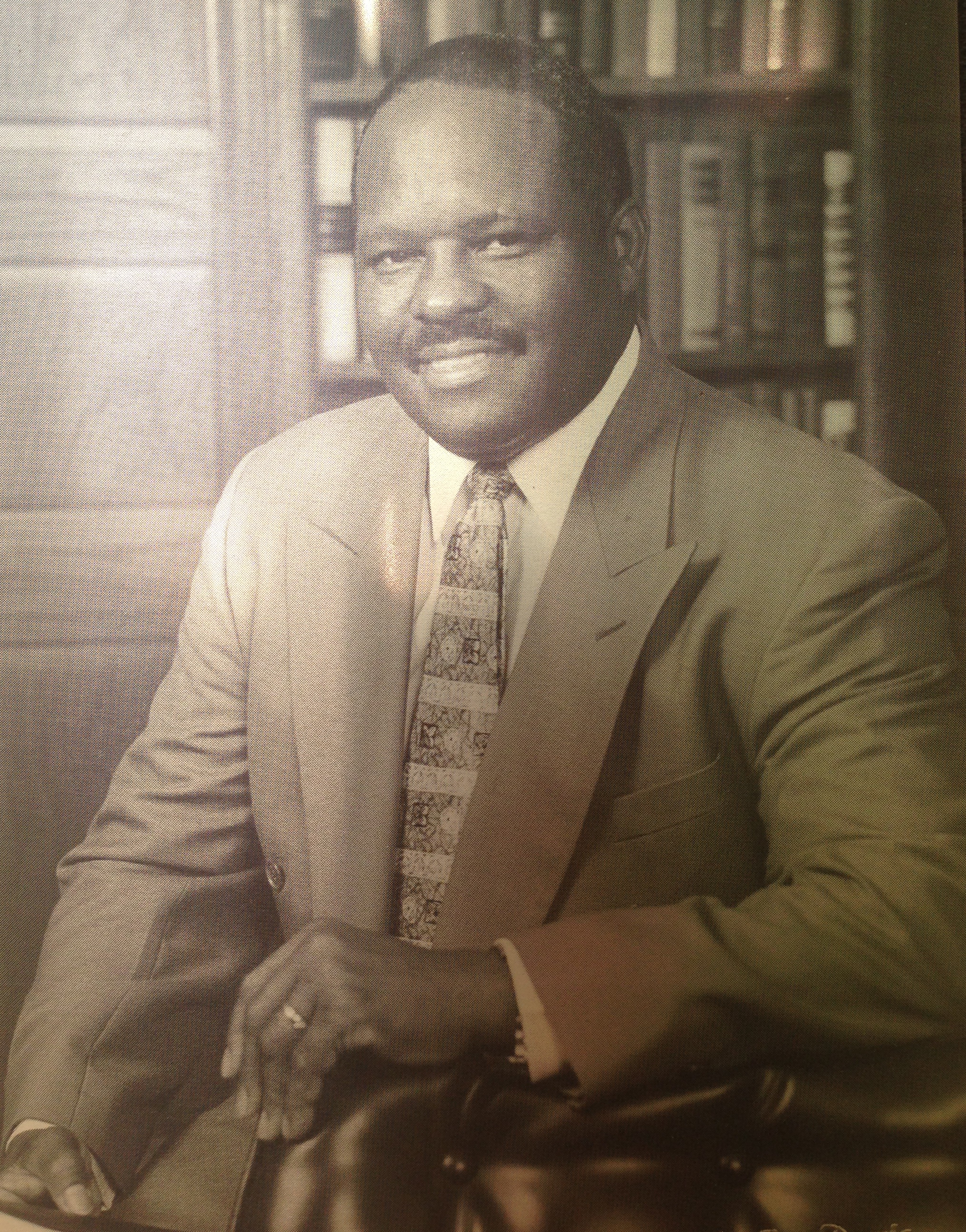
Little Rock Look Back: City Director Willie L. Hinton

HintonOn August 2, 1947, future Little Rock Vice Mayor Willie Lee Hinton was born in Wynne and educated in Cross County.  He then attended what is now the University of Arkansas at Pine Bluff.

For twenty-eight years, Hinton was a vocational education teacher at the Arkansas School for the Deaf.  He was also very active in neighborhood activities as well as in grassroots community-building efforts.

In 1993, Hinton made his first race for the City Board of Directors.  After narrowly losing the Ward 2 race in a special election, he returned to run again the following year.  Hinton won the race in November 1994 and was re-elected in 1998 and 2002.  In 2003, he was selected to serve as Little Rock Vice Mayor for a two year term.

Long an advocate for neighborhood empowerment, Hinton had championed the transformation of the old Lee Elementary School into a resource center.  Under his leadership the building was purchased from the Little Rock School District in 1997 and opened in 2000 as the Neighborhood Resource Center.  Five years later, the Little Rock City Board of Directors voted to name it in his honor.  The building, which stands at 12th and Pine Streets, is a living testament to his vision of inclusiveness and the worth of every individual.

After battling a brain tumor for nearly two years, Hinton chose not to seek a fourth term on the Little Rock City Board.  His public service to the citizens of Little Rock ended on December 31, 2006.  On February 13, 2007, Hinton died at his home in Little Rock at the age of 59.  He was survived by his wife Blondell, two children and two grandchildren.  He is buried in the Graham Cemetery in Cross County.

Learn about Little Rock’s earliest auditorium (which also was a roller rink AND rifle range) today at noon at Old State House Museum Brown Bag Lecture

11805726_10154024863604908_1192217255_nToday at noon, the Old State House Museum will have another Brown Bag Lecture.  This one focuses on three decades of unsuccessful efforts to build a municipal auditorium in Little Rock.  That time period was filled with big dreams, lawsuits, personality clashes, disappointments, and a Roller Rink that was also a Rifle Range.

In April 1904, Little Rock Mayor W. E. Lenon spoke of the need for a municipal auditorium in Little Rock. It would take thirty-six years for that dream to be realized. Along the way there were numerous twists, turns, detours and disappointments as the saga was played out in the newspapers, courtrooms, and offices of every major Little Rock architect at the time.

Until a permanent auditorium could be found, the City made do with vaudeville houses, high schools, and even a roller skating rink which doubled as a rifle range. Over the three decades of planning for an auditorium, some names came and went, others such as Mayor Lenon, architect Charles L. Thompson and Arkansas Gazette publisher J. N. Heiskell appeared time and time again. This Brown Bag Lunch Lecture explores the time period from 1904 to 1934 as it looks at the numerous unsuccessful attempts to construct a municipal auditorium in Little Rock.

In 2016, there will be a Brown Bag Lecture to look at construction and opening of Robinson Center Music Hall.

Scott Whiteley Carter is Special Projects Administrator for the City of Little Rock. As the unofficial historian of Little Rock City Hall, he can often be found leafing through sheaves of papers in the City Clerk’s vault or furiously scribbling notes in Little Rock research libraries. He is also the author of the LRCultureVulture.comblog. A native of Little Rock, he is a graduate of Missouri State University.

“A Work of Art” – Jazz Week 2015 Kicks off today at Little Rock City Hall at noon

apme awoa 2015Today at noon at City Hall, the City of Little Rock will host an event introducing the 2015 “A Work of Art” Jazz Week. The kickoff features the first concert of a week-long series of awe-inspiring performances. The agenda includes the introduction of Madison Moline, the 2015 Art Porter Music Education scholarship recipient, a performance by the students from the “Minors of Music” program and details on the concerts scheduled for the rest of the week.

“A Work of Art” is the primary fundraiser for the Art Porter Music Education scholarship program. All proceeds from the week-long fundraiser benefit the scholarship fund. “A Work of Art” concludes in early August in observance of the birth month of Art Porter, Jr. Attendees enjoy a week of unique educational experiences by an impressive group of local artists, music students and national recording artists.

Ticket information is available at www.artporter.org.

Little Rock Look Back: LR Mayor Harold “Sonney” Henson

On July 18, 1928, future Little Rock Mayor Harold E. “Sonney” Henson, Jr. was born in Fayetteville to Harold E Henson Sr. and Dollie Croxdale Henson.  He and his sister Sara Sue grew up in Springdale.
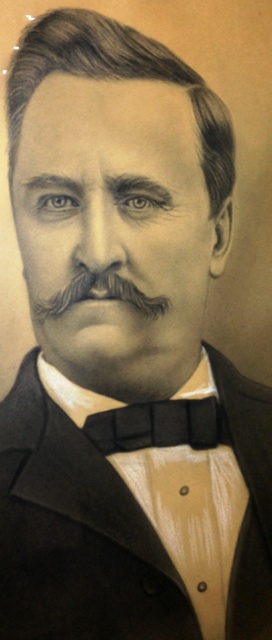
Henson graduated from Springdale High School and was later inducted as one of the first inductees into the Springdale High School Hall of Fame where he participated in the state high school championship in football and basketball. He attended the University of Arkansas in 1945 on an athletic scholarship where he participated in three sports, golf, basketball and football, and graduated in 1949 with a degree in Business Administration.

He was active in ROTC at the university and graduated as a second lieutenant in the U.S. Army. Henson served in Korea as a captain and commander during the Korean conflict. He attained the rank of major as an active member of the Army reserve post his duty in Korea.

Henson’s professional career began with First National Bank of Springdale and soon moved to Little Rock where he served as Vice President at the Worthen Bank on Asher Avenue. In 1962 he was elected to the City of Little Rock Board of Directors.  From January 1965 to December 1966, he served as mayor of Little Rock.  In November 1966, he was unopposed in his bid for a second term on the City Board.  However in October 1967, he resigned from the City Board because he was taking a position with a bank in Joplin, Missouri.

From 1966 to 1972, he served as President of Security National Bank Joplin.  While there, he was a Missouri amateur championship golfer.  Herbert Thomas then asked him to move to Ft. Smith to head up City National Bank (present Bank Corp South) where he served as President and CEO from 1972 to his retirement in 1993 at the age of 65. He continued his service to Bank Corp South as an active board member for several years.

Among his many civic activities throughout his career were the Springdale Junior Chamber of Commerce,  Sparks Regional Medical Center board of directors of Fort Smith, president and active member of the board for the Arkansas Sports Hall of Fame and Razorback Foundation, on the board for the University of Arkansas for Medical Sciences foundation, the Westark area council for Boy Scouts, the Arkansas State Chamber of Commerce, the Small Colleges of Arkansas, Leadership Fort Smith, the Community Rescue Mission and the President of the Arkansas Bankers Association to name a few.  In 1995 he received the meritorious service award by the Arkansas Sports Hall of Honor for his lifelong commitment to Arkansas sports.

Henson was married for 53 years to Helen Garrott Henson. He had four children, 16 grandchildren and one great-grand child.

Little Rock Look Back: Mayor James A. Woodson

IMG_0298On July 14, 1848, future Little Rock Mayor James Alexander Woodson was born in North Carolina.  The son of two prominent eastern families, he and his parents moved to Pine Bluff in 1849.  His father died within two weeks of the family’s arrival in Arkansas.

With the outbreak of the Civil War, he enlisted as a drummer boy in the Ninth Arkansas infantry but was discharged because of his youth. He worked as a clerk at a general store in Pine Bluff. After the Civil War ended, he attended school in Virginia and Maryland before returning Pine Bluff. Upon his return he worked in the steamboat business and eventually started working in railroads. He was instrumental in putting together one of the forerunners of the Missouri Pacific Railroad and worked for them for 18 years.

Woodson moved to Little Rock in March 1881 and continued working for the railroad until 1891.  Working in the mercantile business allowed him more time to be engaged in civic affairs.  In 1895 he was elected mayor.   He handily defeated former mayor W. G. Whipple who was seeking to return to office.

During Mayor Woodson’s tenure, he oversaw renovations of the 1867 Little Rock City Hall (which was located at the time on the north side of Markham between Main Street and Louisiana Street).  He also championed the construction of a city hospital and the first free bridge across the Arkansas River.  Mayor Woodson was reelected in April 1897 and April 1899.

In April 1890, he resigned to take over the Arkansas and Southwestern Railway.  After restoring it to sound financial footing, he later led the Arkansas Asphalt Company.  That company provided the first asphalt for paving Little Rock city streets.

Woodson served as a director of the Little Rock board of trade (forerunner to the Little Rock Regional Chamber of Commerce), director of the Mercantile Trust Company and president of the state board of trade (forerunner of the Arkansas State Chamber of Commerce).

Woodson married Virginia Lanier in 1868.  They had six children, five of whom lived to adulthood.  Mayor Woodson died on October 19, 1908 and is buried in Mount Holly Cemetery.  His wife lived until 1937 and is buried next to him.  Also buried in Mount Holly are their children James Alexander Woodson, Benjamin Morehead Woodson and Gertrude Woodson Hardeman; each of whom died before their mother.  Mrs. Hardeman’s husband and son are also buried in Mount Holly.

In 2013 and 2014, Mayor Woodson was one of the characters portrayed at the annual Parkview High School “Tales from the Crypt” program at Mount Holly.

Some have noted his resemblance to actor Nick Offerman of the show “Parks and Recreation.”  Here is a Six Degrees game to link the two.

  • James Woodson
  • The Woodson community and Woodson Lateral is named for him
  • Growing up in the area, actor Billy Bob Thornton has been to Woodson Lateral
  • Bruce Willis appeared in BANDITS with Thornton.
  • “Friends” featured Willis and Paul Rudd as multi-episode guest stars
  • Rudd appeared in “Parks & Recreation” as a multi-episode guest star
  • Nick Offerman starred in “Parks & Recreation”