
Little Rock Look Back: Civic Leader John Herndon Hollis

On February 5, 1870, future Little Rock alderman and acting mayor John Herndon Hollis was born shortly before his family moved to what is now Cleveland County. His parents were originally from Georgia and came from prosperous and longtime families there.

The Hollis family came to Arkansas after the Civil War and settled in Union County. A portion of that county was carved off and became Dorsey County (named after a Republican US Senator from Arkansas) but was renamed Cleveland County after Grover Cleveland was elected President. Cleveland was the first Democrat to be elected President in over 20 years. This name change also reflected the political shift in Arkansas from the Reconstruction-led Republican politics to the Democratic Party politics which would dominate for the next century.

John Herndon Hollis was one of six children, and the only one with a middle name. Herndon had been his mother’s maiden name. As one of his brothers described their childhood in Cleveland County, “they all went to country schools in their home neighborhood, worked hard on the farm in the summertime, and were inside their little Methodist Church every time the doors were open.”

Around 1900, Hollis and his new wife Malinda M. “Linda” Taliaferro Hollis (formerly of Rison) moved to Little Rock.  Together the couple had six children. In Little Rock, Hollis worked in the banking industry. For years he worked for People’s Building and Loan Association.

Hollis was first elected to the Little Rock City Council in April 1904. He would serve as one of the Aldermen from the city’s Fourth Ward until April 1918.  This was on the western border of Little Rock at the time. The family lived at 1510 S. Schiller, which is one block east of Central High, though at the time neither the school nor its predecessor (West End Park) existed.  From 1907 until 1913 he also served on the Little Rock School Board.

In April 1908, at the first City Council meeting in the new City Hall, Mayor W. E. Lenon announced his resignation. Because the resignation was effective immediately, there was a vacancy in the office of mayor.  Hollis was selected by his colleagues to serve as acting mayor until a successor could be elected. So from April 1908 through June 1908, Hollis was the City’s chief political and executive leader.

Though he was never formally mayor (and did not resign his position as alderman), since 1908, Hollis’ name has appeared on the list of mayors of Little Rock. The reason seems to be as a sign of respect since there was a vacancy.

There previously had been acting mayors when the mayor would be absent on business or due to illness. But in those instances, the mayor had not resigned. This is the only instance in Little Rock history when a mayor resigned immediately with no successor in place. So John Herndon Hollis holds a unique role in Little Rock history.

After leaving the City Council, Hollis remained active in civic affairs.  He co-chaired a successful campaign in 1929, to raise a tax for a variety of civic issues.

Hollis’ wife died in 1920.  He later married Ann Jewell of Little Rock (who was a cousin of his first wife). They were married until his death on October 23, 1941.  Ann Hollis lived in Little Rock until her death in 1980.  The Hollis family is entombed in the mausoleum at Mount Holly Cemetery.

Both of John Herndon Hollis’ wives are distant cousins of the Culture Vulture, so he is particularly fond of John Herndon Hollis.

Little Rock Look Back: Opening of the Little Rock Public Library

On February 2, 1910, the Little Rock Public Library officially opened its doors.  There had been an open house the night before, but this was the first day of acquiring a library card and checking out books.

Various private libraries had existed sporadically in Little Rock throughout the 19th Century.  In November 1900, a Little Rock School District committee made the first inquiry into the the creation of a Carnegie Library in Little Rock.  Over the next several years, numerous entreaties were made, but funding for the City’s portion was an obstacle.  On December 17, 1906, the Little Rock City Council passed an ordinance to move forward with building, furnishing and equipping a library.  Finally, in February 1908, the City approved acceptance of $88,100 from Andrew Carnegie.  The building would be designed by Edward Tilton, who designed Carnegie libraries, working with local architect Charles Thompson.

Mary Maud Pugsley was hired as the first librarian for Little Rock in May 1909. She began her duties on September 15, 1909, in order to get ready for the opening of the library at the southwest corner of 7th and Louisiana Streets.

On February 2, 1910, formal circulation of books began.  J. N. Heiskell was issued library card number 1.  He was secretary of the Library’s Board of Trustees and had long been an advocate for a public library in Little Rock.  He had often used his bully pulpit as editor of the Arkansas Gazette to advocate for a public library since arriving in Little Rock in 1902.  (Years later — he lived until 1972 — he received a replica of the library card made out of gold.)

That first day of operation, 500 people had applied for library cards. The application process required one to be a Little Rock property owner or to have a property owner sign the application.

Within the first year of operation, 2.5% of Little Rock’s population of 45,951 had applied for a library card.

For more on the history of the transformation of the Little Rock Public Library into the Central Arkansas Library System, read Shirley Schuette and Nathania Sawyer’s From Carnegie to Cyberspace — 100 Years at the Central Arkansas Library System, published by Butler Center Books.

Little Rock Look Back: 27 students attempt to integrate LR schools in 1956

Arkansas Democrat photo by staff photographer Mr. Bisgood.

On Monday, January 23, 1956, twenty-seven African American students attempted to integrate four Little Rock schools.  By the end of the day, all four school principals had refused entry and some of the students had met with LRSD Superintendent Virgil Blossom.

Eight girls who were students at Horace Mann High School arrived at Central High at 9:30 am accompanied by Daisy Bates and Frank W. Smith both of the NAACP.  One male student attempted to integrate Little Rock Technical High School.  Four students arrived at Forest Heights Junior High (accompanied by three adults) and fourteen students attempted to integrate Forest Park Elementary (accompanied by four adults).  Neither the Arkansas Gazette nor the Arkansas Democrat broke down the age or gender of the junior high and elementary students.

Though all were referred to meet with Mr. Blossom, only the young women from Horace Mann visited with him.  After the conversation both he and Mrs. Bates declared the conversation had been friendly.   Mr. Blossom, in denying the request, noted that the Little Rock School District had a plan for integration. To allow them to integrate immediately would have been going against the plan.  The integration plan was connected to the completion of the new high school.  If it were ready to open in the fall of 1957, then integration at the high schools would start then.  The newspapers noted that there was no timeline for when it would extend down to the junior high and elementary levels.

That evening, Rev. J. C. Crenchaw, the president of the Little Rock NAACP, issued a statement.  In it he expressed frustration that the LRSD was vague on its timeline for integration.  He noted that the students lived near the schools which they tried to integrate and were therefore forced to travel several extra miles each day to attend school.  He also commented that the young man who attempted to enroll at Tech was not afforded the training available there at his current school.

The Arkansas Democrat ran a photo of the meeting with Mr. Blossom.  It identified the seven students who were pictured.  No mention was made as to whether the eighth student was present but not photographed, or if she did not attend the meeting.  As was the practice at the time, the addresses of the students were listed by their names.  Based on those addresses, the students lived between 0.4 and 0.9 miles from Central High School and were between 2.1 and 3.2 miles away from Horace Mann High School.  Of the seven students in the photo, two were seniors, three were juniors, and three were sophomores.  None of the students named became part of the Little Rock Nine who did integrate Central High twenty-one months later.

On January 24, the Gazette editorial writer opined they were glad for the amicable nature of the conversations. They hoped it did not affect the good race relations in Little Rock.  The writer concluded by saying they did not want it to incite extremists (but did not specify if they viewed the extremists as being for or against integration.)

Little Rock Look Back: Frederick Kramer

Mayor KramerOn December 29, 1829, future Little Rock Mayor Frederick G. Kramer was born in Halle, Prussia.  In 1848, he immigrated to the United States.  Kramer enlisted in the United States Army and served in the Seventh Infantry until his discharge at Fort Gibson, Indian Territory, in July 1857. After his discharge, Kramer settled in Little Rock, and became a citizen in 1859. He married Adaline Margaret Reichardt, an emigrant from Germany, in 1857. They had six children Louisa, Mattie, Emma, Charles, Fred, and Henry.
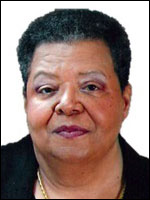
From 1869 to 1894, Kramer served on the Little Rock School Board.  He was the first School Board president.  Among his other civic activities were serving as president of the Masonic Mutual Relief Association, a founder of the Mount Holly Cemetery Commission, and a founder of Temple B’nai Israel.  In 1875 he and F. A. Sarasin opened a mercantile business. Kramer later became the president of the Bank of Commerce.

Frederick Kramer was elected Mayor of Little Rock in November 1873.  He served until April 1875, when a new Arkansas Constitution took effect.

From November 1869 through March 1875, the City Council President presided over City Council meetings and signed ordinances, performing many of the duties formerly ascribed to the Mayor.  As such, during his Mayoral tenure from 1873 to 1875, Kramer was the Chief Executive of the City but did not preside over Council Meeting.  When he had served on the City Council, however, Kramer had been elected President of the Council and had presided over Council meetings from October 1871 to May 1872

Kramer was returned to the Mayoralty in April 1881 and served three more terms leaving office in April 1887.  His tenure as an Alderman and as Mayor overlapped with his service on the school board.

A new Little Rock elementary school which opened in 1895 on Sherman Street was named the Fred Kramer Elementary School in his honor.  Though the building’s bell tower was removed in the 1950s, the structure still stands today.  It now houses loft apartments.

Frederick G. Kramer died on September 8, 1896, in Colorado Springs, Colorado.  A few months earlier, he had traveled there with his wife and daughter Emma to recuperate from an illness. He is buried in Oakland Cemetery.

Little Rock Look Back: Elizabeth Eckford

After 60 years, the most dramatic images of the 1957 crisis at Little Rock Central High School remain those of 15-year-old Elizabeth Eckford, being taunted as she walked through a hate-filled mob, on her way to school.  Today, Ms. Eckford recalls how difficult it was for her parents, Oscar and Birdie, to allow her to continue the struggle to integrate the Little Rock schools.

Born on October 4, 1941, she grew up in Little Rock.  Because all of the city’s high schools closed her senior year, Ms. Eckford moved to St Louis, where she obtained her GED. She attended Knox College in Illinois, and received her BA in History from Central State University in Wilberforce, Ohio.  While in college, Ms. Eckford became one of the first African Americans to work in a local St. Louis bank, in a non-janitorial position, and later she worked as a substitute teacher, in Little Rock public schools.

Ms. Eckford, a veteran of the U.S. Army, has also worked as a substitute teacher in Little Rock public schools, test administrator, unemployment interviewer, waitress, welfare worker, and military reporter.  Along with her fellow Little Rock Nine members, she is a recipient of the NAACP’s Spingarn Medal and the prestigious Congressional Gold Medal.  Together with one of her former tormenters, Ms. Eckford also received a Humanitarian award, presented by the National Conference for Community and Justice (NCCJ), following their meeting 34 years after an apology.  The award recognizes forgiveness and atonement.  They talked to students for two years, and, together, attended a 12-week racial healing course.

Ms. Eckford has started to walk through the painful past in sharing some of her story.  She has said that true reconciliation can occur if we honestly look back on our shared history. She believes that the lessons learned from Little Rock Central High School must continue to be shared with new generations, reminding audiences that “the dead can be buried, but not the past.”  Ms. Eckford continues her interest in education by sharing her story with school groups, and challenges students to be active participants in confronting justice, rather than being passive observers.

Ms. Eckford lives in Little Rock, and is a probation officer for the First Division Circuit Court of Pulaski County.

Little Rock Look Back: Little Rock Nine in Central for a few hours

centralentranceOn Monday, September 23, 1957, the Little Rock Nine entered Central High School for a few hours.

The previous Friday, Federal District Judge Ronald Davies ruled that Governor Faubus had used the National Guard to keep the Little Rock Nine out of the school.  At this point, the Governor withdrew the troops.  The duty of maintaining any order on the site and ensuring the safety of the students now fell solely on the Little Rock Police Department.

To minimize interactions with aggressive protestors who were outside of the school, the Nine were escorted into the side of the school.  Word quickly spread that they had made it into the building.  This caused the 1,000 or more people out front to become more hostile.

Threats were called into the building. Some parents of white children called wanting to get their students out of the building.  Some students snuck out of the building, while at the same time some of the crowd were trying to sneak in.  The situation was tense and getting more so by the minute.

Little Rock Mayor Woodrow Mann and police leadership were concerned about the ability of the City to protect the Nine and maintain order.  The Fire Department refused to use water from a firehose to disperse the crowd.

For the safety of the Little Rock Nine the students were removed from the building after having been in it only a few hours.


Little Rock Look Back: Labor Day Bombings of 1959

Labor Day Bomb

ARKANSAS GAZETTE photos showing the exterior and interior of the LRSD building after the bomb blast.

On September 7, 1959, a peaceful Labor Day in Little Rock was shattered by the explosions of three dynamite bombs.

The locations were Fire Chief Gene Nalley’s driveway on Baseline Road at 10:20pm, Baldwin Company offices at Fourth and Gaines at 10:53pm (where Little Rock Mayor Werner Knoop was a partner–the company is now known as Baldwin Shell), and the School District offices at 10:58pm (then located at Eighth and Louisiana streets).

Given the three targets, it was fairly quickly assumed that there was a connection between the bombings and the lingering effects of the 1957 integration crisis. In light of that, police officers were stationed at the homes of all Little Rock City Directors and School Board members.

The investigation into the bombings turned up a purported fourth location for a bomb. That was the office of Letcher Langford. (Culture Vulture Editorializing Note:  This could have been a ploy to throw investigators off the scent. Langford was the only City Director who had been backed by segregationist candidates and had been openly hostile to the Women’s Emergency Committee — to the point of threatening them with legal action for not disclosing their membership rolls.)

Investigators determined that the bombing had been planned in late August by members of the Ku Klux Klan.  Five individuals were arrested.  They were J. D. Sims, Jesse Raymond Perry, John Taylor Coggins, Samuel Graydon Beavers, and E. A. Lauderdale.  The latter had twice been an unsuccessful candidate for the City Board of Directors.

Sims pleaded guilty and started serving a prison term later in September 1959.  Perry, Coggins and Beavers all went to trial in October and November.  Each was found guilty. Their terms ranged from three to five years.  Lauderdale was convicted, but appealed his decision. Though the Arkansas Supreme Court upheld the verdict against him, he did not start serving his sentence until the court decision in February 1961.

Governor Faubus commuted the sentences of Perry, Coggins and Beavers.  All three served less than six months.  Lauderdale’s sentence was reduced by Faubus so that he, too, was eligible for release after six months.  Sims, who was first to plead, served the longest: nearly two years.

Sadly, this would not be the last bombing in Little Rock tied to 1957. In February 1960, Carlotta Walls’ house was bombed.