LR Cultural Touchstone: Mary Fletcher Worthen

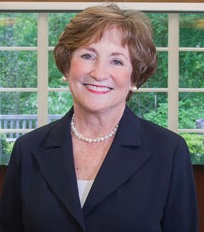
JJLR-MaryWorthen-MayMary Fletcher Worthen has cultivated history and music with the same grace and skill as she has cultivated gardens.

Born outside of Scott, she attended Vassar and Little Rock Junior College. After marrying banker Booker Worthen, she has devoted her life to improving Little Rock. Together with Stella Boyle and George Smith, she and Booker helped found the precursor to the Arkansas Symphony Orchestra.  Through its many iterations, she has been a steadfast supporter and is now a life member of the ASO Board.  She has also been a supporter of many other music organizations in Little Rock including the Chamber Music Society of Little Rock, of which she was a founder.

Another hallmark of her involvement is Mount Holly Cemetery Association.  For over 50 years she has served on the board of this body.  Without notes, she can recite the history of practically every resident buried there.  The tours she would lead with the late Peg Newton Smith were hot commodities when auctioned at fundraisers.  These two loving and lifelong friends would sometimes remember things differently. They playfully prodded and needled each other as they wended and winded their way through the headstones and history regaling rapt audiences with yarns of yore, quips and quotes, plus an anecdote or two.  In the decade since Peg passed, Mary has continued to entertain and engage visitors to the cemetery, especially at the annual Mount Holly Rest in Perpetuity (RIP) picnic.

She has also served on the Old State House Museum Board and the Pulaski County Historical Society Board.  As a historian, she literally wrote the book on Trinity Episcopal Cathedral.  She combined her interest in herb gardening and history with the creation of the Medicinal Garden at Historic Arkansas Museum, which is now named in her honor.

Born in 1917, Mary Worthen continues to learn new facts, share her love of history and music, and works to cultivate the next generations of cultural enthusiasts.
 

Learn about some historic late night killings in the safety of daylight at Old State House

OSH logoAs part of the ongoing Brown Bag Lectures, today the Old State House Museum features “On the Hunt For the Texarkana Moonlight Phantom”

In 1946 a number of murders and assaults were committed late at night in and around Texarkana. The unknown killer was nicknamed by the press the “Moonlight Phantom.” Thirty years later, Arkansas filmmaker Charles B. Pierce loosely based his film The Town That Dreaded Sundown on these incidents. For a special Halloween edition of Brown Bag Lunch Lectures, Brian Irby of the Arkansas History Commission will talk about this spooky, unsettling case that has remained unsolved for almost 70 years.

It will take place starting at noon today at the Old State House Museum.


Big Boo!-seum Bash Tonight

BooseumLogo_EventIt’s the 19th Annual Big Boo!-seum Bash, where kids can enjoy a safe and fun Halloween Thursday, Oct. 30 from 6 – 8:30 p.m.  Come out and trick-or-treat, play games and have fun at participating area museums!

There will be free candy and Halloween activities for all ages. Visit every participating location to enter in the drawing for a flat-screen TV or a $100 gift card!

Locations:
* Arkansas Arts Center – 501 East 9th Street

* Historic Arkansas Museum – 200 East 3rd Street

* Little Rock Visitor Center at Curran Hall – 615 East Capitol Avenue
— Arkansas State Capitol will participate on site

* MacArthur Museum of Arkansas Military History – 503 East 9th Street
— Arkansas National Guard Museum will participate on-site

* Mosaic Templars Cultural Center – 9th Street and Broadway
— Little Rock Central High School National Historic Site will participate on-site

* Museum of Discovery – 500 President Clinton Avenue

* Old State House Museum – 300 West Markham Street

* CALS Ron Robinson Theater – 100 River Market Avenue

* Witt Stephens Jr. Central Arkansas Nature Center – 602 President Clinton Avenue
— Arkansas Inland Maritime Museum will participate on-site

LR Cultural Touchstone: Jane Rogers

Jane RogersJane Rogers is a Little Rock native who has had a hand in developing two different cultural entities in her hometown.  She helped organize the first Riverfest to be held in Riverfront Park in 1983.  Continuing her involvement, she later served as the first full-time executive director of Riverfest.  Under her leadership the festival experienced significant growth.  This, in turn, brought more people down to the banks of the Arkansas River and the new Riverfront Park.  Because of this, more people were familiar with the area which helped the fledgling River Market take hold in the mid-1990s.

Shortly after he became Governor, Mike Huckabee tapped her to lead the Department of Arkansas Heritage.  In that capacity, she oversaw the Arkansas Arts Council, Old State House Museum, Historic Arkansas Museum, Delta Cultural Center, Arkansas Historic Preservation Program and Arkansas Natural Heritage Commission.  She served as Director for two years.

In 2003, she was appointed to the University of Arkansas Board of Trustees.  In that capacity, she has been involved in efforts to strengthen cultural offerings and facilities at the various campuses in the University of Arkansas system.

Her most recent cultural endeavor has been as a founder of Sculpture at the River Market.  In 2007, she helped recruit volunteers to create Little Rock’s first nation-wide sculpture invitational show and sale.  Since that time, Sculpture at the River Market has built a $2,000,000+ collection of public sculpture placed in beautiful surroundings along the banks of the Arkansas River in downtown Little Rock.  As a result of pieces of these efforts, the Vogel Schwartz Sculpture Garden was created in Riverfront Park.

LR Cultural Touchstone: Kathryn Donham Rice

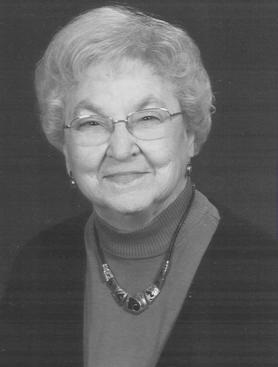
Katy RiceKathryn Donham Rice was better known by her friends as Katy.  As a historian, she was an archivist and an author.

A native of Little Rock, she was a lifelong Methodist.  Her interest in Arkansas Methodist history led to her appointment as the Archivist of the Little Rock Conference of the United Methodist Church. In 1980, she authored A History of the First United Methodist Church in Little Rock, Arkansas 1831 – 1981 to commemorate the church’s sesquicentennial. She served as church historian for twenty-eight years, creating with her husband, James H. Rice, Jr., the History Hall where many Methodist historic photographs and artifacts are displayed. She was a board member of the Commission on Archives and History of the United Methodist Church and a charter member of the Arkansas United Methodist Historical Society.

In the 1970’s she was employed at the Old State House Museum, first as a guide, then as Registrar, a position for which she trained at the Smithsonian Institution, Washington, DC. In 1986 she was appointed to serve on the Arkansas Sesquicentennial Commission as head of the Religious Organizations Task Force. This group sponsored four regional workshops on church history-writing and church archives management during the year.

Katy was an active supporter of Hendrix College, her alma mater.  She volunteered as archivist in the Winfred Polk United Methodist Archives and the Bailey Library.  She also was active in the Aesthetic Club, where she served as President; the Arkansas Women’s History Institute; the Pulaski County Historical Society; and the Arkansas Historical Association.  She wrote two additional histories which were published: The History of Lakeside Country Club and The History of Belcher Lake Farms.

For several years she was a very active volunteer for the MacArthur Museum of Arkansas Military History.  She assisted with registrar duties, including processing many of the photographs in the Allison collection. For several hours every week, she could be found in the basement of the museum with her white archivist gloves on helping out.  She would also give tours of the museum once it opened.


LR Cultural Touchstone: Louise Loughborough

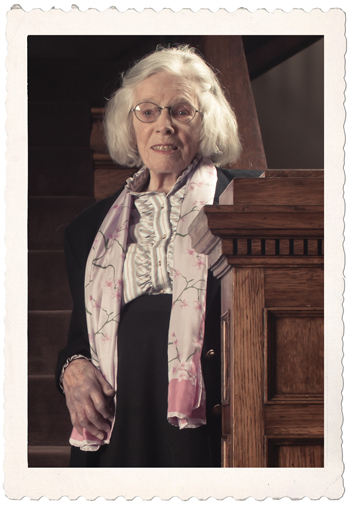
louise_loughborough_fLouise Loughborough could be called the mother of historic preservation and history museums in Arkansas.

Born Louisa Watkins Wright in Little Rock 1881, her ancestors included many early Arkansas leaders. At age 21 she married attorney J. Fairfax Loughborough.  She became active in several organizations including the Little Rock Garden Club, Colonial Dames and Mount Vernon Ladies Association.

Her involvement in historic structures in Little Rock began when the Little Rock Garden Club sought to improve the appearance of the War Memorial Building (now known as the Old State House Museum) in 1928. The grounds were littered with signs and monuments, and the roof of the Greek Revival building sported figurative statues of Law, Justice, and Mercy, which had been installed above the pediment after being salvaged from the Arkansas exhibit at the Philadelphia Centennial of 1876. To take the façade of the edifice back to its original 1830s appearance, Loughborough had the statues removed—without the permission of the War Memorial Commission, which had legal authority over the building.

In 1935, Loughborough was appointed to the Little Rock Planning Commission, and it was in this role that she first heard about the plan to condemn the half-block of houses that she had grown up admiring on Cumberland and East Third streets. Although the neighborhood had fallen on hard times, becoming a red-light district and slum, Loughborough feared the loss of several historic structures, including the Hinderliter House, the oldest building in Little Rock and thought to be Arkansas’s last territorial capitol. She mobilized a group of civic leaders to save these buildings. She enlisted the aid of prominent architect Max Mayer and coined the term “town of three capitols” to try to capture the imagination of potential supporters, grouping the “Territorial Capitol” with the Old State House and the State Capitol.

In 1938, Loughborough secured a commitment from Floyd Sharp of the federal WPA to help with the project, on the condition that the houses be owned by a governmental entity. She persuaded the Arkansas General Assembly to create and support, with general revenues, the Arkansas Territorial Capitol Restoration Commission (Act 388 of 1939). This satisfied Sharp’s condition, and the WPA provided labor and material for the new historic house museum. A private fundraising campaign brought in the remaining monetary support necessary for the completion of the project.

The Arkansas Territorial Restoration opened on July 19, 1941. The project was the first Arkansas agency committed to both the restoration of structures and the interpretation of their history, and it served as a model and inspiration for historic preservation in the state. Around the same time, she was a moving force behind the creation of a museum at the Old State House as well.  Today both Historic Arkansas Museum (as the Territorial Restoration is now known) and the Old State House Museum are agencies of the Department of Arkansas Heritage.

As founding Chairman of the Arkansas Territorial Restoration Commission, Louise Loughborough provided daily direction for the museum house complex through the first twenty years of its existence, yielding her authority to architect Edwin B. Cromwell only as her health began to fail. She died in Little Rock on December 10, 1962 and was buried at Mount Holly Cemetery.

LR Cultural Touchstone: Agnes Loewer

Photo from Arkansas History Commission

Photo from Arkansas History Commission

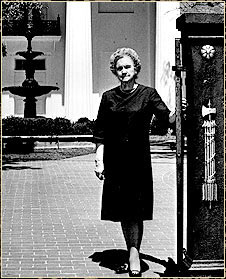
Agnes McDaniel Loewer was a driving force and the first curator of the Old State House Museum.

Born June 26, 1893, in Searcy, she moved to Little Rock with her family in 1900.  After turning 18, she began her business career working for the Underwood Typewriter Company, Mayor Charles Taylor, and the Little Rock YWCA.  In 1919, at age 26, she married Charles F.W. Loewer.

Throughout the years, Agnes McDaniel Loewer was active in numerous civic organizations, devoting her business and organizational skill to a great many causes. She served as secretary, treasurer, and president of various organizations, and filled leadership roles in accomplishing goals and missions. Loewer was a member of the Arkansas Federation of Women’s Clubs, the Business and Professional Women’s City Club, the Women’s Division of the State Fair, the Arkansas Conference of Welfare Legislation, the National Youth Association, the Canteen Corps of the American Red Cross, and the Arkansas Federation of Garden Clubs, among others.
Around 1939 Loewer and Louise Loughborough lobbied daily in the halls of the State Capitol for the preservation of the Old State House. Successful in this endeavor, Loewer was appointed a member of the Arkansas Commemorative Commission of 1947, which was formed that year to oversee the restoration of the Old State House and create a future museum of Arkansas history. She served as secretary to the commission, a position that later evolved into director.
When the restoration was completed, Loewer was hired as the first curator of the Old State House, beginning July 1951.  Utilizing a small paid staff and an army of well-instructed volunteers, she oversaw the museum.  Throughout her curatorship, she promoted the Old State House as a historic shrine and tourist attraction, and continued to battle threats to its preservation.

Her interest in history extended beyond the Old State House, she was a member of the Quapaw Quarter Association, Arkansas State Historical Society, Pulaski County Historical Society, and Arkansas Landmarks.

In March 1972, she retired at age 78, after 21 years as curator.  Among the honors she received were a commendation from the Arkansas Legislative Council in 1971 for her public service; a certificate of appreciation from the Arkansas Parks, Recreation and Travel Commission in 1974; and an award from the National Trust for Historic Preservation in 1974, presented by former first lady Lady Bird Johnson.
Loewer died on September 18, 1975 and is buried in Roselawn Memorial Park.