
Women Making History – Louise Loughborough

Louise Loughborough was the first woman to serve on the Little Rock Planning Commission.  Not only was the she first woman to serve on this body, she was the first to serve on any City commission other than the Board of Censors or Library Board.

Born Louisa Watkins Wright in Little Rock 1881, her ancestors included many early Arkansas leaders including Little Rock Mayor David Fulton, who had been born in Ireland.

In 1935, Loughborough was appointed to the Little Rock Planning Commission, and it was in this role that she first heard about the plan to condemn the half-block of houses that she had grown up admiring on Cumberland and East Third streets. Although the neighborhood had fallen on hard times, becoming a red-light district and slum, Loughborough feared the loss of several historic structures, including the Hinderliter House, the oldest building in Little Rock and thought to be Arkansas’s last territorial capitol. She mobilized a group of civic leaders to save these buildings. She enlisted the aid of prominent architect Max Mayer and coined the term “town of three capitols” to try to capture the imagination of potential supporters, grouping the “Territorial Capitol” with the Old State House and the State Capitol.

The Arkansas Territorial Restoration opened on July 19, 1941. The project was the first Arkansas agency committed to both the restoration of structures and the interpretation of their history, and it served as a model and inspiration for historic preservation in the state. Around the same time, she was a moving force behind the creation of a museum at the Old State House as well.  Today both Historic Arkansas Museum (as the Territorial Restoration is now known) and the Old State House Museum are agencies of the Department of Arkansas Heritage.

As founding Chairman of the Arkansas Territorial Restoration Commission, Louise Loughborough provided daily direction for the museum house complex through the first twenty years of its existence. She died in Little Rock on December 10, 1962 and was buried at Mount Holly Cemetery.

2nd Friday Art Night – The Cons of Formant at the Old State House Museum

Tonight (March 8) from 5pm to 8pm, explore the Old State House Museum exhibits and the Museum Store, and enjoy the folk rock sounds of The Cons of Formant!

Combining backgrounds from old soul-filled hymns and rock & roll to blues and bluegrass, The Cons of Formant have established themselves as a core part of the Americana & Folk Rock movement. The diverse blend of styles has created a beautiful balance of sound that is uniquely their own.
Beer, soft drinks and light snacks will be provided.

Tonight at the Old State House Museum – Erin Enderlin in Concert

Image may contain: 1 person, guitar and indoorThe Old State House Museum (OSHM) will host rising country music star Erin Enderlin on March 1, 7-9 p.m., for a free community concert.
Doors open at 6:30 p.m. Admission is free and open to the public. Beer and soft drinks will be served.

The museum can validate parking at the DoubleTree hotel; metered parking near the hotel is free after 6 p.m.

Recently named one of CMT’s Next Women of Country and Arkansas’s Country Music Songwriter of the Year, Enderlin is an Arkansas native and award-winning singer/songwriter currently based in Nashville, Tenn.

Her critically acclaimed sophomore album, “Whiskeytown Crier,” was co-produced by Jamey Johnson and Jim “Moose” Brown and features Chris Stapleton, Randy Houser and Ricky Skaggs. An in-demand songwriter, Enderlin penned Alan Jackson’s “Monday Morning Church,” Lee Ann Womack’s “Last Call,” and others for Luke Bryan, Randy Travis, Terri Clark, Joey + Rory and many more.

During the March 1 concert, Enderlin will present the guitar she used when writing “Monday Morning Church,” which she is donating to OSHM. The guitar will be included in the museum’s collection of Arkansas music artifacts.

Enderlin is touring with Jamey Johnson during February and March, and she will take a detour to Arkansas to play the March 1 show. All tour dates are available on her website at https://www.erinenderlin.com/p/tour.

Previously, Enderlin has toured with artists including Willie Nelson, Kip Moore and Marty Stuart. She was recently named Nashville Scene’s Runner-up for Best Singer-Songwriter in Nashville behind Jason Isbell.

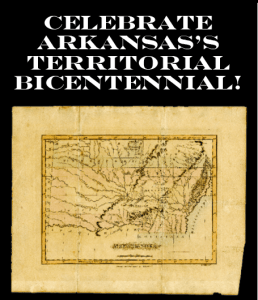
Celebrate Bicentennial of creation of Arkansas Territory

On March 2, 1819, the Arkansas Territory was created.  It was carved out of the Missouri Territory (which itself had been carved out of the Louisiana Territory).  The land consisted of what is now Arkansas as well as most of what is now Oklahoma.
Today (March 1) from 9am to 1pm, the Department of Arkansas Heritage is leading events to commemorate the bicentennial of the establishment of the Arkansas Territory. These will take place on the second floor of the rotunda at the Arkansas State Capitol.  At 10am, Governor Asa Hutchinson will make remarks.

Throughout the commemoration there will be family-friendly activities and opportunities to learn about the history of Arkansas. Many of the divisions of the Department of Arkansas Heritage will be on hand. And, of course, there will be birthday cake!


Little Rock Look Back: John Wassell

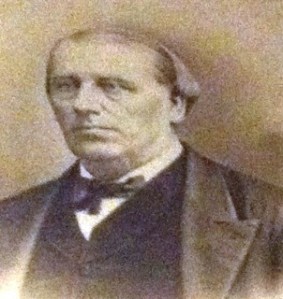
Future Little Rock Mayor John Wassell was born on February 15, 1813 in Kidderminster, England.
In 1829, he came to the United States.  He learned carpentry and construction in Ohio and ended up in Little Rock.  One of his jobs was as the finishing contractor on the State Capitol building, now known as the Old State House.

He later gave up carpentry and became an attorney.  (It is said that he did so after becoming embroiled in a legal dispute arising from one of his construction jobs.) Wassell also served as a judge.

In 1868, he was appointed Mayor of Little Rock by President Andrew Johnson.  He is Little Rock’s only Mayor to have served through a military appointment.  Mayor Wassell died in January 1881 and is buried at Mount Holly Cemetery along with his wife and other family members.  One of his grandsons, Samuel M. Wassell also served as Mayor of Little Rock. Another one, Dr. Corydon Wassell, was the subject of the Hollywood film The Story of Dr. Wassell.

2nd Friday Cinema at Old State House: THE CREATURE FROM THE BLACK LAGOON

Image may contain: one or more people and text

In 2013, the Old State House played host to Little Rock native Julie Adams where she discussed her work in the film The Creature from the Black Lagoon.  Miss Adams died earlier this month. As a tribute to her, the Old State House is screening her seminal film.

This 1954 movie tells the tale of a strange prehistoric beast which lurks in the depths of the Amazonian jungle. A group of scientists try to capture the animal and bring it back to civilization for study. The explorers capture the mysterious creature, but it breaks free. The Gill-Man returns to kidnap the lovely Kay (played by Adams), fiancée of one in the expedition, with whom it has fallen in love.


Rock the Oscars 2019: THE STORY OF DR. WASSELL

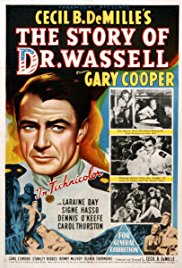
From April 24 to 26, 1944, future Oscar winner Cecil B. DeMille was in Little Rock for the world premiere screening of The Story of Dr. Wassell.  This 1944 Paramount Pictures Technicolor release told the story of wartime hero Dr. Corydon Wassell.  It would be nominated for the Oscar for Best Special Effects.

Why was Little Rock chosen?  It was the hometown of Dr. Wassell.  His paternal grandfather, John Wassell, was Little Rock’s 27th mayor.  His first cousin, Sam Wassell, was serving on the City Council at the time of the film’s release and would become Little Rock’s 51st mayor.

Based on a book by James Hilton, it was inspired by the heroic efforts of Dr. Wassell, a naval officer, as he led the evacuation of several sailors (and treated their wounds) in Java in February 1942.  President Roosevelt highlighted Dr. Wassell in his May 26, 1942, fireside chat.

Little Rock rolled out the red carpet (literally and figuratively) for DeMille and a contingency from Hollywood.  Dr. and Mrs. Wassell also returned to Little Rock for the festivities.  Unfortunately, Gary Cooper (who played Wassell in the film) was unable to attend due to illness.  His costar, Laraine Day, was making another film and could not attend either.    Those in attendance with DeMille (and Mrs. DeMille) included actresses Signe Hasso and Carol Thurston, and actor Melvin Francis.  The latter played himself; he had actually been one of the sailors saved by Dr. Wassell.

On April 24, 1944, DeMille and Dr. Wassell appeared on a radio program broadcast live from the music hall of Robinson Auditorium.  The next day, the troupe toured Camp Robinson and spoke to the soldiers there.  Later that day, Miss Hasso and Miss Thurston sold war bonds at Pfeiffers and M.M. Cohn’s.

April 26, 1944, was a full day for the DeMilles, the Wassells, and the others.  It started with a luncheon at the Hotel Marion, hosted by the Lions Club and Little Rock Chamber of Commerce.  Governor Homer Adkins presented DeMille with an Arkansas Traveler certificate.  DeMille, in return, presented Governor Adkins with a copy of the script.

When it was Dr. Wassell’s time to speak, he praised Little Rock’s efforts on the home front.  He also asked for a standing tribute to longtime Little Rock school superintendent R.C. Hall, who had died the day before.  Dr. Wassell had taught with Mr. Hall decades earlier.

Following the lunch, there was a parade on Main Street.  It started at 10th and Main and proceeded to Markham before ending at the War Memorial Building (now the Old State House Museum).  Newspaper accounts said that it was four miles long and featured many military units and marching bands.

Dinner that evening was at the Lafayette Hotel before screenings of the movie at the Capitol and Arkansas Theatres. Both screenings were sold out.  On April 27, 1944, a regular run of the movie started at the Capitol Theatre.  It would be released nationally on July 4, 1944, which also happened to be Dr. Wassell’s birthday.