Legacy of Civil War topic of seminar at Old State House today

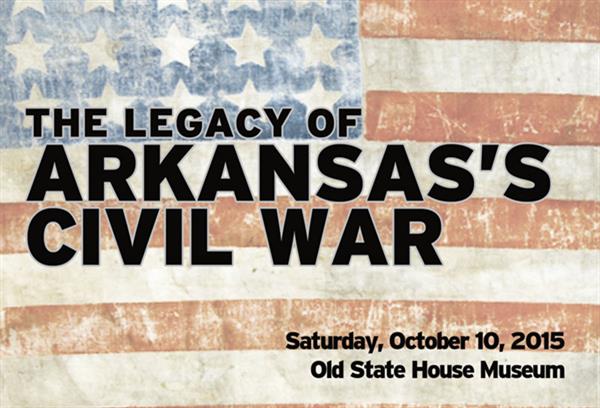
cw-seminarThe Arkansas Civil War Sesquicentennial Commission and the Old State House Museum are sponsoring a seminar on the legacy of the Civil War on Saturday, October 10.

ACWSC Chairman Tom Dupree described it thus: “As we near the end of the commemoration of the 150th anniversary of the Civil War, we wanted to address the lingering influences of the war,” Dupree said. “Each of our speakers will look at different aspects of the war and how they continue to affect us today.”

Speakers at the “Legacy of Arkansas’s Civil War” will be:

•Dr. Elliott West – University of Arkansas at Fayetteville on “Arkansas: Where One War’s Edge Was Another War’s Center”

•Dr. Carl Moneyhon – University of Arkansas at Little Rock on “Conflicting Civil War Memories and Cultural Divides in Arkansas”

•Dr. Jeannie Whayne – University of Arkansas at Fayetteville on “The Civil War and the Burden of Arkansas History”

•Dr. Cherisse Jones-Branch – Arkansas State University on “’How Free is Free?’: African Americans in Post-Civil War Arkansas”

•Dr. Kelly Houston Jones – Austin Peay University on “Women After the War: Profiles of Change and Continuity”

•Dr. Tom DeBlack – Arkansas Tech University on “’What Is to Become of Us?’: The Postwar Lives of Major Figures in Civil War Arkansas”

For more information on this and other sesquicentennial events, visit http://www.arkansascivilwar150.com/events/.

Evenings with History return tonight with Dr. Edward Anson: The Augustan Transformation of Ancient Rome

Ed-AnsonThe UALR History Institutes’ Evenings with History returns for a new year tonight.  This nationally recognized series has featured a variety of subjects.  The sessions take place at the Ottenheimer Auditorium of Historic Arkansas Museum. Refreshments are served at 7 with the program beginning at 7:30 pm. The cost is $50 for admission to all six programs.

Tonight’s program features Dr. Edward Anson speaking on “The Augustan Transformation of Ancient Rome.”

Augustus, grandnewphew, adopted son, and heir of Gaius Julius Caesar, founded the Roman Empire and was its first Emperor.  In this talk Dr. Anson shows how Augustus gained control of the state while at the same time appearing to maintain Republican traditions and serve the needs of the people.  His creation of institutions brought him power but at the same time also solved problems that had long festered during the Republic.  While his adoptive father brought about the end of the Republic, it was the adoptive son who created the governmental structure known as the Empire.

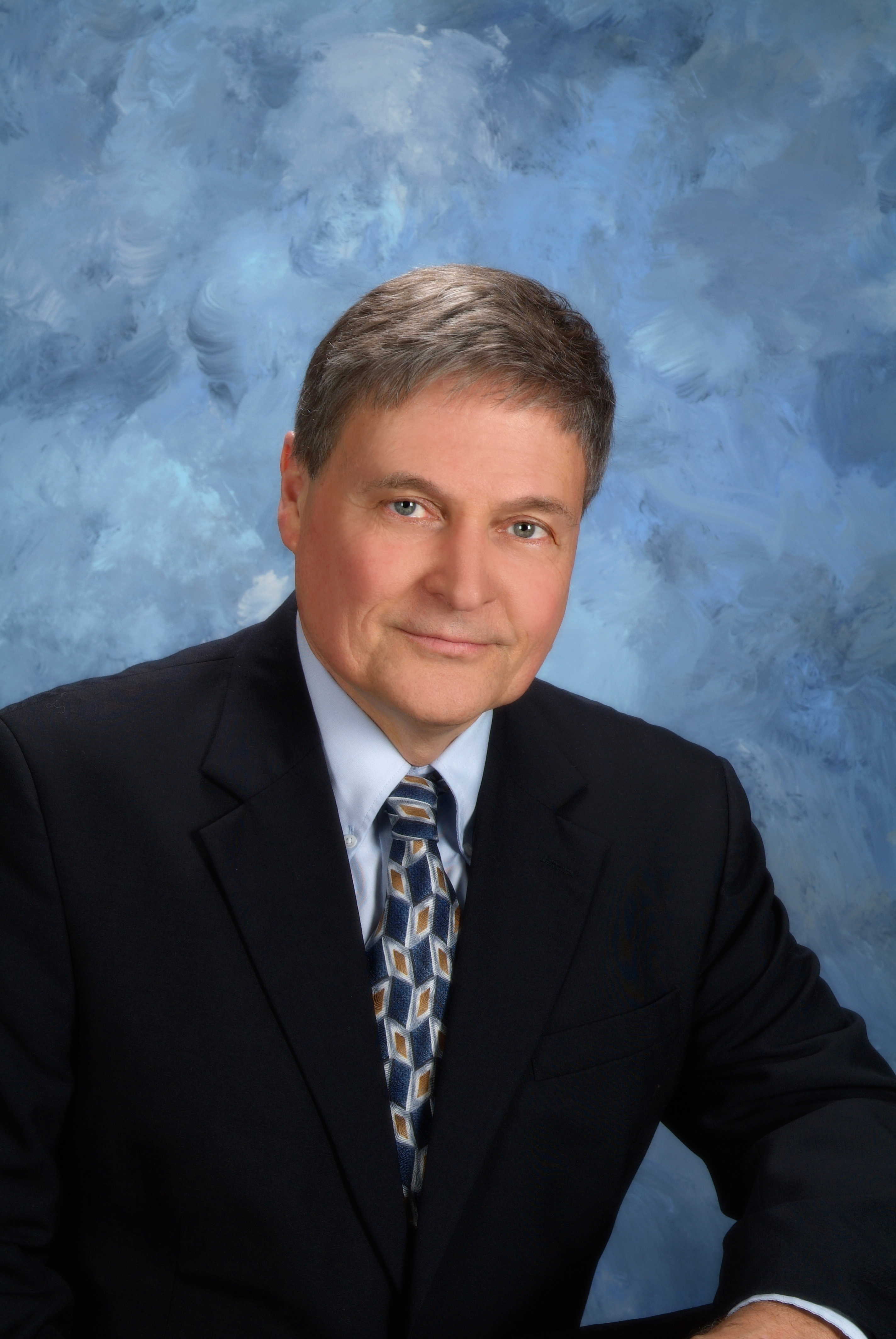
Edward M. Anson has authored or edited eight books, fifteen book chapters, and over fifty encyclopedia articles.  He is the editor of the Alexander the Great and the Hellenistic World series for Lexington Books (Rowman and Littlefield), associate editor of the Ancient History Bulletin, and an Assessor for Classics for the Australian Research Council, an agency of the Australian national government that awards grants to researchers.  He received his PhD from the University of Virginia and is currently Professor of History, a faculty senator, and a former President of the University Assembly/Senate.

Friday, Eldredge, & Clark and the Union Pacific Railroad help make these lectures possible. Other sponsors are the Ottenheimer Library, University of Arkansas at Little Rock; Historic Arkansas Museum, a museum of the Department of Arkansas Heritage; UALR Public Radio—KUAR-KLRE; UALR public television; and Grapevine Spirits.


Book on Ancient Greece, Macedonia by UALR History Professor Dr. Edward Anson published

anson ualr historyInternationally renowned scholar and University of Arkansas at Little Rock history professor Dr. Edward Anson had a second edition of his book, “Eumenes of Cardia: A Greek Among Macedonians,” released this summer.

Published by Brill Academic, the book is extensively revised from his 2004 edition, with new cuneiform material and a bibliography that includes 80 new entries.

“It has been a decade since the first edition, and much new research has been added since the original,” Anson said.

Eumenes of Cardia was a royal secretary who became a major contender for power after the death of Alexander the Great and was close to securing control of the Asian remnants of Alexander’s empire. Anson’s book argues that, despite traditional telling, Eumenes’ defeat and death were not caused by the fact that he had Greek rather than Macedonian origins.

The book may be purchased at Brill Academic and Barnes and Noble. The UALR Ottenheimer library also holds a copy.

Additionally, Anson had three chapters published in books this summer:

• “Alexander at the Beas” in “East and West in the Empire of Alexander: Essays in Honour of Brian Bosworth” by Oxford University Press
• “‘Shock and Awe’ à la Alexander the Great” in “The Many Faces of War” by Oxford University Press
• “Counter-Insurgency: The Lessons of Alexander the Great” in “Greece, Macedon, and Persia: Studies in Social, Political and Military History, A Festschrift honoring Waldemar Heckel” by Oxbow Books

Anson has published more than 50 encyclopedia articles, 14 book chapters, and more than 30 peer-reviewed articles.

His recently published books, “Alexander the Great: Themes and Issues” and “Alexander’s Heirs: The Age of the Diadochi,” was called “essential for all college and university libraries” by the American Library Association.

Anson is renowned for his work and study of fourth century B.C. Greek history. He is acclaimed by scholars all over the world for his area of specialization in the era of Alexander the Great and his successors.

His degrees include a Ph.D. from the University of Virginia and a B.A. from Drake University.

Dr. Clea Hupp to lead UALR History Department

C-HuppDr. Clea Hupp has been named as the new Chair of the UALR History Department.

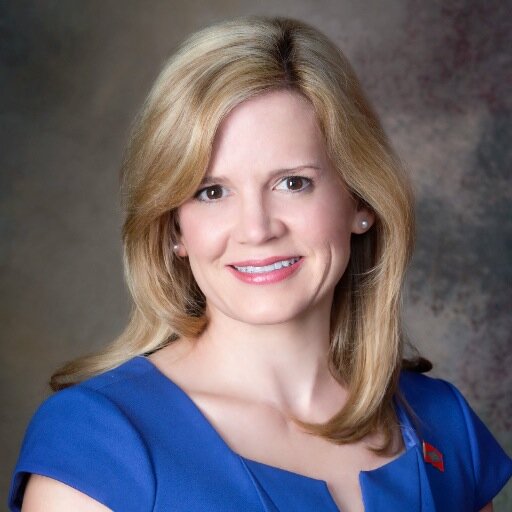
Clea E. Hupp is an Associate Professor of History. She joined the UALR History Department in 2006 and received her Ph.D. at the University of Arkansas, Fayetteville in 2004.

Clea Hupp specializes in the history of the Modern Middle East and U.S. – Middle Eastern relations. Dr. Hupp received grants from numerous institutions including the John F. Kennedy Foundation, the Lyndon Johnson Foundation, the Society for Historians of American Foreign Relations, and the American Center of Oriental Research. Her latest book was recently published from I. B. Tauris and is entitled “The United States and Jordan: Middle East Diplomacy during the Cold War.” She has traveled extensively in the Middle East and she speaks both Arabic and French.

She has made numerous presentations both in Arkansas and throughout the US on Middle East relations.  In addition to her book, her publications include:

“Strike at Samu: Covert Diplomacy and Shifting Alliances Prior to the Six Day War,” Diplomatic History January,2008.

“Supporting the Brave Young King: The Suez Crisis and Eisenhower’s New Approach to Jordan, 1953-1958” in Reassessing Suez 2008.

“Balancing Act: Jordan and the United States during the Johnson Administration,” Canadian Journal of History 2006.

Dr. Hupp serves on the Board of Directors of Ballet Arkansas. She is also an active supporter of many arts organizations in Little Rock.

Historian Dr. John Kirk is new director of UALR Institute on Race and Ethnicity

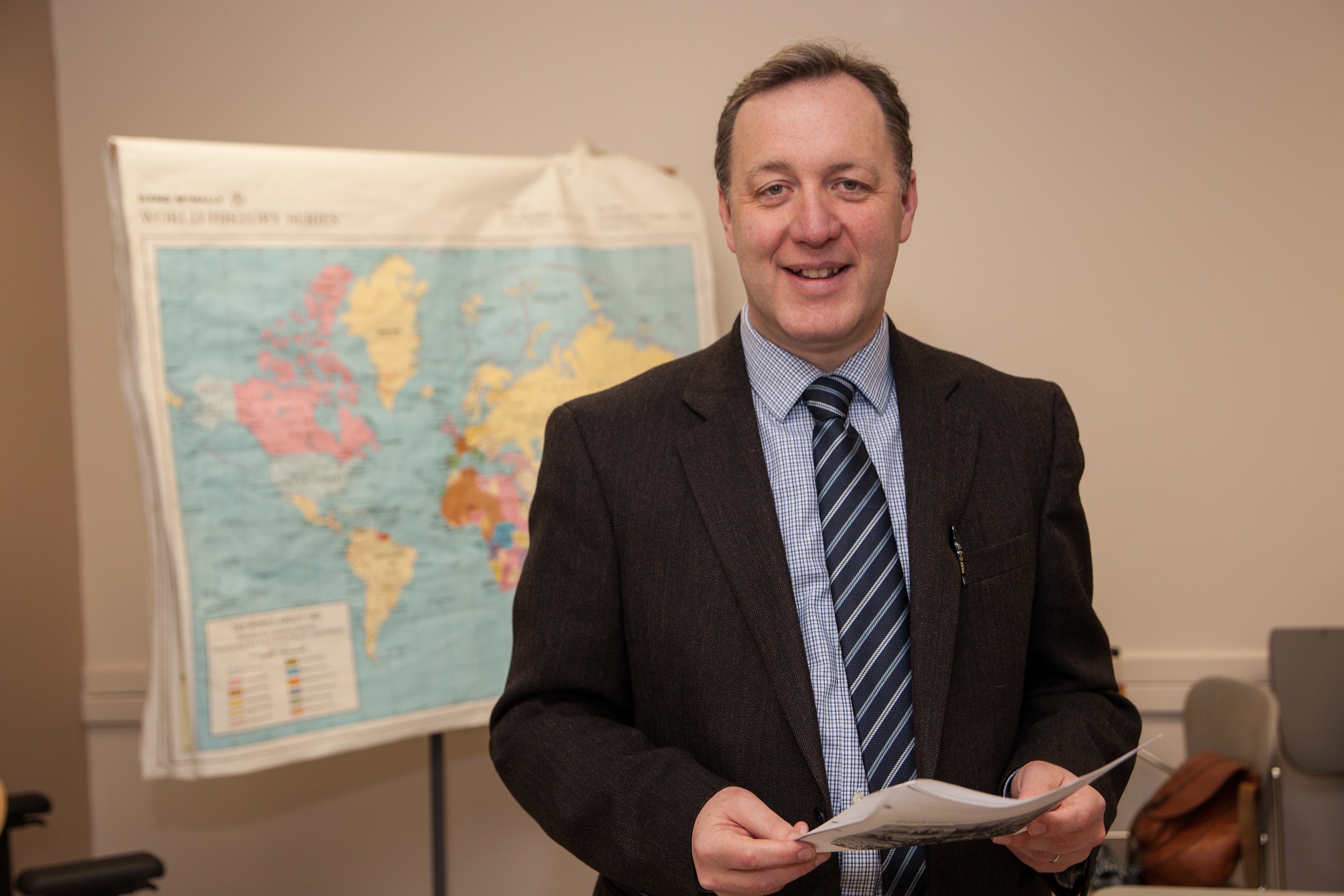
JohnKirk_history1aDr. John A. Kirk has been named the new director of the University of Arkansas at Little Rock’s Institute on Race and Ethnicity.  A native of Great Britain, he has garnered international acclaim for his research and writings on race and the civil rights movement — with a particular focus on Little Rock.

Kirk has been a member of the Chancellor’s Committee on Race and Ethnicity since he arrived at the university more than five years ago and has been involved with the institute since its inception about four years ago.

“I have a deep personal and professional commitment to the pursuit of racial and ethnic justice, and I think that should be the primary reason anyone takes on the job of director of UALR’s Institute on Race and Ethnicity — it is at the very heart of what the institute does,” Kirk said.

Kirk plans to connect with and engage as many students, faculty, and community members as possible in achieving the goals of the institute, which include:

  • Raising awareness of race and ethnicity issues
  • Providing research-based information and policy recommendations
  • Building bridges and seeking reconciliation through interracial and interethnic dialogue
  • Engaging students
  • Serving as a clearinghouse for on- and off-campus initiatives related to race and ethnicity
  • Holding UALR accountable for becoming a more diverse and multi-ethnic community.

For the past 25 years, Kirk has researched and written about issues of race and ethnicity in the United States, especially in Little Rock and Arkansas. He’s the author of numerous books, including “Race and Ethnicity in Arkansas: New Perspectives,” “Martin Luther King, Jr. and the Civil Rights Movement,” and “Beyond Little Rock: The Origins and Legacies of the Central High Crisis.” He also recently partnered with the BBC on its Martin Luther King Jr. web display that serves as an information resource for an international audience.

In announcing Kirk’s appointment, UALR Chancellor Joel E. Anderson noted the professor’s knowledge and passion for civil rights-related topics were ideal fits for the institute’s leadership role.

“It is a rare opportunity to work with someone who grew up in Great Britain but whose knowledge of Arkansas civil rights history is probably greater than anyone else’s in Arkansas or the United States,” Anderson said.  “Dr. John Kirk is a well-known resource in our community for his expertise on the many ways race has shaped our city and state. I am confident that under his leadership the UALR Institute on Race and Ethnicity will continue to grow in influence and will help shape a better future for the people of Arkansas.”

Kirk replaces Dr. Michael R. Twyman, who resigned in July to take a position at the Indiana Black Expo organization.

With Kirk’s new director responsibilities, he will remain the Donaghey Distinguished Professor of History  but no longer will serve as the UALR History Department chair.

“I am excited by the challenges and opportunities that the director’s job brings with it,” Kirk said. “I particularly look forward to getting to know more about and working with students, faculty, and community members who are learning, teaching, researching and serving on issues of race and ethnicity.”

Integration of Little Rock’s Junior Highs topic of panel today

Seven students who desegregated Little Rock’s junior high schools will discuss their experiences for the first time from 9 a.m. to noon Saturday, Feb. 21, at the Little Rock Central High School National Historic Site.

Laverne before and after

Dr. LaVerne Bell-Tolliver, first African American to attend Forest Heights Middle School in 1961 and currently an assistant professor in the UALR School of Social Work.

During the event, titled ”Phase II: The Desegregation of Little Rock Public Schools,” the former students will discuss their roles in the desegregation process in the early 1960s.  Between 1961 and 1962, 25 black students enrolled at junior high schools throughout Little Rock that had previously been closed to them.

Dr. LaVerne Bell-Tolliver, Judge Kathleen Bell, Henry Rodgers, Wilbunette Walls Randolph, Glenda Wilson, Dr. Kenneth Jones, and Judge Joyce Williams Warren will participate in the panel discussion to share their stories.  For many of them, this will be the first time they will discuss their experiences publicly.

The panel will be moderated by Rhonda Stewart, local history and genealogy expert at The Butler Center for Arkansas Studies.  Dr. John A. Kirk, George W. Donaghey Distinguished Professor of History and chair of the UALR Department of History, will provide an overview of the history of school desegregation in the area including the landmark Brown vs Board of Education decision and 1958, a so-called “lost year” when all schools in the district were closed in order to block integration.

In addition to the presentations and discussions, copies of historic documents and artifacts from the era will be on display for public viewing.

The program in sponsored in part by the Little Rock Central High School National Historic Site Visitors’ Center, the Central Arkansas Chapter of the National Association of Black Social Workers, and a grant from the Arkansas Humanities Council’s African American Heritage Fund.

Tonight at Arkansas Rep – UALR History Professor Carl Moneyhon will discuss the South at the end of the Civil War

Carl_Moneyhon_smIn conjunction with the current production of The Whipping Man, UALR History Professor Dr. Carl Moneyhon will be speaking at the Arkansas Repertory Theatre this evening. His remarks are entitled “The World Turned Upside Down: The South at The End.

Dr. Moneyhon is a specialist in the history of the American Civil War and the South and is widely published in his field. He is faculty liaison with the University History Institute, an organization that develops closer ties between the department and the community. He serves on editorial boards of the Arkansas Historical Quarterly & the Encyclopedia of Arkansas History and Culture. He has won the UALR Faculty Excellence Award for Research and the UALR Faculty Excellence Award for Teaching.

The program is at 6:00 tonight in Foster’s at the Arkansas Rep.  The doors open at 5:30; a cash bar will be available.  Admission is free for members of the Rep and $10 for non-members.  Registration is required and can be made by calling the Rep Box Office at 501-378-0405.