Anson discusses Alexander the Great to kick of 2013-14 Evenings with History

Ed-AnsonThe Evenings with History series, sponsored by the UALR History Institute kicks off the 2013-2014 series tonight.  This year’s series will focus on how the study and writing of history is done.

The six sessions of the 2013-2014 Evenings with History series will be on the first Tuesday of October, November, and December of 2013 and February, March, and April of 2014.

They are held at the Ottenheimer Auditorium in the Historic Arkansas Museum at 200 E. Third Street in Little Rock. Historic Arkansas’s downtown location and the museum’s adjacent parking lot at Third and Cumberland make the sessions convenient and pleasant to attend.

Refreshments are served at 7:00 p.m., and the talk begins at 7:30 p.m.

An individual subscription to the series, at $50 annually, includes admission to all six lectures.

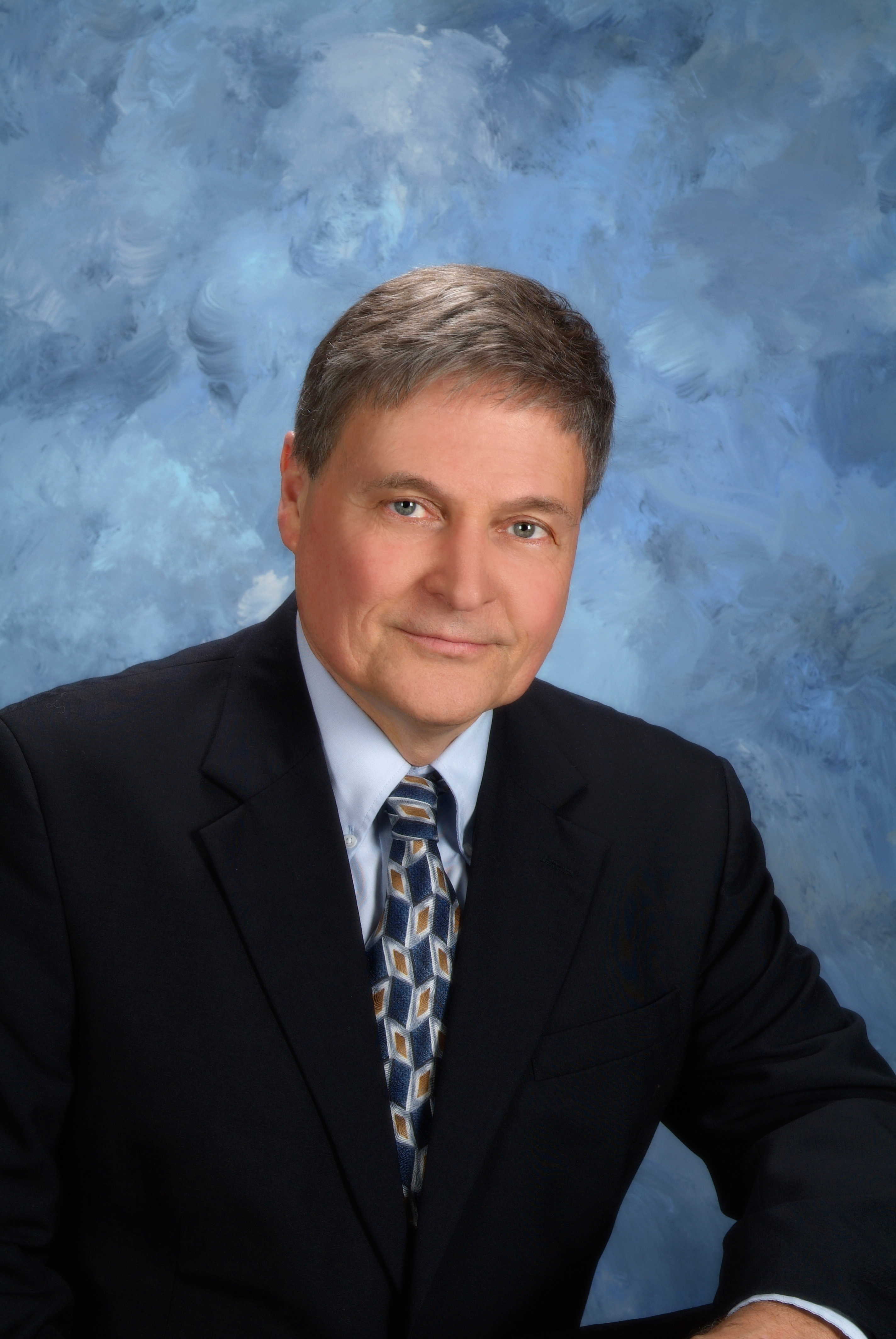
Tonight, Edward Anson discusses “The Character of Alexander the Great.”

Professor Anson has been working for many years examining aspects of the life of Alexander the Great but wanted to write something about who he was as opposed to what he did. Ancient history presents unique problems for the historian. Sources seldom are contemporary with the topic studied. Standards of behavior often do not coincide with those of today.

This talk examines Professor Anson’s efforts to establish the character of Alexander, which resulted in his new book, Alexander the Great: Themes and Issues. Simply detailing what Alexander did produces serious difficulties, but getting into the mind of someone who lived more than two thousand years ago turns out to be even more difficult. Anson offers insights into how the historian uses the evidence of antiquity to overcome these barriers.

Edward M. Anson has authored or edited seven books, including Alexander the Great: Themes and Issues (2013); After Alexander: The Age of the Diadochi (323-281 BC) (2013); Eumenes of Cardia: A Greek Among Macedonians (2004), and more than thirty articles in journals, including Greek, Roman and Byzantine Studies, The Journal of Cuneiform Studies, The Journal of the American Oriental Society, Classical Philology, and The American Journal of Philology; twelve book chapters, and over fifty encyclopedia articles. He received his PhD from the University of Virginia and is currently Professor of History, a faculty senator, and a former President of the University Assembly.

Corporate sponsors for the 2013-2014 season include Friday, Eldredge, & Clark; Union Pacific Railroad; Wright, Lindsey, and Jennings; and the Teaching American History Program of the Little Rock School District.

Support and gifts in kind are provided by the UALR Ottenheimer Library; Historic Arkansas Museum, a museum of the Department of Arkansas Heritage; UALR Public Radio—KUAR-KLRE; UALR public television; and Grapevine Spirits.

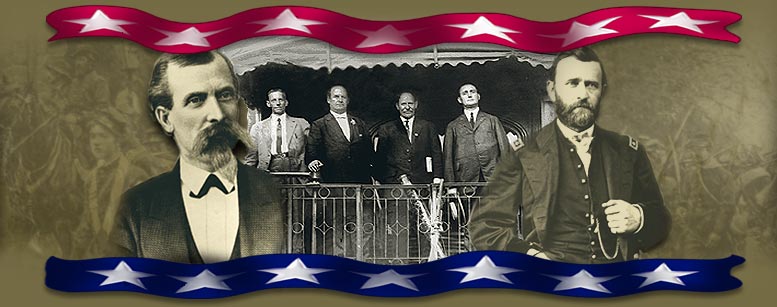
Election Day: Go On the Stump at the Old State House

Twenty years ago, on Election Day 1992, the eyes of the world were on Little Rock.  That evening William Jefferson Clinton strode out through the front doors of the Old State House Museum and delivered his acceptance speech after being elected the 42nd President of the United States.

On this election day, you can visit the Old State House and visit the permanent exhibit they have on Clinton’s presidential announcement in 1991 and the election nights in 1992 and 1996.  You can also view the exhibit “On the Stump” which looks at campaigns in Arkansas from 1819 through 1919.

In 1819 when the Arkansas Territory was created, the elimination of property requirements for voting combined with the raucous spirit of the frontier produced a new style of mass participation in American politics. The results were crude and often vulgar, but thoroughly democratic. This manifested itself in Arkansas politics less centered on political parties of Arkansas and the ideology of citizens than on the personalities of those involved. So personal were the politics of the times that political campaigns often culminated in duels.  The exhibit was curated by Dr. Carl Moneyhon, Professor of History at UALR.

The Old State House is a museum of the Department of Arkansas Heritage.  It is open from 9am to 5pm Monday through Saturday and from 1pm to 5pm on Sunday.


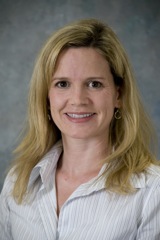
UALR Evenings with History Starts Tonight with Clea Bunch

Dr. Bunch will discuss “The Rumsfeld-Hussein Meeting, December 1983-A Nuanced View of American Policy”

The purpose of Secretary of War Donald Rumsfeld’s talks with Iraqi President Saddam Hussein in December 1983 has been scrutinized and criticized by the media and in popular histories in the wake of the 1991 and 2003 conflicts between the United States and Iraq. The prevailing interpretation of this meeting is that it resulted from President Ronald Reagan’s effort to contain the power of Iranian religious leader Ayatollah Khomeini by providing support to Iraq. This talk, based on documents from the Reagan Library, suggests a more nuanced picture of this meeting, arguing that Rumsfeld’s visit to the region was not concerned with containing Iranian power, but rather with enhancing the stability of Lebanon in preparation for a withdrawal of United States forces from that country.

Dr. Bunch joined the faculty in 2006. She is working with a committee to create a Middle East Studies minor and has assisted the Ottenheimer Library in the acquisition of an extensive collection of Middle East diplomatic documents. She serves on the Faculty Senate and the college Undergraduate Research Committee, and is the faculty advisor to the Saudi Student Association.

Dr. Bunch earned a Ph.D from the University of Arkansas. She has traveled extensively in the Middle East and she speaks both Arabic and French. Her work has been supported by numerous organizations such as the John F. Kennedy Foundation, the Society of Historians of American Foreign Relations, and the American Center of Oriental Research. She is currently working on a book on Jordanian-American relations during the Cold War.

The Evenings with History series, sponsored by the University History Institute, features presentations by UALR faculty members sharing their current research. Although these talks are aimed at a general audience, each offers insight into the real workings of historical scholarship. The nationally-recognized series covers a variety of times, areas, and subjects. Many of the presentations illuminate current affairs. The format also allows for questions and discussion.

The six sessions of the 2012-2013 Evenings with History series will be on the first Tuesday of October and December of 2011, and February, March, and April, 2013. The November 2012 session will be on the second Tuesday.

This year’s meetings will be held at the Ottenheimer Auditorium in the Historic Arkansas Museum at 200 E. Third Street in Little Rock.  Historic Arkansas’s downtown location and the museum’s adjacent parking lot at Third and Cumberland make the sessions convenient and pleasant to attend.   Refreshments and an informal atmosphere encourage the interchange of ideas.  Refreshments are served at 7:00 p.m., and the talk begins at 7:30 p.m.


An individual subscription to the series, at $50 annually, includes admission to all six lectures.  A joint subscription to the series, at $90 annually, offers couples and friends a savings of $10.  A Fellow of the Institute, at $250 annually, receives admission to the six lectures plus an invitation to special presentations for Fellows only. This often includes a private evening with a noted author.

The Institute also offers a Life Membership at $1,000.

Subscribers to the series help support historical research.  The presenters donate their time, and the University History Institute uses all proceeds from the series to encourage research at the University of Arkansas at Little Rock.  In recent years annual Institute grants, made possible by the Evenings with History series, have made major purchases of historical research materials for UALR.  Subscriptions and donations to the Institute are tax deductible as allowed by law.

Legacies and Lunch tomorrow

The Butler Center’s monthly “Legacies and Lunch” series continues tomorrow.

Wednesday, August 1, 2012, noon to 1 p.m.
Darragh Center, Main Library
100 Rock St.
The Civil War in Arkansas

In conjunction with the Butler Center exhibition Invasion or Liberation? The Civil War in Arkansas, Dr. Carl Moneyhon will discuss opposition to the Civil War in Arkansas. Moneyhon, a faculty member in the University of Arkansas at Little Rock history department, is a specialist in the history of the American Civil War and the South and is widely published in the field.

Invasion or Liberation? will be on view on Concordia Hall (401 President Clinton Ave.) through October 27, 2012. Legacies & Lunch is sponsored in part by the Arkansas Humanities Council. Bring a sack lunch; drinks and dessert are provided.
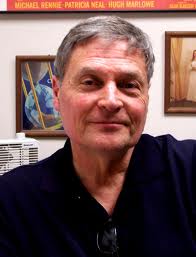
Dr. Moneyhon joined the faculty in 1973 and holds a Ph.D. from the University of Chicago. He is faculty liaison with the University History Institute, an organization that develops closer ties between the department and the community. He also serves on the editorial boards of the Arkansas Historical Quarterly and the Encyclopedia of Arkansas History and Culture. He was won the UALR Faculty Excellent Award for Research and the UALR Faculty Excellence Award for Teaching.

Dr. Moneyhon is a specialist in the history of the American Civil War and the South and is widely published in the field. His work has been supported by the National Endowment for the Humanities, and he recently received one of the first College of Arts, Humanities, and Social Sciences Summer Fellowships for Research. He is a Fellow of the Texas Historical Association. He is working on a book on the connection of war-time experience and developed identity among Confederate soldiers.

UALR Evenings In History concludes 2011-2012 series tonight

The UALR Evenings with History program concludes the 2011-2012 series tonight with Edward Anson’s “Counter-Insurgency: The Lessons of Alexander the Great.”

During Alexander the Great’s conquering expedition, which took him from Greece to Egypt to the Punjab, he only endured one serious insurrection against his once established authority.  This talk shows how he dealt with the peoples of the areas he conquered, mollifying them through the retention of basic political, cultural, and religious institutions and establishing close bonds with local elites. Why, then, did his policy fail in the one instance that produced an insurgency? The talk assesses that failure and examines the brutal counter-insurgent measures employed by Alexander to deal with this resistance to his authority.

Edward M. Anson has authored or edited five books, including Eumenes of Cardia: A Greek Among Macedonians (Leiden, Boston, Tokyo: E. J. Brill, 2004), more than thirty articles in journals, including Greek, Roman and Byzantine Studies, The Journal of Cuneiform Studies, The Journal of the American Oriental Society, Classical Philology, Historia: Zeitschrift für alte GeschichtePhoenix, Classical Journal, Greece and Rome, Ancient Society, Ancient History Bulletin, The Ancient World, and The American Journal of Philology; ten book chapters, and over fifty encyclopedia articles.  He received his PhD from the University of Virginia and is  currently Professor of History, a faculty senator, and a former President of the University Assembly.

The Evenings with History take place in the Ottenheimer Auditorium in the Historic Arkansas Museum at 200 E. Third Street. Refreshments are served at 7:00 p.m., and the talk begins at 7:30 p.m.

Corporate sponsors for the 2011-2012 season are Delta Trust, Union Pacific Railroad, the Little Rock School District—Teaching American History Program; the law firms of Friday, Eldredge, & Clark and Wright, Lindsey & Jennings. Also thanks for support and gifts in kind from the Ottenheimer Library; Historic Arkansas Museum, a museum of the Department of Arkansas Heritage; UALR Public Radio–KLRE-KUAR; and Grapevine Spirits

UALR Evenings with History: A Brief History of Human Rights on March 6

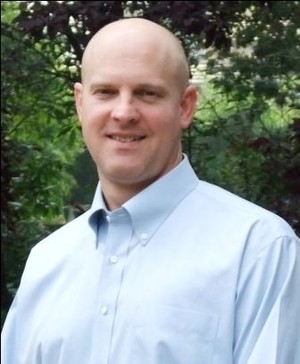
The UALR Evenings with History program returns tomorrow night (March 6) with Charles W. Romney’s “A Brief History of Human Rights.”

What are Human Rights? Some claim humans have always had rights that cannot be traded, infringed, or given away. Others argue international organizations and American officials invented the concept of human rights in the 1970s to further various political agendas. In this Evening with History we will discuss the two historical interpretations behind each vision of human rights, assess the relative strength of both ideas of international rights, and explore the political and intellectual stakes in the debate over the origins of Human Rights.

Charles Romney graduated from Pomona College and received his Ph.D. in history from UCLA. He worked in public history for seven years on documentary films and digital history projects, and in the five years before joining UALR taught Asian and African history at Whittier College in California. At UALR he is the Graduate Coordinator of the History Department’s MA program in Public History.  Dr. Romney teaches classes on public history, digital history, African history, and on the United States and the world.  His current research includes a study of law, labor, and the state in modern America and a comparative history of colonial Hawaii.

The Evenings with History take place in the Ottenheimer Auditorium in the Historic Arkansas Museum at 200 E. Third Street. Refreshments are served at 7:00 p.m., and the talk begins at 7:30 p.m.

Corporate sponsors for the 2011-2012 season are Delta Trust, Union Pacific Railroad, the Little Rock School District—Teaching American History Program; the law firms of Friday, Eldredge, & Clark and Wright, Lindsey & Jennings. Also thanks for support and gifts in kind from the Ottenheimer Library; Historic Arkansas Museum, a museum of the Department of Arkansas Heritage; UALR Public Radio–KLRE-KUAR; and Grapevine Spirits

UALR Evenings with History: How an Arkansan taught Chinese Nationalism

The UALR Evenings with History program resumes for 2012 tomorrow night (February 7) with Jeffrey Kyong-McClain’s “The Heavenly History of the Han, or How a Liberal Baptist from Green Forest, Arkansas Taught Racial and Ethnic Nationalism to the Chinese.”

In the early years of the twentieth century, Chinese (or “Han”) nationalists were searching for ways to convert a tradition-bound and multi-cultural empire into a modern nation-state. Although, in the minds of these nationalists, foreign missionaries were a big part of China’s problem, many such missionaries in fact aided the Chinese against the non-Chinese in questions over who had the historical right to rule the borderlands, thereby helping Chinese nationalists assert their purported rights over vast amounts of territory.

This talk looks at the case of one missionary particularly active in this regard, Arkansan D.C. Graham, who blended liberal theology with a Social Darwinian belief in the superiority of the Chinese over the other people groups in the region (southwest China). Graham propagated this belief as the pioneer of modern archaeology and ethnography in Sichuan province in the 1920s and 1930s, and his ideas remain influential in the region to this day.

A member of the UALR History faculty, Dr. Kyong-McClain was born and raised in Minneapolis. He received a BA in History from the University of Minnesota and an MA in Theology from Bethel Seminary, St. Paul, before beginning graduate work in Chinese History at the University of Illinois, Urbana-Champaign. He lived for three years in the city of Chengdu, in southwestern China, the last year on a Fulbright-Hays dissertation grant. His research centers on the place of archaeology in modern Chinese nation-building; teaching interests include modern China and modern Korea, and anything pertaining to Sino-Western interaction.

The Evenings with History take place in the Ottenheimer Auditorium in the Historic Arkansas Museum at 200 E. Third Street. Refreshments are served at 7:00 p.m., and the talk begins at 7:30 p.m.

Corporate sponsors for the 2011-2012 season are Delta Trust, Union Pacific Railroad, the Little Rock School District—Teaching American History Program; the law firms of Friday, Eldredge, & Clark and Wright, Lindsey & Jennings. Also thanks for support and gifts in kind from the Ottenheimer Library; Historic Arkansas Museum, a museum of the Department of Arkansas Heritage; UALR Public Radio–KLRE-KUAR; and Grapevine Spirits