
 Louise Loughborough was the first woman to serve on the Little Rock Planning Commission. Not only was the she first woman to serve on this body, she was the first to serve on any City commission other than the Board of Censors or Library Board.
Born Louisa Watkins Wright in Little Rock 1881, her ancestors included many early Arkansas leaders including Little Rock Mayor David Fulton, who had been born in Ireland.
In 1935, Loughborough was appointed to the Little Rock Planning Commission, and it was in this role that she first heard about the plan to condemn the half-block of houses that she had grown up admiring on Cumberland and East Third streets. Although the neighborhood had fallen on hard times, becoming a red-light district and slum, Loughborough feared the loss of several historic structures, including the Hinderliter House, the oldest building in Little Rock and thought to be Arkansas’s last territorial capitol. She mobilized a group of civic leaders to save these buildings. She enlisted the aid of prominent architect Max Mayer and coined the term “town of three capitols” to try to capture the imagination of potential supporters, grouping the “Territorial Capitol” with the Old State House and the State Capitol.
The Arkansas Territorial Restoration opened on July 19, 1941. The project was the first Arkansas agency committed to both the restoration of structures and the interpretation of their history, and it served as a model and inspiration for historic preservation in the state. Around the same time, she was a moving force behind the creation of a museum at the Old State House as well. Today both Historic Arkansas Museum (as the Territorial Restoration is now known) and the Old State House Museum are agencies of the Department of Arkansas Heritage.
As founding Chairman of the Arkansas Territorial Restoration Commission, Louise Loughborough provided daily direction for the museum house complex through the first twenty years of its existence. She died in Little Rock on December 10, 1962 and was buried at Mount Holly Cemetery.
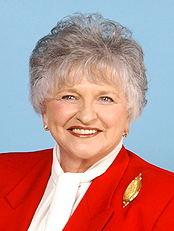 Jimmie Lou Fisher served as a Constitutional officer in Arkansas longer than any other woman in the state’s history (twenty-four years). Her twenty-two years as Treasurer is also the longest any person has served in that post. (And unless the term limits rules for Constitutional officers are changed, it is a record that is likely to stand.)
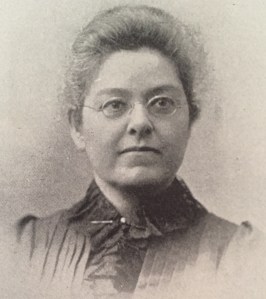 Dr. Ida Joe Brooks was the first woman to practice medicine in Arkansas. In 1920, she became the first woman to be a party nominee for a statewide office.
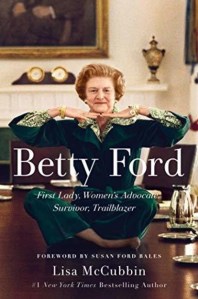 In celebration of Women’s History Month, the Clinton Foundation and University of Arkansas Clinton School of Public Service will host Remembering Betty Ford, a conversation about the woman who made a positive and lasting impact on our country.
 In 1976, Anne Bartley was sworn in as the first director of what was then known as the Department of Arkansas Natural and Cultural Heritage. In that capacity, she was the first woman to serve in an Arkansas Governor’s cabinet. She had encouraged Governor David Pryor to propose establishing the department and then had lobbied the Arkansas General Assembly to create it. (Her oath of office was administered by the first woman on the Arkansas Supreme Court, Justice Elsijane Trimble Roy.)
 Through their social media campaign #5WomenArtists, the National Museum of Women in the Arts (NMWA) asks, “Can you name five women artists?
 Little Rock Culture Vulture