
LR Women Making History: Stella Boyle Smith

When Stella Boyle Smith died at the age of 100 in 1994, she was well known for her love of music and philanthropy.  It is a lasting connection of her to a building in which she spent so many hours as an arts patron.

Smith was a Little Rock philanthropist and founder of the Arkansas Symphony Orchestra. She lived to be 100, but ensured that her legacy would continue.  In her lifetime, she donated more than $2.5 million to organizations in the music and medical fields.  Since her death, the Stella Boyle Smith Trust has donated more than $5 million.  One of its most recent gifts was the sculpture In the Wings which graces the front of Robinson Center.

She was born in Farmington, Mo., into a large, musically inclined family, which moved to Arkansas when she was two. She began singing at the age of three and graduated from high school at 14. In 1922, she moved to Little Rock with her first husband, Dandridge Perry Compton, who died in 1935. Her second husband, George Smith, held various business interests and extensive farms in Woodruff and Arkansas counties, which allowed them to engage in philanthropy. Mr. Smith died in 1946.

In 1923, Smith’s love for music inspired her to start The Musical Group in her living room of her residence at 102 Ridgeway Drive in Little Rock, where she lived until she died. Through several iterations, the group eventually became the Arkansas Symphony Orchestra in 1966. Her initial objective was to establish the symphony as an educational tool for children, and, in 1968, she helped establish the Youth Orchestra. In 1972, the symphony board of directors named her an honorary life member. Smith established a trust fund for the symphony’s permanent endowment in 1985. A loyal friend of music and the symphony, she attended nearly every performance and most rehearsals.

Smith was also a pianist. In 1988, she gave UALR a grand piano as well as an endowed trust of $500,000. When she purchased the grand piano for UALR, a Steinway, she later on the same day purchased a Steinway for herself.  She remains the only individual to purchase two Steinway grand pianos in the same day. UALR renamed its concert hall the Stella Boyle Smith Concert Hall as a tribute to her. That year the university also gave her an honorary doctor of humane letters degree. Interest from the trust provides scholarships each year for music students studying string instruments, piano or voice.  After she died, her personal Steinway was given to UALR.  The music faculty and students now lovingly refer to the two pianos as Stella and George (after her and her husband).

Smith enabled many students around the state to attend college through the more than 200 scholarships that she financed.

Other organizations that have benefited from her generosity include Arkansas Arts Center and Historic Arkansas Museum as well as the University of Arkansas.
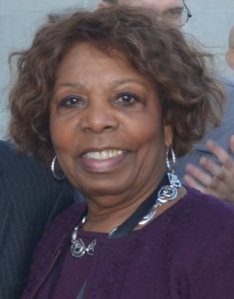
LR Women Making History: Lottie Shackelford

Lottie Shackelford has been a trailblazer throughout her career in public service.

Active in community activities and politics, she ran for the City Board in 1974 and lost.  But she was appointed to the Little Rock City Board in September 1978 to fill a vacancy.  This made her the first African American woman to serve on he City Board, and indeed on any governing board for the City (during Reconstruction, there were at least three African Americans on the City Council, but they were all men.) She was subsequently elected to a full-term on the City Board in 1980 winning 55% of the vote over three male candidates.

She was subsequently re-elected in 1984 (unopposed) and in 1988 (with 60% of the vote).

In January 1987, Shackelford became the first female mayor of Little Rock when she was chosen by her colleagues on the City Board to serve in that position. She was Mayor until December 1988.

From 1982 until 1992, she served as Executive Director of the Arkansas Regional Minority Purchasing Council.  She left that position to serve as Deputy Campaign Manager of Clinton for President.  She subsequently served on the Clinton/Gore transition team. She later served on the Overseas Private Investment Corporation from 1993 to 2003. She was the first African American to be in that position.

A graduate of Philander Smith College, she has also studied at the Arkansas Institute of Politics at Hendrix College and the Kennedy School of Government at Harvard University.

In recognition of all of her achievements, she has been included in the Arkansas Civil Rights Heritage Trail, the Arkansas Black Hall of Fame, and the Arkansas Women’s Hall of Fame.

LR Women Making History – Mary Fletcher Worthen

Mary Fletcher Worthen cultivated history and music with the same grace and skill as she cultivated gardens.

Born outside of Scott, she attended Vassar and Little Rock Junior College. After marrying banker Booker Worthen, she has devoted her life to improving Little Rock. Together with Stella Boyle and George Smith, she and Booker helped found the precursor to the Arkansas Symphony Orchestra.  Through its many iterations, she has been a steadfast supporter and is now a life member of the ASO Board.  She has also been a supporter of many other music organizations in Little Rock including the Chamber Music Society of Little Rock, of which she was a founder.

Another hallmark of her involvement is Mount Holly Cemetery Association.  For over 50 years she has served on the board of this body.  Without notes, she can recite the history of practically every resident buried there.  The tours she would lead with Peg Newton Smith were hot commodities when auctioned at fundraisers.  These two loving and lifelong friends would sometimes remember things differently. They playfully prodded and needled each other as they wended and winded their way through the headstones and history regaling rapt audiences with yarns of yore, quips and quotes, plus an anecdote or two.

She has also served on the Old State House Museum Board and the Pulaski County Historical Society Board.  As a historian, she literally wrote the book on Trinity Episcopal Cathedral.  She combined her interest in herb gardening and history with the creation of the Medicinal Garden at Historic Arkansas Museum, which is now named in her honor.

Born in 1917, up until her final days in 2015 Mary Worthen continued to learn new facts, share her love of history and music, and work to cultivate the next generations of cultural enthusiasts.

LR Women Making History – Peg Newton Smith

While the Culture Vulture remains a huge fan of Peg Newton Smith, it is better for this entry to be taken from a tribute written by her longtime friend Bill Worthen.
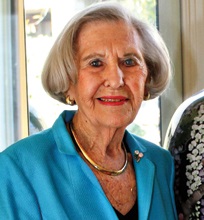
Peg Newton Smith was a pioneer in the field of history and historic preservation.  A founder of both the Arkansas Museums Association and the Quapaw Quarter Association, Little Rock’s historic preservation organization, she served as a significant resource for many local history researchers and historians.

Born February 10, 1915, Peg Smith came from a family deeply engaged in Arkansas history. Two Arkansas counties – Newton and Hempstead – are named after ancestors.  She married George Rose Smith, himself from a prominent Arkansas family, in 1938. Peg Smith became his most vigorous supporter as George Rose Smith was elected and  reelected to the State Supreme Court, ultimately offering 38 years of service as Associate Justice.

She  enjoyed a sixty-two year career as a volunteer at the Historic Arkansas Museum, where she served as Commission Chair from 1978 to 1983. On the museum’s first day, she was dressed in period garb as a volunteer.  She was named Chair Emerita of the Commission in 2002. Her commitment to history has also included decades of service on the Mount Holly Cemetery Association Board of Directors, where she was famous with Mary Worthen for tours of the cemetery, often hot items at charity auctions.

Because of her instrumental work for the Arkansas Museums Association and the Quapaw Quarter Association, both organizations named significant annual awards after her. She was appointed to the inaugural Review Committee of the State Historic Preservation Program and with architect Edwin Cromwell was the first Arkansan named to the Board of Advisors of the National Trust for Historic Preservation. She was appointed to the Arkansas Bicentennial Commission, was elected president of the Junior League of Little Rock, was a founding member of the Board of the Historic Preservation Alliance of Arkansas, and was active in the Pulaski County Historical Society.  She also was an early supporter of the MacArthur Museum of Arkansas Military History.

She was honored by many groups, being named 1967 Greater Little Rock Woman of the Year by the Arkansas Democrat, Shield of the Trojan Award winner from the UALR Alumni Association in 1979, Fellow of the Museum of Science and History in 1981, and Candlelight Gala Honoree of the Historic Arkansas Museum in 1994. She became the first recipient of the Lifetime Achievement Award from the Arkansas Museums Association in 2003.

Peg Newton Smith died on July 20, 2003.

Because of her love of Arkansas history and Arkansas art, the Historic Arkansas Museum commissioned the pARTy for Peg sculpture which dances near the north entrance to the museum.  pARTy for Peg is not a portrait of our dear friend—it is a sculpture inspired by her spirit. It had been her brainchild for the museum to have a separate gallery devoted to contemporary Arkansas artists. She also founded the Museum Store, filled with Arkansas crafts.

LR Women Making History – Jeane Hamilton

Photo taken for SOIREE

Jeane Hamilton has nurtured the Arkansas Arts Center for over 60 years.  She was present at the genesis of it and has remained so.  In 2007, she was awarded the Arkansas Arts Council’s Lifetime Achievement Governor’s Arts Award.

Arriving in Little Rock a young wife in 1952, she immediately set about to become involved in her new community as she and her husband James set up a household.  In the mid-1950s, the Junior League of Little Rock tapped her to chair the initiative to create a new art museum for Little Rock.  The two decades old Museum of Fine Arts was threadbare through years of neglect and unfocused programming and collecting.

Hamilton, along with Junior League President Carrie Remmel Dickinson and Vice President Martha McHaney, approached Winthrop Rockefeller (then a relatively new resident) to lead the fundraising effort for the new museum.  He agreed on a few conditions: one was that a base amount had to be raised in Little Rock first, and second that the museum would be for the entire State of Arkansas and not just Little Rock.

Hamilton and her colleagues set about to raise the funds. They raised $645,000 at the same time Little Rock’s business climate was stymied by the aftereffects of the Central High crisis.

Now a lifetime honorary member of the Arkansas Arts Center Board, Hamilton has spent much of her life working on Arkansas Arts Center projects since that visit in 1959.  She has served on the Board, chaired committees, chaired special events, served hot dogs, helped kids paint and danced the night away at countless fundraisers.  She was on the committee which hired Townsend Wolfe as executive director and chief curator.  Jeane has led art tours for the Arts Center to a number of countries over the years.

When she is not at the Arts Center, she is often seen at the Rep, the Symphony or any number of other cultural institutions.  While she enjoys seeing old friends at these events, she also loves to see a room full of strangers – because that means that new people have become engaged in the cultural life of Little Rock.

LR Women Making History – Charlie May Simon

Charlie May Simon is known today for being the eponym of a children’s literature award. But during her lifetime she was a prolific author for children and for adults.

Born in South Arkansas, she was raised in Memphis and then resided in Chicago and Paris. With her then-husband (who would serve as illustrator for her books even after they divorced) she moved to Perry County in the 1930s. She returned to writing, with Robin on the Mountain being published in 1934.  In 1936, she married longtime friend and Arkansas poet John Gould Fletcher. The couple resided in Little Rock.

Following his 1950 death, Simon continued to live in Little Rock, though she traveled all over the world. Her books for children and adults covered a variety of topics and themes.

In 1971, the Arkansas Department of Education named its annual Children’s Literature Award the Charlie May Simon Award.

After her death in 1977, she was buried next to her husband in Mount Holly Cemetery.

LR Women Making History – Adolphine Fletcher Terry

Adolphine Fletcher Terry was born on November 3, 1882 to former Little Rock Mayor John Gould Fletcher and his wife Adolphine Krause Fletcher.

Raised in Little Rock, in 1889 she moved into the Albert Pike House on East 7th Street, when her aunt transferred the title to her father. That house would be her primary residence the rest of her life.  Her sister Mary Fletcher Drennan never lived in Arkansas as an adult after marriage. Her brother John Gould Fletcher spent much of his adulthood in Europe before returning to Little Rock and establishing his own house, Johnswood.

At age 15, Adolphine attended Vassar. She later credited that experience as broadening her views on many issues.  After graduating at age 19, she returned to Little Rock.  Her parents both died prior to her 1910 wedding to David D. Terry, which took place at what was then known as the Pike-Fletcher House (and today is known as the Pike-Fletcher-Terry House).

She is perhaps best known today for establishing the Women’s Emergency Committee in 1958 and for her subsequent deeding of the family house to the City for use by the Arkansas Arts Center.  But her entire life was based on civic engagement.

She was instrumental in establishing the first juvenile court system in Arkansas and helped form the first school improvement association in the state. She was long an advocate for libraries, serving 40 years on the Little Rock public library board.  Through her leadership, the library opened its doors to African Americans in the early 1950s. Today a branch of the Central Arkansas Library System (the successor the Little Rock public library) is named after her.  Another branch is named after her Pulitzer Prize winning brother.

Adolphine formed the Little Rock chapter of the American Association of University Women, the Pulaski County tuberculosis association and the Community Chest.

In 1958, when the Little Rock public high schools were closed instead of allowing them to be desegregated again, she called Harry Ashmore the editor of the Gazette and exclaimed, “the men have failed us…it’s time to call out the women.”  With this, she formed the Women’s Emergency Committee to Open Our Schools. This group played a major role in getting the four high schools open the following year.

From 1933 to 1942, David Terry served in the U.S. Congress. During that time, Adolphine alternated her time between Washington DC and Little Rock. But she spent much time in Little Rock raising her five children.

After her husband’s death in 1963, she continued to remain active in civic affairs. In the 1960’s, she and her sister deeded the Pike-Fletcher-Terry House to the City of Little Rock for use by the Arkansas Arts Center upon both their deaths.  Following Adolphine Fletcher Terry’s death in 1976, Mary turned over the title to the City.

Adolphine Fletcher Terry is buried in Mount Holly Cemetery alongside her husband. Three of her children are also buried in that plot.  Her parents and brother are buried in a nearby plot.

Her granddaughters and their families carry on Adolphine Fletcher Terry’s commitment to making Little Rock better.