Two Central Arkansas Library System (CALS) branches have been awarded prestigious LEED® (Leadership in Energy and Environmental Design) Green Building Certification by the U.S. Green Building Council and verified by the Green Building Certification Institute (CBGI). The first LEED certified project for CALS, Oley E. Rooker Library has been certified LEED Silver, and Hillary Rodham Clinton Children’s Library & Learning Center has been certified LEED Gold.
LEED is the nation’s preeminent program for the design, construction, and operation of high performance green buildings. In the central Arkansas area, Rooker Library is one of only nine LEED Silver projects, and the Hillary Rodham Clinton Children’s Library & Learning Center is one of only ten LEED Gold projects.

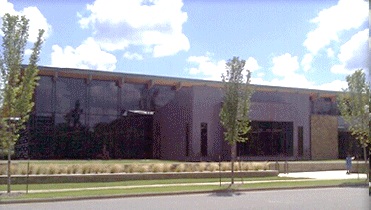
OLEY ROOKER LIBRARY (photo courtesy of CALS)
A building’s structure, access, and personality reflect the materials and design that went into its construction. CALS strives to show its respect for the history of our community and for its natural resources in its building design and choice of materials. With CALS’ commitment to sustainable building techniques or adaptable reuse of existing facilities in mind, Allison Architects designed the Rooker Library and James H. Cone, Inc. served as general contractor. Polk Stanley Wilcox Architects managed the Hillary Rodham Clinton Children’s Library & Learning Center design and East-Harding Construction provided construction services.
The Rooker Library and Hillary Rodham Clinton Children’s Library & Learning Center achieved LEED certification for energy use, lights, water, and material use as well as incorporating a variety of other sustainable strategies. By using less energy and water, LEED certified buildings save money for families, businesses, and taxpayers; reduce greenhouse gas emissions; and contribute to a healthier environment for residents, workers, and the larger community.
LEED certification of the libraries was based on a number of green design and construction features including:
- Geothermal heating and cooling systems and high performance building envelopes which reduce the energy needed to maintain the buildings
- High performance glazing with sunscreens which allow for abundant daylight
- Deep roof overhang with fritted glass filtering system
- Maximizing open space on the site
- Use of local materials, rapidly renewable materials, and materials with recycled content
- Bioswale and open-grid paving
- Use of mature tree to provide natural shade
- Water management system including a butterfly roof and wetland for water efficient landscaping, with native plants to help break down pollutants
- Bicycle storage on site
- Low flow water fixtures
- Construction practices which include reducing construction site waste, preventing pollution from erosion, and managing the building to limit air contamination
Oley E. Rooker Library
The $5 million, 13,450 square-foot Rooker Library includes sustainable features such as a geothermal HVAC system and cork or linoleum flooring throughout, and building materials include copper and Arkansas sandstone. Amenities at the library include public meeting rooms, smaller study rooms, and public access computers. Exterior features include a reflecting pool with three sculpture otters and a pavilion that can be used for library and community functions.
Funding for the Rooker Library was made available by Little Rock voters’ approval of a bond issue in 2004.

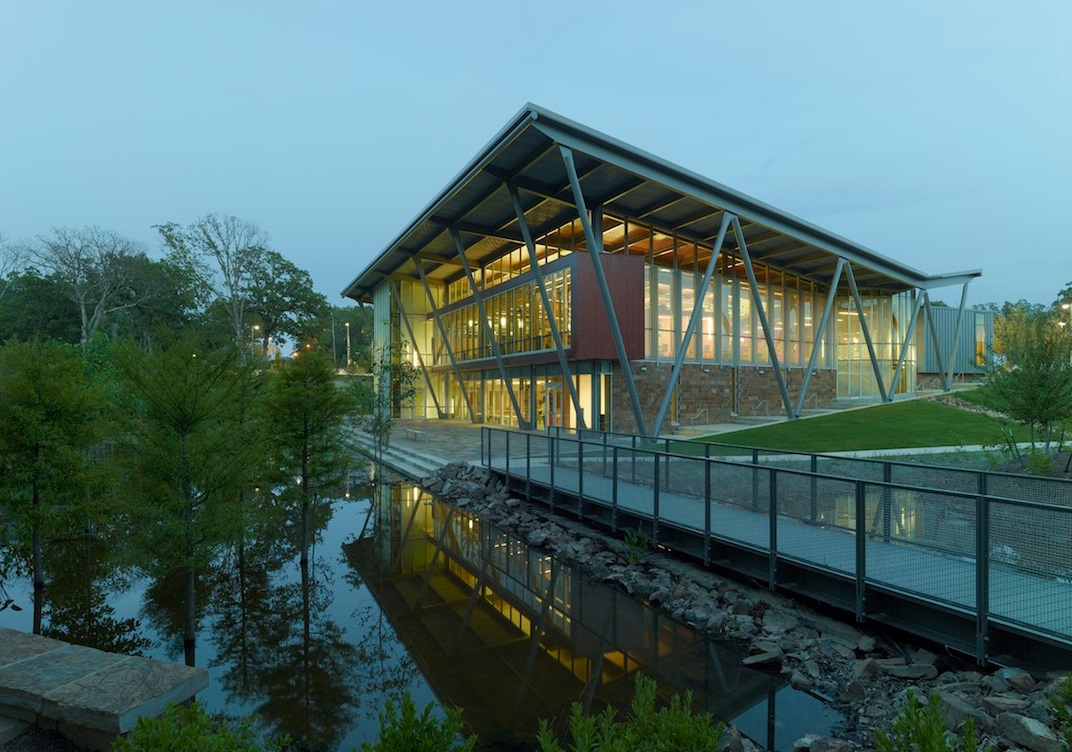
Hillary Clinton Children’ s Library and Learning Center (photo courtesy of Polk Stanley Wilcox)
Hillary Rodham Clinton Children’s Library & Learning Center
Set on a six-acre site, the $12 million, 30,000 square foot Children’s Library includes a computer lab with fourteen computers, teaching kitchen, large activity area, individual and group study rooms, theater, and community room in addition to a collection of more than 21,000 books, DVDs, and CDs.
In 2007, Little Rock voters approved a bond issue to provide funding for the Children’s Library.
The Children’s Library’s grounds are integral to the entire facility’s program. A greenhouse and teaching garden help children learn about growing healthy foods as well as provide produce that will be used in the teaching kitchen programs. The grounds reflect the topography of Arkansas’s ecosystems, from the native hardwood trees in the highlands to vegetation of the wetland areas, which are both planted and original to the site. Walking paths offer families an attractive place for exercise while learning the names of the trees and plants, and an amphitheater has seating for outdoor programs or nature watching.

 Jazz lovers may jump at a chance to hear a 17-piece big band in July. Arkansas Sounds’ concert series will host the Dave Rosen Big Band on Saturday, July 26, at 8:00 p.m., in the CALS Ron Robinson Theater. Tickets are $10, general admission, and are available online and in person at Butler Center Galleries, 401 President Clinton Avenue. The theater’s entrance may be accessed from the Main Library’s parking lot, 100 Rock Street.
 This weekend is the last chance to see the 53rd Young Arkansas Artists exhibition in the Alice Pratt Brown Atrium and the Sam Strauss Sr. Gallery at the Arkansas Arts Center.




 Little Rock Culture Vulture