Members of The Knights Chamber Orchestra perform tonight for Chamber Music Society of LR

The Chamber Music Society of Little Rock wraps up 2014-2015 with Members of The Knights Chamber Orchestra.

This extraordinary ensemble, praised for their outstanding virtuosity, innovative programs, and bold mission,. . .[ is] at the forefront of “the future of classical music in America” (Los Angeles Times). “That they suggest a rock band is not accidental, but the precision of balance and ensemble bespeaks the highest level of musicianship and preparation” (The Washington Post). The Knights frequently collaborate with leading artists including cellist Yo-Yo Ma, soprano Dawn Upshaw, violinists Itzhak Perlman and fiddler Mark O’Connor. Their enthusiasm and goal of intimate, vibrant music making leads the New York Times to ask, “Is there another orchestra that seems to be having as much fun when it plays as the Knights do?”

The concert will take place this evening at 7:30pm at the Clinton Presidential Center.

Tonight Amy Dubois Barnett speaks at Bless the Mic on Philander Smith campus

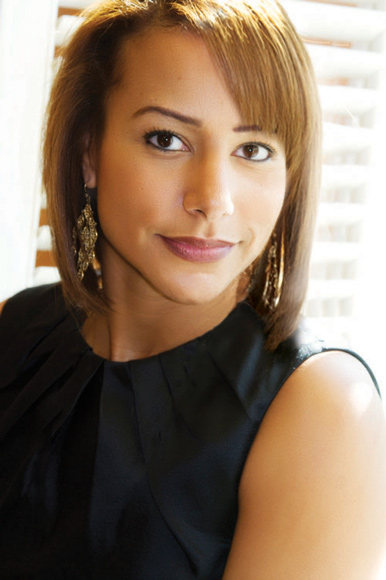
amy-dubois-barnettPhilander Smith College’s free lecture series “Bless the Mic” finishes the season tonight with journalist Amy Dubois Barnett.  She will speak at 7pm in the M.L. Harris Auditorium on the Philander Smith campus.

In August 2014, she was named Executive Editor of ESPN’s The Undefeated.  Prior to that, Barnett was Editor-in-Chief of Ebony, the oldest and largest African-American magazine in the country. At Ebony, Barnett executed the publication’s first top-to-bottom redesign in its 68-year history and also re-launched Ebony.com, both to critical acclaim.

Before Ebony, Barnett was the Deputy Editor-in-Chief of Harper’s Bazaar. Barnett was also the Managing Editor of Teen People. Before Teen People, Barnett served as Editor-in-Chief of Honey magazine where she oversaw a major redesign of the magazine.  Prior to Honey, Barnett was with Essence magazine, heading up the publication’s style content and lifestyle department.

For her work as a journalist, Barnett was named the 2012 Media Executive of the Year by Target Market News.  In 2013, she was included on the Folio 100, a list that honors the most innovative and influential professionals in magazine media.

This past school year, Barnett was also an Adjunct Professor of Management & Organizations at Northwestern University’s Kellogg School of Management, teaching a Spring semester class on Shifting Business Frameworks in Media and Entertainment.

Local Live at South on Main tonight – SeanFresh

llsom_seanfresh_website.jpg.190x140_q60_cropTonight at 7:30 pm, the Oxford American magazine presents this week’s Local Live concert at South on Main, starring SeanFresh!

As always, Local Live is free and open to the public. To guarantee a table/seat for this popular series, call ahead at (501) 244-9660. Local Live is made possible by the generous sponsorship of Cosmic Cowboy Music.

SeanFresh, the son of Pastor E.E. Clay-West and Alvin West, is a proud native of Little Rock, Arkansas. In the face of his substantial religious background, Sean was exposed to a very wide scope of music from the likes of Brian McKnight, Babyface, Madonna, 8 Ball and MJG, Otis Redding, The Isley Brothers, OutKast, and Fred Hammond. As a child, Sean grew up in area dominant in gang violence, and he would use his faith and music to escape the threatening world around him. Now the singer, songwriter, entertainer uses his sultry, charming vocals to enlighten the world through his alluring melodies. This year he will be releasing his ultimate musical experience called The Teshuvah Project; three albums telling a story of love, pain, and restoration, starting with FreshSeason.

Sean is also currently heading up fundraisers as the Marketing Director for Global Kids Arkansas (GKAR), which gives at-risk children hands on experience in foreign policy and global initiatives.

When asked who SeanFresh is, he replies “It’s simple. SeanFresh is just a church boy that loves to do R&B and Hip-Hop.”

Little Rock Look Back: 107 years of City Hall at Markham & Broadway

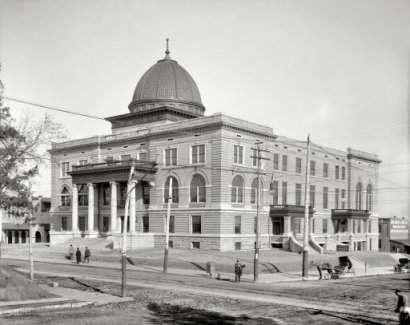
CityHa78107 years ago today, Little Rock City Hall officially opened at the corner of Markham and Broadway.

On April 15, 1908, the Italian Renaissance Revival style building, which had been designed by local architect Charles Thompson, played host to an open house. Staff had started moving into the building in March of that year.   This was, as often is the case, behind schedule.  The date in the cornice toward the top of the building is 1907, but the building was not completed until 1908.

In 1903, W. E. Lenon became Mayor of Little Rock. Back then, the terms were two-year terms.  By the start of his second term in 1905, he realized that the City was outgrowing City Hall, which was, at the time, on the northeast corner of Markham and Louisiana – where part of the Statehouse Convention Center sits today.

In February 1906, Mayor Lenon appointed a committee of five aldermen to over see the planning for the building of a new City Hall. In July 1906, the City Council approved plans, which called for a City Hall with an municipal auditorium wing. There was some hue and cry about wasteful spending and a resulting lawsuit, so, in September 1906, those plans were scrapped and a simpler City Hall was approved for the cost of $175,000.

The last resolution in the old City Hall called for the banning of smoking in the new Council Chambers – while the Council was in session. This may well have been the first smoking ban in a public government building in the history of Arkansas.

When the building opened, the third floor was not finished out. The space was not needed. When the Museum of Natural History and Antiquities (now the Museum of Discovery) moved into City Hall in 1929, they had to finish out their space.

In 1913, the new Central Fire Station, designed in the Beaux Arts style, was constructed adjacent to City Hall. During the 1930s, as the City grew, more space was needed. A garage, designed in the “austere, utilitarian” style was built in 1936 and a City Jail Annex, built by the WPA in the modified Art Deco style was built in 1938.
City Hall prior to 1912

By 1955, the copper-clad dome which sat on top of City Hall needed severe repairs. The wooden supports and the copper cladding were both in dire shape. Mayor Pratt Remmel set aside money for the dome to be repaired. After defeating Remmel in his bid for a third term, Mayor Woodrow Mann scrapped plans for the repair and, indeed, scrapped the dome.

Following the lead of County Judge Arch Campbell who had removed the tower at the County Courthouse, Mann proposed removal of the dome. He had an informal survey which had three options: repair the dome, replace the dome with an aluminum one, or remove it. This was open to anyone to respond – voting eligibility or Little Rock residency did not matter. By a slim margin, remove the dome won – so the dome was removed.

In 1960, as air conditioning was installed, windows were bricked in to promote energy efficiency. At the time, the feeling was that a new City Hall would be constructed in the 1970s somewhere more central to the growing city. Relocation talk persisted throughout the 1970s and early 1980s. By that time, City Hall had been modified a great deal – with no thought about historic preservation. When the Police and Fire Department had moved out into their new facilities, their old spaces had become storage.

By 1984, the decision was made to stay at Markham and Broadway. An extensive renovation and restoration effort was undertaken. In 1988, the building reopened, and the interior had been restored to its 1908 appearance.

Jazz in the Park tonight – New Era Jazz Project from 6pm to 8pm at History Pavilion in Riverfront Park

The New Era Jazz Project in the KATV studio

The New Era Jazz Project in the KATV studio

Jazz in the Park continues its third year tonight with New Era Jazz Project.

The concert will be from 6pm to 8pm in the History Pavilion in Riverfront Park.  The closest entry point to the History Pavilion is Ottenheimer Drive off of President Clinton Avenue.

In case of rain, the River Market West Pavilion will be the alternate location for the event.

jazzinpark

The event is completely free, but no coolers are allowed. Beer, wine, soft drinks and water will be available for sale, with a portion of the proceeds going to benefit Art Porter Music Education, Inc.’s scholarship fund.  Lawn chairs and blankets are welcome, and there is some seating in the natural stone amphitheater at the History Pavilion.

This event is sponsored by Little Rock Convention and Visitors Bureau and the River Market.

For more information about Art Porter Music Education, visit www.artporter.org.

J. William Fulbright’s domestic, international politics is focus of Old State House Brown Bag Lunch Lecture today

Today at noon at the Old State House Museum, the next installment of their regular “Brown Bag Lunch Lecture” will take place.  

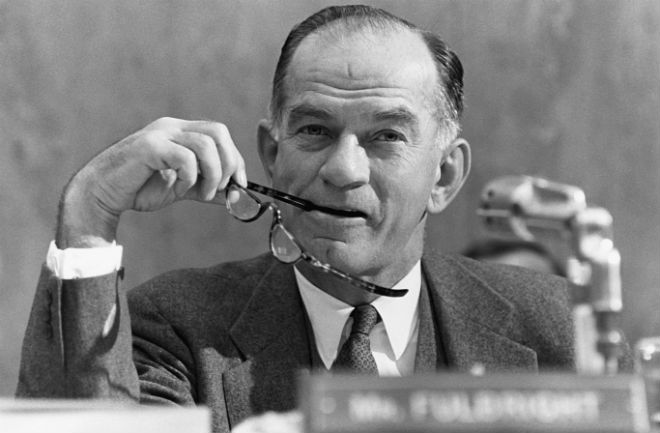
This edition features Micah Roberts discussing “Fulbright’s Balancing Act: How Domestic and International Politics Converged in 1959.”

Senator J. William Fulbright’s 1959 “Face the Nation” interview is used to assess how the Arkansas senator prioritized the Civil Rights agenda in Arkansas with his ambitions as a Cold War statesman. Response letters from Arkansans following the interview and also used to assess the importance of domestic vs. international politics for Arkansans.

Micah Roberts is a graduate student at the University of Arkansas where he studies United States foreign relations and politics during the Cold War, with special attention devoted to the Eisenhower-Khrushchev relationship and their use of personal and public diplomacy.

The Old State House is an agency of the Department of Arkansas Heritage.


Little Rock Look Back: Gen. Grant speaks in Little Rock but does not ride horse in Capital Hotel elevator

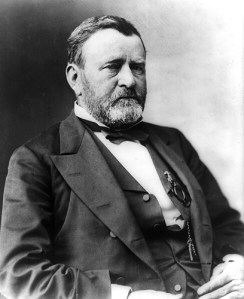
US_Grant_fOn April 15, 1880, former president Ulysses S. Grant spoke in Little Rock as part of his world tour. While here he made a couple of appearances and participated in a parade. It was Grant’s first visit to Arkansas either as a soldier or a politician.

At his outdoor speech, his remarks followed brief comments by Governor William R. Miller and Mayor John Gould Fletcher (erroneously referred to as John C. Fletcher in the Memphis Appeal story the next day). Grant’s comments were brief and flowery. He thanked Arkansans for a warm welcome, praised the future prospects of Arkansas and discussed the demise of what he termed “sectionalism” which was undoubtedly a reference to the division between the Union and and former Confederate states.

Also that day, Grant addressed a banquet in Concordia Hall (now part of the Arkansas Studies Institute complex on the Central Arkansas Library downtown campus). His was one of fifteen toasts that evening. It was simply “The United States of America, forever United.” He expounded briefly on the theme of unity of citizens from all states. He also discussed immigration noting, “All foreigners find a welcome here. We make them American citizens. After we receive them, it is but one generation until they are Americans.” He noted that he could speak much more on the topic, but that since he was but one of fifteen toasts and that there was to be music after each toast, “It will be to-morrow (sic) morning when we get through if we all take as much time as the subjects admit of.”

Not everyone was thrilled to have the former commander of the Union Army in Little Rock. The story goes that when he was parading down the street, some Little Rock women (in a display of Souther un-hospitality) sat in chairs with their backs to the parade route. But all in all, it appears to have been a successful visit for the man who was the only Republican in the 19th Century to win Arkansas’ Electoral votes.Grant arrived in Little Rock on the night of April 14 and lodged at the Capital Hotel. He undoubtedly enjoyed some whiskey and cigars while at the Capital. Grant had originally planned on departing in the afternoon of April 15, but Little Rock leaders pled with him to stay so that he could be honored at the banquet. He assented.

Incidentally, there is an urban myth that, while in Little Rock, General Grant rode his horse in the oversized elevator of the Capital Hotel.  This is a relatively recent story. The oversized elevator was not installed until the 1980s, over 100 years after Gen. Grant was a guest of the facility.