Unknown's avatar

About Scott

A cultural thinker with a life long interest in the arts and humanities: theatre, music, architecture, photography, history, urban planning, etc.

Little Rock Look Back: LR Mayor Charles Moyer

Mayor MoyerOn April 18, 1880, future Little Rock Mayor Charles E. Moyer was born in Glenwood, Minnesota. A man of contradictions, he was both a candidate backed by (and probably personally involved in) the Ku Klux Klan, yet he also brought the Goodwill Industries organization to Little Rock and Arkansas to help those less fortunate.

He came to Little Rock shortly after the turn of the 20th century as a clerk in the Post Office, and later served as a mail carrier. He then worked for Plunkett-Jarrell Wholesale Grocer Company in Little Rock. On January 1, 1921, he took office as County Judge for Pulaski County. In 1924, he ran against incumbent mayor Ben Brickhouse in the Democratic primary. Since Brickhouse had displeased the Klan, which was an active part of Democratic politics in Little Rock and throughout the nation at the time, Moyer won the primary.

Mayor Moyer led the City of Little Rock from April 1925 through April 1929. In 1927, the last lynching in Little Rock took place. While race-baiting crowds were surrounding City Hall demanding an African American prisoner be released to them for vigilante justice, Mayor Moyer was in hiding at an undisclosed location. Not able to get the prisoner they wanted, they took out their venom on another man who had assaulted a white woman and her daughter.

After leaving office in 1929, Moyer moved for a time to Batesville. He returned to Little Rock and was a chief deputy sheriff. From 1937 to 1941, he served as Pulaski County Assessor. In 1941, he returned to the office of Little Rock Mayor after J. V. Satterfield opted to serve only one term and did not seek re-election. Mayor Moyer led Little Rock through most of World War II. He left office in April 1945 and died on May 29, 1945, barely only one month after leaving City Hall.

Symposium on the Moral Imperative of Music Education tonight; sponsored by Clinton School and Spirit of Harmony Foundation

sohf_webThis evening from 6pm to 9pm at the Clinton School and the Spirit of Harmony Foundation are presenting a symposium on the importance of music education.    The Spirit of Harmony Foundation was founded by musician, songwriter and record producer Todd Rundgren.  The symposium will explore the social, neurological, economic, academic and creative benefits of music education and will conclude with a short musical performance by Todd.  

It will take place in the Wally Allen Ballroom of the Statehouse Convention Center.

The symposium panel includes:
– “The Social Benefits of Music Education: Music education improves children’s lives by making them more successful academically and in their social interactions (working with others and self-confidence)” with Margaret Martin, founder of the Harmony Project.
– “The Neurological/Physical Benefits of Music Education: Music education changes a child’s brain in ways that last a lifetime, making the child a better student and a more mentally fit adult” with Nina Kraus, director of Auditory Neuroscience Laboratory.
– “The Economic Benefits of Music Education: The proven physical and social benefits of music education ultimately result in substantial economic assets that manifest throughout a person’s lifetime” with George S. Frod, co-founder and chief economist at Phoenix Center for Advanced Legal and Economic Public Policy Studies.
– “The Academic Benefits of Music Education: Individual students experience substantial and life-change positive results from active participation in music education programs” with Carl Mouton, director of bands for Maumelle High School.
– “The Emotional/Creative Benefits of Music Education: Music changes the world and changes ourselves” with Todd Rundgren, founder and president of the spirit of Harmony Foundation.
The evening will also feature a performance from members of the Arkansas Symphony Youth Orchestra, under the direction of Geoffrey Robson.
For more information, visit  http://www.spiritofharmony.org/symposium.html

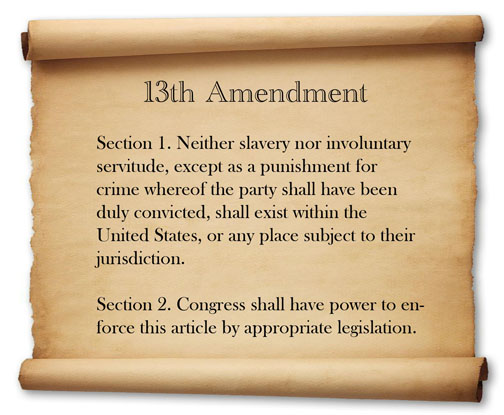
150th Anniversary of 13th Amendment marked today at Old State House’s Arguments for Freedom

2014-06-21-13thAmendmentJoin the Old State House Museum’s “Arguments For Freedom,” today at 11 am.

Living History Interpreters will reenact the ratification of the 13th Amendment, which abolished slavery in the United States. Learn about the reasons Arkansas ratified the 13th Amendment and the concerns the political leaders faced at the end of the Civil War. Arrive early to meet the statesmen and find out their views on this topic.

The Old State House Museum is an agency of the Department of Arkansas Heritage.

Tonight as part of Arkansas Sounds – Brian Nahlen in concert

Arkansas Sounds celebrates the wide spectrum of Arkansas music and musicians.  Tonight, they are offering a concert in one of the newest CALS facilities – Hillcrest Hall on Kavanaugh.

Singer/songwriter Brian Nahlen, a Central Arkansas  native, will perform a few Beatles favorites, such as “Blackbird,” “Norwegian Wood,” and “While My Guitar Gently Weeps,” and original music from his debut album, Better Than I Thought It Could Be, released in February 2015.

The concert starts at 7pm at 1501 Kavanaugh (the wedge formed by Kavanaugh and Lee streets).  Admission is $5.

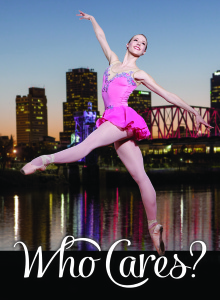
Ballet Arkansas headlines spring show with historic performance of Balanchine-Gershwin WHO CARES? this weekend

WhoCares-220x300Ballet Arkansas’ annual spring mixed repertory show will be performed April 17-19 at the Arkansas Repertory Theatre. “This mixed repertory format gives us the ability to entertain and educate our audience with different styles of dance, from classical ballet to contemporary dance to ballet-meets-Broadway” says Karen Bassett, Executive Director.  “There is truly something for everyone in this show”.

The headlining piece, Who Cares?, was choreographed by the father of American ballet George Balanchine and is set to music of the incomparable George Gershwin.  “This will mark the first time an Arkansas based dance company has been licensed to perform a work choreographed by Mr. Balanchine. We at Ballet Arkansas are honored to be able to bring such a wonderful work to our state. This accomplishment speaks volumes for artistic and technical abilities of our twelve professional dancers” says Artistic Director Michael Bearden. This piece was chosen for its fun, high-energy choreography and audience catching tunes that will delight fans of all dance styles.

The show also includes Hilary Wolfley’s expanded piece, Façade. Hilary, from Orem Utah, was the winner of our August 2014 Visions Choreographic Competition. Excerpts from the tragic tale and classical ballet Raymonda, choreographed by the Marius Petipa which was premiered January 19th, 1898, Maryinsky Theatre, St. Petersburg will be performed as well as the pas de deux from Lady of the Camellias by Val Caniparoli. Lady of the Camellias is set to the music of Chopin and is based on the 19th century French novel by Alexander Dumas. Former Hubbard Street Dance company member Greg Sample has choreographed a contemporary piece titled Rerouting which will round out the show’s line-up.

Tickets to the public shows of Who Cares? are available on the Arkansas Repertory Theatre’s website at therep.org or by calling (501) 378-0405.

Ballet Arkansas is supported in part by the Arkansas Arts Council, an agency of the Department of Arkansas Heritage.

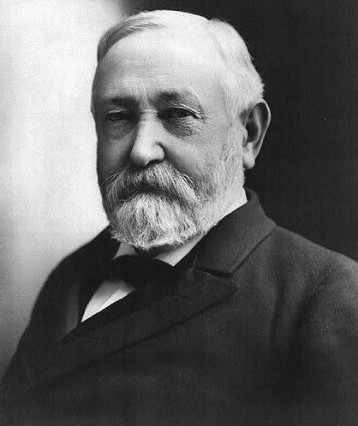
Little Rock Look Back: President Benjamin Harrison becomes first sitting president to visit LR

Benjamin-Harrison-by-Joseph-Gray-Kitchell-1897-358x426On April 17, 1891, Benjamin Harrison became the first sitting president to visit Arkansas.  He was on a cross-country railroad trip having left DC on April 13.

The morning of the 17th he spoke in Memphis and then took the train to Little Rock.  Accompanying him from Memphis to Little Rock were a delegation which included Governor and Mrs. James P. Eagle, Mayor H. L. Fletcher and Col. Logan H. Roots.  Also in the party was Mrs. W. G. Whipple, a former first lady of Little Rock.

They arrived in Little Rock in the afternoon.  A parade took them from the train station to the State House (now the Old State House Museum) where the Governor formally welcomed the President and his party.

In his brief remarks, President Harrison spoke of the hospitality and the natural resources available in Arkansas.  He also touched on the Civil War, which at the time was less than 30 years in the past. He noted “The commonwealth rests upon the free suffrage of its citizens and their devotion to the Constitution and the flag is the bulwark of its life.  We have agreed, I am sure, that we will do no more fighting among ourselves.” These remarks were met enthusiastically by the crowd assembled.

The President concluded is brief remarks thanking the State officials and the citizenry.  He then took the train to Texarkana where he made his third remarks of the day.

Benjamin Harrison was on the Presidential ticket two times. The first time he lost the popular vote but won the Electoral College defeating incumbent Grover Cleveland. The second time he lost both the popular and electoral votes to Cleveland.  He did not carry Arkansas in either election. Though he was the first sitting president to visit Little Rock, there is nothing here named for him.  Since there was already a Harrison Street named after his grandfather, he is skipped between Cleveland and McKinley in the presidential streets.

Members of The Knights Chamber Orchestra perform tonight for Chamber Music Society of LR

The Chamber Music Society of Little Rock wraps up 2014-2015 with Members of The Knights Chamber Orchestra.

This extraordinary ensemble, praised for their outstanding virtuosity, innovative programs, and bold mission,. . .[ is] at the forefront of “the future of classical music in America” (Los Angeles Times). “That they suggest a rock band is not accidental, but the precision of balance and ensemble bespeaks the highest level of musicianship and preparation” (The Washington Post). The Knights frequently collaborate with leading artists including cellist Yo-Yo Ma, soprano Dawn Upshaw, violinists Itzhak Perlman and fiddler Mark O’Connor. Their enthusiasm and goal of intimate, vibrant music making leads the New York Times to ask, “Is there another orchestra that seems to be having as much fun when it plays as the Knights do?”

The concert will take place this evening at 7:30pm at the Clinton Presidential Center.